The Proper Pub Grub Baked Cheddar Cauliflower Gratin

- Unveiling the Ultimate Comfort: Why This Baked Cheddar Cauliflower Outshines Everything Else
- The Philosophy Behind Perfect Cheesy Vegetable Bakes
- The Essential Components for Creamy Baked Cheddar Cauliflower
- Step-by-Step Mastery: Crafting Your Cheesy Masterpiece
- Elevating and Adapting Your Baked Cheddar Cauliflower Recipe
- Recipe FAQs
- 📝 Recipe Card
Unveiling the Ultimate Comfort: Why This Baked Cheddar Cauliflower Outshines Everything Else
Right then, let's get cracking on this delightful dish! "Baked Cheddar Cauliflower" sounds like comfort food royalty to me, the sort of thing you want when it's raining cats and dogs outside and you fancy something utterly satisfying but not too taxing on the brain after a long day.
We’re going to elevate the humble cauliflower into something truly special, a proper hug in a baking dish. Forget those watery, bland cauliflower cheese dishes you might have endured!
This recipe marries tender, perfectly roasted cauliflower florets with a rich, velvety homemade cheese sauce, sharp English cheddar being the star, naturally. Baked until bubbly and topped with a crisp, golden breadcrumb crust, it’s the ultimate satisfying side dish or a fantastic vegetarian main course.
It has that wonderful, deep umami richness you crave, pure kitchen alchemy! This Baked Cheesy Cauliflower Casserole is designed to be intensely flavourful.
The Philosophy Behind Perfect Cheesy Vegetable Bakes
The success of any truly great gratin hinges on two core principles: managing moisture and maximizing flavour penetration. When tackling a Baked Cheese Cauliflower Recipe , most home cooks fail because they don't respect the water content of the vegetable.
We are determined to avoid that soggy texture and instead achieve perfectly cooked, slightly caramelized florets suspended in a luxurious Mornay sauce. This isn't just about smothering; it's about construction.
Transforming the Humble Head of Brassica into a Culinary Star
The foundation of this dish starts long before the sauce comes near the pan. We aren't merely boiling or steaming our vegetable; we are treating it to an initial blast of dry heat.
By tossing the florets with olive oil, salt, and pepper, and giving them a solid 15–20 minutes in a hot oven, we achieve two vital things. First, we drive out excess surface moisture.
Second, we initiate the Maillard reaction, giving the cauliflower edges a nutty depth that simple boiling can never replicate. This pre-roasting is the secret sauce for superior Roasted Cheddar Cauliflower .
Why Our Gratin Technique Ensures Zero Soggy Cauliflower
This pre-roasting step directly addresses the mushiness that plagues lesser versions. Once the florets have developed some structure and flavour, they are then combined with the sauce.
Since the cauliflower is already tender-crisp (al dente), it only needs to bathe in the sauce long enough to absorb the richness during the final bake, rather than requiring a long, steamy cook time submerged in liquid.
This ensures that even the pieces deep within the Baked Cauliflower Casserole Recipe retain integrity.
Setting the Stage: What to Expect from This Decadent Dish
When this dish emerges from the oven, you should anticipate a visual feast: a bubbling, golden-brown crust giving way to creamy, molten cheese beneath. The flavour profile is dominated by that assertive, tangy sharp cheddar, balanced by the gentle warmth of nutmeg and a surprising depth from a hint of Dijon mustard woven into the sauce.
It’s the definition of Comfort Food Cauliflower , simultaneously rich and deeply satisfying.
Related Recipes Worth Trying
- The Best Baked Cauliflower Crisp Recipe Crispy Easy Side — Tired of boring veg Learn how to cook cauliflower crispy in the oven These bites are coated in garlic and Parmesan for a satisfying crunch
- The Sunday Supper Shortcut Simple Baked Rigatoni Recipe — Need an easy baked rigatoni with ricotta that tastes homemade This foolproof recipe is your weeknight hero for hearty Italian casserole dinners
- Crispy Baked Bang Bang Salmon Rice Bowls in 40 Mins — Forget the takeaway These easy Bang Bang Salmon Rice Bowls feature crispy pankocrusted salmon smothered in a creamy spicy sauce A perfect Salmon Rice Bowl...
The Essential Components for Creamy Baked Cheddar Cauliflower
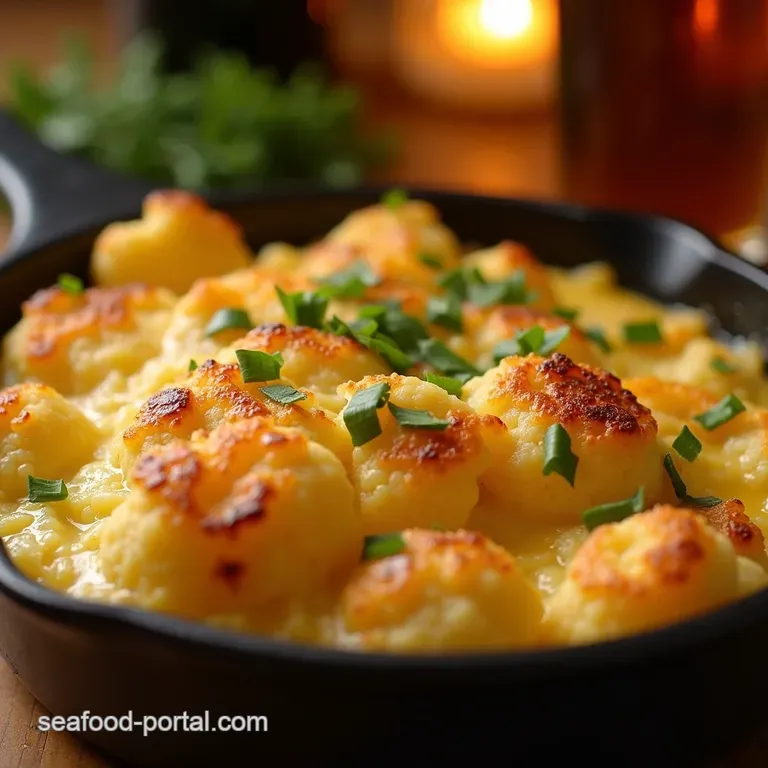
Creating a truly remarkable Cheesy Baked Cauliflower requires attention to the quality of your base ingredients, particularly the dairy. A great cheese sauce, or Mornay, is just a Béchamel enriched with cheese, and its success rests squarely on the quality of the butter, flour, milk, and most importantly, the cheese itself.
Sourcing the Finest Flavor Boosters
We are aiming for high-impact flavour without unnecessary complexity. This means choosing ingredients that deliver punch: sharp cheese, good quality butter, and fresh seasonings. Don't skimp on the cheddar; it is the anchor of the entire dish.
Precise List of Required Components (Measurements Included)
To begin, gather your main components for this Baked Cheddar Cauliflower . For the vegetable component, you'll need one large head of cauliflower, cut into bite-sized florets, tossed lightly with 2 tablespoons of olive oil, salt, and pepper.
For the sauce, the backbone is 4 tablespoons of unsalted butter and an equal amount of all-purpose flour to create our roux. We enrich this with 2½ cups of whole milk, aiming for a luxurious texture.
The flavour profile hinges on 1½ cups of tightly packed sharp cheddar cheese, grated, with a small reserve for the topping. Finally, for depth, a pinch of nutmeg and 1 teaspoon of Dijon mustard are essential partners to the cheese.
The topping requires ½ cup of Panko breadcrumbs mixed with 1 tablespoon of melted butter and the remaining reserved cheddar.
Tool Kit Essentials: Baking Dishes and Whisks Needed
You will need a sturdy saucepan or deep skillet capable of handling sauce construction over medium heat. A good wire whisk is non-negotiable for achieving that lump-free, velvety Béchamel base. Finally,, prepare a large baking dish, ideally around 9x13 inches, to house the final assembly.
Having these pieces ready allows for smooth transitions, which is crucial for the sauce-making process.
Selecting the Ideal Sharp Cheddar for Maximum Zing
For this recipe, the sharper, the better. We highly recommend an English or Irish mature/vintage sharp cheddar, as its lower moisture content and intense flavour profile stand up beautifully to the heat without becoming greasy.
Mild or medium cheddar simply disappears into the sauce, leaving you with a lacklustre experience. Reserve half a cup of this glorious cheese specifically for the topping, where it will mingle with the crunchy Panko.
Step-by-step Mastery: Crafting Your Cheesy Masterpiece
With the ingredients prepped and the oven preheating to 400° F ( 200° C), we move into the active cooking phase. Remember, the timing works in concert: as the cauliflower roasts, you build the sauce simultaneously.
Preparing the Cauliflower Florets for Initial Roasting
Take your prepared florets and distribute them evenly across a baking sheet, crowding leads to steaming, which we are actively avoiding. A light drizzle of olive oil and a generous grind of salt and pepper ensure they brown nicely. Get them into that hot oven for 15 to 20 minutes.
They should be fork-tender but retain a slight bite; slightly browned edges signal they are ready to transition to the sauce stage.
The Roux Revelation: Building the Velvety Cheese Sauce Base
While your cauliflower is transforming, focus on the stove. Melt the 4 tablespoons of butter over medium heat in your saucepan. Once melted and slightly foamy, whisk in the 4 tablespoons of flour vigorously. This mixture, the roux, must cook for a solid two minutes, stirring constantly.
This crucial step cooks out the raw, pasty flavour of the flour, ensuring a clean taste in the final Baked Cheddar Cauliflower .
Layering and Final Assembly Before Baking
Once your Béchamel has thickened, it should smoothly coat the back of a spoon after about 5–7 minutes of whisking in the milk, remove it from the heat immediately.
Stir in the Dijon mustard, nutmeg, and the majority of your grated sharp cheddar until it melts into a homogenous, gleaming sauce. Taste it now! Next, gently fold the pre-roasted cauliflower florets into the cheese sauce within the saucepan, ensuring every piece is coated, before transferring the entire mixture into your prepared baking dish.
Monitoring Temperature and Doneness for Optimal Results
The final step before the oven is applying the crust. Combine the Panko breadcrumbs, the reserved ½ cup of cheddar, and the 1 tablespoon of melted butter until crumbly. Scatter this evenly over the sauced cauliflower.
Place the dish back into the 400° F ( 200° C) oven for a further 15 to 20 minutes. You are looking for aggressive bubbling at the edges and a deep, golden hue on the topping.
Let it rest for five minutes upon removal; this brief pause allows the sauce to settle slightly, guaranteeing that your Baked Cheddar Cauliflower Bites remain wonderfully creamy rather than runny when served.
Elevating and Adapting Your Baked Cheddar Cauliflower Recipe
This foundation is magnificent, but any expert cook knows that flexibility is key to long-term kitchen success. Once you master this core technique, you can begin to explore exciting variations that keep this dish fresh.
Creative Additions: Boosting Flavor Profiles Beyond Cheese
To inject excitement into your next batch of Baked Cheddar Cauliflower , consider aromatic additions to the sauce. A tablespoon of sautéed shallots added just before whisking in the milk provides a sweet, subtle onion note.
For a smoky dimension, substitute a quarter of the cheddar with smoked Gouda or add a teaspoon of smoked paprika to the roux. If you enjoy heat, a small grating of fresh horseradish mixed into the final sauce offers a fantastic nasal clearing kick.
Making Ahead: Strategies for Easy Meal Prep
This is a fantastic dish for entertaining because much of the work can be completed in advance. You can roast the cauliflower entirely the day before and store it in the fridge. Similarly, the cheese sauce can be made up to 2 days ahead.
When ready to bake, simply fold the cooled sauce into the room-temperature cauliflower, top with the Panko mixture, and add about 10 minutes to the final baking time to ensure it heats through thoroughly.
Nutritional Snapshot: Balancing Indulgence with Health
While undeniably rich, this dish benefits significantly from being predominantly vegetable-based, unlike many grain-heavy casseroles. It provides a wonderful source of Vitamin C from the cauliflower and a good dose of protein and calcium from the dairy.
When portioned as a side dish for six, it integrates beautifully into a balanced meal plan, proving that Healthy Baked Vegetable Dishes can certainly be indulgent.
Storage Secrets and Reheating Best Practices
Any leftovers of your Baked Cheese Cauliflower Casserole should be stored tightly covered in the refrigerator for up to three days. Reheating is best done in the oven.
Cover the dish loosely with foil and bake at 350° F ( 175° C) for about 20 minutes, removing the foil for the last five minutes if the top seems too soft and needs re-crisping.
Microwaving is fast but tends to make the sauce grainy; oven reheating preserves the luxurious texture we worked so hard to create.
Serving Suggestions: Pairing This Side Dish with Main Courses
Because this is such a robust and satisfying side, it pairs wonderfully with leaner proteins that don't compete with its richness. Consider serving it alongside slow-cooked pulled pork, grilled sausages, or a simple, pan-seared chicken breast.
For a vegetarian spread, a vibrant lentil loaf or hearty mushroom steaks make excellent main companions for this magnificent Baked Cheddar Cauliflower .
Recipe FAQs
Can I skip roasting the cauliflower first for the Baked Cheddar Cauliflower?
While you technically could skip it, we strongly advise against it! Pre-roasting the cauliflower removes excess moisture, which is the secret to stopping your final dish from being watery. Plus, it gives the florets a lovely nutty flavour before they dive into the cheese sauce.
My cheese sauce keeps looking lumpy, what’s the trick to getting it smooth like yours?
Ah, the dreaded lumpy béchamel! The key is patience: always add your warmed milk to the roux (the butter/flour mix) gradually while whisking vigorously. Ensure the sauce is simmering gently before adding more liquid, and always take the pan off the heat before stirring in the final portion of cheese, that prevents the sauce from splitting or becoming grainy.
How do I store leftovers of this cheesy delight, and can I freeze it?
Leftovers should be cooled quickly and stored in an airtight container in the fridge for up to three days; reheat gently in the oven or microwave until piping hot. Unfortunately, freezing isn't recommended, as the texture of the sauce tends to separate and become watery once thawed, which is a real shame.
Can I use a different cheese instead of sharp Cheddar, or perhaps a mix?
Absolutely, but ensure whatever you pick melts well. Sharp cheddar is brilliant because of its flavour punch, but you could substitute up to half with Gruyère or even a good Red Leicester for a slightly different profile.
Just avoid pre-shredded cheeses, as they contain additives that stop them from melting smoothly.
This is for a vegetarian dinner party; can I make the Baked Cheddar Cauliflower ahead of time?
Yes, preparing in advance is a doddle! You can assemble the entire dish, cauliflower coated in sauce, topped with breadcrumbs, and cover it tightly. Keep it in the fridge for up to 24 hours, then simply add an extra 10-15 minutes to the baking time to account for the chill.
The Ultimate Baked Cheddar Cauliflower Gratin Recipe