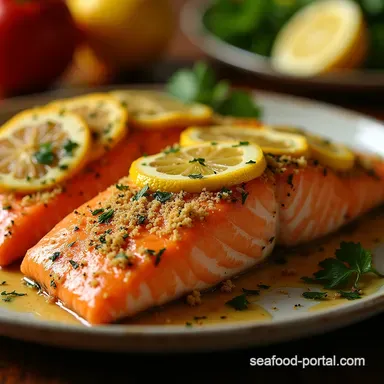
Sunkissed Lemonherb Baked Salmon Flaky Perfection Every Time
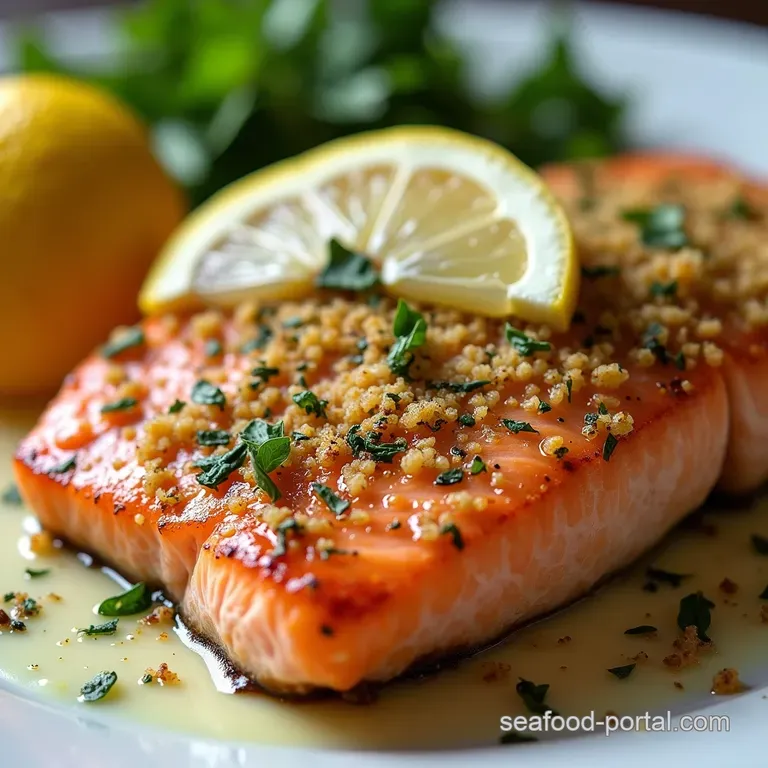
- The Secret to Unlocking Ultra-Moist Baked Salmon
- Why This Lemon-Herb Profile Outshines Standard Preparations
- Assembling Your Aromatic Crust Components
- Essential Tools for Perfect Pan Presentation
- The Optimal Temperature and Time for Baked Salmon Success
- Troubleshooting Common Baking Pitfalls
- Creative Twists on Your Classic Lemon-Herb Salmon
- Recipe FAQs
- 📝 Recipe Card
The Secret to Unlocking Ultra Moist Baked Salmon
Baking salmon is one of those cooking techniques that sounds utterly straightforward, yet often leaves home cooks feeling slightly disappointed by a result that leans toward dry or lackluster.
However, achieving that dream of perfectly flaky baked salmon is not about complex marinades or hours of resting time; it's about managing surface moisture and leveraging high heat correctly.
When executed with intention, an Oven Baked Salmon preparation allows the natural oils of the fish to infuse every fiber, resulting in an incredibly tender texture.
We are going to focus on a technique where a simple, bright coating acts as a protective shield, trapping steam and flavor right where it belongs, making this the Best Baked Salmon you'll ever prepare on a weeknight.
Why This Lemon Herb Profile Outshines Standard Preparations
While a simple drizzle of oil and salt might suffice in a pinch, elevating your Baked Salmon Fillet demands a vibrant flavour profile that complements the richness of the fish without overpowering it. This lemon herb crust is specifically designed to achieve just that balance.
It’s a celebration of fresh, aromatic ingredients that harmonize beautifully, turning a modest piece of fish into a centerpiece dish worthy of company.
Say Goodbye to Dry Fish: Our Foolproof Baking Guarantee
The primary fear when cooking salmon is dryness, often stemming from two culprits: insufficient surface oil or being removed from the heat too late. This specific Baked Salmon Recipe addresses the first issue by creating a generous, moist coating of herbs, oil, and Dijon mustard which seals the top layer.
The second key to success lies in precise temperature control, which we detail later trusting the thermometer rather than just timing is the true secret to a foolproof result every time. This method guarantees a moist interior.
The Bright, Zesty Flavor Foundation
At the heart of this preparation is a dynamic blend of fresh elements. We are combining the bright, fragrant oils released from fresh lemon zest with the sharp tang of fresh lemon juice. This is blended seamlessly with finely minced garlic, ensuring that subtle, savoury depth that prevents the fish from tasting flat.
It’s this interplay of sharp acid and fragrant oils that wakes up the palate.
Serving Suggestions for a Complete Meal Experience
Once you have mastered the art of creating perfectly cooked flaky baked salmon , the next step is presentation. This dish pairs wonderfully with simple, grounding sides that don't compete with its vibrant flavour.
Consider serving it atop a bed of fluffy quinoa or alongside roasted asparagus spears that have been tossed with a touch of the same olive oil you used for the fish. For a more traditional approach, buttered new potatoes and blanched green beans make an excellent accompaniment, allowing the salmon to remain the star of the plate.
Assembling Your Aromatic Crust Components
The magic of this Easy Baked Salmon Recipe lies in the simplicity of its topping. We bypass lengthy resting periods by creating a flavour packed paste that adheres beautifully to the raw fish, starting the infusion process immediately upon entering the oven.
You'll need roughly four six-ounce fillets of salmon, ideally of a uniform thickness for even cooking.
Selecting the Optimal Salmon Cut and Thickness
When purchasing your salmon, aim for fillets around 1 to 1.5 inches thick. Thicker cuts allow more room for error, ensuring the exterior can form a nice crust while the interior remains succulent.
If you are using a combination of thick and thin pieces, simply position the thinner pieces toward the perimeter of your baking sheet, as they may cook a minute or two faster. Always ensure any pin-bones have been removed before preparation begins.
Elevating Flavor: Pairing Herbs Beyond Just Dill
While fresh dill is a classic partner for salmon, this recipe intentionally broadens the herbal base. We incorporate a generous amount of flat leaf parsley for volume and freshness, ensuring the final taste isn't dominated by one single herb.
If you enjoy a more earthy note, a small quantity of fresh thyme can be introduced, though it's important to use it judiciously as its flavour is quite potent compared to dill or parsley.
The Precision of Measuring Fats and Acids
The ratio between the fat (extra virgin olive oil) and the acid (lemon juice) is crucial for creating a stable, flavourful coating that won't simply slide off. You need enough oil to carry the zest and herbs, but enough lemon to provide that necessary zing.
Using about three tablespoons of good quality olive oil to two tablespoons of fresh lemon juice strikes the perfect balance for binding the mixture.
Related Recipes Worth Trying
- The Best CrispySkin Loaded Baked Potato Recipe — Stop serving sad spuds This Loaded Baked Potato Recipe guarantees a dramatically crisp skin and fluffy inside piled high with bacon cheese
- The Best Baked Creamy Crab Rangoon Dip Recipe Easy Appetizer — Forget the wrappers This Creamy Crab Rangoon Dip Recipe captures all that flavour in a hot bubbly bake Its the best Crab Rangoon Dip youll ever make
- Foolproof Crispy Southern Salmon Croquettes Recipe — Master the best Southern Salmon Croquettescrispy outside perfectly flaky inside This easy recipe guarantees a comforting classic every time Get cooking
Essential Tools for Perfect Pan Presentation
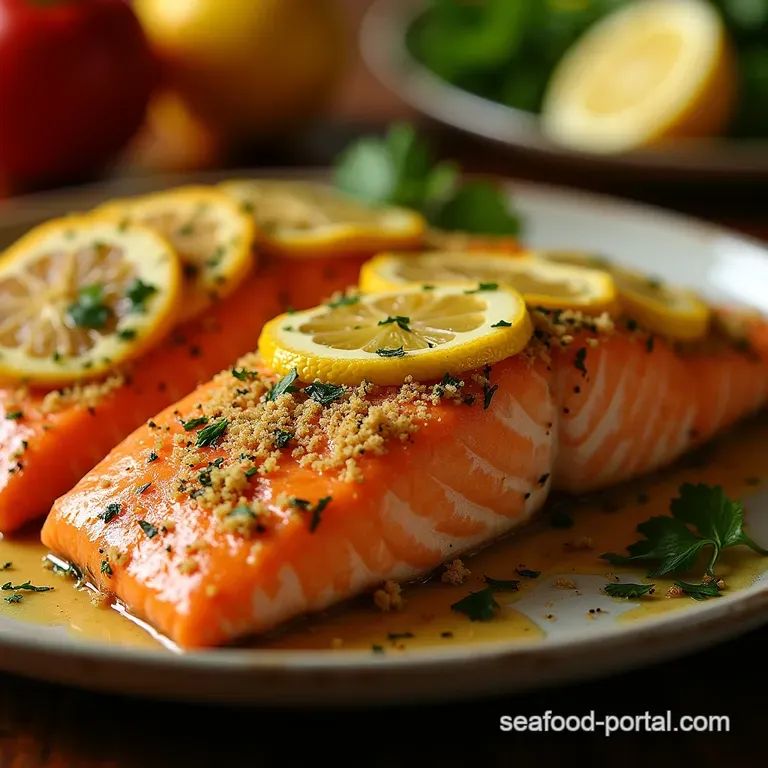
A few key tools will ensure that your journey to perfect Baked Salmon at 400 degrees is smooth and clean. While you don’t need specialized equipment, having the right foundation for baking is half the battle won.
Creating the Herbaceous Paste (No Food Processor Required)
Since we are relying on finely minced fresh ingredients, a food processor isn’t necessary, which drastically cuts down on cleanup. Simply combine your chopped parsley, minced dill, zest, juice, garlic, Dijon mustard, salt, and pepper in a small bowl.
Use a whisk or a small fork to thoroughly incorporate the ingredients. The Dijon mustard acts as a fantastic emulsifier, helping the oil and acid bind together into a slightly thicker, spreadable paste.
Lining Your Pan to Ensure Zero Sticking Incidents
To guarantee effortless removal and make clean-up a breeze, line your large rimmed baking sheet with parchment paper or heavy duty aluminum foil. If using foil, a light spritz of cooking spray can provide an extra layer of insurance, though the oil in the herb mixture usually suffices.
Positioning the fillets skin side down (if they have skin) provides another layer of natural non-stick protection.
The Crucial Mid-Bake Basting Technique
While this recipe is robust enough to be left alone, for those seeking ultimate moisture, a light mid-bake baste can be beneficial. About five minutes into the cooking time, carefully remove the pan and use a pastry brush to dab any remaining herb mixture over the top of the salmon.
This ensures the entire surface receives flavour and moisture during the critical cooking phase.
The Optimal Temperature and Time for Baked Salmon Success
Nailing the Baked Salmon Temperature is arguably the most important factor in achieving that signature tender texture. High heat applied correctly cooks the fish quickly, preventing moisture loss.
Prepping the Salmon for Maximum Flavor Infusion
Before applying the topping, give your Baked Salmon Fillet a gentle pat-down with paper towels. Removing surface moisture is key; a wet surface steams rather than roasts, resulting in a less appealing texture.
Once dry, place the fillets onto your prepared sheet pan and then liberally spoon the herb mixture over the top of each piece, ensuring it adheres well to the flesh.
The Optimal Temperature and Time for Baked Salmon Success
We are aiming for a relatively high heat environment for rapid, even cooking. Preheat your oven to 400° F ( 200° C) . For standard 1 inch thick fillets, the expected Salmon Cooking Time will fall between 12 to 15 minutes.
Thicker cuts may require up to 18 minutes. It is vital to monitor closely as soon as the 12-minute mark is hit.
Troubleshooting Common Baking Pitfalls
Even with the best instructions, things can occasionally go sideways. Understanding potential issues helps you perfect this Baked Salmon Recipe over time. If your salmon is slightly overdone, it usually means it sat in the oven for just a minute or two too long.
If the topping seems greasy, it often means the heat wasn't quite high enough to crisp the edges of the herbs. The most common issue, however, relates to doneness.
Doneness Indicators: Knowing When It's Truly Ready
The most reliable method for confirming readiness is using an instant read thermometer inserted into the thickest part of the fillet. The USDA safe temperature is 145° F ( 63° C).
However, for that perfect melt-in-your mouth texture, I recommend removing the salmon when the thermometer reads 140° F ( 60° C) .
The residual heat held within the fish will carry it the final five degrees during the resting period, resulting in supreme moistness. Visually, the fish should flake easily when gently probed with a fork, but the centre should remain slightly translucent before resting.
Storage Strategies for Leftover Flaky Fish
Leftovers, while glorious, need proper handling to retain their texture. Once completely cooled, store the remaining flaky baked salmon in an airtight container in the refrigerator. It should keep well for up to three days.
When reheating, avoid the microwave if possible, as it can rapidly dry the fish out. Instead, gently reheat portions in a low oven (around 300° F) or even quickly sauté them in a pan with a tiny splash of water or broth to introduce some steam.
Creative Twists on Your Classic Lemon Herb Salmon
Once you’ve mastered the core technique for a successful Baked Salmon at 400 , feel free to experiment with textural and flavour additions to keep things exciting.
Incorporating Crumb Toppings for Added Crunch
If you desire a textural contrast to the moist interior, consider adding a crumb topping during the last five minutes of baking. Mix about 1/4 cup of Panko breadcrumbs with 1 tablespoon of melted butter and a pinch of dried oregano. Sprinkle this lightly over the herb crust during the final minutes of cooking.
This elevates the dish to a more substantial texture profile.
Making a Quick, Light Dill Accompaniment Sauce
While the herb crust provides plenty of immediate flavour, a simple cooling sauce can provide a beautiful contrast, especially in warmer weather. To create a quick dill accompaniment, mix half a cup of plain Greek yogurt with a squeeze of lemon juice, a teaspoon of finely chopped fresh dill, a touch of salt, and a drizzle of honey or maple syrup if you prefer a hint of sweetness.
This light, tangy sauce cuts beautifully through the richness of the baked salmon.
Recipe FAQs
How do I know when my Baked Salmon is perfectly cooked and not dry?
The best trick is to use an instant read thermometer; you want the thickest part to register 145°F (63°C), but many chefs pull it out slightly earlier at 140°F (60°C) as it keeps cooking for a minute or two after it leaves the oven.
Visually, it should easily flake when gently prodded with a fork, looking opaque but still moist inside no one wants salmon drier than a sand shoe!
Can I bake the salmon from frozen, or do I need to thaw it first?
While you can technically bake it from frozen, it's best practice to thaw it fully in the fridge overnight first for even cooking. If you must bake from frozen, add about 50% more cooking time and place the oven temperature slightly lower, around 375°F (190°C), to prevent the outside from burning before the middle thaws.
While you can technically bake it from frozen, it's best practice to thaw it fully in the fridge overnight first for even cooking. If you must bake from frozen, add about 50% more cooking time and place the oven temperature slightly lower, around 375°F (190°C), to prevent the outside from burning before the middle thaws.
My recipe calls for parchment paper, but what if I don't have any? Can I use foil for Baked Salmon?
Absolutely, aluminium foil works just as well for lining your tray and makes cleanup a breeze it’s a proper British staple for roasting! If you use foil, you might want to lightly grease it with oil, as salmon skin can sometimes stick stubbornly to the bare metal, unlike parchment paper.
I used up all my fresh dill; what herb can I substitute in this Baked Salmon recipe?
Don't fret if the herb rack is looking bare; fresh parsley is a great substitute if you have plenty of that, though you might need to increase the quantity slightly. For a different but equally lovely flavour, fresh thyme or rosemary work well, but use those sparingly as they pack a stronger punch than dill.
How long will leftover baked salmon keep in the fridge, and can I freeze it?
Leftover baked salmon is grand for about 3 to 4 days stored tightly covered in the fridge perfect for topping up a lunchtime salad the next day. Freezing cooked fish is possible, but it can affect the texture, so if you plan to freeze it, aim to consume it within one month for the best result.
What's the best way to stop the herbs and lemon topping from burning before the fish cooks through?
The key here is the fat content; make sure your herb mixture has enough olive oil, as the oil helps cushion the herbs from the direct heat. If your fillets are very thin, consider placing them under a preheated grill for the last 1-2 minutes instead of baking them the whole time, just to crisp the top nicely.
Lemonherb Baked Salmon