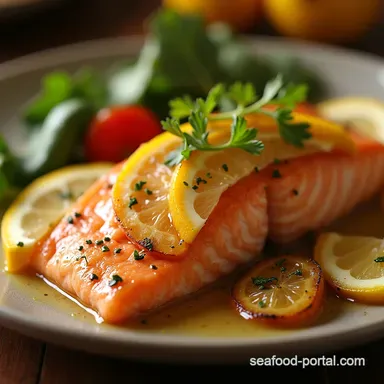
The Sunday Lunch Star Effortless Baked Salmon with Zesty Lemon Dijon Glaze
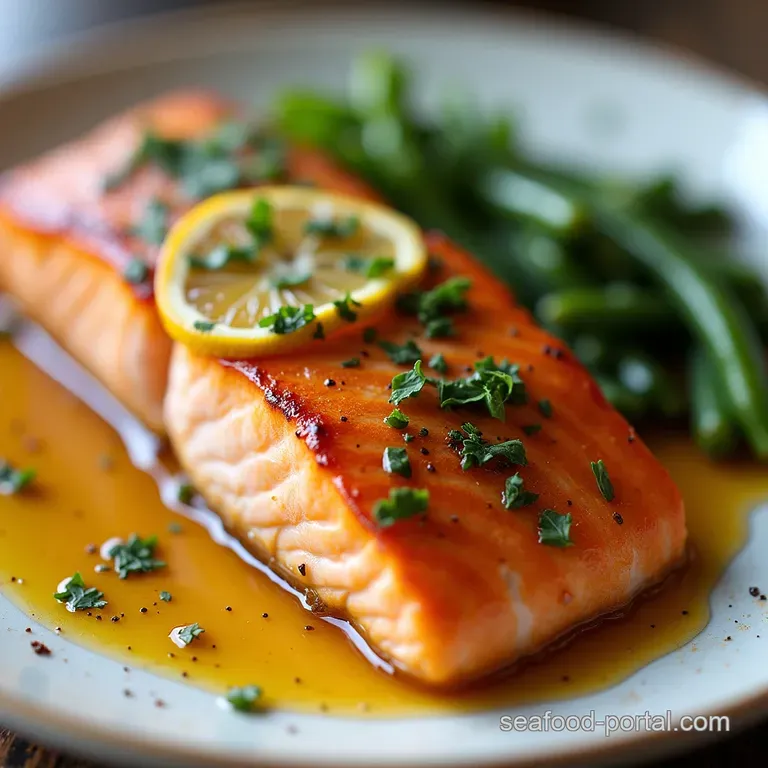
- Why This Baked Salmon with Lemon Dijon Sauce Reigns Supreme
- The Speedy Secret to Sophisticated Weeknight Dinners
- Assembling Your Must-Have Components for Perfection
- Selecting the Finest Salmon Fillets: A Buyer's Guide
- The Step-by-Step Path to Perfect Baked Salmon
- Crafting the Zesty Lemon Dijon Coating: Mixing Method
- Maximizing Enjoyment: Serving Suggestions for Your Meal
- Recipe FAQs
- 📝 Recipe Card
Why This Baked Salmon with Lemon Dijon Sauce Reigns Supreme
When it comes to weeknight cooking, finding a dish that balances impressive flavour with genuine speed is the ultimate goal. Our Baked Salmon with Lemon Dijon Sauce achieves this delicate balance perfectly.
This recipe transforms a simple fillet of fish into a vibrant, restaurant quality meal using ingredients you likely already have on hand. It’s the kind of Seafood Dinner Inspiration that makes you look forward to Tuesday nights.
The richness of the salmon, naturally packed with healthy fats, pairs impeccably with the sharp, tangy Lemon Dijon Salmon Sauce , creating a crust that seals in moisture while delivering a burst of flavour with every single bite.
This is not just another fish recipe; it’s an essential addition to your culinary rotation.
The Speedy Secret to Sophisticated Weeknight Dinners
The beauty of Easy Baked Salmon lies in its minimal hands-on time. With only about 10 minutes required for active preparation, this meal comes together faster than ordering takeout.
We are relying on the oven’s consistent, gentle heat to cook the fish evenly while the glorious glaze does all the heavy lifting in terms of flavour development. For 4 generous servings, you can go from fridge to table in under 30 minutes, proving that sophistication doesn't require hours tethered to the stove.
Unlocking Flavour: Our Signature Sauce Profile
The heart of this dish is, without a doubt, the coating. The magic happens when you combine three powerhouse components: the assertive bite of Dijon mustard, the necessary acidity of fresh lemon juice, and a touch of sweetness, whether you opt for honey or maple syrup, to round out the sharpness.
This precise combination creates the definitive Dijon Salmon flavour profile bright, savoury, and completely irresistible. When baked, this glaze caramelizes slightly, forming a luscious, tangy exterior that locks in moisture, ensuring your Oven Baked Salmon remains delightfully flaky.
Meeting Your New Go-To Fish Recipe
Why settle for dry, bland fish when you can master How to cook salmon with lemon so effortlessly? This recipe is designed for maximum impact with minimal stress. We aren't searing, flipping, or fussing; we are simply coating and baking.
This straightforward approach means consistency is guaranteed, making it a reliable choice whether you are cooking for a busy family or hosting unexpected guests. It truly becomes the benchmark for all future Baked Salmon Lemon attempts.
Dispelling the Myth: Baking Salmon Isn't Boring
Many home cooks default to pan-searing salmon, perhaps viewing baking as a less exciting alternative. However, using the oven allows us to apply a robust, flavourful coating our signature glaze that adheres beautifully and cooks evenly across the entire surface.
This method ensures you achieve that perfect melt-in-your mouth texture throughout the fillet, something that can sometimes be tricky to manage on a stovetop where temperature gradients are far more volatile.
Assembling Your Must Have Components for Perfection
To create spectacular Lemon Dijon Baked Salmon , a little preparation goes a long way. Before we even touch the oven, ensuring you have the right ingredients and tools will streamline the process immensely. Remember, success in cooking often hinges on the quality of your foundation.
Related Recipes Worth Trying
- The Ultimate Juicy Garlic Butter Baked Chicken Breast Recipe — Tired of dry chicken This easy baked chicken breast oven recipe delivers tender meat bathing in aromatic garlic butter Ready in 40 minutes Perfect for...
- Foolproof Juicy Oven Baked Chicken Breast Recipe 400F — Tired of dry dinners Learn the secret to succulent Oven Baked Chicken Breast cooked at 400 degrees This easy baked chicken breast recipe is perfect for a...
- The Million Dollar Baked Ziti Recipe Ultimate Comfort Bake — Make the famous Million Dollar Baked Ziti tonight This casserole is layered with a slowsimmered ragu and herbed ricotta for an elevated family dinner
Selecting the Finest Salmon Fillets: A Buyer's Guide

For this recipe, aiming for four centre cut fillets, each roughly 6 ounces (about 170g), provides excellent portion control and even cooking. Whether you choose skin-on or skin off depends on personal preference; skin-on fish often yields a slightly moister result as the skin protects the flesh, but skin off allows the glaze to permeate the top layer more directly.
Look for vibrant colour and firm flesh that springs back lightly when pressed these are hallmarks of freshness.
The Essential Pantry Check: Sauce Building Blocks
The flavour complexity of our Lemon Dijon Sauce comes from high-quality basics. You will need a smooth, good quality Dijon mustard for its distinctive sharpness.
Freshly squeezed lemon juice is non-negotiable; the bottled variety simply lacks the vibrant acidity required to cut through the richness of the fish. Finally, a tablespoon of a balancing sweetener like honey or maple syrup is crucial to harmonize the tang.
Don't forget two small cloves of garlic, minced until they practically melt into the sauce base.
Tool Talk: What You Absolutely Need in Your Kitchen
You don't need specialized equipment for this! A standard baking sheet lined with parchment paper is your best friend it prevents sticking and makes cleanup astonishingly easy. A small whisk or even a fork will suffice for bringing the sauce ingredients together.
Accurate measuring spoons are helpful, though for the salt and pepper, intuition will guide you.
Pro Tip: Sourcing the Brightest Lemons for Maximum Zest
The zest carries essential oils and flavour that the juice alone cannot provide. Before you slice your lemons for juice, take a microplane grater and carefully remove about half a teaspoon of bright yellow zest. Incorporating this zest directly into the sauce adds an aromatic dimension that truly elevates the dish.
Ensure you only grate the yellow part; the white pith underneath is bitter and should be avoided entirely.
The step-by-step Path to Perfect Baked Salmon
Once you have your ingredients prepped, the actual cooking process moves very quickly. The sequence is designed to maximise flavour adherence before the heat begins its work.
Crafting the Zesty Lemon Dijon Coating: Mixing Method
In a small bowl, we begin building the flavour profile. Whisk together the 3 tablespoons of Dijon mustard with the 2 tablespoons of fresh lemon juice and the 1 tablespoon of honey or maple syrup. Next, incorporate the finely minced garlic.
Continue whisking until the mixture is homogenous smooth, creamy, and glossy. This mixture is potent, tangy, and ready to transform your fish.
Prepping the Fillet for Optimal Flavour Absorption
Set your oven temperature to a robust 400° F ( 200° C) and line your baking sheet with parchment paper. Crucially, take paper towels and firmly pat down the surface of each salmon fillet. Moisture is the enemy of a good crust, so dry the fish thoroughly.
Once dry, place the fillets on the prepared sheet, drizzle them with just a tablespoon of olive oil, and season generously with salt and freshly cracked black pepper.
Baking Temperatures and Timing: Hitting the Sweet Spot
With the fish seasoned, it’s time to apply the glaze. Spoon the prepared Lemon Dijon Salmon Sauce evenly over the top surface of each fillet, ensuring good coverage right to the edges. Place the sheet into the preheated oven.
For fillets about 1 inch thick, you will bake for approximately 12 to 15 minutes. The goal is flaky perfection; if you use a thermometer, aim for an internal temperature of 145° F ( 63° C) at the thickest part.
The Final Glaze Application: Achieving That Beautiful Crust
While some recipes call for applying the glaze halfway through baking, we find that applying it all at the start allows the mustard and sugar to lightly caramelize without burning, creating a beautiful, slightly burnished crust on your Baked Salmon with Lemon Dijon Sauce .
As it rests briefly out of the oven just two minutes the residual heat finishes the cooking process gently.
Maximizing Enjoyment: Serving Suggestions for Your Meal
The incredible versatility of this main course means it pairs well with nearly any side dish you can imagine. Don’t let the simplicity of the recipe fool you; the presentation should still feel special.
Elevating Your Plate: Perfect Side Dish Pairings
For a classic pairing that soaks up any extra glaze beautifully, opt for fluffy Basmati rice or creamy mashed potatoes. If you prefer something lighter to contrast the richness of the fish, simple steamed green beans tossed with slivered almonds provide crunch, or a bright arugula salad dressed with a light lemon vinaigrette will perfectly complement the citrus notes already present in the sauce.
Storing Leftovers from Your Baked Salmon with Lemon Dijon Sauce
Should you be fortunate enough to have leftovers of your Oven Baked Salmon , store them immediately in an airtight container in the refrigerator. They will keep well for up to three days.
Reheat gently a quick zap in the microwave or, preferably, warming in a low-temperature oven will maintain texture best.
Troubleshooting Common Baking Issues (Too Dry? We Fix That)
The primary culprit for dry salmon is overcooking. If your fish often turns out dry, next time reduce the baking time by two minutes and check for doneness early. If you’ve already overcooked it slightly, salvage the texture by gently drizzling a tiny bit of fresh lemon juice or a few drops of good quality olive oil over the cooled leftovers before reheating.
Creative Twists: Adding Herbs or Spice Variations to the Sauce
While the classic recipe is fantastic, feel free to experiment! To introduce a French garden flavour, stir in 1/2 teaspoon of dried tarragon or thyme into the glaze mixture. If you prefer a hint of heat, a tiny pinch (about 1/8 teaspoon) of red pepper flakes whisked into the sauce before brushing offers a warm kick without overwhelming the delicate lemon and mustard notes.
Recipe FAQs
How do I know when my Baked Salmon with Lemon Dijon Sauce is perfectly cooked and not rubbery?
The golden rule is to check for flakiness; the salmon should easily separate when gently prodded with a fork. For true accuracy, aim for an internal temperature of 145°F (63°C) right at the thickest part if you are hovering near 140°F, pull it out, as it will continue cooking on the plate!
Overcooked salmon is as disappointing as finding out the chippy has run out of mushy peas.
Can I prepare the Lemon Dijon sauce ahead of time, and if so, how long will it keep?
Absolutely, making the sauce in advance saves precious time on a busy weeknight. You can whisk it up the day before and store it covered in the fridge; it usually keeps well for 3 to 4 days. Just give it a quick whisk before brushing it on, as the mustard might separate slightly upon chilling.
My salmon fillets are very thin; should I reduce the baking time for this Baked Salmon with Lemon Dijon Sauce recipe?
Yes, thin fillets cook significantly faster, so do keep an eye on them aiming for 10 to 12 minutes max, depending on the thickness. It’s wise to preheat your oven and start checking them around the 9-minute mark. Better to slightly undercook and finish under the grill (broiler) than end up with dry fish!
What’s the best way to store leftovers, and can I freeze this dish?
Leftovers of the baked salmon should be stored in an airtight container in the fridge and eaten within two days it’s brilliant cold on a cracker the next day, by the way!
While you technically can freeze cooked salmon, the texture can suffer upon thawing; it often gets a bit mushy, so fresh is definitely best for this recipe.
I don't have fresh lemon juice; what's a decent substitute for the sauce?
While nothing beats the zest of a freshly squeezed lemon, bottled lemon juice can work in a pinch, though you might need slightly less as it can sometimes be more concentrated. If you are truly desperate, a splash of white wine vinegar mixed with a little extra water can provide the necessary acidity, but do taste test first!
Is this recipe quite high in sugar, considering it calls for honey or maple syrup?
Not at all, the amount of sweetener used in this recipe is deliberately small, primarily serving to balance the sharpness of the Dijon mustard and help the glaze caramelise beautifully. As noted in the nutrition estimate, the total carbs are very low, so it remains a wonderfully healthy, lean protein option.
Zesty Lemon Dijon Salmon