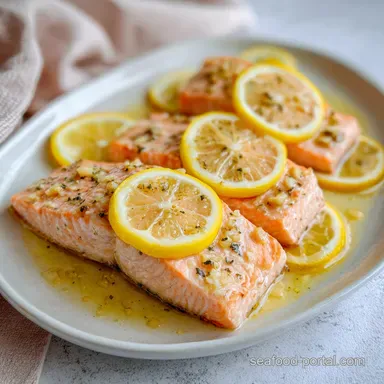
Baked Salmon Recipe with Lemon: Silky and Buttery
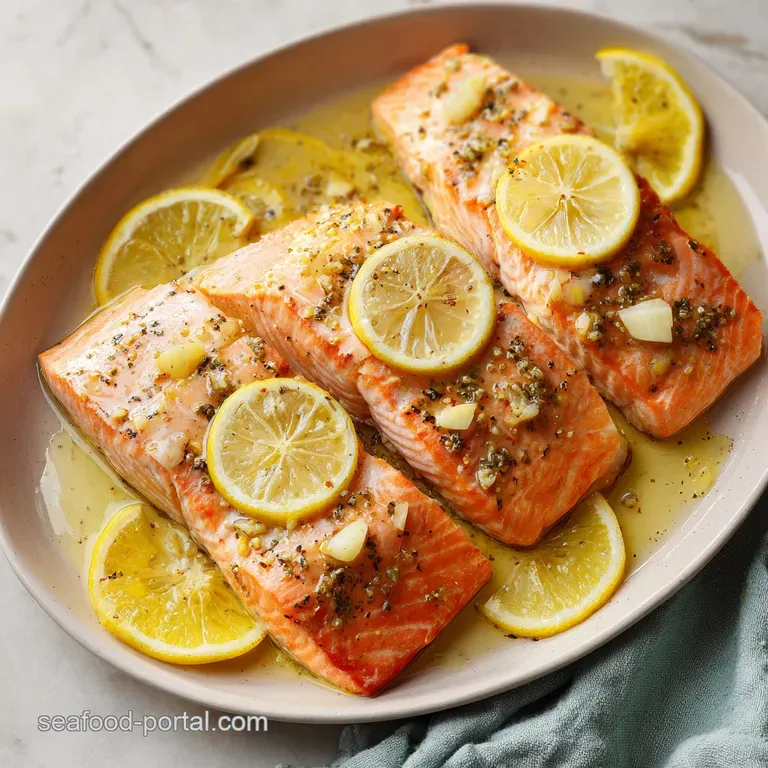
- Time:10 minutes active + 15 minutes baking = 25 minutes total
- Flavor/Texture Hook: Silky, buttery flakes with a bright, zesty finish
- Perfect for: A fast weeknight dinner that feels like a fancy bistro meal
- Easy Baked Salmon Recipe with Lemon
- Secrets to Flaky Fish
- Component Analysis
- The Fresh Pantry List
- Essential Kitchen Tools
- Simple Step-by-Step Guide
- Fixing Common Salmon Flaws
- Troubleshooting Common Issues
- Creative Flavor Variations
- Adjusting Your Portion Size
- Saving and Reusing Leftovers
- Best Ways to Plate
- Recipe FAQs
- 📝 Recipe Card
Easy Baked Salmon Recipe with Lemon
That first scent of garlic hitting melted butter in a hot oven is honestly my favorite part of the week. It fills the kitchen with this warm, savory aroma that immediately tells my brain it's time to relax. For me, salmon was always a "scary" fish.
I used to treat it like a ticking time bomb, terrified that one minute too long would turn my expensive fillet into a piece of dry, flavorless cardboard.
I remember one disastrous dinner with my in laws where I overcooked the fish so badly it actually felt gritty. I spent the rest of the night apologizing while they politely chewed through the "salmon jerky." That failure is exactly why I obsessed over the timing and the fat ratios.
This Baked Salmon Recipe with Lemon and Garlic is the only one you'll ever need because it removes the guesswork and protects the fish from drying out.
You can expect a result that is tender and flaky, with a sauce that doesn't just sit on top but actually seeps into the flesh. We're aiming for that opaque pink center that just barely gives way when you press it with a fork.
No more guesswork, no more jerky, just a quick win that gets you from the fridge to the table in under 30 minutes.
Secrets to Flaky Fish
Understanding what's happening in the oven helps you stop guessing and start knowing. I used to think the white stuff on salmon was a sign of bad fish, but it's actually just protein.
The Butter Barrier: Melted butter creates a protective layer that traps moisture inside the fillet. This prevents the oven's dry heat from sucking out the juices, keeping the texture velvety.
Zest vs. Juice: The zest contains the essential oils for that punchy aroma, while the juice provides the acidity to cut through the fat. Using both gives you a multi dimensional flavor that doesn't taste "flat."
Heat Transfer: Baking at 400°F allows the exterior to brown slightly while the interior reaches the target temperature quickly. According to Serious Eats, this fast cook time is the best way to avoid the rubbery texture common in slow baked fish.
Carryover Cooking: The fish continues to cook for several minutes after it leaves the heat. Pulling it slightly early ensures the center stays moist rather than overdone.
| Thickness | Internal Temp | Rest Time | Visual Cue |
|---|---|---|---|
| 1 inch | 135-140°F | 5 mins | Flakes easily with a fork |
| 1.5 inches | 130-135°F | 5 mins | Opaque pink, slight translucency in center |
| 2 inches | 125-130°F | 7 mins | Firm but yielding to touch |
Component Analysis
Not every ingredient is just for flavor. Some are there to do a specific job in the pan.
| Ingredient | Science Role | Pro Secret |
|---|---|---|
| Olive Oil | Heat Conductor | Brushing this first prevents the butter from burning |
| Lemon Zest | Aroma Driver | Rub it into the salt for a more intense citrus hit |
| Garlic | Flavor Base | Mince it fine so it doesn't burn in the high heat |
| Unsalted Butter | Moisture Lock | Use unsalted so you can control the seasoning exactly |
The Fresh Pantry List
Getting the right gear is half the battle. I've found that using fresh lemon over the bottled stuff is the difference between a meal that tastes "homemade" and one that tastes "restaurant grade."
- 4 salmon fillets (approx 1.5 lbs / 680g) Why this? Standard size for even cooking across the tray
- 1 tbsp olive oil Why this? High smoke point for the initial sear
- ½ tsp salt Why this? Draws out moisture for a better surface
- ¼ tsp black pepper Why this? Adds a subtle, woody heat
- 3 tbsp unsalted butter, melted Why this? Essential for that silky mouthfeel
- 3 cloves garlic, minced Why this? Fresh garlic has a sharper, cleaner bite
- 1 tbsp fresh lemon juice Why this? Balances the richness of the salmon fat
- 1 tsp lemon zest Why this? Concentrated lemon flavor without extra liquid
- 1 tbsp fresh parsley, chopped Why this? Adds a fresh, grassy finish to the richness
If you're out of butter, you can use melted coconut oil. It's a great substitute because it has a similar fat structure, though it will add a very slight tropical note. For the lemon, if you're in a pinch, a splash of white wine works as a substitute for the juice, but it will be less tangy and more acidic.
Essential Kitchen Tools
You don't need a professional kitchen to make this work, but a few specific tools make the process much smoother.
- Large rimmed baking sheet: The rim is vital so the bubbling butter doesn't leak into your oven and cause a smoke alarm incident.
- Parchment paper: This is non negotiable for me. Salmon skin loves to stick to metal, and peeling it off usually ruins the fillet.
- Small mixing bowl: For whisking the butter mixture.
- Silicone pastry brush: Great for getting the olive oil evenly distributed.
- Paper towels: For the most important step - drying the fish.
Simple step-by-step Guide
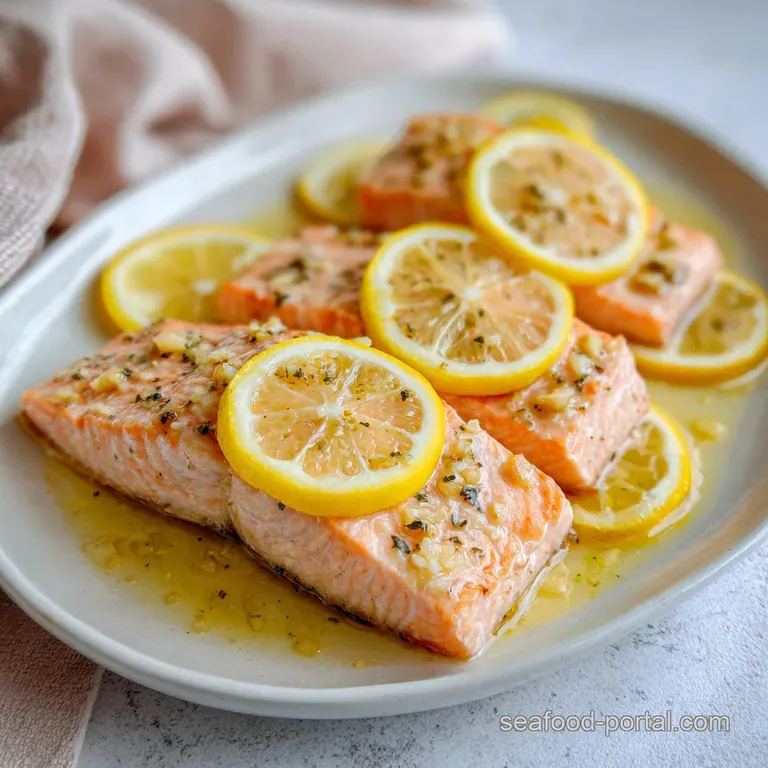
Right then, let's get into the actual cooking. Trust the timer, but trust your eyes more.
- Preheat your oven to 400°F (200°C) and line a large rimmed baking sheet with parchment paper. Note: A hot oven ensures the butter sizzles immediately
- Pat the salmon fillets completely dry with paper towels and place them skin side down on the prepared baking sheet. Note: Damp fish steams instead of roasting
- In a small mixing bowl, whisk together the melted butter, minced garlic, lemon juice, and lemon zest.
- Brush the olive oil over the fillets first, then spoon the lemon garlic butter mixture generously over the top and sides. Note: The oil acts as a primer for the butter
- Season the fillets with salt and black pepper.
- Bake in the center rack of the oven for 12–15 minutes until the salmon is opaque pink and the butter is bubbling.
- Remove from oven, immediately sprinkle with fresh chopped parsley, and let the fish rest on the pan for 5 minutes before serving. Note: Resting allows the juices to redistribute
Chef's Tip: Try freezing your butter for 10 minutes before melting it if you want a thicker sauce, or add a pinch of smoked paprika to the butter for a deeper, woodsy aroma.
Fixing Common Salmon Flaws
Even the best of us have "off" days in the kitchen. Usually, salmon issues come down to temperature or moisture.
Troubleshooting Common Issues
| Issue | Solution |
|---|---|
| Why Your Salmon is Dry | This usually happens when the fish is cooked past the point of "flaking." If the fillet feels stiff or the colors have turned a pale, matte pink, it's overdone. |
| Why Garlic Burnt | If your garlic is brown or black, it probably wasn't minced finely enough or the fillets were too thin, exposing the garlic to direct heat for too long. |
| Why White Stuff Appears | That white substance is albumin. It's just a protein that pushes out when the muscle fibers contract too quickly from high heat. It's harmless, but blotting it with a towel makes the dish look cleaner |
Creative Flavor Variations
Once you've nailed the basic Baked Salmon Recipe with Lemon, you can start playing with the profile. I love treating the lemon garlic base as a canvas.
If you want something a bit more decadent, try pairing this with my creamy dill sauce. The coolness of the dill cuts through the rich butter perfectly. For those who like a bit of a kick, swap the parsley for chopped cilantro and add a pinch of cayenne pepper to the butter mixture.
For a dairy-free version, use a high-quality vegan butter or melted ghee. Ghee is actually brilliant here because it has a higher smoke point than regular butter, which means you can get a slightly more intense roast on the top of the fish.
If you have leftover honey in the pantry, whisk 1 teaspoon into the butter sauce. It creates a subtle glaze that caramelizes under the broiler for the last 2 minutes.
Adjusting Your Portion Size
Scaling fish is a bit different than scaling a cake. You can't just double the time or you'll end up with salmon bricks.
When cooking for a crowd (8+ people), don't try to jam all the fillets onto one tray. If the fillets are touching, they'll steam each other and you'll lose those golden edges. Work in batches or use two separate pans.
For the seasoning, I've found that you don't need to double the salt and pepper exactly - usually 1.5x is plenty to avoid over salting.
If you're just cooking for one, use a smaller baking sheet or a toaster oven. Reduce the cook time by about 20% since a single fillet doesn't absorb as much of the oven's heat as a full tray does. If you're looking for something even more flavorful for a small group, you might enjoy my zesty lemon dijon salmon which uses a thicker glaze.
| Method | Time | Texture | Best For |
|---|---|---|---|
| Oven Baked | 15 min | Velvety/Even | Weeknight dinners |
| Pan Seared | 10 min | Crispy Skin | Fancy date nights |
| Poached | 12 min | Silky/Soft | Healthy breakfasts |
Saving and Reusing Leftovers
Salmon is one of those things that's great fresh, but can be tricky to reheat without it becoming rubbery.
Storage: Keep your leftovers in an airtight container in the fridge for up to 3 days. I recommend keeping the extra butter sauce in a separate small jar so you can drizzle it back on when reheating.
Freezing: I don't recommend freezing cooked salmon, as the texture becomes grainy. However, you can freeze the raw fillets with the lemon garlic butter already brushed on. Just thaw them in the fridge overnight before baking.
Zero Waste: Don't throw away the lemon halves! Squeeze the remaining juice into your salad dressings or use the spent peels to make a quick citrus infused vinegar. If you have salmon skin left over from trimming, fry it in a pan with a bit of salt until it's a shatter crisp chip.
It's a fantastic snack or garnish for a salad.
Best Ways to Plate
Presentation is where you can really make this feel like a win. Since the salmon is so buttery and bright, you want sides that provide a bit of crunch or earthiness.
For a low carb option, I love serving this over a bed of sautéed spinach or roasted asparagus. The lemon butter from the pan acts as a natural sauce for the vegetables, so don't let that liquid go to waste - spoon it over everything!
If you want something heartier, a scoop of fluffy quinoa or wild rice absorbs the garlic butter beautifully.
When plating, place the fillet on the side and garnish with an extra slice of fresh lemon and a sprig of parsley. It adds a pop of color and gives the diner a chance to add a final squeeze of fresh acidity right before the first bite. Trust me, that final squeeze of lemon is what wakes up all the other flavors.
Recipe FAQs
How to prevent the salmon from drying out?
Bake for exactly 12–15 minutes at 400°F. Remove the fillets as soon as they are opaque pink and flake easily with a fork to avoid overcooking.
What is the white substance that appears on the salmon?
This is albumin, a natural protein. It pushes out of the muscle fibers when the fish is cooked at high heat and is completely safe to eat.
Can I use frozen salmon fillets?
Yes, but thaw them completely first. Pat the fillets dry with paper towels so the olive oil and lemon butter mixture adhere properly to the surface.
Is it true that salmon must be seared in a pan before baking to get the best flavor?
No, this is a common misconception. Baking at 400°F provides a clean, buttery flavor, though you can use a pan seared technique if you prefer a crispier skin.
How to tell when the salmon is perfectly cooked?
Check that the flesh is opaque pink. The salmon should flake easily when pressed with a fork, and the butter on top should be bubbling.
Why did the minced garlic burn during baking?
The garlic was likely exposed to direct heat for too long. This typically happens if the fillets are too thin or the garlic was not minced finely enough.
How to store and reheat the leftovers?
Keep in an airtight container in the fridge for up to 3 days. Reheat gently in the oven or microwave to prevent the fish from becoming tough.
Baked Salmon Recipe with Lemon for 4