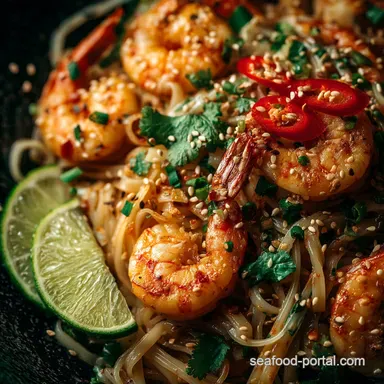
Authentic Streetstyle Shrimp Pad Thai Sweet Sour and Savoury Perfection
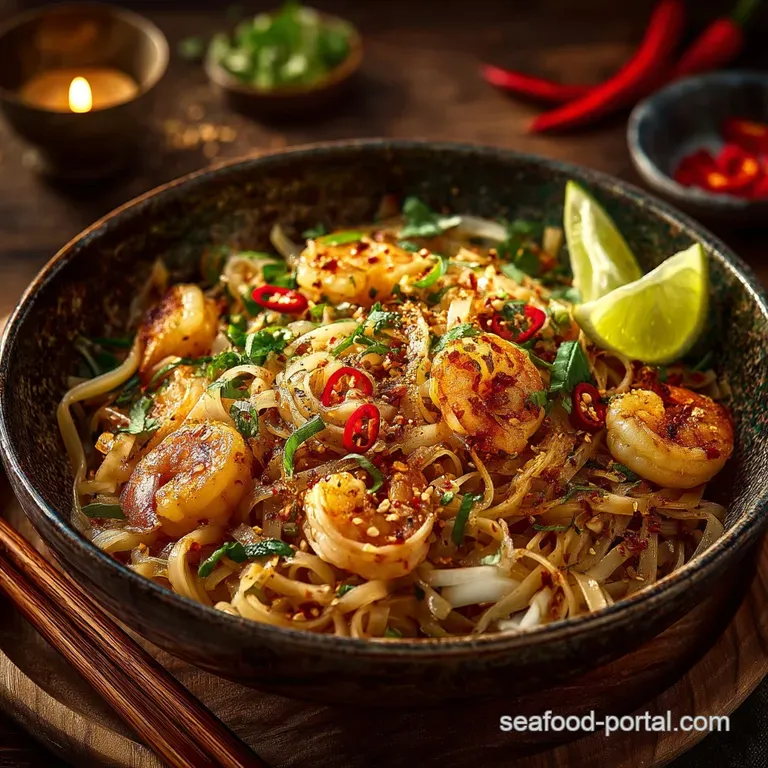
- Why This Shrimp Pad Thai Recipe Delivers Authentic Bangkok Street Flavour
- Essential Components for Your Hawker-Style Plate
- Required Kitchen Arsenal for a Successful Pad Thai Stir-Fry
- Step-by-Step Mastery: Cooking Your Authentic Shrimp Pad Thai
- Troubleshooting Common Pad Thai Pitfalls
- Customizing Your Plate: Protein Swaps and Vegetarian Options
- Recipe FAQs
- 📝 Recipe Card
Why This Shrimp Pad Thai Recipe Delivers Authentic Bangkok Street Flavour
Pad Thai holds legendary status in the culinary world, and for good reason it’s a dynamic, flavour packed experience that is far more complex than a standard noodle stir fry.
This particular Authentic Shrimp Pad Thai recipe doesn't shy away from traditional ingredients but streamlines the process, ensuring you can recreate that beloved hawker stall magic right in your own kitchen.
It takes just over 30 minutes from start to finish, culminating in a spectacular Homemade Pad Thai Dinner that hits every textural and aromatic note perfectly.
Decoding the Perfect Sweet Sour-Salty Balance
The soul of any great Pad Thai lies in the sauce. Achieving the signature, addictive flavour profile requires a precise balance of three key ingredients in equal measure: tamarind paste for the complex sourness, high-quality fish sauce for the potent umami and salinity, and palm sugar for a deep, molasses like sweetness.
We combine three tablespoons of each, plus a mere teaspoon of rice vinegar and a splash of hot water or stock, creating a concentrated mixture that is aggressively flavourful. If your pre-mixed Pad Thai Sauce Recipe Easy tastes almost too intense on its own, you’ve nailed it; it needs that robustness to adequately coat and flavour the neutral Thai Rice Noodles and protein.
Achieving Wok Hei at Home (Without the Hawker Stall)
Wok hei , or the "breath of the wok," is the elusive smoky aroma imparted by cooking food quickly over extreme heat. While home stoves rarely reach commercial flame temperatures, you can simulate this effect by employing a crucial technique: high heat and minimal crowding.
Use a carbon steel wok or the largest, heaviest frying pan you own, and heat four tablespoons of high smoke point oil until shimmering. Since the total cooking time for this entire dish is only 12 minutes, you must work fast.
If you are tempted to double the recipe, always cook it in two smaller batches to keep the temperature consistently high and guarantee the noodles sauté rather than steam.
The Secret to Non-Sticky, Chewy Rice Noodles
The biggest challenge home cooks face is preventing the Thai Rice Noodles from becoming a single, gluggy mass. The secret is counter intuitive: you must under cook the 8 ounces of dried noodles before they ever hit the wok.
Place the medium width noodles (3-5mm) in a bowl and cover them with hot tap water not boiling water for 20 to 30 minutes. When you drain them, they should be pliable but still distinctly firm and resistant in the centre (al dente).
They will finish cooking and absorb the remaining moisture and flavour from the rich Pad Thai sauce during the final stir fry, ensuring a perfect, chewy texture.
Essential Components for Your Hawker Style Plate
The beauty of Pad Thai lies not just in the sauce, but in the variety of textures provided by the supporting cast. We begin with one pound of large, peeled and deveined raw shrimp, providing the quick cooking, sweet protein.
Integral to the structural integrity and flavour is four ounces of pressed, firm tofu, diced and fried until slightly crispy. For foundational aromatics, you will need two finely sliced shallots and two cloves of minced garlic.
To truly elevate the dish to street style standards, don’t skip the optional but highly recommended ingredients: one teaspoon of dried shrimp and one tablespoon of preserved radish, both adding layers of savoury depth.
Finally, 2 cups of bean sprouts and 1 cup of Chinese chives are incorporated at the very last moment to provide that essential fresh crunch.
Required Kitchen Arsenal for a Successful Pad Thai Stir Fry
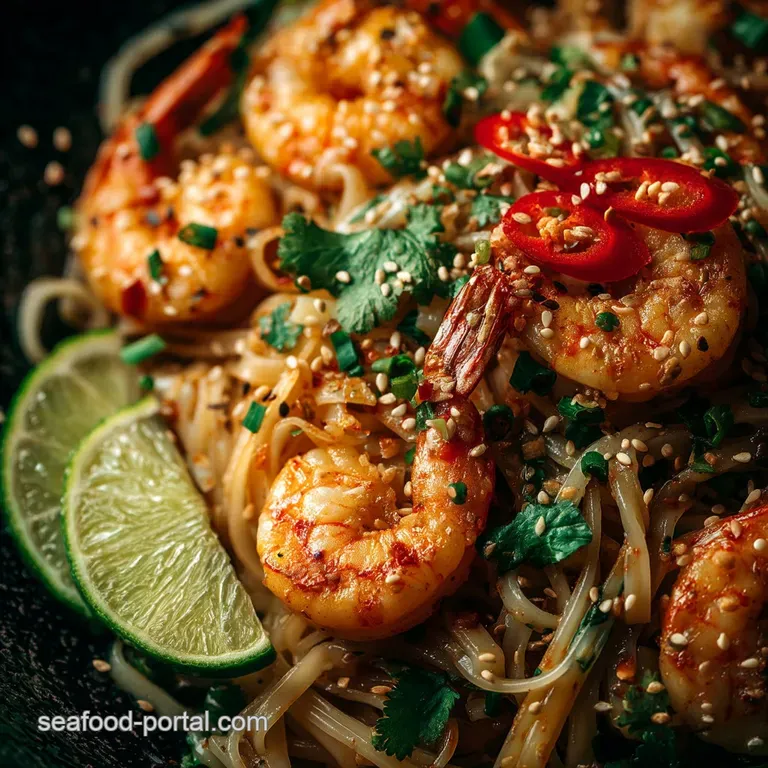
While you can technically make Pad Thai in a frying pan, a wok provides the necessary high sides to easily toss the noodles without spilling, a process that is key to thorough flavour integration.
Beyond the appropriate cookware, the main requirement is mental preparedness, meaning mastering mise en place .
Building the Umami Bomb: Tamarind Paste vs. Vinegar
The complexity of an Authentic Shrimp Pad Thai recipe is rooted in authentic ingredients. While some recipes substitute lime juice, the dark, fruity tang of three tablespoons of tamarind paste is non-negotiable for true street flavour.
Tamarind provides a depth of sourness that complements the rich savouriness of the fish sauce. The single teaspoon of rice vinegar used in the sauce is merely an accent, not the main acidic component.
If tamarind is genuinely unavailable, you would need to combine lime juice, rice vinegar, and extra sugar to even attempt mimicking its flavour profile.
Selecting and Prepping the Freshest Shrimp
For the fastest and most efficient preparation of this Easy Pad Thai recipe , use one pound of fresh, high-quality shrimp. They should be completely peeled and deveined.
Crucially, the shrimp must be cooked first for just 1– 2 minutes until barely pink, and then immediately removed from the wok. This prevents them from becoming tough or rubbery during the high heat cooking of the noodles and aromatics; they are reintroduced only at the very end to finish cooking.
Choosing the Correct Thin Rice Noodle (Sen Lek)
Traditional Pad Thai uses sen lek , which are the medium width (3-5mm) flat rice noodles. Choosing the correct size is vital because these noodles are substantial enough to withstand vigorous tossing without disintegrating, yet thin enough to quickly absorb the dark, concentrated sauce.
Avoid the very fine, fragile vermicelli noodles which are better suited for soups.
Mise En Place: The Golden Rule of Wok Cooking
Since the active cooking phase is remarkably short, you must adhere strictly to mise en place —the culinary practice of having everything in its place. This means the sauce must be mixed, the noodles soaked and drained, the shrimp seared and set aside, the tofu cubed, the shallots sliced, and the chives and sprouts ready to hand.
Once the wok is hot, the process is continuous; there is absolutely no time for chopping or measuring.
Related Recipes Worth Trying
- Weeknight Silky Thai Red Curry with Salmon Ready in 35 Mins — Ditch the takeaway This vibrant Thai Red Curry with Salmon is quick healthy and low carb without the rice Learn the trick to blooming the paste for deep flavour
- The Bees Knees Hot Honey Shrimp Sticky Crispy and Perfectly Balanced — Achieve superior crunch with our Hot Honey Glazed Crispy Shrimp This easy recipe pairs spicy sweet honey chili sauce with perfectly golden jumbo prawns Stop...
- Best 30Minute Italian Shrimp Scampi Recipe with LemonGarlic Sauce — Make the Best Italian Shrimp Scampi in 30 minutes This simple recipe yields a velvety bright Italian Shrimp Scampi Sauce guaranteed to cling beautifully to...
Step-by-step Mastery: Cooking Your Authentic Shrimp Pad Thai
Follow these steps precisely to ensure optimal flavour development and texture control in your Authentic Shrimp Pad Thai recipe .
Hydrating the Noodles for Optimal Texture
As detailed previously, begin by soaking the 8 ounces of medium width Thai Rice Noodles in hot tap water for 20– 30 minutes until pliable but still firm in the centre. Drain them completely and toss them with a teaspoon of oil to prevent any sticking while the wok heats up.
Do not proceed until this step is done correctly.
Infusing Flavour: Sautéing Aromatics and Tofu
After you have quickly seared and removed the shrimp using 1 tablespoon of oil, add the remaining oil to the screaming hot wok. First, introduce the diced firm tofu and fry it for 2– 3 minutes until the pieces are golden and slightly crisp. Push the tofu to the side.
Now, add the shallots, minced garlic, optional preserved radish, and dried shrimp, stirring for one minute until the aromas are intense. Next, push all the solids aside, crack the two large eggs into the clear space, and scramble them quickly. Once set, mix the eggs into the aromatics and tofu.
The Critical One-Minute Noodle Toss
This is the moment of truth. Introduce the drained, semi soft noodles into the wok, immediately followed by the entire batch of prepared Pad Thai sauce. Use two spatulas or tongs to toss the ingredients continuously and vigorously for 2– 3 minutes.
The noodles will start absorbing the sauce rapidly, taking on that deep reddish brown hue and softening completely. If the noodles appear too stiff or the mixture feels dry, add a small splash of stock or water, but keep tossing until they are perfectly caramelized and cooked through.
Achieving the Hawker’s Garnish and Plating
Finally, return the pre-cooked shrimp to the wok. Add the bulk vegetables: the 2 cups of bean sprouts and the 1 cup of chives or spring onions. Toss briefly, about 30 seconds, using the residual heat to lightly wilt the fresh vegetables while ensuring they retain their essential bite.
Immediately divide the Shrimp Pad Thai onto four serving plates. Garnish generously with the 1/4 cup of roughly chopped roasted peanuts, a sprinkle of chili flakes to taste, and a fresh lime wedge ready for squeezing.
Troubleshooting Common Pad Thai Pitfalls
Successfully mastering Pad Thai requires anticipating potential issues before they arise, especially those related to texture and flavour.
Rescuing Overcooked or Gluggy Noodle Batches
If your noodles absorbed too much water during the initial soak and they begin to break down into a sticky mess in the wok, you may attempt a rescue by turning the heat down slightly and adding a small amount of extra stock or water. Toss constantly to try and separate the strands.
If they are truly overcooked and mushy, the best course of action is to finish the batch and note to shorten the soaking time significantly for your next attempt.
Adjusting the Tang: Too Sweet? Too Sour?
The powerful flavour profile of the sauce must be managed carefully. If, after tasting, the finished dish is too sweet, the simplest fix is to squeeze in extra lime juice or rice vinegar. If it’s overly sour or salty, introduce half a teaspoon of brown or palm sugar dissolved in hot water to temper the sharpness.
Remember, the final fresh lime wedge on the plate is the diner’s tool for personalizing the final sour note.
Customizing Your Plate: Protein Swaps and Vegetarian Options
One of the great features of Pad Thai is its adaptability, allowing for easy substitutions while maintaining the core flavour structure.
Is This Shrimp Pad Thai gluten-free Friendly?
Yes, this Shrimp Pad Thai is generally friendly for those requiring a gluten-free diet. Thai Rice Noodles are naturally derived from rice. The only ingredients requiring verification are the fish sauce and the preserved radish; ensure these brands are certified gluten-free, as some contain wheat derivatives or stabilizing agents.
Choosing the freshest ingredients also contributes to a naturally Healthy Pad Thai option compared to heavier dishes.
Best Practices for Storing and Reheating Leftovers
If you find yourself with leftovers (which is rare!), store the Homemade Pad Thai Dinner in an airtight container for up to three days. To reheat, avoid the microwave, which tends to dry out the delicate rice noodles and toughen the shrimp.
Instead, heat a small amount of oil in a skillet or wok over medium high heat and quickly stir fry the noodles until piping hot, adding a tiny splash of water or stock to rehydrate the noodles without further cooking them.
Recipe FAQs
Why are my Pad Thai noodles always mushy and end up like a gluggy mess?
Ah, the age-old Pad Thai predicament! The secret to avoiding that dreaded sticky texture lies in the soaking stage. You must treat the rice noodles like Italian pasta: they should only be soaked until they are pliable and slightly resistant (al dente) before they hit the wok.
They finish cooking by absorbing the glorious sauce in the high heat, ensuring they maintain their chewy, satisfying bite.
I can’t find tamarind paste for the Authentic Shrimp Pad Thai sauce. Am I in a bit of a pickle?
While tamarind gives authentic Pad Thai its unique, deep sourness it's the real deal don't throw the towel in yet! You can approximate the flavour balance by combining equal parts fresh lime juice and rice vinegar, and adding a little extra brown sugar to compensate for the missing fruity notes.
It won't be exactly the same, but it will certainly capture the spirit of the dish.
Do I really need a wok, or can I make great Shrimp Pad Thai in a normal frying pan?
A wok is ideal because its shape allows for high, focused heat and easier tossing, which is crucial for achieving that smoky ‘wok hei.’ However, if you don't have one, just grab your largest, heavy bottomed frying pan and make sure it’s screaming hot before you start.
The key is to cook this particular Shrimp Pad Thai recipe in high heat and avoid overcrowding the pan; if necessary, cook it in two smaller batches to stop the temperature from plummeting.
I've made a massive batch how do I store leftover Pad Thai without it drying out?
Pad Thai is always best enjoyed fresh, as the noodles tend to absorb any remaining moisture when cooled, which can make them quite stiff. If you have leftovers, store them quickly in an airtight container in the fridge for up to three days.
When reheating (microwave or pan), splash a tiny amount of water or chicken stock over the noodles about a tablespoon per serving to reintroduce steam and help loosen them up.
Can I make this recipe for dietary requirements? What swaps work best for vegetarian versions?
Absolutely! This recipe is incredibly adaptable. To go vegetarian or vegan, simply omit the shrimp and eggs, and substitute the fish sauce with a strong, high-quality dark or mushroom soy sauce to maintain that essential umami depth.
Increase the amount of firm tofu and consider adding extra crunchy vegetables like shredded carrots or bell peppers to bulk out the dish and keep things interesting.
Authentic Shrimp Pad Thai