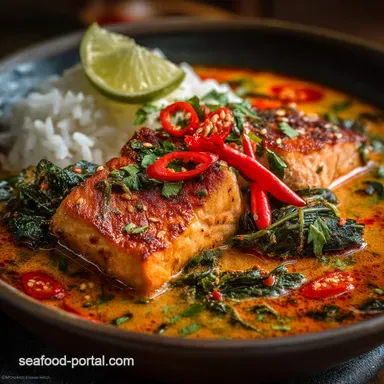
Coconutkissed Thai Red Curry with Panseared Salmon Fillets
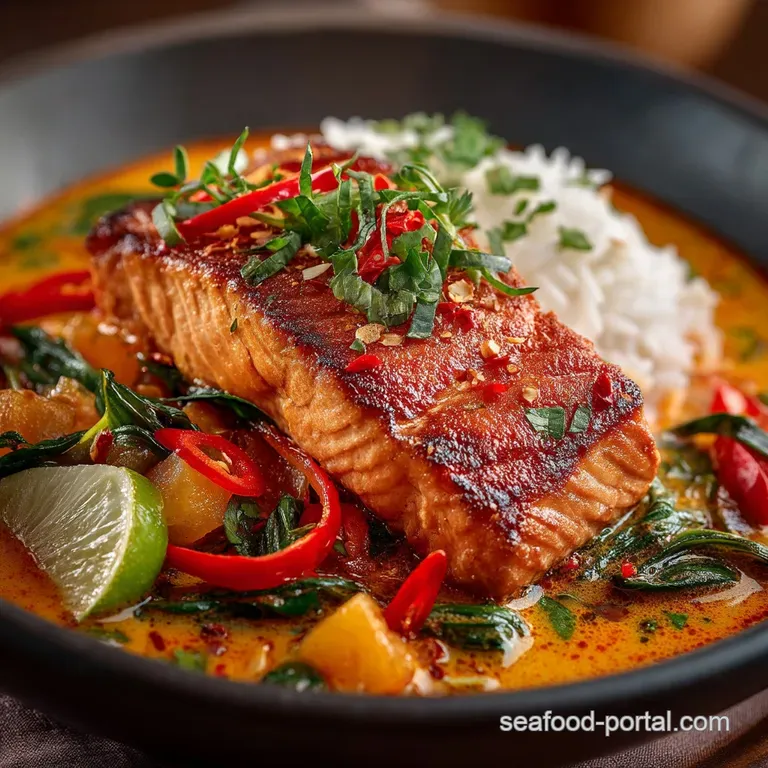
A Weeknight Masterpiece: Mastering Thai Red Curry with Salmon
We often associate truly deeply flavored Curry Recipes with slow cooking, but this luxurious Thai approach proves that sophistication doesn’t require hours in the kitchen.
This specific preparation, featuring succulent salmon fillets bathed in a vibrant red coconut broth, is a testament to how easily intense flavor can be built from high-quality pantry staples.
The entire process, from chopping board to bowl, takes approximately 35 minutes, making this Thai Red Curry with Salmon an ideal centerpiece for any busy weeknight table.
From Pantry to Plate: Achieving Deep Flavour Quickly
The secret to this rapid depth of flavor lies not in lengthy simmering, but in the specific technique used to treat the concentrated red curry paste. This recipe moves rapidly through three stages: quick prep (slicing vegetables and seasoning the fish), flavor base development, and gentle poaching.
With just 10 to 15 minutes of initial preparation, the actual cooking time is minimized to only 20 minutes. This efficient process ensures you can enjoy restaurant quality Thai food in the time it often takes to coordinate a delivery, establishing this as a truly easy yet rewarding addition to your arsenal of Easy Curry dishes.
The Essential Balance: Sweet, Salty, Spicy, Sour
Thai cuisine operates on a foundational principle of balance, striving to hit all four key taste profiles in every dish. In this thai red curry with salmon recipe , the richness of the full fat coconut milk provides a creamy base against which these contrasts can play out.
Salinity and deep umami are delivered by the fish sauce, while the brightness of fresh lime (and kaffir lime leaves, if used) cuts through the richness, providing the necessary sour notes. A touch of brown sugar balances the inherent heat and acid, completing the classic Thai flavor profile.
Achieving this balance before introducing the salmon is crucial for a flawless final dish.
Choosing Your Perfect Curry Heat Profile
Thai Red Curry Paste carries significant natural heat, but the intensity can vary dramatically depending on the brand selected. If you prefer a milder experience, opt for readily available options like Thai Kitchen. If you enjoy genuine fire, brands like Mae Ploy deliver a robust punch.
To ensure the heat level remains manageable for all diners, the recipe relies on the paste for core spice, but saves additional fresh red chili slices (such as bird’s eye) as an optional garnish. This allows each individual to control their own heat level after plating.
Sourcing Your Ingredients and Necessary Tools
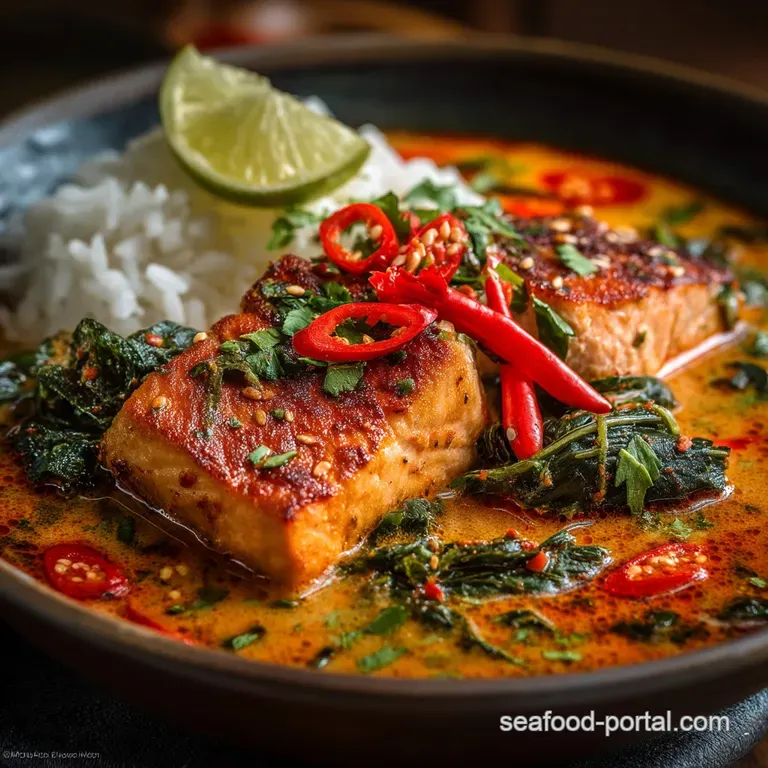
A successful Thai dish relies heavily on ingredient quality, especially when the cooking time is short. To execute this recipe perfectly, you will need a large, deep skillet or Dutch oven wide enough to hold four salmon fillets comfortably, along with standard tools like a cutting board and sharp knife.
Essential Pantry Staples for Thai Cooking
For the core sauce, three items are non-negotiable: high-quality Thai Red Curry Paste, a can of full fat coconut milk (avoiding the "light" version is vital for body and richness), and good fish sauce. The fish sauce provides irreplaceable umami and salinity.
To finish the sauce, you’ll also need stock (chicken or vegetable) and brown sugar, though traditional palm sugar offers a slightly earthier sweetness if you have access to it. If you can source them, kaffir lime leaves add an unparalleled citrus aroma; otherwise, fresh lime zest works well as a substitute.
Selecting the Best Cut of Salmon (and Alternatives)
We specify four generous 6 oz (170g) fillets, ideally about an inch thick. While skin-on salmon provides the opportunity for a lovely seared crust, skinless fillets work equally well since the fish will primarily finish by poaching in the sauce.
The high protein and healthy fats of the salmon make this an excellent choice for those seeking nourishing Thai Curry Recipes . If salmon is unavailable, firm white fish like cod or halibut are superb substitutes, soaking up the fragrant sauce beautifully.
Alternatively, thinly sliced chicken thigh can be added early in the process to ensure it cooks through fully.
Quick Prep Vegetable Options for the Curry Base
This recipe is intentionally streamlined to keep prep time down while still adding crunch and nutritional value. The vegetables are focused on aromatics sliced shallots, minced garlic, and grated ginger which quickly meld into the blooming curry paste.
For the main body, we utilize thinly sliced red bell pepper for sweetness and color, alongside drained and rinsed bamboo shoots for a traditional, satisfying textural contrast. This efficient selection ensures we create a vibrant red thai curry with salmon and vegetables without lengthy chopping.
Garnish Glossary: Fresh Herbs and Crunch
The final presentation of any Thai dish depends heavily on fresh additions that provide scent and contrast. Fresh basil is essential Thai basil is preferred for its subtle anise notes, but standard sweet basil is a delicious and widely accessible option.
We stir half the basil into the sauce just before serving and use the rest as a fragrant garnish. Lime wedges are crucial for a final squeeze of acidity, and a sprinkling of thinly sliced red chili adds that professional touch of color and controllable heat.
Related Recipes Worth Trying
- Foolproof Salmon Croquettes Recipe Crispy Panada Lemon Aioli — Skip the dry fish cakes This easy Salmon Croquettes recipe uses a creamy panada binder for a tender middle and a golden crunchy crust Perfect weeknight comfort
- Best 30Minute Italian Shrimp Scampi Recipe with LemonGarlic Sauce — Make the Best Italian Shrimp Scampi in 30 minutes This simple recipe yields a velvety bright Italian Shrimp Scampi Sauce guaranteed to cling beautifully to...
- Easy Shrimp Spring Rolls Recipe Fresh Summer Rolls with Zesty Peanut Sauce — Learn how to make foolproof vibrant Shrimp Spring Rolls in just 35 minutes These healthy Shrimp Rice Wraps are light packed with fresh herbs and served with...
The Method: A step-by-step Guide to Cooking Thai Red Curry with Salmon
The success of this dish lies in building the flavor base sequentially before the delicate salmon is introduced. Attention to temperature and timing is key.
Perfecting the Pan-Sear on Your Salmon Fillets
While optional, pan-searing the salmon first adds crucial texture and helps the fillets maintain their structural integrity during the final poaching stage. Start by patting the seasoned fillets completely dry. Heat one tablespoon of neutral oil in your large skillet over medium high heat.
Place the fillets, skin side down (if applicable), and sear undisturbed for 2 to 3 minutes until a light crust forms. Remove the salmon immediately and set it aside; do not wipe the pan clean, as the residual oil and fish fat contribute to the curry’s depth.
Bloomed and Beautiful: Releasing the Red Curry Paste Aromas
This is perhaps the most important technique in the entire thai red curry with salmon recipe . Reduce the heat to medium. Add the red curry paste to the skillet, using the residual oil and fat from the salmon sear. Sauté the paste for 60 to 90 seconds, stirring constantly.
You will notice the color deepen slightly, and the fragrance will intensify dramatically. This "blooming" releases the fat-soluble compounds and deepens the overall flavor profile of the spices before any liquid is added.
Following this, stir in the sliced shallots, garlic, and ginger, cooking until the shallots soften, about 2 to 3 minutes.
Developing the Rich Coconut Broth Consistency
Next, incorporate the sliced red bell pepper and bamboo shoots, stirring them in for about three minutes to coat them thoroughly in the aromatic paste. Now, pour in the full can of coconut milk and the stock. Stir until the paste is fully incorporated into the liquid.
Add the fish sauce, brown sugar, and kaffir lime leaves. Bring the sauce to a gentle simmer it should never boil rapidly. Simmering gently for five minutes allows the coconut milk to fully absorb the spice aromas and the flavors to marry, creating that velvety broth consistency we are aiming for.
The Final Flavour Adjustment: Balancing the Finish
Once the broth has simmered, taste and adjust the seasoning based on the foundational balance (add more fish sauce for salt, sugar for sweetness, or lime juice for brightness). Carefully place the partially seared salmon fillets into the simmering curry, allowing the sauce to surround them, leaving the top exposed.
Reduce the heat to low and allow the salmon to poach for 5 to 8 minutes, depending on thickness, until the internal temperature reaches 145° F ( 63° C) and the fish flakes easily.
Remove the kaffir lime leaves, stir in half of the fresh basil, and serve immediately alongside fluffy thai red curry salmon with jasmine rice .
Beyond the Bowl: Tips, Troubleshooting, and Variations
Nutritional Overview and Macro Breakdown
This dish is naturally protein dense and rich in healthy fats, thanks to the combination of fatty fish and full fat coconut milk. While many traditional Curry Recipes can be carb heavy, this preparation is intrinsically low in carbohydrates (only 12 15g per serving, excluding rice) and high in beneficial Omega-3s.
Providing roughly 580 620 kcal and 38 42g of protein per serving, this Thai Red Curry with Salmon fits perfectly into lists of Healthy Low Carb Recipes that don't sacrifice comfort or flavor.
Storage and Reheating Advice for Leftovers
Leftovers should be cooled quickly and stored in an airtight container for up to three days. The curry sauce itself improves overnight as the flavors deepen. However, salmon can easily dry out upon reheating. To maintain the best texture, separate the salmon from the sauce before storing.
Reheat the sauce gently on the stovetop, and then briefly poach the leftover salmon in the hot sauce just until warmed through, or microwave the fish very briefly, covered, on low power.
Easy Recipe Variations (dairy-free or Vegan Swaps)
This recipe is naturally dairy-free thanks to the use of coconut milk. For those avoiding fish products, swap the salmon for firm tofu or meaty sweet potato chunks (add the potato early and simmer until tender).
The essential fish sauce can be replaced with light soy sauce and a pinch of salt, though the umami profile will differ slightly. If you have extra time or prefer oven cooking, the same principle can be adapted for a thai red curry salmon tray bake by spreading the sauce and vegetables in a pan and baking the salmon directly in the sauce until cooked.
Troubleshooting Common Curry Consistency Issues
The most common issue with coconut curries is the sauce being too thin or, conversely, having the coconut milk "break" or separate. To prevent separation, always use full fat coconut milk and ensure the sauce maintains a gentle simmer rather than a rolling boil.
If your sauce is too thin, simply remove the lid and allow it to simmer uncovered for an extra 2 to 3 minutes to encourage evaporation. If it becomes too thick or rich, thin it slightly by stirring in a tablespoon or two of warm stock until the desired velvety consistency is reached.
Recipe FAQs
What if my Thai Red Curry with Salmon is too mild or too hot for my family’s liking?
Achieving the perfect heat level is key, isn't it? If the curry is too hot, the full fat coconut milk in this recipe is your best friend, as the high fat content naturally tempers the chilli heat. If it's too mild, resist the urge to add more curry paste at the end.
Instead, serve fresh slices of bird’s eye chilli or chilli flakes on the side, allowing everyone to customise their spice level, much like adding a dash of Worcester sauce to their shepherd's pie!
I don't have salmon. Can I use chicken or prawns instead in this Thai Red Curry?
Absolutely, you can swap out the protein, no problem. If using boneless, skinless chicken thighs (a brilliant, flavourful alternative), slice them thinly and add them to the simmering sauce about 7 10 minutes before you plan to serve.
Prawns cook even faster; chuck them in right at the end (the last 3 4 minutes) until they turn pink and opaque. Remember, keep an eye on cooking times to avoid tough fish or chewy chicken.
What exactly does "blooming the paste" mean, and is it a crucial step?
"Blooming" the paste is the secret sauce it's non-negotiable for a proper, flavourful curry! It involves cooking the paste in hot oil before adding the liquid. This process awakens the spices and releases their aromatic oils, resulting in a much deeper, richer, restaurant quality flavour and removing any raw, metallic edge the paste might have.
Think of it as waking up the flavour; skipping it is like making tea with cold water!
Can I freeze the leftovers, and how long does the Thai Red Curry with Salmon last in the fridge?
The rich curry sauce itself freezes wonderfully for up to three months, perfect for a rainy day meal prep! However, salmon tends to dry out and become slightly spongy when frozen and reheated in the sauce.
For the best quality, store the sauce and salmon separately, or better yet, freeze the sauce solo and add freshly pan-seared salmon upon reheating. Otherwise, leftovers will keep happily in the fridge for up to three days in an airtight container.
Do I really need to use full fat coconut milk, or can I swap it for a lower fat version?
While you can use light coconut milk, the dish will lose that essential, luxurious velvet texture and deep richness. The high fat content of full fat coconut milk is crucial for carrying the complex spice notes and balancing the heat; it stops the curry tasting thin or watery.
If you're counting calories, you can compromise by using a full fat base and bulking out the curry with extra vegetables.
Easy Thai Red Curry Salmon Fillets