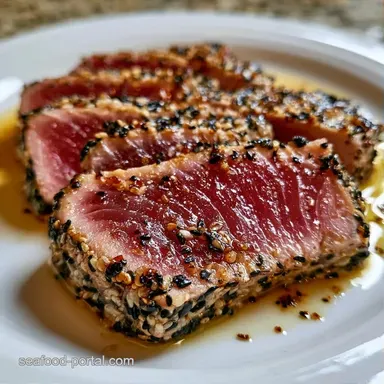
Sesame Crusted Ahi Tuna Steaks in 10 Minutes
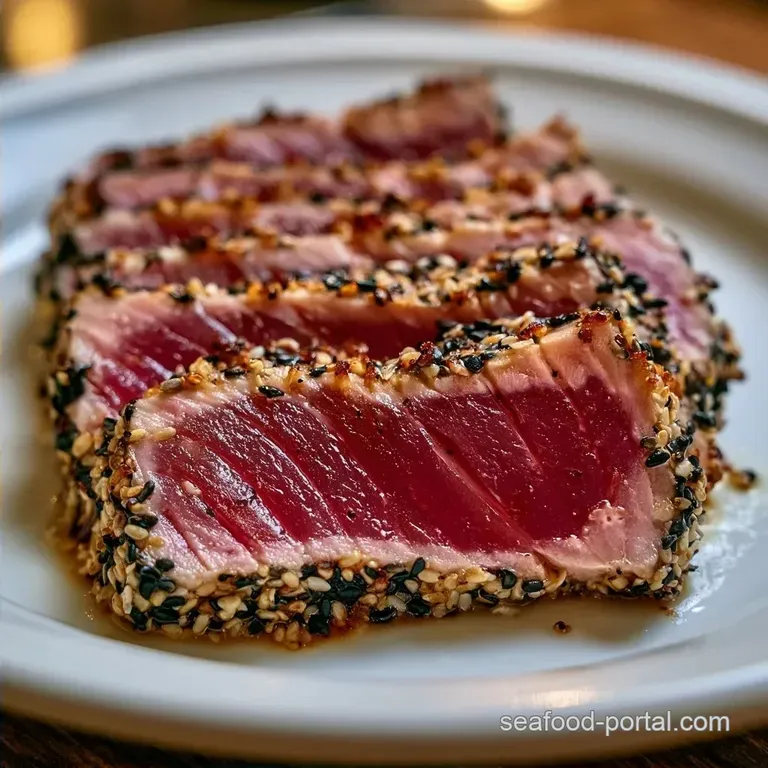
- Time: 5 min active + 5 min cook (15 minutes total)
- Flavor/Texture Hook: Toasted, crunchy seeds with a smooth, rare center
- Perfect for: Last-minute date nights or protein-rich starters
There is a certain satisfaction in the sound of tuna hitting a scorching hot pan. That aggressive hiss signals that the crust is setting and the edges are darkening to a rich mahogany brown.
I first served this at a dinner party when I wanted a dish that looked professionally plated but didn't keep me trapped in the kitchen all night.
The appeal here is the interplay of temperatures and textures. You get the snap of toasted seeds followed by the cool, buttery feel of the rare fish. It is a vibrant presentation that feels upscale, yet the actual prep is minimal.
Whether you are treating yourself to a solo meal or wowing a guest, Sesame Crusted Ahi Tuna delivers high impact flavor without the stress. All you need are a few premium ingredients and a pan that can handle intense heat.
Sesame Crusted Ahi Tuna
Flash Searing: Using high heat toasts the seeds almost instantly, ensuring the interior of the steak stays raw.
Seed Contrast: A blend of black and white sesame seeds provides visual appeal and a nuanced toasted taste in every mouthful.
Acid Balance: The rice vinegar offsets the fatty nature of the tuna and oil, adding a bright finish to the dish.
| Tuna Type | Prep Effort | Texture | Best For |
|---|---|---|---|
| Fresh Sushi Grade | Minimal | Firm, clean snap | Purest flavor |
| Frozen (Thawed) | Moderate | Softer, more moist | Budget friendly meals |
Essential Kitchen Gear
While a professional kitchen isn't necessary, a few specific tools will improve the result. I prefer a cast iron skillet for its superior heat retention. Alternatively, a thick non-stick pan is a good substitute, though you may need to increase the temperature slightly.
A sharp chef's knife is also highly recommended. Using a dull blade risks tearing the tuna and crushing the rare center, which can flatten your medallions. To maintain clean edges, employ a smooth, slicing movement.
The Ingredient List
Quick Recipe Stats
| Ingredient | What It Does | Best Swap |
|---|---|---|
| Ahi Tuna | Main protein | Yellowfin tuna |
| Sesame Seeds | Texture and nuttiness | Poppy seeds (mixed) |
| Soy Sauce | Umami and salt | Tamari (for GF) |
| Honey | Sweetness and glaze | Maple syrup |
- 2 (6 oz / 170 g) sushi grade Ahi tuna steaks Why this? Must be sushi grade for safe raw consumption.
- 2 tbsp (30 ml) soy sauce Why this? Provides the base salty flavor.
- 1 tbsp (15 ml) toasted sesame oil Why this? Adds a deep, nutty aroma.
- 1/4 cup (35 g) white sesame seeds Why this? Classic crunch.
- 1/4 cup (35 g) black sesame seeds Why this? Bold look and toasted flavor.
- 1 tbsp (15 ml) neutral oil (avocado or grapeseed) Why this? High smoke point prevents burning.
- 1/4 cup (60 ml) soy sauce Why this? For the dipping sauce.
- 1 tsp (5 g) freshly grated ginger Why this? Adds a sharp, fresh zing.
- 1 tbsp (15 ml) honey Why this? Balances the salt with sweetness.
- 1 tsp (5 ml) rice vinegar Why this? Cuts the richness.
Bringing the Dish Together
Drying the Fish
Use paper towels to thoroughly pat the tuna steaks dry. Excess water prevents the seeds from adhering and inhibits the formation of a crisp crust.
Coating the Tuna
Combine 2 tbsp soy sauce and 1 tbsp toasted sesame oil in a shallow bowl. Coat each steak by dipping it in the mixture, then firmly press them into a blend of black and white sesame seeds until every side is well covered.
Searing for Texture
Warm neutral oil in a cast iron skillet over high heat until it just starts to smoke. As noted by the experts at Serious Eats, utilizing high heat ensures a perfect sear while keeping the inside tender.
The Precision Sear
Gently place the tuna in the pan, searing for 45 to 60 seconds on each side. Aim for a narrow, browned outer edge while leaving the center completely raw.
Resting the Meat
Transfer the tuna to a cutting board and let it rest for 2 minutes. This allows the juices to settle, preventing them from leaking during slicing.
The Ginger Glaze
During the resting period, combine 1/4 cup soy sauce, grated ginger, honey, and rice vinegar in a small bowl. Whisk until the honey has completely dissolved.
Slicing the Steaks
With a sharp knife, carve the steaks into medallions about 1/2 inch thick. Arrange the slices on a platter to highlight the rare interior.
Final Touch
Pour the ginger soy sauce over the fish or serve it in a side dish for dipping.
Fixing Common Issues
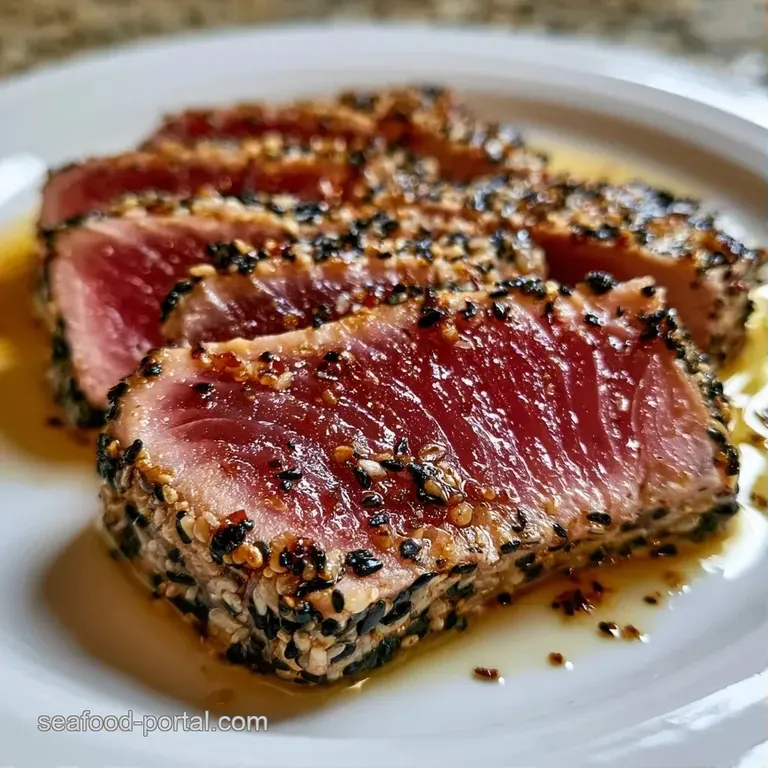
If your seeds aren't sticking, it's usually a moisture problem. Either the fish was too wet or the soy oil dip was too thin. Make sure you press the tuna firmly into the seeds.
Overcooking is the biggest risk here. If you see a thick grey band of cooked fish, you've left it in the pan too long. The goal is a flash sear, not a medium rare steak.
Soggy Seed Fix
Ensure the pan is shimmering hot. If the oil isn't smoking, the seeds will soak up grease instead of toasting.
Overcooked Core
Reduce sear time to 30 seconds per side if your pan is exceptionally hot.
Sauce Too Salty
Add a splash more rice vinegar or a pinch of sugar to balance the soy sauce.
| Problem | Root Cause | Solution |
|---|---|---|
| Seeds falling off | Tuna was damp | Pat drier with towels |
| Grey band in fish | Sear time too long | Reduce to 45 seconds |
| Burnt seeds | Heat too extreme | Use avocado oil |
Adjusting the Portion Size
To make a smaller snack, use one 6 oz steak. Halve the seed mixture and use only 1 tbsp of soy sauce for the dip. The cooking time remains the same.
When doubling for four people, sear the fish in separate turns. Overfilling the pan prevents the tuna from searing properly, which could leave your Sesame Crusted Ahi Tuna soggy.
For the sauce, you can double the liquids, but increase the ginger and honey by only 1.5x to keep the flavor from becoming too cloying.
- For a firmer crust: press seeds into the fish with the back of a spoon.
- For a spicier kick: add 1 tsp of sriracha to the dipping sauce.
- For a lighter version: swap honey for a squeeze of fresh lime.
Keeping it Fresh
Enjoy the tuna fresh for the best results. Any leftovers should be placed in a glass container and refrigerated for no more than 24 hours.
Avoid freezing seared tuna, as the rare center develops a mealy, unpleasant texture after thawing. For raw tuna steaks that won't be used immediately, wrap them securely in plastic and aluminum foil; these can be kept in the freezer for up to 2 months.
Extra soy ginger sauce works perfectly as a marinade for shrimp or tofu. Alternatively, if you prefer a heartier, fully cooked meal, try this Tuna Casserole recipe made with canned tuna.
Customizing Your Plate
Transform this into a Sesame Crusted Ahi Tuna Salad by layering the sliced seared tuna over mixed greens, edamame, and shredded carrots. Drizzle with the ginger soy sauce for a refreshing, bright lunch.
For a different taste, replace the white sesame seeds with crushed peppercorns. This "pepper crusted" version offers a sharper, more pungent flavor with less nuttiness.
This tuna also makes a fantastic wrap when paired with avocado and pickled ginger. If you're craving something warm and cooked, my Tuna Melt recipe is the perfect choice.
Serving Your Tuna
Plate the medallions on a dark slate or a white ceramic plate to make the black and white seeds pop. I like to serve this with a side of steamed bok choy or a scoop of jasmine rice.
Pair this with a crisp, dry white wine or a cold lager. The bubbles and acidity help cleanse the palate between the rich, buttery bites of the fish.
The beauty of this recipe is that it looks like a professional effort but takes only 15 minutes. Once you get the hang of the sear, it becomes a reliable go to for any night you want a bold, high protein meal.
Critical Sodium Level
2700 mg 2,700 mg of sodium per serving (117% 117% of daily value)
The American Heart Association recommends a daily limit of no more than 2,300mg of sodium for most adults to maintain heart health.
Tips to Reduce Sodium
-
Swap for Low-Sodium Soy-30%
Replace the regular soy sauce with low-sodium soy sauce or coconut aminos to significantly reduce salt while keeping the umami flavor.
-
Reduce Soy Quantity-20%
Cut the amount of soy sauce in half and compensate for the loss of flavor by doubling the freshly grated ginger.
-
Increase Acidity-10%
Add a squeeze of fresh lime juice or increase the rice vinegar to mimic the sharp taste of salt without adding sodium.
-
Enhance with Fresh Herbs
Garnish the finished dish with freshly sliced scallions or cilantro to add aromatic depth and brightness.
Recipe FAQs
How to get sesame seeds to stick to the tuna?
Dip the steak in soy sauce and sesame oil first. This creates a tacky surface that allows the seeds to adhere firmly when pressed.
Is it true you must use a cast iron skillet for a proper sear?
No, this is a common misconception. A heavy non-stick pan works just as well as long as it is heated until the oil just begins to smoke. If you mastered the sensory doneness cues here, apply them to our crispy pan seared salmon for perfect results.
Can the middle be eaten raw?
Yes, provided you use sushi grade tuna. This recipe is designed to leave the center rare to preserve the buttery texture and clean flavor.
What happens if I cook the tuna all the way through?
The meat becomes dry and tough. Because Ahi tuna is very lean, it loses its velvety quality quickly once the heat penetrates the center.
Which temperature is ideal for seared tuna?
Aim for a rare center. Sear for 45 to 60 seconds per side over high heat to toast the seeds without overcooking the fish.
Why does the crust sometimes fall off during cooking?
Press the seeds firmly into the fish before searing. Patting the tuna completely dry with paper towels before adding the oil dip also prevents moisture from loosening the crust.
Sesame Crusted Ahi Tuna