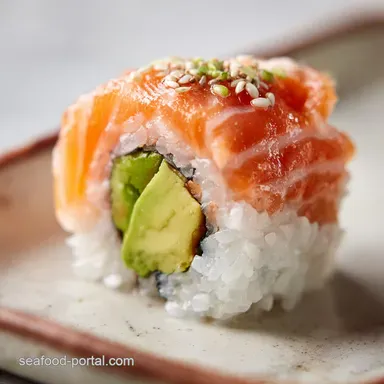
Salmon Avocado Sushi Roll: Silky and Creamy

- Time: Active 20 minutes, Passive 15 minutes, Total 35 minutes
- Flavor/Texture Hook: Silky salmon meets buttery avocado with a sharp vinegar snap.
- Perfect for: Bold weekend lunch or a high energy DIY dinner party.
- Perfect Sushi Roll Recipe with Salmon at Home
- Time and Temperature for Success
- Picking the Boldest Fresh Ingredients
- Tools for Street Style Results
- Rolling and Slicing Master Steps
- Fixing Texture and Rolling Issues
- Creative Swaps and Flavor Variations
- Storage and Reducing Food Waste
- Plating for a Vibrant Look
- Common Sushi Lore Debunked
- Recipe FAQs
- 📝 Recipe Card
Perfect Sushi Roll Recipe with Salmon at Home
Forget the myth that you need a decade of training in a silent Tokyo cellar to pull off a decent roll. This article shares a fantastic Sushi Roll Recipe featuring salmon and avocado that brings that vibrant, street style energy right to your counter.
Honestly, for the longest time, I was terrified of touching sushi rice. I thought if I didn't have a handcrafted cypress tub or a specialized rice paddle, it would just turn into a sad, gummy mess.
But here is the truth: you don't need fancy equipment to get that restaurant quality "shatter" in the nori and that perfect, individual grain definition in the rice. It’s all about the bold approach to seasoning and not being afraid to get your hands a little messy.
This isn't about being precious; it’s about that satisfying "click" when your sharp knife slides through the roll, revealing those bright orange and green layers inside.
We are going for big flavors and even bigger textures. We want the salmon to feel velvety, the avocado to be rich, and the rice to have enough tang to cut through it all like a neon light in the dark.
If you've been sitting on the sidelines because you think your rolling skills aren't "authentic" enough, let’s just drop that right now. We’re cooking for flavor, not for a trophy.
Time and Temperature for Success
When we talk about this specific Sushi Roll Recipe with Salmon, timing is your best friend. If you rush the rice, it won't absorb the vinegar correctly. If you let it sit too long, it dries out and loses that gorgeous gloss that makes it look so professional.
You’ve got to hit those precision checkpoints if you want that street style vibrance.
Starch Stripping: Rinsing the rice at least five times isn't just a suggestion; it’s the law of the kitchen. You are physically removing the excess surface starch that causes grains to stick together in a big, unappealing clump.
We want "sticky" rice that holds together, not "clumpy" rice that feels like mashed potatoes.
Steam Lock: Letting the rice sit undisturbed for 10 minutes after the heat goes off is where the magic happens. This allows the moisture to redistribute evenly through every single grain. If you skip this, the center of the grain stays hard while the outside gets mushy.
It’s the difference between a mediocre roll and a vibrant one.
Rapid Cooling: Using a hand fan while folding in the vinegar isn't just for show. It shocks the starch on the outside of the grain, creating a microscopic "skin" that reflects light. That’s how you get that professional shine.
It also stops the cooking process instantly so the rice doesn't become overcooked and soft.
| Method | Prep Time | Rice Texture | Best For |
|---|---|---|---|
| Fast Method | 5 mins | Softer, less defined | Quick cravings |
| Classic Street Style | 20 mins | Glossy, individual grains | The full experience |
| Professional | 60 mins+ | Extremely firm, aged | High end Omakase |
There is a massive difference between rushing through a Recipe with Salmon and Avocado and actually respecting the ingredients. When you take those extra few minutes to fan the rice, you’re not just cooling it; you’re building the structural integrity of the entire roll.
This is what prevents the roll from falling apart when you dip it into the soy sauce.
For those who are just starting out, I always recommend sticking to the classic timing. It gives you a buffer to get the textures exactly where they need to be. Once you've done this a few times, you'll start to recognize the specific aroma of the vinegared rice when it's perfectly seasoned, it should smell sharp, sweet, and slightly floral.
Picking the Boldest Fresh Ingredients
When you are working with Salmon and Avocado, there is nowhere for low quality ingredients to hide. Since we aren't cooking the fish, the flavor depends entirely on the freshness and the fat content of that salmon.
Look for "sashimi grade" or "sushi grade" labels, this isn't just marketing; it’s about how the fish was handled and frozen to ensure it's safe and vibrant for raw consumption.
| Component | Science Role | Pro Secret |
|---|---|---|
| Short Grain Rice | Starch structure | Use "New Crop" rice for better hydration |
| Rice Vinegar | Acidic seasoning | Season with salt/sugar while the rice is hot |
| Toasted Nori | Structural wrap | Briefly toast over a flame for extra snap |
| Sashimi Salmon | Fat & Protein | Slice against the grain for a melt in-mouth feel |
The rice is the foundation. You want a high-quality Japanese short grain rice (like Koshihikari). Long grain rice like Basmati or Jasmine will never work here; they don't have the amylopectin levels required to hold the roll together. If you want to learn more about the foundations of this craft, you might find my guide on mastering classic sushi rolls helpful for your journey.
For the avocado, you want it "just" ripe. If it's too soft, it will turn into a green paste that smears all over the rice. If it's too hard, it will poke through the nori like a stick.
You’re looking for that buttery, velvety texture that yields to gentle pressure but still holds a clean edge when sliced into wedges.
Choosing Sashimi Salmon
The salmon is the star of this Sushi Roll Recipe with Salmon. I always look for Atlantic or King salmon because the fat marbling is much more pronounced. That fat is what provides the rich, creamy mouthfeel that contrasts so beautifully with the sharp, acidic rice.
Never settle for "fresh" salmon from the standard seafood counter unless it is specifically cleared for raw consumption.
The Power of Fanning
Fanning the rice is a non negotiable step in my kitchen. As you use a slicing motion to fold in the vinegar, the fan evaporates the excess moisture. This concentrates the flavors and gives the rice a translucent, jewel like appearance.
It’s a sensory experience, the smell of the vinegar hitting the hot rice is one of my favorite kitchen aromas.
Selecting Toasted Nori
Nori can make or break a roll. You want sheets that are dark green, almost black, and have a clear "rough" side and a "shiny" side. The rice always goes on the rough side so it has something to grip onto.
If your nori feels floppy, you can quickly pass it over a low gas flame for two seconds to bring back that signature "shatter" when you bite into it.
Tools for Street Style Results
You don't need a thousand dollars worth of Japanese steel, but you do need a few specific items to make this Recipe with Salmon and Avocado a success. The most important tool is actually a very sharp knife.
If your knife is dull, you will end up squishing the roll instead of slicing it, which pushes all that beautiful avocado out the sides.
- Bamboo Rolling Mat (Makisu): This is essential for getting that tight, even cylinder. Pro tip: wrap it in plastic wrap to keep the rice from sticking to the wood.
- Hangiri or Large Non Metal Bowl: Use wood or glass. Metal can react with the vinegar and give the rice a weird, metallic tang that ruins the bold flavor.
- Rice Paddle (Shamoji): A flat, wide paddle helps you "cut and fold" the rice without crushing the individual grains.
- Sharp Chef's Knife: A thin bladed knife is best. Keep a damp towel and a small bowl of vinegar water nearby to wipe the blade between every single cut.
I remember my first attempt at this Sushi Roll Recipe; I tried to use a serrated bread knife because I thought it would "saw" through the seaweed. Big mistake. It just shredded the nori and made the roll look like it had been through a blender.
Use a straight edge, keep it wet, and let the weight of the knife do the work.
If you are just starting and want something a bit more forgiving, checking out my tips for beginner California rolls can help you get the hang of the rolling motion before you move on to the more delicate sashimi grade fish. It's all about building that muscle memory.
| Tool | Street Style Substitute | Why It Works |
|---|---|---|
| Bamboo Mat | Thick Silicone Mat | Provides similar tension and is easy to clean |
| Rice Paddle | Large Silicone Spatula | Gentle on the grains, prevents crushing |
| Hangiri Bowl | Wide Glass Baking Dish | Large surface area allows for fast cooling |
Rolling and Slicing Master Steps

Ready to get your hands in there? This is the part where most people get nervous, but honestly, it’s just physics. You want to apply enough pressure to make the ingredients "one," but not so much that you turn the rice into a solid block of paste.
Think of it like a firm handshake, confident, but not crushing.
- Rinse the rice. Wash the 400g of rice in a bowl until the water is clear. Note: This prevents the rice from becoming a gummy starch bomb.
- Cook and steam. Use 530ml of filtered water. After cooking, let it sit for 10 minutes. Until the grains are plump and tender.
- Season the rice. Fold in the mixture of 0.25 cup vinegar, 2 tbsp sugar, and 1 tsp salt. Note: Use a slicing motion to avoid mashing.
- Fan and cool. Fan the rice while folding until it reaches room temperature and looks glossy and vibrant.
- Prep the fillings. Slice 8 oz of salmon into 0.5 inch batons. Julienne the half cucumber and slice the avocado into thin wedges.
- Set the nori. Place one sheet on the bamboo mat, rough side up. Spread 1 cup of rice, leaving a 1 inch gap at the top.
- Layer the flavors. Lay the salmon, avocado, and cucumber across the center of the rice. Smell the fresh, cool cucumber aroma.
- The first fold. Lift the mat and fold it over the filling, tucking the edge of the nori under the ingredients.
- Tighten the roll. Give the mat a firm squeeze to set the shape. Roll forward until the seam is sealed.
- Slice with precision. Use a wet knife to cut the roll into 8 pieces. Until the knife makes a clean "shisk" sound through the nori.
The most important thing to remember is the moisture. Your hands should be "tezu" (vinegar water) damp. If they are dry, the rice will stick to you like glue. If they are too wet, the nori will disintegrate. It’s a balance. You want just enough moisture to create a barrier between your skin and the rice starch.
When you get to the slicing stage, don't try to "push" the knife down. Use a long, drawing motion. Start at the heel of the knife and pull back toward you. Let the sharpness of the blade do the work. If you feel resistance, stop, clean the knife, re wet it, and try again.
A clean cut is what makes the interior of the Salmon and Avocado roll look like a piece of art.
Fixing Texture and Rolling Issues
Even the best cooks have days where the rice just won't behave. Maybe the humidity in the kitchen is high, or maybe you accidentally added too much water. Whatever the issue, most sushi problems are easily fixed if you know what to look for.
The goal is to keep that bold, vibrant look without losing the structural integrity of the roll.
Why is my rice mushy and gummy?
This usually happens because of two things: either the rice wasn't rinsed enough, or it was overcooked with too much water. If your rice is already cooked and it feels like a paste, there isn't much you can do to save the texture for maki rolls.
However, you can spread it out on a tray and let it air dry for an extra 10 minutes to see if some of that surface moisture evaporates. Next time, be sure to use exactly 530ml of water for your 400g of rice.
Why does my seaweed tear when I roll it?
Tearing nori is a sign that the seaweed has absorbed too much moisture before you even started rolling. This happens if your rice is too hot when you spread it, or if your hands are dripping wet. Make sure the rice is at room temperature and your hands are just slightly damp.
Also, check your nori, if the package was left open, it might have gone stale. You want that nori to be crisp enough that it "snaps" when bent.
| Problem | Root Cause | Solution |
|---|---|---|
| Rice is too sticky | Too much starch | Rinse 5+ times until water is clear |
| Roll won't seal | Too much filling | Leave a 1 inch border of nori at the top |
| Fish is tearing | Dull knife | Sharpen blade or use a slicing motion |
Common Mistakes Checklist
- ✓ Never use warm rice on nori; it will turn the seaweed into a soggy, chewy mess within seconds.
- ✓ Don't over fill the roll, if you can't see the nori border, you've gone too far.
- ✓ Always wipe your knife after every single cut to prevent starch buildup that causes tearing.
- ✓ Ensure the avocado is firm enough to hold its shape; overly ripe fruit will create a smear.
- ✓ Use a "cutting" motion with the paddle, never "stir" the rice or you'll break the grains.
Creative Swaps and Flavor Variations
Once you have mastered the basic Sushi Roll Recipe with Salmon, the street style possibilities are endless. You can start playing with the bold flavor profiles that make modern sushi so exciting. Think about adding heat, crunch, or even a hit of smokiness.
The base of Salmon and Avocado is so versatile that it can handle almost any bold addition you throw at it.
If you want to take it in a "Spicy Salmon" direction, finely chop some of that salmon and mix it with a little Sriracha and a touch of Japanese mayo (like Kewpie). This adds a creamy, fiery element that pairs perfectly with the cool avocado.
You can also add a sprinkle of Furikake (Japanese rice seasoning) over the rice before rolling for an extra layer of umami and crunch.
For those who want a bit more texture, try adding a strip of Tempura crunch or even some toasted panko breadcrumbs inside the roll. That contrast between the soft fish and the crunchy topping is what makes street style sushi so addictive.
Don't be afraid to experiment, sushi is a living cuisine, and your kitchen is the lab.
| Original Ingredient | Substitute | Why It Works |
|---|---|---|
| Sashimi Salmon | Smoked Salmon | Adds a salty, smokey depth. Note: Stronger flavor than raw. |
| English Cucumber | Daikon Radish | Provides a sharper, peppery crunch. |
| Rice Vinegar | Apple Cider Vinegar | Similar acidity but adds a fruity note. |
Spicy Salmon Twist
To make a bold, spicy version of this with Salmon and Avocado, I like to toss the salmon batons in a mix of sesame oil and chili flakes before laying them down. The oil helps carry the heat across your palate, while the avocado works to cool everything down.
It’s a high energy flavor profile that always disappears fast at parties.
Finding Quality Fish
If you can't find a dedicated Japanese market, check with high end fishmongers and ask specifically for "Grade 1" or "Sashimi Grade" salmon. Some people worry about the price, but remember, a little goes a long way.
8 oz of salmon is enough for four full rolls, which is a lot of sushi for the cost of one restaurant entree.
Storage and Reducing Food Waste
Sushi is best eaten the moment it’s sliced. The contrast between the cool fish and the room temperature rice is a fleeting window of perfection. However, life happens, and sometimes you have leftovers.
Just remember that the refrigerator is the enemy of sushi rice, it causes the starch to crystallize and turn hard and "pebbly."
Storage: If you must store it, wrap the uncut rolls tightly in plastic wrap and keep them in a cool spot (not necessarily the fridge if you're eating them within 2 hours). If you put them in the fridge, the nori will get soft and the rice will get hard.
If you do refrigerate, try to eat them within 24 hours for safety.
Zero Waste: Don't throw away those little scraps of salmon or the ends of the cucumber! I take all the trimmings, chop them up, and toss them with the leftover rice and a bit of soy sauce to make a "Sushi Bowl" for lunch the next day.
You can also toast the leftover nori scraps and crumble them over popcorn for a bold, savory snack. Even the skin of the salmon can be fried until crispy and used as a garnish.
Plating for a Vibrant Look
Street style sushi is all about the "wow" factor. When you're plating your Sushi Roll Recipe with Salmon, think about color and height. Use a dark, slate colored plate or a bright wooden board to make the orange of the salmon and the green of the avocado really pop.
Don't just line them up in a boring row, stagger them, or lean them against each other to show off the beautiful interior cross section.
Add a small mound of pickled ginger and a neat dollop of wasabi on the side. I like to drizzle a tiny bit of "unagi sauce" (sweet soy reduction) or a few drops of toasted sesame oil over the top for that professional finish.
A final sprinkle of toasted sesame seeds adds that last bit of texture and makes the whole dish look high end.
The aroma should be the first thing your guests notice, the toasted scent of the nori, the sharp tang of the ginger, and the clean, fresh smell of the fish. It should feel like an event. When you bring that tray to the table, no one is going to care if your rolls aren't perfectly symmetrical.
They are going to be too busy diving into those bold, vibrant flavors you just created.
If You Want Bold Flavor
- If you want spice: Add a thin slice of serrano pepper on top of each piece.
- If you want umami: Brush the top of the salmon with a tiny bit of white miso paste.
- If you want citrus: Add a microscopic squeeze of lime juice over the avocado before rolling.
Common Sushi Lore Debunked
One of the biggest myths is that "sushi" means "raw fish." In reality, "sushi" refers to the vinegared rice itself. You can have a Sushi Roll Recipe with no fish at all and it’s still sushi. The fish is just a topping.
Understanding this changes how you approach the dish; you realize that the rice isn't just a carrier, it’s the heart of the entire recipe.
Another myth is that you should soak your sushi in soy sauce. Actually, you should only lightly dip the fish side (if it's nigiri) or just a corner of the roll. Over soaking drowns out the delicate flavor of the salmon and makes the rice fall apart.
You want the soy sauce to be a background singer, not the lead vocalist. The bold flavors should come from the Salmon and Avocado themselves.
Finally, people think that "wasabi" in most restaurants is real wasabi. It’s almost always horseradish dyed green. If you can ever find real, freshly grated wasabi root, try it, it has a much more complex, floral heat that doesn't just punch you in the nose.
But even the "fake" stuff provides that essential counterpoint to the rich fat of the salmon. Embracing these little details is what takes your home cooking from "okay" to "incredible."
Recipe FAQs
What sushi roll has avocado and salmon?
The Alaska roll typically features these ingredients. In our recipe, you combine these by laying salmon batons and avocado wedges across your seasoned rice before tightly rolling the nori sheet.
Is sushi a healthy choice for diabetics?
Yes, but portion control is vital. Because the rice contains sugar and salt, it can impact blood glucose levels, so focus on the protein-rich salmon and cucumber fillings.
Does eating sushi help lower cholesterol?
Yes, the salmon provides heart-healthy omega-3 fatty acids. If you enjoyed learning how to properly prepare this fish, you can refine your skills further with our Spicy Tuna Roll, which utilizes similar knife techniques for quality control.
How to avoid common sushi rolling mistakes?
Keep your rice at room temperature before spreading it on the nori. Using warm rice will immediately steam the seaweed, turning it into a soggy mess instead of keeping it crisp.
Is it true I should store sushi in the refrigerator overnight?
No, this is a common misconception. The refrigerator causes the rice starch to crystallize, turning the texture hard and pebbly, so you should always consume your rolls within two hours of preparation.
How to get the perfect glossy finish on sushi rice?
Use a hand fan to cool the rice while folding in the vinegar mixture. This rapid cooling technique locks in the shine and prevents the grains from becoming overly gummy.
How to slice sushi rolls without the nori tearing?
Moisten your knife with vinegar water and wipe it clean after every single slice. Removing the starch buildup between cuts ensures a clean, professional edge without pulling the roll apart.
Sushi Roll Recipe with Salmon for 4 Servings: Silky and Creamy