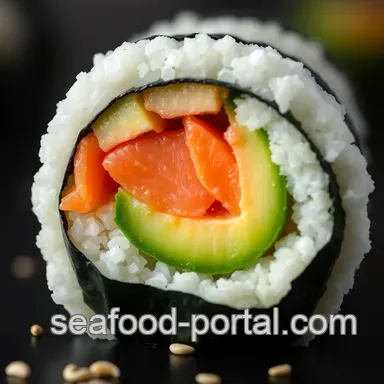
Salmon Avocado Sushi Roll with Seasoned Rice

- Time: 20 min active + 15 min cooking
- Flavor & Texture: Buttery salmon and crisp nori
- Perfect for: A fresh, vibrant dinner
Easy Salmon Avocado Sushi Roll
Forget the idea that you need a professional degree from a sushi school to avoid rolls that fall apart. You don't need expensive tools or years of training, because the real trick is just managing your rice temperature and moisture.
When you get the rice right, the rest is just assembly. You're looking for a roll that snaps when you bite into it, with a center that feels lush and cool.
Making a salmon avocado sushi roll at home lets you control the quality of the fish and the amount of filling. It's a street-style approach to a classic that focuses on bold, fresh flavors.
Why It Works
- Rice Temperature: Allowing the seasoned rice to cool to room temperature prevents the nori from steaming, ensuring the seaweed stays crisp.
- Moisture Barrier: Dampening your fingers creates a slight water film that prevents the sticky starch from adhering to your skin.
- Acid Balance: The vinegar in the rice provides a sharp contrast that balances the richness of the salmon and avocado.
The Building Blocks
| Component | Purpose | Substitute Notes |
|---|---|---|
| Sushi Rice | Provides structure | Arborio rice: Works in a pinch, but is slightly creamier |
| Rice Vinegar | Adds tang and preserves | Apple cider vinegar: Use less; it is more pungent |
| Nori | Holds the roll together | Soy paper: Great for a different look, but less savory |
| Sushi grade Salmon | Core protein | Smoked salmon: Saltier, so reduce added salt in rice |
The Essentials
- 1 cup (185g) short-grain sushi rice Why this? High starch content makes it sticky.
- 1 1/4 cups (300ml) water
- 2 tbsp (30ml) rice vinegar
- 1 tbsp (12g) granulated sugar
- 1/2 tsp (3g) salt
- 4 oz (115g) sushi grade salmon Why this? Safe for raw consumption.
- 1 ripe avocado
- 2 sheets nori seaweed
- 1/2 cup (60g) cucumber
- 2 tbsp (30ml) low-sodium soy sauce
- 1 tsp (5g) wasabi paste
- 1 tbsp (15g) pickled ginger
Gear You'll Need
A handful of basic tools will do the trick. A bamboo rolling mat is the primary tool; however, a clean kitchen towel or parchment paper can be used as an alternative. An exceptionally sharp chef's knife is a must, as a dull edge will squash the roll rather than slice through it.
Bringing It Together
Phase 1: Perfecting the Base
Wash 1 cup (185g) short-grain sushi rice in cold water, draining repeatedly to rinse away surface starch. This ensures the grains stay distinct and fluffy.
Combine the washed rice and 1 1/4 cups (300ml) water in a rice cooker or a medium saucepan with a tight-fitting lid. Heat until bubbling, then reduce to a low simmer for 15 minutes until fluffy and the water is fully absorbed.
While the rice is still hot, whisk 2 tbsp (30ml) rice vinegar, 1 tbsp (12g) granulated sugar, and 1/2 tsp (3g) salt until the crystals have dissolved.
Use a slicing motion to gently fold the vinegar mixture into the cooked rice. This technique preserves the integrity of the grains rather than crushing them. Allow the rice to cool to room temperature.

Phase 2: Preparing the Fillings
Cut 4 oz (115g) sushi-grade salmon into even strips, roughly 1/2 inch (1.3cm) thick.
Pit 1 ripe avocado and slice the flesh into thin, crescent-shaped wedges.
Cut 1/2 cup (60g) cucumber into fine matchsticks.

Phase 3: The Assembly
Lay a sheet of nori seaweed on a bamboo rolling mat with the rough side facing up.
Dip your fingertips in water and spread about 3/4 cup of the seasoned rice evenly over the nori, leaving a 1-inch (2.5cm) gap at the top.
Arrange the salmon strips and avocado wedges horizontally across the middle of the rice. To keep your salmon avocado sushi roll neat, ensure the fillings are centered so they don't protrude from the ends.
Using the mat, firmly roll the ingredients forward. Apply light pressure to keep the roll tight and cohesive.
Moisten the top edge of the nori with water and press down to seal the roll. Repeat the process for the second roll.

Phase 4: The Precision Cut
Wipe a sharp chef's knife with a damp cloth. Slice each roll in half, then divide those halves into three equal sections.
Clean the blade after every slice. This prevents the rice from sticking to the metal and tearing the seaweed.
Serve the sushi with 2 tbsp (30ml) low-sodium soy sauce, 1 tsp (5g) wasabi paste, and 1 tbsp (15g) pickled ginger.

Quick Fixes
Rice Sticking to Hands
Keep a bowl of water mixed with a splash of vinegar nearby. Dip your fingers every few seconds. This creates a barrier that stops the starch from clinging to your skin.
Roll Feels Loose
This usually happens from overfilling. Limit your fillings to a single layer. If it's already rolled and loose, you can wrap a second piece of nori around the outside to tighten it.
Nori Tears
Tearing happens when you apply too much pressure or the rice is too wet. Use a light touch with the mat and ensure you aren't over-saturating the rice with water during the spreading process.
Tasty Variations
If you want a bolder kick, mix some Sriracha and mayo into the salmon before rolling for a spicy version. You can also swap the raw fish for smoked salmon, but reduce the salt in your rice seasoning to compensate for the saltiness of the fish.
For a low-carb version, skip the rice and use thin sheets of cucumber or large lettuce leaves as the wrap. If you're feeling extra hungry, you can turn this into a sushi burrito wrap by using a larger nori sheet and adding more fillings. For another seafood option, try spicy tuna rolls for a different flavor profile.
Your salmon avocado sushi roll is also great with a drizzle of eel sauce or a sprinkle of toasted sesame seeds for an extra layer of nuttiness.
Storage Guidelines
Keep your salmon avocado sushi roll wrapped tightly in plastic wrap in the fridge for up to 24 hours. Be aware that the rice will harden slightly in the cold, which is just how sushi rice reacts to refrigeration.
Do not freeze this dish. The avocado will oxidize and turn brown, and the rice texture will degrade into something mushy. Sushi is meant to be eaten cold or at room temperature, so avoid the microwave.
Serving Suggestions

Arrange these rolls on a large plate with some pickled ginger to cleanse your palate between pieces. I recommend adding a few fresh jalapeño slices on the side for an extra kick. A traditional miso soup is a classic accompaniment, though steamed edamame with sea salt is also a fantastic choice for a hearty meal.
High in Sodium
1105 mg of sodium per serving (48% of daily value)
To support heart health, the American Heart Association suggests a daily intake limit of 2,300mg of sodium for most adults.
Tips to Reduce Sodium
-
Swap Soy Sauce
Use coconut aminos instead of low-sodium soy sauce to get a similar savory taste with significantly less salt.
-
Skip the Added Salt
Leave out the added salt when preparing the rice; the soy sauce and rice vinegar already contribute plenty of saltiness.
-
Refresh Your Ginger
Substitute pickled ginger with freshly grated ginger to avoid the sodium found in the pickling liquid.
-
Select Unsalted Nori
Ensure you are using unsalted nori sheets by checking the labels to lower the overall sodium in your wrap.
-
Boost Flavor with Aromatics
Incorporate fresh lemon juice, lime zest, or toasted sesame seeds to add depth of flavor without adding more salt.
Common Questions
Is salmon roll sushi raw?
Yes, this recipe uses sushi-grade salmon. Always ensure your fish is specifically labeled for raw consumption to ensure safety.
How many calories are in a salmon avo sushi roll?
One serving contains 664 kcal. This total includes the rice, fish, avocado, and accompanying condiments.
What ingredients go into this roll?
The filling consists of sushi-grade salmon, avocado, and julienned cucumber. These are wrapped in nori seaweed and seasoned sushi rice.
How to avoid common sushi rolling mistakes?
Wet your fingers in a bowl of water before handling the rice. This prevents the grains from sticking to your skin and ensures an even spread.
Can I achieve a glossy finish on the sushi rice?
Yes, by folding a mixture of rice vinegar, sugar, and salt into the hot grains. Use a gentle slicing motion to avoid mashing the rice.
Why does the rice stick to the knife?
Rice tends to stick to the blade because of starch accumulation. For precise cuts, use a moist cloth to clean the knife after each slice.
Could I substitute the salmon with another fish?
Yes, other sushi-grade options like tuna work well. If you prefer cooked seafood, you can try our poached mahi mahi.
Is it true that freezing sushi helps it last longer?
Not true. Freezing damages the rice texture and causes the avocado to oxidize and turn brown.
Salmon Avocado Sushi Roll for Two