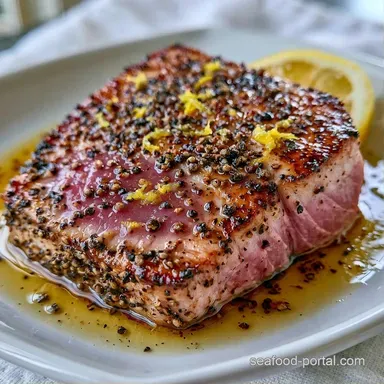
Pan-Seared Lemon Pepper Tuna in 15 Minutes
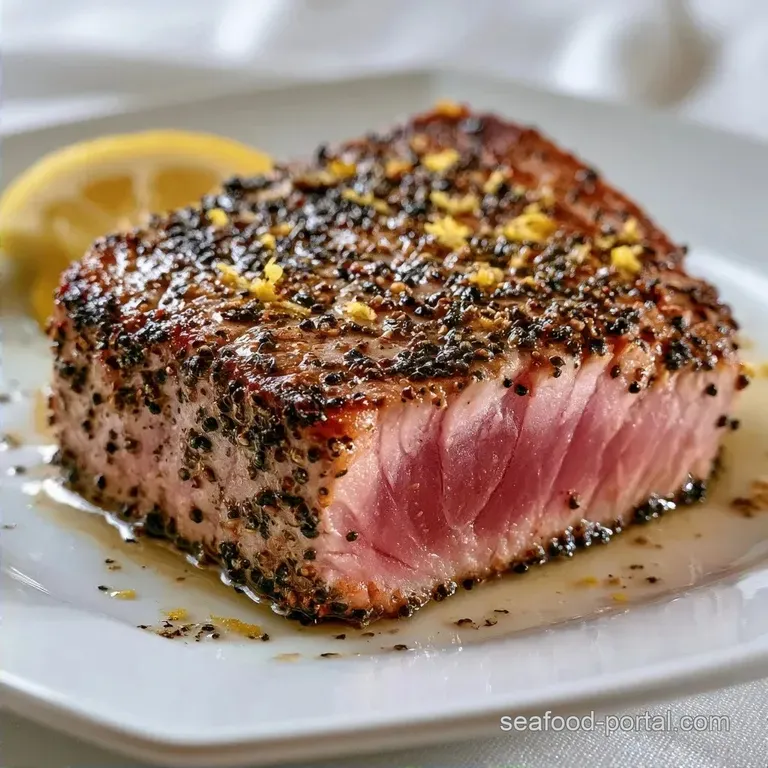
- Time: 10 min active + 25 min tempering/resting
- Flavor/Texture Hook: Zesty, peppery crust with a tender center
- Perfect for: High protein weeknight dinners
That sharp crackle of oil in a hot skillet is the best sound in the kitchen. I used to make the mistake of overcooking my fish because I was worried about the "raw" center, which usually just resulted in a rubbery, grey piece of protein.
Then I tried this over high heat method and realized that the contrast between a charred crust and a cool center is where the magic happens.
It is the kind of meal you whip up on a chaotic Tuesday when you want something that feels like a fancy bistro dish but doesn't take an hour of effort. You get that bright, acidic punch from the lemon and a slow heat from the cracked pepper.
This Lemon Pepper Tuna doesn't need a long list of ingredients to work. It relies on a few bold flavors and a very hot pan. If you have about 35 minutes total, you can have a restaurant quality meal on the table.
Fast Facts for Dinner
This is a fast paced recipe. You spend very little time actually at the stove, but the tempering and resting phases are non negotiable if you want the texture to be right.
| Method | Prep Time | Cook Time | Result |
|---|---|---|---|
| Fast Sear | 10 minutes | 5 minutes | Rare to Medium Rare |
| Traditional | 20 minutes | 12 minutes | Medium to Well Done |
The fast method keeps the fats intact and prevents the tuna from becoming dry. Since tuna is so lean, every extra minute in the pan pulls out the moisture.
Pantry Staples and Substitutes
Yellowfin is my top choice for this recipe since its meaty consistency holds up beautifully under heat. Bigeye is another excellent option if yellowfin is unavailable.
- 2 (6 oz) yellowfin tuna steaks The reason: Dense texture prevents crumbling during the sear
- 1 tbsp avocado oil The reason: High smoke point avoids burning
- 1 tbsp extra virgin olive oil The reason: Carries the rub flavors into the fish
- 1 tbsp fresh lemon zest The reason: Concentrated citrus oil adds brightness
- 1 tbsp fresh lemon juice The reason: Cuts through the richness of the tuna
- 1 tsp freshly cracked black pepper The reason: Coarse grains offer a better bite
- 1 tsp coarse sea salt The reason: Pulls out moisture for a better crust
- 1/2 tsp garlic powder The reason: Adds a savory base without burning
- Fresh parsley for garnish The reason: Adds a clean, grassy finish
Quick Swaps:
- Avocado oil: Grapeseed oil is a great substitute.
- Yellowfin: Ahi tuna is a standard alternative.
- Lemon zest: Use a dash of lemon extract if fresh lemons aren't available, though it's less potent.
The Essential Gear
While you don't need expensive equipment, your pan choice is key. Cast iron is the ideal option for this recipe. Its superior heat retention compared to non-stick or stainless steel helps the Lemon Pepper Tuna develop a rich, dark crust.
I recommend a fish spatula. Its slim, flexible design allows you to flip the tuna without damaging the pepper coating. A thin metal spatula is a fine alternative, provided you move carefully.
Chef Note: Keep your paper towels close. Any remaining moisture on the tuna will lead to steaming rather than searing, preventing that deep mahogany finish.
Step-by-step Cooking Process
Phase 1: The Prep for a Maximum Sear
- Use paper towels to pat the tuna steaks bone dry. Note: This is critical for achieving a professional sear.
- In a small bowl, combine olive oil, lemon zest, salt, black pepper, and garlic powder.
- Coat all sides of the steaks evenly with the mixture.
- Let the fish temper at room temperature for 10-15 minutes. Note: This ensures the interior doesn't stay freezing while the exterior overcooks.
Phase 2: The over High heat Sear
- In a cast iron pan, warm avocado oil over medium high heat until it shimmers and starts to smoke slightly.
- Lay the tuna in the pan, pressing down gently.
- Sear for 60-90 seconds per side for rare, or 2 minutes per side for medium rare. Note: Keep an eye on the color changing as it moves up the sides.
- Add a splash of fresh lemon juice just before taking the fish off the heat to create a zesty pan sauce.
Phase 3: Finishing and Resting
- Move the steaks to a plate and let them rest for 5 minutes.
- Cut the tuna into 1/2 inch thick slices against the grain and top with fresh parsley.
Fixing Common Texture Issues
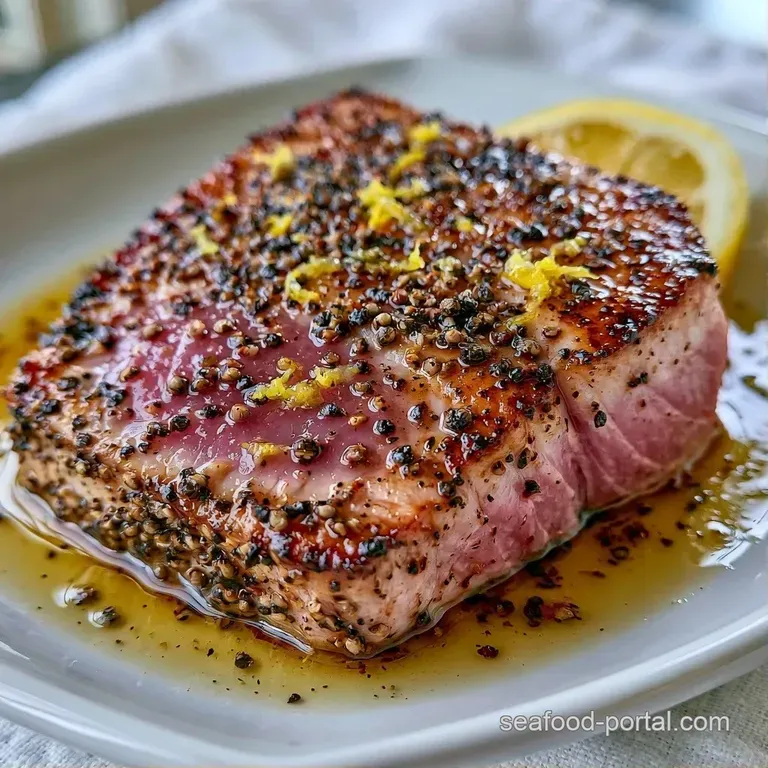
A rubbery texture usually means the tuna spent too much time in the pan. There is only a 30-second window between a perfect sear and overcooking. While the timer is helpful, check the side of the steak; you are aiming for a thin cooked layer surrounding a pink middle.
To prevent the fish from clinging to the surface, ensure your pan is sufficiently hot. The tuna should sizzle immediately upon hitting the oil. If you don't hear that sound, lift the fish out and give the oil another minute to reach the proper temperature.
Common Fixes
| Problem | Root Cause | Solution |
|---|---|---|
| Rubbery Texture | Overcooked | Reduce sear time by 30 seconds per side |
| Sticking to Pan | Pan too cold | Wait for oil to shimmer/smoke before adding fish |
| Grey Exterior | Moisture on surface | Pat fish completely dry before adding rub |
Fresh Flavor Twists
This Lemon Pepper Tuna is easy to adapt depending on what you have in your fridge. For a Mediterranean twist, stir a pinch of dried oregano into the rub and serve the dish with sliced olives.
To add some crunch, try a sesame crust by pressing seeds into the rub before searing for a nutty contrast to the citrus. For a more casual appetizer, you can apply this same seasoning to pan fried tuna cakes.
Decision Shortcut:
- Extra tang? → fold in 1 tsp extra lemon zest
- More heat? → add 1/4 tsp cayenne pepper to the rub
- Nutty flavor? → press sesame seeds onto the steaks before searing
Storage and Waste Tips
This dish is best eaten immediately, but you can keep leftovers in a glass container in the fridge for up to 2 days. To reheat, don't use the microwave. Instead, flash sear it in a pan for 30 seconds per side just to warm it through. If you overcook it during reheating, it will become dry.
Freezing seared tuna isn't recommended because the texture changes significantly. However, you can freeze raw tuna steaks wrapped in parchment and plastic wrap for about 2 months.
For zero waste, save the lemon hulls after zesting. You can toss them into a freezer bag with other citrus scraps to make a homemade citrus powder or use them to infuse vinegar.
The Best Side Pairings
Because Seared Lemon Pepper Tuna is so lean and bright, it pairs well with something earthy or creamy. A side of sautéed spinach with garlic or a light quinoa salad with cucumbers and feta works brilliantly.
If you're looking for a heartier meal, serve it over a bed of wild rice. The nuttiness of the rice balances the acidity of the lemon. For a low carb option, roasted asparagus or steamed broccolini provides a nice snap that complements the tender fish.
The Logic of the Sear
The success of Pan Seared Lemon Pepper Tuna comes down to the temperature gradient. By using a cast iron skillet, we create a massive amount of heat on the surface of the fish. This triggers the process where amino acids and sugars brown, creating a savory crust without cooking the inside.
According to Serious Eats, over high heat searing is essential for lean proteins to prevent moisture loss. This is why we temper the meat first; it ensures the heat penetrates evenly. If you want to see how this compares to other methods, check out my guide on how to cook a tuna steak using different heat levels.
Right then, you've got everything you need for a spot on dinner. Just remember: keep the pan hot, the fish dry, and don't overthink the timing. Trust the sizzle and enjoy.
Recipe FAQs
Is it true that butter is better than oil for searing tuna?
Actually, no. High smoke point oils like avocado oil prevent burning and create a cleaner crust.
How long do you pan sear tuna steak?
Sear for 60 90 seconds per side for rare or 2 minutes per side for medium rare. This ensures the center remains tender while the outside is browned.
What is the secret to a perfect tuna sear?
Pat the steaks completely dry with paper towels before seasoning. Removing surface moisture allows the heat to sear the meat instead of steaming it.
Which tuna is best for searing?
Yellowfin tuna steaks are the ideal choice due to their firm texture and lean profile. They hold their shape well under high heat.
How do I prevent tuna from sticking to the pan?
Heat your avocado oil until it is shimmering and just beginning to smoke. Adding the fish to a hot pan creates an immediate sear that releases naturally.
Can you cook tuna steak directly from frozen?
No, and here's why. Frozen meat releases excess water and won't sear properly, resulting in a grey, steamed texture.
What side dishes complement this tuna?
Sautéed spinach or a crisp cucumber salad balances the zesty pepper. For another elegant seafood option, try our sesame ginger tuna.
How to cook tuna steak in the oven?
Broil on high for a few minutes per side. Monitor closely to avoid overcooking, as tuna dries out quickly in the oven.
Lemon Pepper Tuna Steak