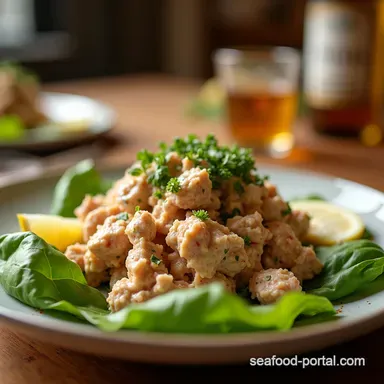
The Quintessential Creamy Tuna Salad Flavour Without Fuss
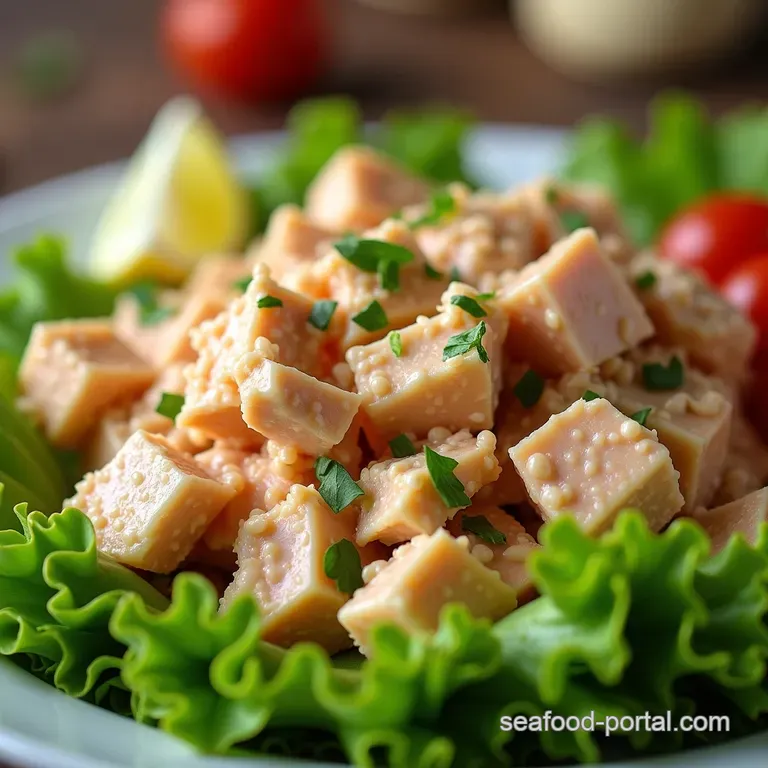
- Reclaiming the Lunch Hour: Why This Recipe Defines Classic Tuna Salad Perfection
- The Anatomy of an Unforgettable Sandwich Base
- Curating Your Core Components for Superior Flavour
- Essential Gear for Assembling Your Perfect Batch
- The Definitive Method for Building Your Classic Tuna Salad
- Elevating Your Experience: Serving Suggestions Beyond the Bread Slice
- Longevity and Next-Day Brilliance: Storing Your Creation
- Recipe FAQs
- 📝 Recipe Card
Reclaiming the Lunch Hour: Why This Recipe Defines Classic Tuna Salad Perfection
There are few culinary staples as enduringly comforting as a perfectly executed Classic Tuna Salad . It’s the quiet hero of the packed lunch, the reliable foundation for impromptu picnics, and the benchmark against which all other simple sandwiches are measured.
Yet, how often do we settle for a watery, flavourless version that barely warrants the bread it sits between? That ends today. We are diving deep into what makes a truly superior, creamy, and texturally satisfying batch the kind that earns its place as the definitive Classic Tuna Salad Recipe .
This isn't just about mixing ingredients; it’s about achieving a delicate equilibrium between richness, acidity, and satisfying crunch, ensuring every mouthful of your Tuna Salad Sandwich sings.
The Anatomy of an Unforgettable Sandwich Base
The difference between a mediocre tuna mix and the Best Tuna Salad Recipe lies entirely in the details of its foundation. We are aiming for a filling that holds its shape, shines with a bright flavour profile, and offers a dynamic contrast in textures.
Achieving this requires respecting the quality of the core elements and understanding how they interact.
Setting the Gold Standard for Creaminess and Crunch
The most critical textural interplay in this dish is the contrast between the soft, flaky protein and the sharp, hard vegetables. For our Classic Tuna Salad Ingredients , we rely on two non-negotiable crunchy elements: crisp celery and finely minced red onion.
The celery provides water content and a fresh, grassy snap, while the onion delivers a necessary, pungent bite. These elements must be finely diced no one wants to wrestle a massive chunk of celery in their sandwich. The goal is an even distribution of texture in every single bite.
Understanding the Heritage: A British American Flavour Bridge
While the concept of preserved fish mixed with binders is ancient, the modern, creamy Tuna Salad Recipe with Mayonnaise truly found its footing in the mid-20th century, bridging European simplicity with American abundance.
This iteration leans into that creamy heritage, using high-quality, full fat mayonnaise as the luxurious carrier. We balance this richness, however, with a sharp, essential tang that nods toward older, more acidic preparations. This balance is what makes this classic .
Why Draining Your Tuna Properly is Non-Negotiable
This is perhaps the most overlooked step in crafting a successful Easy Tuna Salad Sandwich . Whether you use tuna packed in water or oil, the liquid is the enemy of texture. Watery tuna dilutes the mayonnaise, leading to a sloppy, unappetizing spread.
If using tuna in water, drain it completely, then transfer the flakes to a fine mesh sieve and gently press out any remaining moisture using the back of a spoon. This simple act is the key differentiator for a firm, flavour concentrated result.
Curating Your Core Components for Superior Flavour
To build a batch yielding approximately four generous servings, we rely on precision, even in this seemingly simple preparation. Our selection process ensures depth beyond just salt and pepper.
Related Recipes Worth Trying
- Quick Healthy Spicy Tuna Wraps Ready in 15 Mins — Need a low calorie tuna lunch idea Try these No Cook Spicy Tuna Wraps They are zesty satisfying and bring that spicy tuna roll flavour without the fuss
- The Best Crab Salad Recipe Fresh Zesty Easy — Upgrade your lunch with this Proper Posh Crab Salad recipe Its light zesty and far better than soggy supermarket versions Perfect for an easy seafood salad
- The Ultimate Tuna Casserole with Crunchy Cheddar Topping — Elevate your weeknight dinner with this Proper Job Tuna Casserole recipe We ditch the soup for a velvety mushroom béchamel and a golden Panko crust Try this...
Essential Gear for Assembling Your Perfect Batch
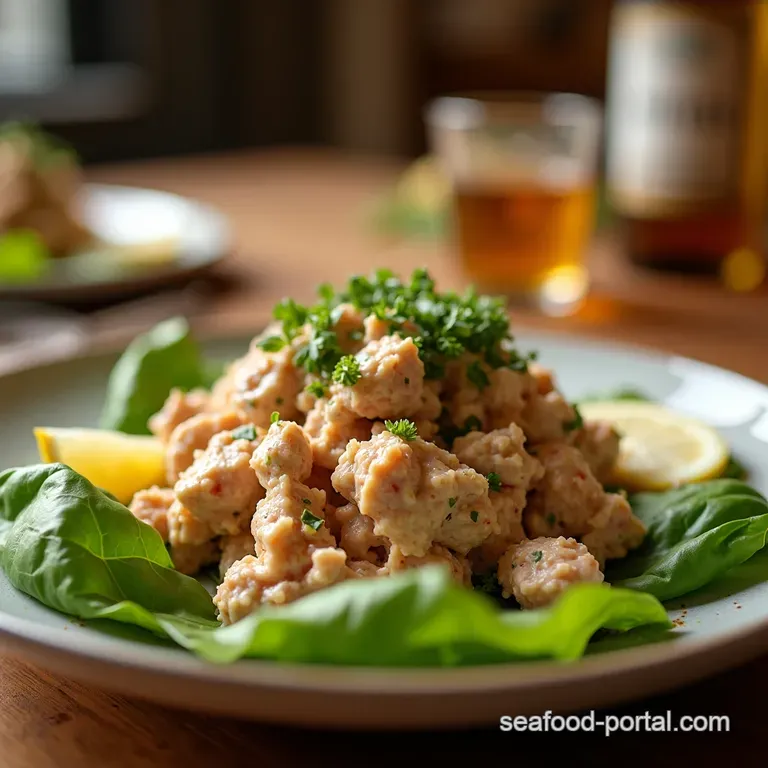
You don’t need a vast array of tools, but having the right equipment makes the process efficient and ensures the final texture is pristine.
Selecting the Finest Fish: Canned, Pouched, or Fresh?
For this iteration of Classic Tuna Salad , we use 5 ounces (or two standard cans) of high-quality canned tuna preferably packed in olive oil, which offers a richer flavour base, although tuna in water, meticulously drained, works perfectly well too.
While leftover cooked fresh tuna can be adapted for a Low-Carb Tuna Salad , the distinct, familiar flakiness of canned fish defines this particular classic preparation.
The Binding Agents: Achieving That Signature Tangy Emulsion
The creamy binder requires more than just mayonnaise. We begin with about 1/2 cup of full fat mayonnaise, which provides the necessary richness. To this, we incorporate 1 teaspoon of sharp Dijon mustard this is vital for complexity, offering a deep, earthy tang that yellow mustard cannot replicate.
Finally, 1 tablespoon of freshly squeezed lemon juice cuts through the fat, brightening the entire mix and ensuring it never tastes heavy.
Mise en Place: Measuring Out Your Crunchy Accents
Preparation of the texture elements must be meticulous. You’ll want 2 finely diced celery stalks and 1/4 cup of very finely minced red onion. These vegetables should be small enough to integrate seamlessly, not dominate the flake of the fish.
Don't forget 2 tablespoons of fresh, bright parsley, chopped finely, for an herbaceous lift.
The Definitive Method for Building Your Classic Tuna Salad
The entire active preparation time for this recipe is a swift 15 minutes, though I strongly advise a subsequent 30-minute chill.
Step 1: Breaking Down the Protein Base
Once the tuna is drained and patted dry, deposit it into your medium mixing bowl. Using a sturdy fork, gently break the tuna apart. Resist the urge to over mash; you should still see distinct, satisfying flakes of fish rather than a uniform paste.
Step 2: Introducing the Wet Ingredients (No Sogginess Allowed)
In a separate small bowl, whisk together your mayonnaise, Dijon mustard, and lemon juice until they form a smooth, cohesive emulsion. This ensures even distribution of flavour before it hits the tuna. Pour this binder mixture directly over the flaked fish.
Step 3: Integrating Textural Elements Without Overworking
Now, gently fold in your diced celery, minced red onion, and fresh parsley. Use a rubber spatula and employ gentle under and-over strokes. The goal is to coat the fish and vegetables evenly with the binder, not to beat the mixture into submission.
Overmixing releases starch from the vegetables and breaks down the tuna further, compromising the texture.
Step 4: The Crucial Chill Phase for Flavour Marriage
This is the secret weapon for achieving truly memorable flavour in any Dinner Salads Tuna preparation. Season the mixture with 1/2 teaspoon of fine sea salt and 1/4 teaspoon of freshly ground black pepper.
Cover the bowl tightly and refrigerate for a minimum of 30 minutes. This resting period allows the lemon and mustard to permeate the fish and the raw sharpness of the onion to mellow slightly against the creaminess.
Elevating Your Experience: Serving Suggestions Beyond the Bread Slice
While nothing beats a perfect Tuna Salad Sandwich on toasted sourdough, this versatile mixture shines in numerous other applications.
Optimal Serving Vessels: From Croissant to Cracker Platter
For lunch, stuff the mixture into a hollowed out half an avocado for a vibrant, low-carb alternative, perfect for those seeking a Low-Carb Tuna Salad . Alternatively, serve a generous scoop atop a crisp, butter lettuce leaf for a light, elegant starter.
It is also magnificent spooned over a warm baked potato or served simply with quality oatcakes or water biscuits.
Longevity and Next Day Brilliance: Storing Your Creation
Proper storage is key to maintaining the freshness and texture of your meticulously prepared salad.
Maximizing Freshness: The Best Practices for Refrigerated Holding
Keep your Classic Tuna Salad tightly covered in an airtight container in the coldest part of your refrigerator. When made correctly with fresh lemon juice, it should hold beautifully for 3 to 4 days.
If you plan to use it later in the week, it is best to chop your celery and onion fresh just before mixing for the freshest crunch.
Troubleshooting: How to Fix Runny or Bland Batches
If your initial mix is too loose, you have two options: 1) Stir in an extra spoonful of mayonnaise, or 2) Add a few crushed saltine crackers, which will absorb excess moisture while adding a nice subtle flavour note.
If it tastes bland, it almost always needs more acid or salt; add a half teaspoon of lemon juice and a pinch of salt, then re-taste.
Expert Hacks: Boosting Your Classic Tuna Salad with Unexpected Zest
To take this classic one step further, consider adding finely minced dill pickles or capers (about 1 tablespoon total) for an intense burst of salinity and pickle brine tang. Alternatively, for a heartier version, folding in one finely chopped, hard boiled egg transforms it into a richer, protein packed meal.
Recipe FAQs
How do I stop my Classic Tuna Salad from tasting watery?
That’s a cracking question, as excess liquid is the bane of a good tuna mix! The secret is twofold: ensure you drain the tuna tins thoroughly, and if it’s packed in water, press the fish firmly against the side of your sieve with the back of a spoon to squeeze out every last drop.
A well drained base means the mayonnaise binder stays creamy, not soggy.
Can I make this ahead of time, and how long does it keep in the fridge?
Absolutely, and I highly recommend chilling it for at least 30 minutes it lets all those flavours properly meld together. You can safely store leftover Classic Tuna Salad in an airtight container in the fridge for up to three days.
Just give it a good stir before serving again, as it might stiffen up slightly when cold.
What’s the best way to make this recipe healthier without losing flavour?
The main area for adjustment is the binder, which is usually mayonnaise. Try swapping out half of the mayo for plain Greek yogurt or low-fat crème fraîche; this will keep the dish creamy but introduce a nice tang and cut down on the fat content significantly.
Also, opt for tuna packed in spring water rather than oil.
My celery and onion are a bit too crunchy; how can I soften them up?
If you prefer a softer bite, try quickly blanching the finely diced celery in boiling water for about 30 seconds, then immediately plunging it into ice water this takes the raw edge off. Alternatively, use a shallot instead of red onion, as shallots are naturally milder and less assertive when raw.
What are some good additions or variations if I fancy a change from the standard?
If you fancy something a bit different, consider adding a teaspoon of mild curry powder along with a few chopped sultanas (golden raisins) for a classic, slightly sweet twist. For a bit of zest, stir in a tablespoon of capers or a dash of your favourite hot sauce right before chilling.
It keeps the core satisfying, but with an added kick!
Classic Creamy Tuna Salad