California Roll Sushi: Fresh and Authentic
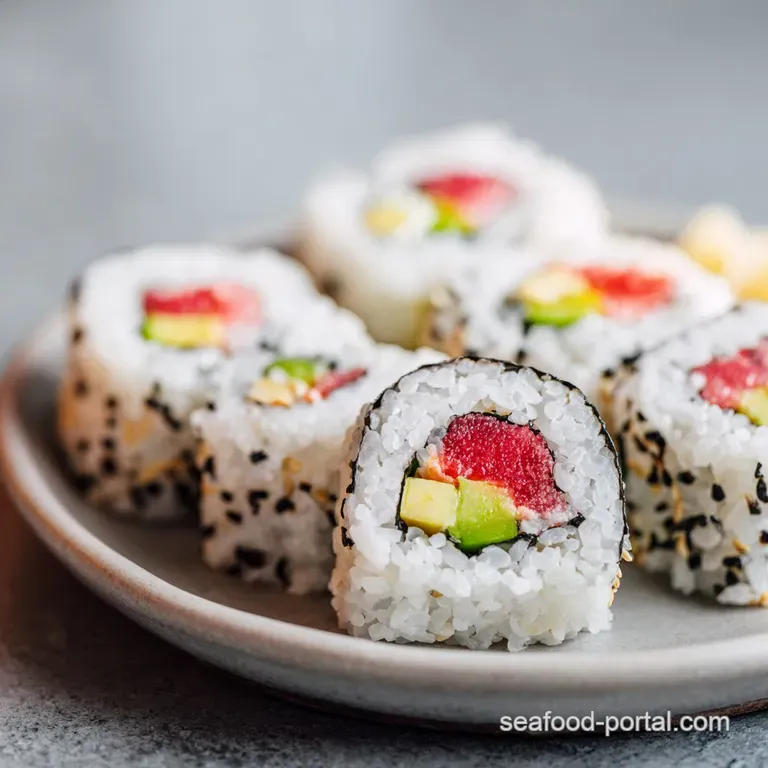
- Time: Active 40 minutes, Passive 20 minutes, Total 60 minutes
- Flavor/Texture Hook: Silky imitation crab meets crisp cucumber and buttery avocado
- Perfect for: Weekend dinner projects or impressive date night appetizers
- Master Your Own California Roll Sushi
- Why This Flavor Layering Works
- Essential Elements For Perfect Results
- Tools To Help You Roll
- Step By Step Rolling Guide
- Fix Your Sushi Making Mistakes
- Customizing Your Sushi Roll Variations
- Keeping Your Leftovers Fresh Longer
- Best Side Dishes To Serve
- Debunking Sushi Making Myths
- Critical Sodium Alert
- Recipe FAQs
- 📝 Recipe Card
Master Your Own California Roll Sushi
We have all been there, standing in the kitchen with rice glued to every single finger, looking at a roll that resembles a squashed burrito more than a elegant piece of sushi. It is the classic "home cook sushi disaster" where the rice is too mushy, the seaweed is chewy, and the whole thing falls apart the second it touches soy sauce.
I remember my first attempt; I didn't rinse the rice enough, and I ended up with a literal brick of starch that tasted like nothing. It was a bold failure, but it taught me that great sushi isn't about magic it is about managing moisture and tension.
This California Roll Sushi recipe is specifically designed to fix those common mistakes. We are moving away from the bland, supermarket versions and building layers of flavor that actually pop. You are going to learn how to get that signature "inside out" look without the rice sticking to everything you own.
We'll focus on the contrast between the velvety Kewpie mayo and the sharp, clean crunch of the English cucumber. It is a street style approach to a classic that prioritizes bold flavor and approachable techniques.
By the time you finish this, you will understand how to handle short grain rice like a pro and how to apply the right amount of pressure during the roll to create a compression seal. We are not just making food; we are building a textural masterpiece that balances acid, fat, and salt.
No more rubbery rolls or bland fillings just vibrant, high impact sushi that looks as good as it tastes. Let's get into the mechanics of why this actually works.
Why This Flavor Layering Works
Starch Management: Rinsing the rice 3 to 4 times removes the excess surface starch that causes grains to clump into a gummy mess, allowing each grain to stay distinct and chewy.
Acetic Acid Infusion: Folding the vinegar mixture into hot rice triggers a quick absorption process where the acidity balances the sugar, creating a vibrant base that cuts through the fatty avocado.
Structural Tension: Using a plastic wrapped bamboo mat allows for even, downward pressure that binds the rice to the nori without crushing the delicate air pockets between grains.
Fat to Crunch Ratio: Mixing imitation crab with Kewpie mayonnaise provides a rich, creamy mouthfeel that contrasts perfectly against the julienned English cucumber’s snap.
Temperature Control: Letting the seasoned rice cool to room temperature before rolling ensures the nori stays crisp instead of becoming steamed and chewy from residual heat.
| Rice Type | Water Ratio | Optimal Texture | Visual Cue |
|---|---|---|---|
| Japanese Short Grain | 1:1.15 | Chewy and distinct | Grains look glossy and translucent |
| Medium Grain | 1:1.25 | Softer, slightly sticky | Grains clump more easily |
| Long Grain (Avoid) | 1:1.5 | Dry and fluffy | Grains separate completely; won't hold shape |
Setting the foundation for your sushi starts with the rice, and if you get this part wrong, the rest of the ingredients won't matter. The ratio of 2 cups of water to 2 cups of rice is the sweet spot for a rice cooker, but if you are using a stovetop, you might need a splash more to account for evaporation.
The key is that 10 minute rest after the heat goes off; that is when the steam finishes the job of hydrating the core of every single grain.
Essential Elements For Perfect Results
| Ingredient | Science Role | Pro Secret |
|---|---|---|
| Japanese Short Grain Rice | Provides the structural starch matrix | Use only "New Crop" rice for higher moisture content and better flavor. |
| Rice Vinegar | Denatures surface proteins for better seasoning | Always fold it in while rice is steaming hot to ensure deep flavor penetration. |
| Nori (Seaweed) | Acts as the tension bearing outer shell | Toast the nori for 3 seconds over a flame to revive its natural snap. |
| Kewpie Mayonnaise | Emulsifies the crab mix with fat | This Japanese mayo uses only yolks, providing a much richer, velvety texture than standard mayo. |
Choosing the right ingredients is the difference between a roll that tastes flat and one that feels professional. You need that Japanese short grain rice because it has the right balance of amylose and amylopectin to stay sticky enough to hold but firm enough to bite.
If you try using Jasmine or Basmati, the roll will simply crumble because they lack the necessary surface starch to create a bond.
The California Roll Ingredients
- 2 cups (400g) Japanese short grain rice: This is the backbone; its starch profile is essential for the "stick."
- 2 cups (475ml) Filtered water: Using filtered water prevents any chlorine or mineral tastes from interfering with the delicate rice.
- 1/4 cup (60ml) Rice vinegar: This provides the essential "sushi" tang.
- 2 tbsp (25g) Granulated sugar: Balances the acidity of the vinegar.
- 1 tsp (6g) Sea salt: Sharpens all the other flavors.
- 4 sheets Nori: The dark seaweed sheets that hold everything together.
- 8 oz (225g) Imitation crab (kanikama): Made from white fish, it has a mild sweetness that pairs perfectly with mayo.
- 1 large Hass avocado: Look for one that yields slightly to pressure for that buttery texture.
- 1 English cucumber: These have fewer seeds and a thinner skin, which is vital for the crunch.
- 2 tbsp Kewpie mayonnaise (for crab mix): The gold standard for sushi because of its deep umami flavor.
- 3 tbsp Kewpie mayonnaise (for spicy mayo): The base for our bold, street style topping.
- 2 tbsp Toasted sesame seeds: These add a nutty aroma and a tiny bit of texture to the rice.
- 1 tbsp Sriracha: For a controlled heat that doesn't overwhelm.
- 1/2 tsp Toasted sesame oil: Adds a layer of smoky depth.
- 1/4 tsp Garlic powder: A tiny savory kick for the sauce.
| Original Ingredient | Substitute | Why It Works |
|---|---|---|
| Imitation Crab | Cooked Shrimp | Similar bouncy texture and sweetness. Note: Chop finely to match the crab's consistency. |
| Rice Vinegar | Apple Cider Vinegar | High acidity levels. Note: Adds a slight fruity note; use a pinch less sugar. |
| English Cucumber | Persian Cucumber | Same thin skin and low seed count. Note: Use two since they are much smaller. |
| Kewpie Mayonnaise | Standard Mayo + pinch of sugar | Provides the fat. Note: Lacks the MSG/yolk richness, but works in a pinch. |
The rice vinegar is non negotiable for that authentic flavor profile, but you have to be careful not to drown the rice. I have seen people pour the vinegar in all at once, which leads to a puddle at the bottom of the bowl.
You want to use a slicing motion with your rice paddle never mash to distribute the liquid evenly while the steam is still rising. This ensures every grain is coated but not crushed.
Tools To Help You Roll
You do not need a kitchen full of gadgets, but a few specific items make this California Roll Sushi much easier to handle. A bamboo rolling mat, known as a makisu, is the most important. Without it, getting enough even pressure to create a tight roll is nearly impossible.
I also highly recommend a high-quality rice cooker if you make sushi often, as it provides the most consistent heat distribution for those delicate grains.
You will also need plastic wrap to cover your bamboo mat. This is a pro trick for "Uramaki" (inside out rolls) because it prevents the rice from getting stuck in the slats of the bamboo. A very sharp chef's knife is your second most important tool.
A dull blade will tear the seaweed and squish your beautiful roll into an oval mess. Keep a small bowl of "Tezu" (water mixed with a splash of rice vinegar) nearby to dip your fingers in; this is the only way to stop the rice from sticking to your hands.
step-by-step Rolling Guide
- Rinse the rice. Place the 2 cups of Japanese short grain rice in a fine mesh strainer and run cold water over it. Swirl it with your hand for 3 to 4 cycles until the water runs clear. This is the most important step for preventing mushiness.
- Cook the foundation. Combine the rinsed rice and 2 cups of filtered water in your rice cooker and hit the start button. If using the stovetop, bring it to a boil, then cover and simmer on the lowest possible heat for 15 minutes. Let it sit, covered, for another 10 minutes to finish steaming.
- Season the rice. While the rice is hot, transfer it to a large bowl. Gently fold in the rice vinegar, sugar, and sea salt using a slicing motion with a rice paddle. This avoids mashing the grains. Let it cool to room temperature.
- Prepare the fillings. Shred the 8 oz of imitation crab and mix it with 2 tbsp of Kewpie mayonnaise in a small bowl. Thinly slice the avocado and julienne the seeded cucumber into matchsticks.
- Whisk the sauce. In a separate bowl, combine 3 tbsp Kewpie mayo, 1 tbsp Sriracha, 1/2 tsp sesame oil, and 1/4 tsp garlic powder. This is your bold topping.
- Set the mat. Cover your bamboo mat tightly with plastic wrap. Place a half sheet or full sheet of nori on the mat, rough side up.
- Spread the rice. Using damp fingers, spread a thin, even layer of rice over the entire nori sheet. Sprinkle with sesame seeds. Flip the nori over so the rice is now facing down on the plastic wrap.
- Layer the centers. Place a line of the crab mix, avocado, and cucumber across the center of the nori. Don't overfill, or it won't close.
- Execute the roll. Lift the edge of the mat closest to you and fold it over the filling. Use your fingers to tuck the edge in tightly, then continue rolling while applying downward pressure until a tight cylinder forms.
- Slice and serve. Use a very sharp, damp knife to slice the roll into 8 even pieces. Wipe the knife and re dampen it between every single cut to ensure a clean, professional look.
Fix Your Sushi Making Mistakes
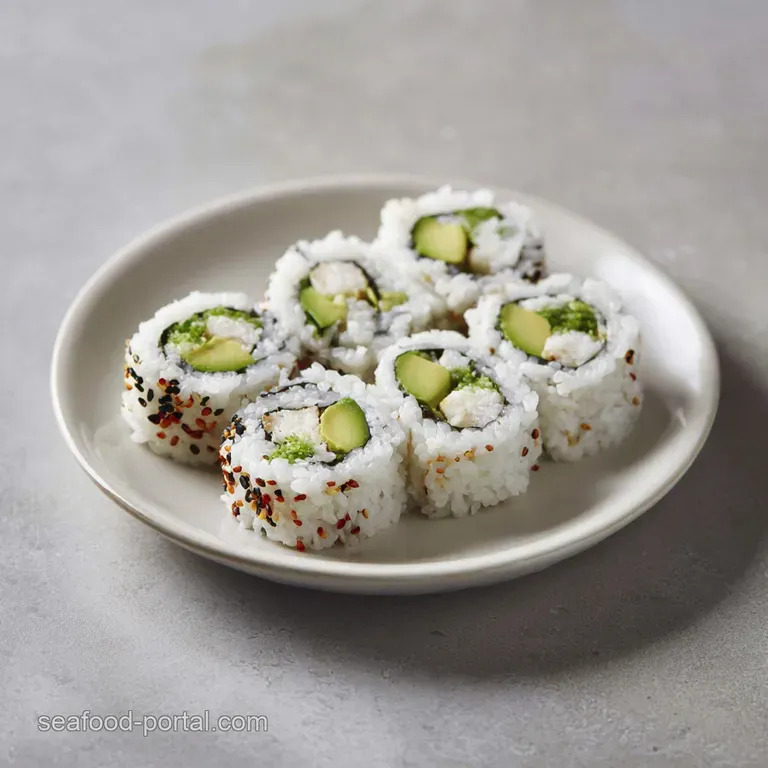
One of the most frustrating things is when your sushi rice is either too hard or way too mushy. If it is too hard, you likely didn't use enough water or didn't let it rest long enough after cooking. If it is mushy, you probably didn't rinse the starch off well enough.
Another big issue is the "exploding roll," which happens when you try to cram too much crab and avocado into the center. Less is more when it is your first time rolling.
Fixing the Loose Roll
If your roll feels floppy or falls apart when you pick it up, it is a tension issue. When you are rolling, you need to use the bamboo mat to "hug" the roll. As you make the first turn, pull back slightly on the mat to tighten the cylinder before finishing the rotation.
Think of it like rolling a sleeping bag; if it isn't tight from the start, it will never be firm at the end.
Preventing the "Rice Stick" Nightmare
If the rice is sticking to your hands more than the nori, your hands are too dry or too wet. You want them just barely damp with vinegar water. If they are dripping wet, the rice will slide around; if they are dry, the starch will act like superglue. Keep a damp towel nearby to wipe your fingers frequently.
| Problem | Root Cause | Solution |
|---|---|---|
| Nori is chewy/rubbery | Rice was too hot | Allow rice to cool fully to room temperature before spreading. |
| Roll falls apart when cut | Knife is dull or dry | Use a razor sharp knife and wipe with a damp cloth after every cut. |
| Rice is bland | Seasoning wasn't folded in hot | Add vinegar mixture immediately after cooking while rice is still steaming. |
Common Mistakes Checklist - ✓ Rinsing rice until the water is crystal clear (prevents gummy texture). - ✓ Using a slicing motion to season rice instead of stirring (preserves grain integrity). - ✓ Wrapping the bamboo mat in plastic (prevents sticking and mess).
- ✓ Wetting the knife blade before every single cut (ensures clean edges). - ✓ Letting the rice cool completely (stops the seaweed from getting soggy).
Customizing Your Sushi Roll Variations
Scaling this California Roll Sushi recipe is quite simple because the ratios are straightforward. If you are making this for a big party, you can double the rice and water, but be careful with the seasonings.
For the vinegar mixture, I usually only go to 1.5x the amount of salt and sugar when doubling the rice to keep the flavor from becoming too aggressive. Work in batches when rolling; don't try to spread rice on 10 nori sheets at once, or the first ones will dry out before you can fill them.
For a smaller portion, like a lunch for one, you can easily halve the recipe. Use a smaller pot for the rice to ensure the water doesn't evaporate too quickly. If you have leftover rice but no more nori, you could check out my California Roll Sushi Bowls for a quick way to use up the ingredients without the hassle of rolling.
| Feature | Fresh Crab Version | Imitation Crab Shortcut |
|---|---|---|
| Flavor Profile | Sweet, briny, and delicate | Mild, savory, and slightly sweet |
| Texture | Flaky and tender | Bouncy and uniform |
| Prep Time | High (cleaning/picking meat) | Low (ready to shred) |
Customizing Your Experience
- If you want a crunchier texture, add a layer of panko breadcrumbs to the outside of the rice before rolling.
- If you want it spicy, double the Sriracha in the crab mix itself instead of just using it as a topper.
- If you want a healthier twist, use brown sushi rice, though keep in mind it requires more water and a longer soak time.
If you are looking for a completely different way to serve these flavors without the precision of rolling, you might love an Easy Sushi Bake. It takes all the California roll ingredients and turns them into a warm, comforting casserole that is perfect for feeding a crowd.
Keeping Your Leftovers Fresh Longer
Sushi is always best the moment it is made, but we all have leftovers. The biggest enemy of leftover sushi is the refrigerator, which dries out the rice and turns it into hard little pebbles. To prevent this, wrap the uncut rolls tightly in plastic wrap before putting them in an airtight container.
If you have already sliced them, place a damp paper towel over the pieces before sealing the lid. This creates a little humidity chamber that keeps the rice soft for up to 24 hours.
For zero waste, don't throw away the cucumber seeds or the avocado pit. You can toss the cucumber cores into a pitcher of water for a refreshing drink. Leftover spicy mayo is basically gold use it on sandwiches, as a dip for fries, or drizzled over grilled fish the next day.
If you have leftover nori that has lost its snap, you can toast it briefly over a gas flame to bring back that crunch.
Best Side Dishes To Serve
When serving California Roll Sushi, I love to lean into the street style vibe with bold, vibrant sides. A simple edamame bowl tossed with sea salt and a drizzle of chili oil is the perfect starting point. The heat from the oil contrasts beautifully with the cool, creamy avocado in the rolls.
I also find that a bright seaweed salad provides a nice oceanic tang that complements the imitation crab without being overwhelming.
Another great pairing is a hot bowl of miso soup. The salty, savory broth acts as a palate cleanser between pieces of sushi. If you want something more substantial, a side of ginger dressed greens provides a sharp acidity that cuts through the richness of the Kewpie mayo.
No matter what you choose, keep the sides light and focused on clean flavors so the sushi remains the star of the show.
Debunking Sushi Making Myths
One major misconception is that "sushi" refers to the raw fish. In reality, the word "sushi" refers specifically to the vinegared rice. This is why a California roll is still authentic sushi even though it uses cooked ingredients like imitation crab.
The quality of your meal depends almost entirely on how well you treat the rice, not just the freshness of the fillings.
Another myth is that you need to use a lot of vinegar to keep the rice together. Actually, it is the starch and the pressure from rolling that provide the structure. Too much vinegar will make the rice soggy and cause the nori to disintegrate.
Balance is key; you want just enough to brighten the flavor and give the rice that signature glossy sheen.
Finally, many people think you shouldn't season the rice until it is cold. This is actually the opposite of what you should do. Folding the seasoning into hot rice allows the grains to expand and absorb the liquid as they cool.
If you wait until the rice is cold, the seasoning will just sit on the surface, making the rice feel slimy rather than flavorful. Trust the process and season it the moment it hits the bowl.
Critical Sodium Alert
1210 mg of sodium per serving (53% of daily value)
The American Heart Association recommends limiting sodium intake to no more than 2,300mg per day, with an ideal limit of about 1,500mg for most adults.
Tips to Reduce Sodium in Your Sushi Rolls
-
Choose Low-Sodium Imitation Crab-25%
The imitation crab (kanikama) is a significant sodium contributor. Opt for brands specifically labeled as 'low sodium' or 'no salt added' if available.
-
Halve the Added Salt-12%
Reducing the sea salt by half can make a noticeable difference. You might find the other flavorful ingredients provide enough savory notes.
-
Make Your Own Spicy Mayo-10%
store-bought mayonnaise, including Kewpie, can contain sodium. Control the amount by mixing your own mayonnaise with Sriracha, and consider using a low-sodium mayonnaise for the crab mix.
-
Boost Flavor with Herbs and Spices
Enhance the taste without salt by generously using fresh herbs like cilantro or mint, and spices like ginger, black pepper, or a pinch of chili flakes.
-
Rinse the Rice-2%
Rinsing the Japanese short grain rice thoroughly under cold water before cooking can remove some surface starch and potentially a small amount of residual sodium.
Recipe FAQs
What is in a California roll sushi?
A California roll contains imitation crab, avocado, cucumber, and seasoned Japanese short grain rice wrapped in nori. It is finished with a drizzle of spicy mayo made from Kewpie mayonnaise, Sriracha, sesame oil, and garlic powder.
Is sushi good for lowering triglycerides?
No, it is not a specific treatment for triglycerides. While it contains healthy fats from avocado, the rice is a refined carbohydrate and the imitation crab is a processed ingredient, so it should be enjoyed in moderation as part of a balanced diet.
What is the best sushi for diabetics?
Focus on low-carb, high protein options that minimize white rice consumption. If you enjoy the assembly process, you can adapt these flavors into an effortless sushi bake to better control the rice-to-topping ratio.
Can sushi lower cholesterol?
No, sushi is not considered a cholesterol lowering food. The ingredients used in a California roll, such as imitation crab and Kewpie mayo, do not provide significant fiber or nutrients specifically linked to reducing LDL levels.
How to keep the rice from becoming mushy?
Rinse the rice in a fine mesh strainer under cold water for 3 to 4 cycles until the water runs completely clear. Removing this excess surface starch is the single most important technique for achieving the correct texture, similar to how we manage starch for perfect results in our insideout sushi rolls.
How to slice the rolls without the filling squishing out?
Use a very sharp, damp knife to slice through the roll in one smooth motion. Applying a light dampening to the blade prevents the rice from sticking, which allows you to maintain clean, professional looking edges.
Is it true I should mash the rice into the nori?
No, this is a common misconception. You must gently fold in the vinegar mixture using a slicing motion with a rice paddle to keep the grains intact and avoid mashing them, ensuring the rice remains light rather than gummy.
Homemade California Roll Sushi
Ingredients:
Instructions:
Nutrition Facts:
| Calories | 692 kcal |
|---|---|
| Protein | 13.6 g |
| Fat | 24.8 g |
| Carbs | 103.2 g |
| Fiber | 6.4 g |
| Sugar | 8.7 g |
| Sodium | 1210 mg |
