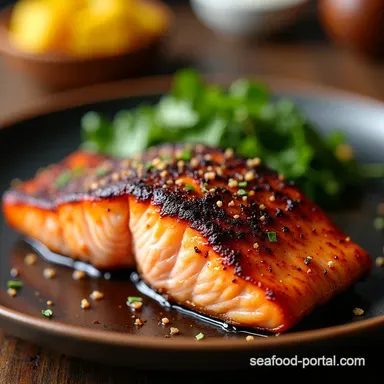
The Chefs Secret to Restaurantquality Fiery Blackened Salmon

- Unlocking the Magic of High-Heat Seasoning for Stunning Blackened Salmon
- Why This Method Beats the Grill Every Time
- Assembling Your Fiery Spice Rub Components
- Sourcing Superior Salmon Fillets
- The Crucial Pre-Cook Preparation Steps
- Achieving the Optimal Searing Temperature for Maximum Flavor
- Maximizing Flavor and Longevity of Your Creation
- Variations on the Classic Blackened Theme
- Frequently Asked Questions
- 📝 Recipe Card
Unlocking the Magic of High-Heat Seasoning for Stunning Blackened Salmon
Right then, let’s get this show on the road! Blackened Salmon, a proper bit of theatre in the kitchen, that is. It’s a fantastic way to get that smoky, spicy crust onto beautiful salmon without resorting to a full-on barbecue.
This method delivers incredibly moist salmon fillets encased in a deeply flavourful, perfectly charred crust thanks to a homemade spice blend that sings of Cajun and Creole sunshine. It’s quick enough for a Tuesday supper but impressive enough for a weekend dinner party.
We’re keeping this iteration strictly Paleo and gluten-free, ensuring everyone gets a taste of that magnificent smoky magic. Forget dry, dusty fish! This Blackened Salmon Recipe is the gateway to your new favorite fish dish.
Why This Method Beats the Grill Every Time
While Blackened Salmon on the Grill certainly has its place, pan-blackening offers superior control and consistency, especially when aiming for that specific crust we crave.
The direct, high heat transfer from cast iron creates an almost instantaneous sear that locks in the juices before the natural fats in the fish have a chance to escape. We achieve a stunning char right on your stovetop, which means no fussing with charcoal or waiting for the grill grates to reach the perfect temperature.
This technique is fast, delivering restaurant-quality results in roughly 20 minutes total time.
The Paleo Promise: Flavor Without Compromise
One of the major beauties of authentic blackening is its inherent simplicity. Traditional methods rely solely on spices and high-heat fat, making it naturally compliant with both Paleo and gluten-free lifestyles.
Since we skip the flour dredge often used in older recipes, we maximize the impact of our Blackened Salmon Seasoning directly onto the protein. This approach ensures maximum flavor payoff while keeping the dish clean and pure.
A Quick Guide to Achieving That Signature Char
The signature "blackened" appearance isn't truly burnt; it’s a deep, flavorful char achieved through the Maillard reaction accelerated by extreme heat. For our recipe, we rely on four ounces of salmon, about one inch thick, generously coated in our potent spice rub.
The magic happens when those spices hit clarified butter (Ghee) heated to the point of shimmering, just before heavy smoking. This intensity forces the exterior to caramelize rapidly, creating that dark, flavour-intensive shell while protecting the delicate interior.
Elevating Everyday Dinners: Introducing Your New Favourite Fish
Once you master this technique, it quickly becomes the Best Salmon Recipe in your rotation. The robust flavor profile means it pairs wonderfully with bright, acidic sides, or transforms beautifully when flaked into other meals, leading directly into delicious concepts like Blackened Salmon Tacos or a zesty Blackened Salmon Salad .
This foundational recipe sets you up for endless culinary creativity.
Assembling Your Fiery Spice Rub Components
The heart of this experience lies entirely within the spice blend. We are using a blend that balances earthiness, smoke, and heat. For four six-ounce portions of salmon, you’ll want to whisk together 2 tablespoons of smoked paprika, 1 tablespoon of dried thyme, 1 teaspoon each of dried oregano, garlic powder, and onion powder.
Crucially, introduce the heat with ½ to 1 teaspoon of cayenne pepper, depending on your courage, along with 1 teaspoon each of coarse sea salt and freshly ground black pepper. Thoroughly whisking these components together in a small bowl ensures uniform coverage when you move to application.
Sourcing Superior Salmon Fillets

For the best results in this high-heat application, opt for skin-on, center-cut fillets, ideally about one inch thick. The skin acts as a fantastic insulator, helping to prevent the flesh from overcooking while the crust develops perfectly.
Patting these four portions absolutely bone-dry with paper towels before applying the seasoning is a non-negotiable first step; moisture creates steam, and steam prevents the crucial crust formation.
The Essential Spice Blend Ratios for Authenticity
The dominance of smoked paprika is what truly sets this blend apart, providing that signature deep color and smoky depth without needing an actual smoker. By keeping the herbs (thyme and oregano) in supporting roles, we ensure the spice blend delivers a strong, direct punch that stands up beautifully to the high temperatures.
Remember, don't be shy; you want a thick, even coating on all sides of the fish.
Oil Selection: Which Fats Withstand the High Heat?
Because blackening requires medium-high to high heat, significantly higher than a typical sauté, you must select an oil with a high smoke point. Standard butter or low-grade olive oil will burn and turn acrid before the salmon is even halfway cooked.
Clarified butter, known as Ghee, is the chef’s preferred choice here, closely followed by coconut oil or avocado oil. These fats can handle the intense heat required to achieve that perfect char.
Tools Required for the Flawless Blackened Salmon Crust
While you can attempt this in a stainless steel skillet, the absolute champion tool for this process is a heavy-bottomed cast-iron skillet. Cast iron retains heat incredibly well and distributes it evenly across the surface, minimizing hot spots that could scorch your spice rub unevenly.
Ensure your skillet is large enough to accommodate all four fillets without overcrowding the pan; working in batches is always preferable to compromising the heat level.
Related Recipes Worth Trying
- Blackened Salmon with Dill Sauce Quick 30Min Dinner — Master easy Blackened Salmon with Creamy Dill Sauce Achieve a perfect Cajun char in 30 mins using this foolproof technique A stellar easy salmon dinner
- The Perfect 10Minute Crisp Pan Seared Salmon Recipe — Master the easiest Pan Seared Salmon recipe for guaranteed crispy skin This quick salmon dinner takes under 15 minutes with a bright lemondill butter sauce
- The Foolproof 15Minute Flake Perfectly Baked LemonDill Salmon — Learn how long to bake salmon for the perfect flaky texture every time This easy baked salmon recipe at 400 degrees is a healthy salmon dinner classic
The Crucial Pre-Cook Preparation Steps
After thoroughly mixing your spice rub, it’s time to dress the fish. Apply the spice mixture generously to every surface of your dried salmon fillets, pressing gently so the spices adhere firmly. Once seasoned, they are ready for the heat.
While the pan preheats, which takes a solid five minutes over high heat, make sure your ventilation hood is running at full blast, a little smoke is part of the fun, but we want to keep the kitchen clear!
Achieving the Optimal Searing Temperature for Maximum Flavor
This stage separates success from sogginess. Place your cast iron pan over medium-high heat and allow it to preheat for a full five minutes. Add four tablespoons of your chosen high-smoke-point fat. Wait patiently until the fat is fully heated, it should be shimmering and just beginning to emit a very light smoke.
This indicates the temperature is high enough to instantaneously sear the outside of the fish.
Mixing and Applying the Dry Rub: Don't Be Shy!
As discussed, the rub must adhere thickly. Since we are skipping the traditional flour dredge, the spices themselves form the crust. Apply a thick blanket of your Blackened Salmon Seasoning across the entire surface area, working it in gently.
The more spice adheres now, the deeper and more even your final char will be, providing a fantastic foundation for dishes like Blackened Salmon Salad .
Pan Selection: Cast Iron vs. Stainless Steel Showdown
For truly professional results, cast iron is the undisputed winner here due to its thermal mass. If you must use stainless steel, use the thickest gauge you own and give it extra time to heat up slowly and evenly.
Regardless of material, do not attempt to cook until the fat is ripping hot; impatience at this stage leads to sticking and uneven cooking.
The Flip: Timing Your Blackening Process Perfectly
Carefully lay the seasoned fillets into the scorching fat, skin-side down first if applicable. Now, you must exercise discipline: do not touch the fish for three to four minutes. This undisturbed time is when the characteristic dark crust develops. You will notice the edges firming up.
Once the crust is firmly set and deeply colored, gently flip the fish using a sturdy metal spatula.
Determining Doneness Without Overcooking the Interior
After flipping, reduce the heat slightly to medium to ensure the center cooks through without burning the exterior. For those beautifully flaky results, the cooking time after the flip is typically another three to five minutes, depending on thickness.
The internal temperature should register 145° F ( 63° C) when checked with a thermometer, or the fish should flake easily when gently probed with a fork.
Remove them from the pan immediately at this point to prevent residual heat from pushing them past perfection.
Maximizing Flavor and Longevity of Your Creation
Once removed from the pan, let the fillets rest briefly, just two minutes is enough. This allows the juices, which were driven to the center during the intense searing, to redistribute throughout the flesh.
A squeeze of fresh lemon juice over the top right before serving brightens the deep, smoky notes beautifully. This method ensures that even the next day, your fish remains flavorful.
Variations on the Classic Blackened Theme
This versatile recipe serves as a brilliant starting point. For those craving even more complexity, you can easily adapt it. Think beyond the main course; flaked, cold Blackened Salmon Salad is divine on a bed of mixed greens with a creamy avocado dressing, offering a cool contrast to the heat.
Alternatively, using the flakes as a spicy protein filler for Blackened Salmon Tacos with cabbage slaw and lime crema is an excellent way to repurpose leftovers.
Storage Secrets: Keeping Leftover Blackened Salmon Succulent
When storing, always allow the salmon to cool completely before sealing it in an airtight container. While best eaten the day it’s made, leftovers will keep well in the refrigerator for up to three days.
To reheat, avoid the microwave, which can turn the fish rubbery; instead, gently warm the flakes in a dry, warm skillet or simply enjoy them cold atop a salad.
Pairing Suggestions: Sides That Complement the Spice
To balance the bold, smoky profile of Blackened Salmon , opt for cooling, starchy, or sharp sides. Creamy cauliflower mash seasoned with a hint of nutmeg is a wonderful Paleo-friendly base.
Alternatively, a bright, acidic slaw made with shredded cabbage, cilantro, and a lime vinaigrette cuts through the richness of the fish perfectly.
Spice Level Adjustment: Taming or Turning Up the Heat
Customizing the heat is simple: adjust the cayenne pepper in the initial rub. For a milder experience suitable for less adventurous palates, omit the cayenne entirely or substitute it with a touch of sweet paprika.
For those who want a serious kick, consider adding a pinch of ground chipotle powder alongside the cayenne for an extra layer of deep smoke and intensity. This flexibility ensures this remains Is Blackened Salmon Healthy and perfectly tailored to your taste buds every single time.
Frequently Asked Questions
Why is my Blackened Salmon tasting bitter or burnt instead of properly charred?
This is usually down to the pan temperature being too low or having the wrong kind of fat. If the pan isn't screaming hot (use cast iron if you have one!), the spices steam and burn before they can form that lovely, dark crust.
Make sure your clarified butter or oil is shimmering and just starting to smoke before you lay the fish down. Remember, it’s a quick, fierce cook, not a gentle simmer!
Do I absolutely need to use clarified butter (Ghee), or can I just use regular butter for Blackened Salmon?
For the best results, yes, stick to clarified butter or coconut/avocado oil. Regular butter has milk solids that will burn almost instantly at the required high heat, leading to a very bitter flavour.
Since this recipe leans Paleo, Ghee fits perfectly and has a smoke point high enough to handle the intense searing needed for that authentic 'blackened' finish.
I’m worried about the smoke, how can I prevent setting off the smoke alarm while cooking this?
It is a fair concern; blackening is famous for making a bit of a fuss! The best approach is preventative: turn on your extractor fan to its highest setting, and if possible, open a window nearby.
Since the cook time is short (under 10 minutes), if your pan is hot enough, the smoke will be minimal and concentrated right above the fish.
I don't like too much heat. What's the best way to dial back the spice in the Blackened Salmon rub?
That's easily done! The heat comes almost entirely from the cayenne pepper listed in the recipe. For a much milder flavour, cut the cayenne right down to a tiny pinch, or omit it entirely.
You'll still get loads of lovely flavour from the smoked paprika, thyme, and garlic powder, which form the backbone of the seasoning.
Can I prepare the spice rub for the Blackened Salmon ahead of time, and how should I store leftovers?
Absolutely, mixing the dry rub a day or two ahead is a brilliant time-saver; just keep it sealed in an airtight container in a cool, dark cupboard, much like you would store your favourite curry powder.
Leftover cooked salmon should be refrigerated promptly in an airtight container and eaten within two to three days, it’s fantastic flaked over a salad the next day!
RestaurantQuality Blackened Salmon Recipe Paleo GF