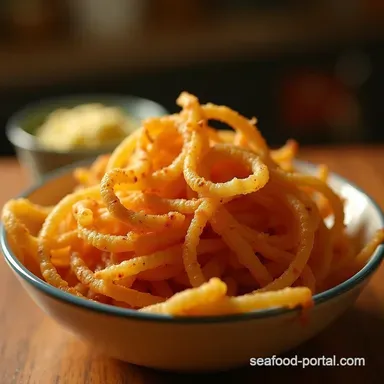
The Ultimate Crispy Onion Strings Homemade Perfection
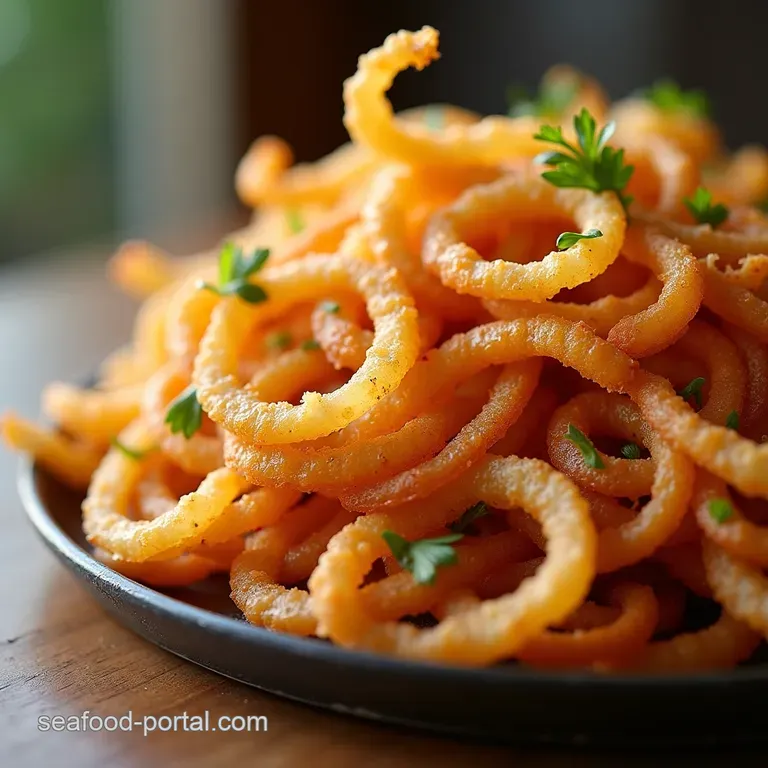
- Why Homemade Crispy Onion Strings Eclipse Store-Bought Versions
- The Secret to Feather-Light, Golden Texture
- Assembling Your Crispy Onion Strings Component List
- Essential Equipment for Deep-Fry Success
- Mastering the Preparation: Slicing and Soaking Techniques
- The Crucial Double-Dredging and Frying Protocol
- Troubleshooting Common Crispy Onion Failures
- Creative Applications for Your Homemade Topping
- Recipe FAQs
- 📝 Recipe Card
Why Homemade Crispy Onion Strings Eclipse store-bought Versions
Forget those fiddly dehydrated things; we’re making proper, feather light, shatteringly crisp onion strings right here in your kitchen. We thinly slice sweet onions, give them a light dusting of seasoned flour, and flash fry them until they achieve that gorgeous, golden brown crunch.
They offer a perfect balance of savoury sweetness and unbeatable texture, making them the ultimate garnish or snack. Making Homemade Crispy Onion Strings elevates any dish instantly.
The difference between a fresh, flash fried product and one pulled from a tin is staggering; homemade versions retain a vibrant onion flavour and a delicate shatter that factory produced alternatives simply cannot replicate.
This Crispy Onion Strings Recipe is straightforward, ensuring that anyone can achieve professional grade results.
The Secret to Feather Light, Golden Texture
Achieving that signature crunch requires attention to three primary factors: the cut of the onion, the coating consistency, and temperature control during frying. This is an Easy recipe, requiring only about 20 minutes of active preparation time plus 30 minutes resting, culminating in roughly 1 hour and 5 minutes total time to yield about 4 cups, enough for 6 to 8 generous garnishes.
The goal isn't a heavy batter; it’s a light veil that protects the onion as it fries.
Elevating Classic Comfort Foods with Fresh Crunch
The textural contrast provided by Crispy Onion Strings for Burgers or crowning a hearty casserole is where their magic lies. Imagine a perfectly cooked steak suddenly gaining a smoky, sweet, salty top note. This texture boost transforms standard weeknight meals into something special.
They are an absolute flavour booster, worth the minimal effort required to prepare them freshly.
A Flavor Booster Worth the Effort
To ensure these aren't just crispy but deeply flavoured, we incorporate a simple but effective seasoning blend into the dredge. You will need 1 cup of All-Purpose Flour partnered with 1/4 cup of Cornstarch that cornstarch is non-negotiable for that extra light, non-greasy exterior.
Seasoning starts with 1 teaspoon of Fine Sea Salt and 1/2 teaspoon of Black Pepper, bolstered by 1/2 teaspoon of Smoked Paprika for depth.
Defining the Perfect 'String' Slice
The consistency of your slice dictates the final texture. For true Crispy Fried Onion Strings , you must slice the 2 large, firm Yellow or Spanish Onions (about 1.5 lbs total) as thinly as possible ideally 1/16th of an inch, or about 1.5mm.
Using a mandoline slicer is highly recommended, as achieving this uniform thinness by hand is difficult and crucial for even cooking.
Assembling Your Crispy Onion Strings Component List
Before setting up your station, gather your necessities. Beyond the onions and seasoning noted above, you need 4 cups of a high heat, neutral oil like Canola, Vegetable, or Peanut oil for frying. Ensure you have a large, heavy bottomed skillet or Dutch oven capable of holding about 1.5 inches of oil depth comfortably.
Essential Equipment for Deep Fry Success
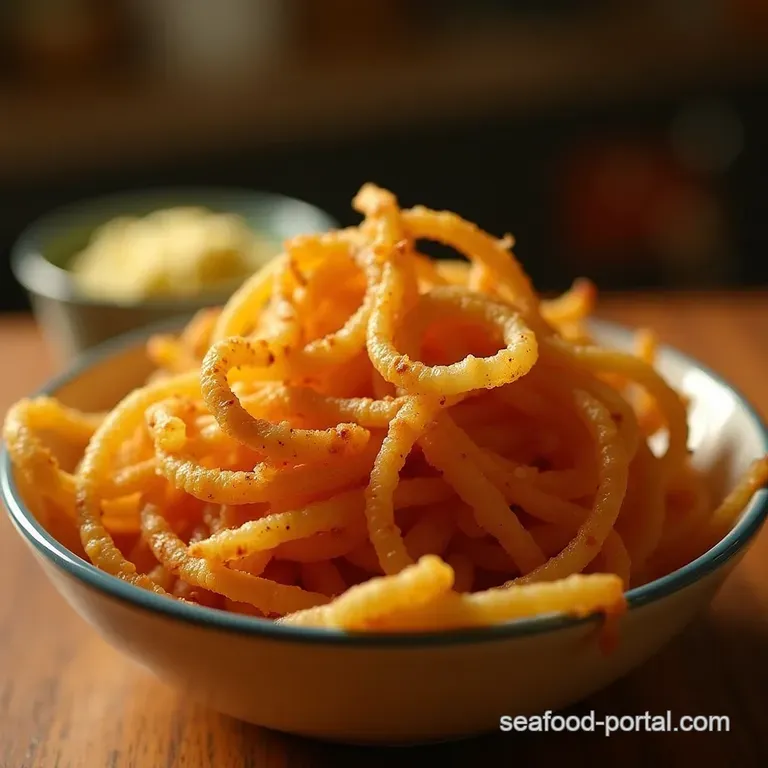
Deep frying, while rewarding, demands precision. A crucial piece of kit is a kitchen thermometer. Guessing the oil temperature leads either to pale, greasy onions or burnt exteriors with raw centres.
You will also need a large slotted spoon or spider strainer for transferring the cooked onions, and crucially, a wire cooling rack set over a baking sheet lined with paper towels for draining the finished product properly.
Selecting the Ideal Onion Variety for Frying
For the best results in this How To Make Fried Onion Strings guide, opt for Yellow or Spanish Onions. These varieties strike a perfect balance; they are firm enough to hold their shape when sliced paper thin, and their natural sugar content caramelizes beautifully during the flash fry, yielding that signature sweet savoury profile.
Crafting the Seasoned Flour Dredge Mixture
In a medium bowl, thoroughly whisk together your base coatings the 1 cup of flour and 1/4 cup of cornstarch with your seasonings: salt, pepper, and smoked paprika. The whisking ensures the paprika and salt are evenly distributed so every onion strand receives the same flavour punch.
The mixture should be light and fluffy before the onions are introduced.
Oil Selection: The Key to High Heat Cooking
The oil you choose must have a high smoke point. Canola, peanut, or vegetable oils are excellent, affordable choices. You need enough oil approximately 1 Litre to create a depth of about 1.5 inches in your pan.
This depth allows the onions to be fully submerged, which promotes even cooking and prevents sticking.
Related Recipes Worth Trying
- Best Buttermilk Fried Chicken Breast Recipe Juicy Crispy — Stop serving dry chicken This Buttermilk Fried Chicken Breast Recipe uses a doubledip dredge for guaranteed juicy meat and crispy shards Perfect for an easy...
- Best Crispy Salmon Tacos with Zesty Lime Slaw 35 Mins — Forget soggy fish These crunchy salmon tacos use Panko for the best texture paired with a vibrant lime slaw A quick healthy weeknight winner
- The Ultimate Crispy Oven Baked Zucchini Slices Recipe — Learn how to bake zucchini slices with crispy edges This easy Oven Baked Zucchini Slices Recipe is healthy simple and perfect for any weeknight meal
Mastering the Preparation: Slicing and Soaking Techniques
The preparation phase is where much of the final crispness is determined. Proper handling of the sliced onions eliminates the lingering bitterness and excess surface moisture that sabotage frying efforts.
Achieving Uniformity: Slicing Onions Paper Thin
Slice your peeled onions pole-to-pole (from root end to tip). If you are not using a mandoline, take extreme care with a very sharp knife to ensure every slice is close to 1/16th of an inch thick. Uniformity is paramount; uneven slices will result in some pieces burning while others remain limp.
Rinsing Away Onion Pungency for Purer Flavor
Once sliced, place the strands into a large bowl and cover them completely with very cold water. Swirl gently with your hands you want to rinse away the harsh, sulphuric compounds responsible for pungency. Drain these immediately, then lay the rinsed onions out across several layers of paper towels.
Pat them down firmly. Crispy Onion Strings Air Fryer Recipe adherents and deep fry enthusiasts alike must follow this step: let them air dry for an additional 15 minutes. Surface moisture is the absolute enemy of crispness.
The Crucial Double Dredging and Frying Protocol
With your onions dry and your flour ready, it's time for the heat application. This process is done in small batches to maintain oil integrity.
The Art of the Flash Fry: Temperature Control is Everything
Heat your oil slowly until the thermometer registers exactly 350° F ( 175° C) . This precise temperature ensures the starches in the coating gelatinize quickly, sealing in the onion’s moisture while browning the exterior rapidly.
If you are looking for an Easy Fried Onion Strings experience, simply aim for a steady, active sizzle when the onions are introduced.
Carefully drop about 1 cup of the dried, seasoned onions into the hot oil. Resist the urge to add more; overcrowding the pan will cause the oil temperature to drop below the critical 340° F mark, resulting in soggy textures.
Gently use your slotted spoon to separate the strands immediately as they enter the oil. Fry for just 2 to 3 minutes, stirring gently until they achieve a rich, deep golden brown hue.
Post Fry Drain: Ensuring Maximum Crispiness
As soon as they hit that perfect colour, swiftly lift the onions using your spider strainer and move them directly to the prepared wire cooling rack set over paper towels. The rack allows air circulation around the entire surface.
Immediately after they leave the oil, sprinkle them with a tiny, final pinch of fine sea salt. They firm up significantly as they cool down from frying temperature. Repeat this process for all batches, allowing the oil to climb back to 350° F between each fry cycle.
Troubleshooting Common Crispy Onion Failures
If your onions emerge pale and soft, your oil temperature was too low (below 340° F). If they are dark brown on the outside but still taste raw or are floppy, the oil was too hot (over 360° F) and cooked too quickly.
If they clump together, you overloaded the pan or didn't stir them quickly enough upon first introduction. Remember, the key to Crispy Onion Strings is patience with the temperature adjustments between batches.
Creative Applications for Your Homemade Topping
These homemade crispy onions are exceptionally versatile. They are a showstopper when served as Crispy Onion Strings for Burgers , but their uses extend far beyond sandwiches.
Preventing Soggy Onion Strings: The Moisture Culprits
Moisture is the enemy during storage. Ensure your onions are cooled completely on the wire rack for at least 30 minutes before considering storage. Never store them while warm, as trapped steam will immediately turn them soft.
Storage Solutions for Preserving Day-One Crunch
Once fully cooled, transfer them to an airtight container lined with a fresh paper towel. Stored at room temperature, they should retain excellent crunch for up to three days. For longer storage, a freezer bag works, though refrigeration is not recommended as it encourages moisture absorption.
Flavor Variations: Spice Blends for Your Dredge
To adapt these, consider a savory profile by substituting the paprika with 1/2 teaspoon of dried thyme and garlic powder. Alternatively, for those seeking a spicier take, a gluten free Crispy Onion Strings version made with rice flour and dusted with a smoked chipotle powder offers a smoky, lingering heat.
Pairing Suggestions: Beyond Shepherd's Pie
While they are legendary atop a Shepherd’s Pie or a rich green bean casserole, try scattering them over creamy risotto or using them as a crunchy element on top of French Onion Soup instead of the traditional crouton. Their savoury sweetness pairs wonderfully with creamy textures across the board.
Recipe FAQs
Why are my homemade Crispy Onion Strings coming out soggy instead of crispy?
Sogginess usually boils down to one of two things: too much moisture or oil that wasn't hot enough. Make sure you are patting those onions bone dry after rinsing, and ensure your oil is hitting a steady 350°F (175°C). If the oil is too cool, the onions soak it up like a sponge instead of frying!
How thinly do I actually need to slice the onions for them to cook properly?
Aim for paper thin, ideally around 1/16th of an inch (or 1.5mm). This is where a mandoline slicer becomes your best mate it ensures uniformity, which means everything cooks at the same speed. If you're using a knife, take your time; thinner slices equal shatteringly crisp results.
Can I make these Crispy Onion Strings ahead of time, and how should I store them?
Yes, they are best made a few hours before serving, as they need to cool completely to achieve maximum crunch. Store them in a completely airtight container at room temperature absolutely no fridge, as that moisture will ruin them! They should last well for 2-3 days if stored correctly.
My oil smokes when I fry the onions; what am I doing wrong?
If your oil is smoking, it’s far too hot, which means your onions will burn on the outside before they even begin to crisp. You need to keep the temperature around 350°F (175°C).
If you don't have a thermometer, try lowering the heat slightly, or if you are frying in too small a batch, the oil temperature might spike between batches be patient and let it settle!
I don't want to deep fry; is there a healthier way to get them crunchy?
While deep frying is the traditional path to true crispness, you can give the oven a go. Toss the coated onions with just enough oil to lightly coat them (2-3 tablespoons) and spread them in a single layer on a wire rack over a baking sheet.
Bake at 400°F (200°C), flipping halfway, until golden it takes longer, but it’s less hands-on!
The Ultimate Crispy Onion Strings Recipe Homemade Perfection