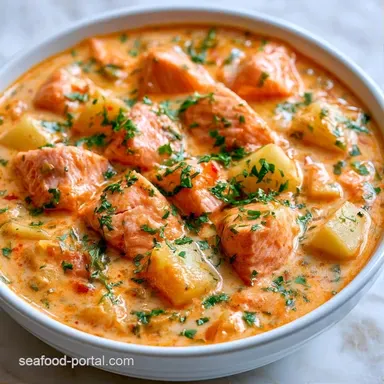
Healthy Thai Coconut Salmon Chowder
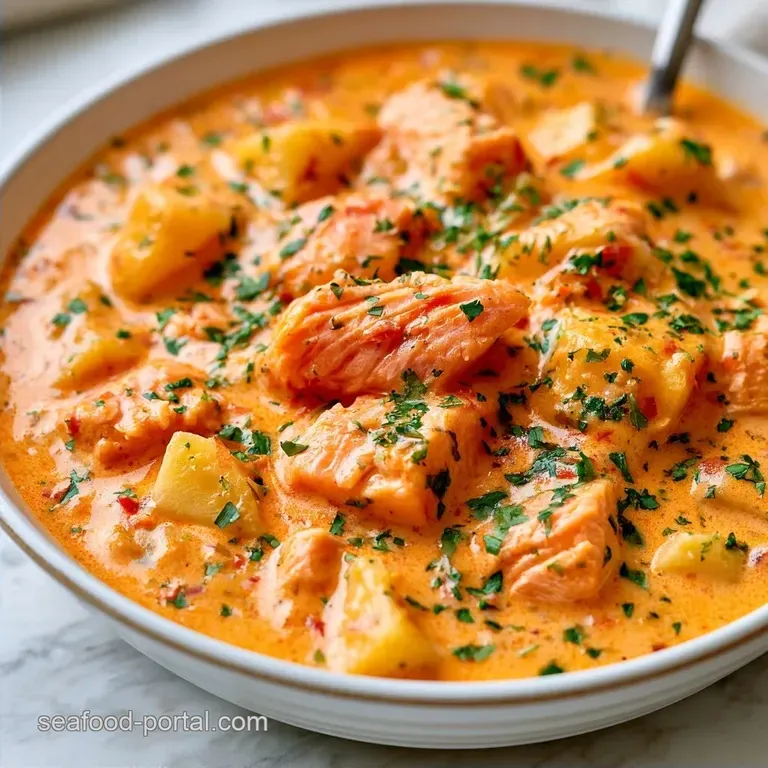
- Prep & Cook: 10 min active + 20 min simmering
- The Vibe: Velvety coconut broth with a spicy red curry kick
- Best for: A cozy, rainy weeknight meal that feels like an indulgence
- Quick Guide to Thai Coconut Salmon Chowder
- Why Most Recipes Get This Wrong
- Ingredients for a Bold Base
- Equipment Needed
- The Cooking Process
- Solving Common Texture Issues
- Adjusting the Serving Size
- Kitchen Myths Debunked
- Storing Your Leftovers
- Dietary Swaps and Twists
- Perfect Complements
- High in Sodium
- Recipe FAQs
- 📝 Recipe Card
The aroma of red curry paste sizzling in hot coconut oil is enough to whet any appetite. It instantly transforms a quiet kitchen into a bustling Thai market, with the pungent notes of garlic and ginger cutting through the richness.
I once made this for a friend who believed salmon was "too fancy" for a Tuesday; one bowl of this completely changed their mind.
This is a far cry from traditional clam chowder. We're replacing heavy cream with rich, full fat coconut milk and adding a squeeze of lime to keep the flavors bright. It's a bold, accessible dish that doesn't require a mountain of pots and pans.
You can expect a bowl of Thai Coconut Salmon Chowder that is deeply comforting without feeling heavy. The salmon remains tender, the potatoes provide satisfying substance, and the curry paste delivers the heat.
Quick Guide to Thai Coconut Salmon Chowder
Looking at this dish, the biggest win is how quickly the flavors develop. You aren't simmering this for hours. Instead, you're building layers of aroma in under 30 minutes.
The balance here comes from the contrast between the fatty coconut milk and the acidic lime juice. If you skip the lime, the dish feels flat. Add it at the end, and the whole bowl wakes up.
Why Most Recipes Get This Wrong
While chowders are often viewed as mere thick soups, the secret lies in the texture.
Potato Starch: Pressing a few cooked potato chunks releases natural starches. This creates thickness without relying on a flour based roux, avoiding a pasty flavor.
Poaching Temp: Instead of boiling the salmon, lower the heat and gently poach the fish for 5 minutes to ensure it doesn't become rubbery.
| Method | Time | Texture | Best For |
|---|---|---|---|
| Stovetop | 30 min | Creamy and integrated | Quick weeknight meals |
| Oven Poached | 45 min | Firmer fish, separated layers | Batch cooking for guests |
Now, let's dive into the ingredients needed for the pot.
Ingredients for a Bold Base
The red curry paste is the engine of this Thai Coconut Salmon Chowder. It provides the heat and the deep, earthy base. I suggest using a brand like Mae Ploy or Maesri for a more authentic, street style punch.
The Yukon Gold potatoes are non negotiable here. They have a naturally buttery texture that holds up during simmering but mashes easily for that thickness we want.
For the salmon, stick to skinless fillets. The skin can get slimy in a chowder, so cubing the fillet directly is the way to go.
Equipment Needed
You only need a few basics. A large heavy bottomed pot is the most important part, as it prevents the coconut milk from scorching on the bottom. A sharp chef's knife for the dicing and a fork for mashing the potatoes will do the trick.
The Cooking Process
Let's get started. This Thai Coconut Salmon Chowder comes together quickly if you have your prep work finished.
Phase 1: Building the Flavor Base
- Set a pot over medium heat and melt 1 tbsp coconut oil. Sauté 1 diced yellow onion and 2 diced carrots for 5 mins until the onions are translucent.
- Stir in 3 minced garlic cloves, 1 tbsp grated ginger, and 2 tbsp Thai red curry paste. Cook for 2 mins until the aroma releases and the paste turns a deep mahogany. Note: This step removes the "raw" taste from the paste.
Phase 2: Simmering the Chowder
- Add 2 cubed Yukon Gold potatoes, 1 can (13.5 oz) full fat coconut milk, and 2 cups vegetable broth.
- Bring to a soft boil, then immediately reduce the heat. Simmer for 12-15 mins until the potatoes are fork tender.
- Scoop out 3-4 potato cubes, mash them into a smooth paste with a fork, and stir them back into the pot. Note: This is how we get that thick, rich consistency.
Phase 3: Gently Poaching the Salmon
- Mix in 1 tbsp fish sauce and 1 tbsp fresh lime juice.
- Gently fold in 1 lb of cubed salmon.
- Simmer for 3-5 mins until the fish is cooked through and just begins to flake. Remove from heat immediately.
- Garnish with 1/4 cup chopped cilantro and 2 sliced green onions.
| Original Ingredient | Substitute | Why It Works |
|---|---|---|
| Full fat Coconut Milk | Cashew Cream (1 cup) | Offers a similar creaminess. Note: Lacks the distinct coconut aroma |
| Red Curry Paste | Yellow Curry Paste | A sweeter, milder option. Note: Less heat than the red version |
| Salmon | Halibut or Cod | Firm white fish is a good alternative. Note: Lacks the rich omega-3 flavor |
| Fish Sauce | Soy Sauce or Tamari | Adds the necessary salt. Note: Missing the fermented funk of fish sauce |
Believe me, the fish sauce is essential. It won't taste "fishy" in the finished dish, but it provides a savory depth that salt alone cannot achieve.
Solving Common Texture Issues
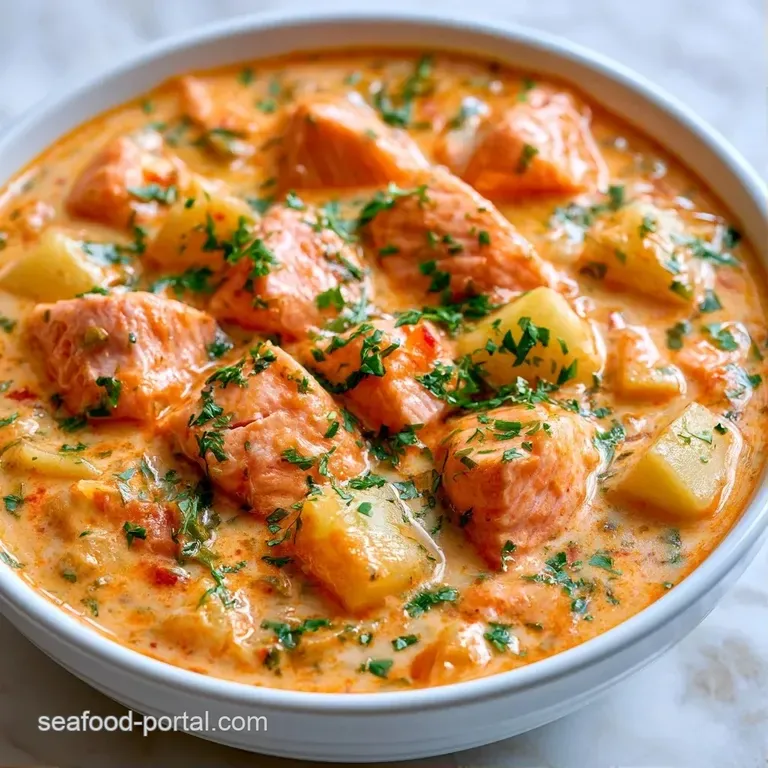
Maintaining the right temperature is key, as excessive heat can spoil this Thai Coconut Salmon Chowder.
Fixing Thin Broth
If the consistency is too watery for a chowder, simmer for an additional 5 minutes before adding the salmon. You can also mash two more potato cubes to thicken the base with extra starch.
Preventing Milk Separation
Avoid boiling the coconut milk too vigorously to prevent it from splitting. Keep it at a low simmer once added. If separation occurs, a quick whisk or a small amount of warm broth usually restores the emulsion.
Handling Overcooked Salmon
When salmon pieces seem dry or shrunken, they have stayed in too long. Pull the pot off the stove the moment the fish turns opaque; the remaining heat will finish the cooking.
Adjusting the Serving Size
Adjusting the proportions for this Thai Coconut Salmon Chowder is simple, but avoid blindly doubling every ingredient.
For a half batch: Use a smaller pot to maintain the proper liquid levels. Since there is less volume, decrease the potato simmer time by approximately 20%.
For a larger group (2x-4x): Begin by increasing the salt and curry paste to 1.5x rather than 2x. Taste as you proceed, as these potent flavors can intensify in larger quantities. Sauté the aromatics in batches to ensure the onions brown properly instead of steaming.
Kitchen Myths Debunked
There are several common misconceptions to clear up when preparing this Thai Coconut Salmon Chowder.
One frequent claim is that searing the salmon "locks in the juices." In reality, while searing enhances the flavor, it doesn't prevent moisture loss. To keep the fish as tender as possible in a chowder, poaching it directly in the liquid is the better approach.
You also don't need a roux to make an authentic chowder. Utilizing the natural starch from the potatoes is a simpler thickening technique that keeps the recipe dairy-free.
Storing Your Leftovers
This Thai Coconut Salmon Chowder keeps well, but salmon can be finicky. Keep it in a sealed glass jar in the cooler for up to 2 days.
Avoid freezing this dish. The coconut milk tends to separate and the potatoes can become grainy when thawed.
To reuse the scraps, save your onion peels and carrot ends in a freezer bag. Once you have a handful, boil them with water to make a quick vegetable stock for your next batch of soup.
Dietary Swaps and Twists
You can easily tweak this Thai Coconut Salmon Chowder to fit different moods.
For a keto friendly version: Swap the potatoes for diced cauliflower or daikon radish. You'll lose the natural thickener, so add a teaspoon of xanthan gum or a tablespoon of coconut cream.
For more heat: Stir in a teaspoon of Sriracha or add sliced Thai bird's eye chilies during the sauté phase.
If you want a drier dish, try this baked fish coconut sauce. For a dipping style, check out my coconut shrimp sauce.
Perfect Complements
A bold Thai Coconut Salmon Chowder needs something to soak up that broth.
Serve it with a side of steamed jasmine rice or a piece of toasted sourdough rubbed with a garlic clove. A crisp cucumber salad with rice vinegar and sesame seeds provides a refreshing crunch that cuts through the richness of the coconut.
If you're feeling adventurous, try topping the bowl with some fried shallots or a squeeze of extra lime right before eating. It's the little things that make it feel like a real meal.
Whether you're cooking for yourself or a crowd, this Thai Coconut Salmon Chowder is a winner. It's fast, punchy, and proves that you don't need hours of simmering to get a deep, complex flavor. Just keep an eye on that salmon and don't forget the lime. Happy cooking!
High in Sodium
950 mg 950 mg of sodium per serving (41% 41% of daily value)
The American Heart Association recommends a daily sodium limit of no more than 2,300 mg for most adults to maintain heart health.
Tips to Reduce Sodium
-
Swap Fish Sauce-30%
Replace the fish sauce with coconut aminos or omit it entirely and increase the lime juice to maintain the savory, tangy profile.
-
Modify Curry Paste-20%
Use a low-sodium red curry paste or make a homemade version using fresh chilies and lemongrass to avoid hidden salts.
-
Switch the Broth-20%
Substitute the low-sodium vegetable broth with water or homemade unsalted vegetable stock.
-
Enhance Fresh Aromatics
Increase the amount of fresh ginger, lime juice, and chopped cilantro to boost flavor depth without adding any salt.
Recipe FAQs
Is it true that salmon is too delicate for a chunky chowder?
False. Cubing the fish into 1 inch pieces and simmering for only 3-5 minutes keeps the chunks intact.
Can beginners easily make this seafood soup?
This is a great starter recipe because it uses a simple one-pot method. If you enjoyed the ease of this dish, you can also try our shrimp and crab ravioli for another impressive seafood meal.
How to use leftover cooked salmon in this recipe?
Fold the pre-cooked fish into the pot during the final step instead of simmering. Heat it through for just one minute to prevent the salmon from becoming tough.
Why is full fat coconut milk preferred over light coconut milk?
Full fat milk provides the creamy richness needed to balance the heat of the red curry paste. It also helps the broth cling to the potatoes and salmon.
Which storage method works best for this chowder?
Use a sealed glass jar in the cooler for up to 2 days. Avoid the freezer because the coconut milk can separate and the potatoes may turn grainy.
Thai Coconut Salmon Chowder