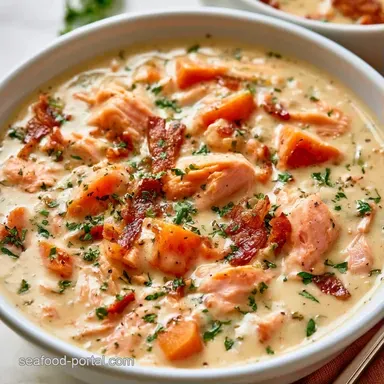
Dutch Oven Salmon Chowder: One-Pot Comfort

- Time: 15 min active + 35 min cooking
- Flavor/Texture Hook: Smoky bacon paired with a smooth cream base
- Perfect for: A relaxing weeknight meal or an intimate get-together
Starting with the aroma of bacon sizzling in a hot pot is unbeatable. Early on, I once tried adding all the ingredients simultaneously, which only produced a bland, grayish sludge. That experience taught me that the sequence of adding ingredients is crucial for developing deep flavor.
The star of the show is the salmon. I prefer using whole fillets over pre-cut chunks as they maintain their structure better. The fish's natural oils allow it to pair perfectly with the potatoes and heavy cream without being overwhelmed.
The result is a decadent Salmon Chowder that balances the saltiness of the bacon with a splash of fresh lemon. It is a deeply satisfying meal that brings warmth and comfort to any table.
Why This Salmon Chowder Works
- Bacon Fond: Searing bacon first leaves brown bits in the pot. This adds a smoky depth that stops the Salmon Chowder from tasting like plain cream soup.
- The Roux: Cooking flour in fat before adding stock prevents those annoying flour clumps. If you're new to seafood, you might also enjoy a stove cooked salmon recipe for a simpler start.
- Residual Poaching: Adding the fish at the very end is the key. The hot broth cooks the salmon gently so it doesn't turn into rubber.
| Method | Time | Texture | Best For |
|---|---|---|---|
| Stovetop | 50 mins | Creamy & Flaky | Quick family dinner |
| Oven | 1 hr 15 mins | Thick & Stew like | Slow weekend cooking |
Ingredients You'll Need
What Each Ingredient Does
| Component | Purpose | Substitute Notes |
|---|---|---|
| Salmon Fillet | Main Protein | Trout: Similar flavor, slightly leaner |
| Gold Potatoes | Thickening/Body | Russets: Fall apart more; makes it thicker |
| Seafood Stock | Savory Base | Chicken Stock: Works well, less "ocean" flavor |
| All purpose Flour | Thickener | Cornstarch: Use 1/3 amount; add as a slurry |
The Shopping List
- 4 oz thick cut bacon, diced Why this? Adds smoke and fat for the base
- 2 tbsp unsalted butter Why this? Helps sauté vegetables without burning
- 1 medium yellow onion, finely diced
- 3 cloves garlic, minced
- 1 lb gold potatoes, peeled and cubed into ½-inch pieces Why this? Holds shape better than russets
- 2 medium carrots, diced
- 1 cup frozen or fresh corn kernels
- 1 tsp dried thyme
- ¼ cup all purpose flour
- 3 cups seafood stock
- 1 cup heavy cream Why this? Provides the classic chowder richness
- 1 tsp salt
- ½ tsp black pepper
- 1 lb salmon fillet, skinless and cut into 1 inch cubes
- 2 tbsp fresh dill, chopped
- 1 tbsp lemon juice
Quick Recipe Specs
- Prep time:15 minutes
- Cook time:35 minutes
- Total time:50 minutes
- Yield: 6 portions
Essential Cooking Gear
While you don't need professional grade equipment for this Salmon Chowder, a heavy bottomed pot is essential. I personally prefer a Dutch oven, as it distributes heat evenly and stops the cream from scorching.
I also suggest using a whisk during the stock stage to achieve a completely smooth roux. Lastly, a sharp chef's knife is key for cutting uniform potato cubes, ensuring they all cook through at the same rate.
Step by step Guide
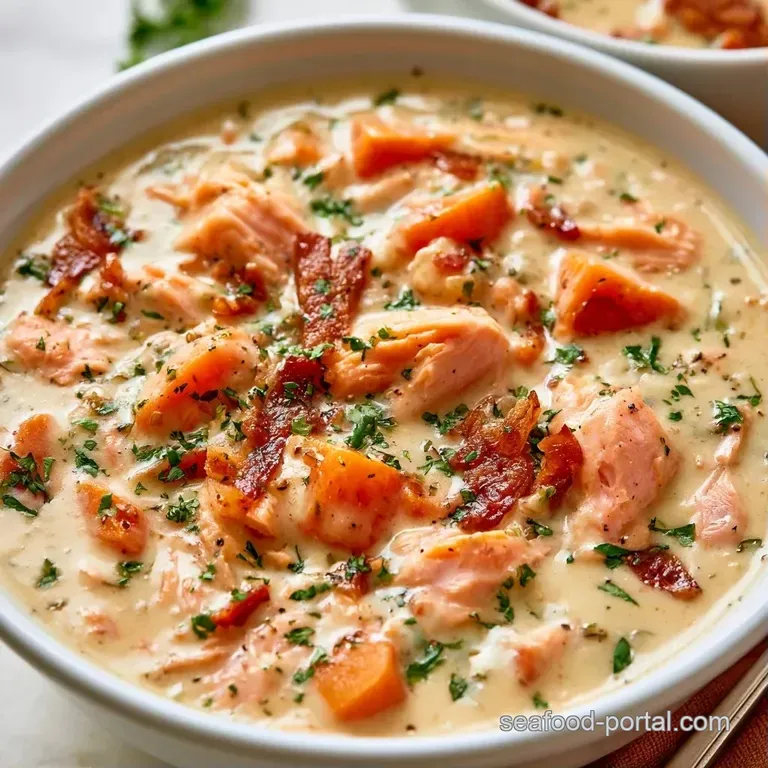
Rendering the Fat
Set the diced bacon in the Dutch oven over medium heat. Cook and stir occasionally until the bacon reaches a crisp texture and the fat is fully rendered. Use a slotted spoon to lift out the bacon bits, leaving the rendered fat in the pot.
Sautéing the Aromatics
Stir the butter into the bacon fat. Once it has melted, add the diced onion and carrots. Sauté for 5–7 minutes until the onions are translucent and the carrots soften. Add the garlic and thyme, cooking for 60 seconds until aromatic.
Creating the Thickener
Dust the vegetables with flour, stirring constantly for 2 minutes. This toasts the flour to remove its raw taste, providing a stable base for the Salmon Chowder.
Simmering the Base
Slowly whisk in the seafood stock, stirring continuously to prevent lumps. Add the cubed potatoes and simmer until the potatoes are tender when pierced with a fork.
Adding the Cream
Stir in the corn kernels and heavy cream. Season with black pepper and salt, allowing the soup to simmer gently as it thickens.
Finishing the Chowder
Remove the pot from the heat. Carefully fold in the cubed salmon, fresh dill, and lemon juice. Let the soup rest for 5 minutes; the residual heat of the broth will poach the salmon until it just flakes.
Final Touch
Stir the reserved crisp bacon bits back into the Salmon Chowder and serve immediately.
Solving Common Issues
Fixing Thin Soup
If the base seems too watery, simmer it uncovered for another 10 minutes before stirring in the cream. You could also whisk a teaspoon of cornstarch with cold water and blend it in while simmering.
Preventing Cream Curdling
Avoid bringing the soup to a boil after the cream is incorporated. Keep it at a low, steady simmer. Excessive heat can cause the fats to break, resulting in an oily Salmon Chowder.
Avoiding Rubbery Salmon
The most frequent error is boiling the fish. Never allow the pot to return to a hard boil once the salmon cubes are added; the residual heat is sufficient.
| Problem | Root Cause | Solution |
|---|---|---|
| Grainy broth | Flour not cooked enough | Sauté flour for full 2 minutes |
| Salmon is tough | Overcooked/Boiled | Remove from heat before adding fish |
| Bland flavor | Needs more brightness | Stir in fresh lemon juice |
Storage and Waste
Store this Salmon Chowder in a tightly sealed glass container in the refrigerator for up to 2 days. Avoid freezing it, as the cream and potatoes often lose their texture and become watery or grainy after thawing.
To reheat, warm the soup in a small pot over low heat. Stir in a splash of stock or milk to restore the consistency, as the potatoes absorb liquid while storing.
For a zero waste approach, keep onion skins and carrot scraps in a bag in your freezer. When the bag is packed, simmer them with a bay leaf and water to make a simple vegetable broth for another recipe.
Common Kitchen Myths
Searing the salmon cubes before adding them to the soup is unnecessary and typically toughens the fish. Poaching them directly in the liquid ensures they stay tender.
You can also comfortably use frozen corn. Because it is usually flash frozen at the peak of ripeness, it works just as effectively as fresh corn in a Salmon Chowder.
Serving and Pairings
This is a heavy dish, so you need something bright to cut through the richness. I love serving it with a piece of crusty sourdough bread toasted with a bit of garlic butter.
A simple side salad with a sharp vinaigrette works well. If you want something more substantial, some steamed asparagus or sautéed spinach provides a nice color contrast.
Dietary Adaptations
Making a Healthier Salmon Chowder
For a lighter version, substitute the heavy cream with whole milk or a cashew based cream. You can also replace the gold potatoes with diced cauliflower to reduce the carb count.
Dairy-free Alternatives
Use full fat coconut milk to get that creamy consistency. Because it adds a touch of sweetness, increase the amount of lemon juice to balance the taste. For the butter, a neutral oil or vegan butter works well.
Adding a Smoky Flavor
To create more depth, use smoked salmon instead of fresh fillets. If you choose this option, reduce the salt in the recipe, as smoked fish is already salty. For another seafood treat, my Rhode Island clam chowder is a great alternative.
If you prefer a different consistency, you can try an Oven Salmon Chowder method. Simply pour the simmered base into an oven safe pot and bake at 180°C for 20 minutes before stirring in the fish and cream. This results in a slightly thicker, more concentrated taste.
Whichever way you make it, this Salmon Chowder is a dependable way to eat more fish. It is simple, hearty, and doesn't need any specialized equipment. Just be patient with the roux and avoid overcooking the fish to ensure a perfectly flaky texture.
Now, get your Dutch oven ready and give this Salmon Chowder a try. It's always a hit.
Recipe FAQs
How do you make a fish chowder with a cream base?
Stir in heavy cream and corn kernels after the potatoes have simmered until tender. Let the mixture simmer gently to thicken the base before folding in the salmon.
What traditional ingredients belong in a seafood chowder?
Potatoes, carrots, and a roux base provide the essential heartiness and thickness. This version uses seafood stock and fresh dill to keep the flavor profile bright and balanced.
Is it true that only clams can be used in traditional chowders?
False. Many regional styles use salmon, cod, or lobster for a rich, creamy result. If you enjoyed the rich texture here, you might also like our creamy lobster sauce for a similarly decadent finish.
Which seafood dishes are best for beginners?
Creamy chowders and pan-seared fillets are excellent starting points. Since this recipe uses residual heat to poach the salmon, it eliminates the risk of overcooking the fish.
Dutch Oven Salmon Chowder