Creamy Salmon Chowder with Dill
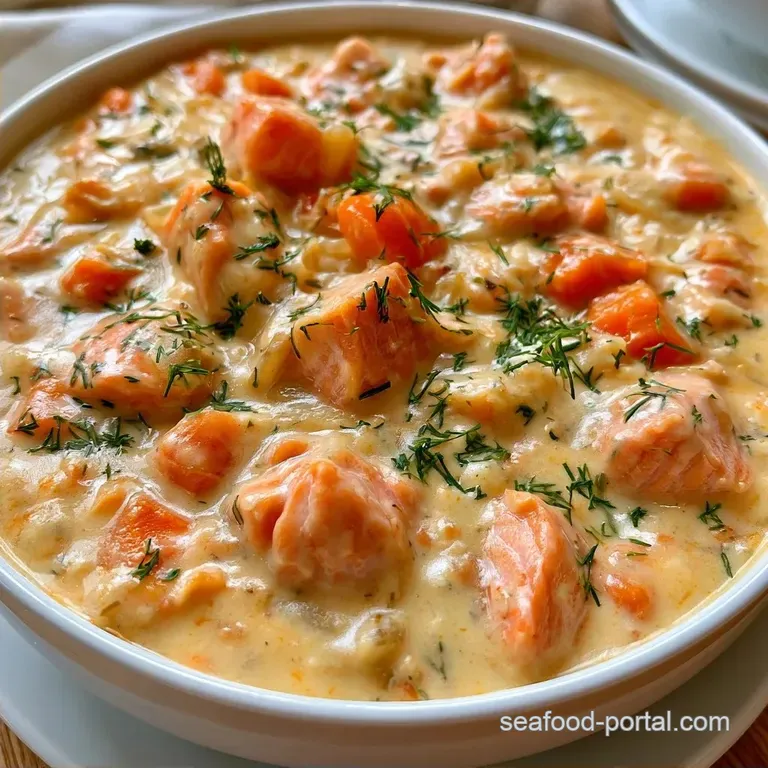
- Duration: 10 min active + 20 min cooking
- Taste/Feel: Velvety texture paired with zesty fresh dill
- Great for: Relaxing weeknight meals or gloomy weather
Easy Creamy Salmon Chowder
Ever notice the difference between a gourmet seafood soup and something that just tastes like boiled fish? I once experimented by simmering salmon and potatoes together for twenty minutes, but the fish turned out rubbery and unappetizing even my dog wasn't interested.
That experience taught me that the timing of your protein is the most important part.
It all begins with the fragrance of onions and carrots sautéing in brown butter. Once that aroma fills the kitchen, the foundation is set. This Salmon Chowder relies on developing these deep layers of flavor before introducing the cream and the fish.
The result is a rich, satisfying soup that stays surprisingly light. Fresh dill and a splash of lemon juice brighten the heavy cream, creating a perfectly balanced bite. Once you see how this timing works, you'll never boil your fish for an hour again.
Quick Recipe Specs
This version of Salmon Chowder is a one pot wonder. It stays simple and accessible for anyone who feels intimidated by seafood.
The total time is 30 minutes. You'll spend 10 minutes prepping your veg and 20 minutes at the stove. It yields 6 servings, which is great for a family dinner or having some leftovers for lunch the next day.
Why This Actually Works
Getting the texture right is the hardest part of a Salmon Chowder. Here is what's actually happening in the pot.
- Gentle Heat: Salmon proteins tighten up quickly. Adding the fish at the end means they poach in the hot liquid without overcooking.
- Starch Release: Yukon Gold potatoes leak just enough starch into the broth to thicken it naturally.
- Acid Balance: The lemon juice added at the end breaks down the heavy fat of the cream, which makes the flavors pop.
What You'll Need
| Ingredient | Role | Best Substitution |
|---|---|---|
| Yukon Gold Potatoes | Adds thickness and heartiness | Red potatoes (less starchy, holds shape better) |
| Fish Stock | Creates a savory seafood base | Vegetable stock (for a lighter taste) |
| Heavy Cream | Provides a rich, velvety body | Whole milk + 1 tbsp butter (less decadent) |
| Fresh Salmon | The primary protein | Frozen salmon (thaw completely first) |
Full Ingredients List:
- 4 tbsp (55g) unsalted butter
- 1 medium (150g) yellow onion, finely diced
- 2 large (120g) carrots, diced
- 2 stalks (60g) celery, diced
- 3 cloves (9g) garlic, minced
- 3 medium (450g) Yukon Gold potatoes, peeled and cubed into ½ inch piecesWhy this? Their buttery consistency helps thicken the soup
- 4 cups (950ml) fish stock
- 2 cups (480ml) heavy whipping cream
- 1 tsp (5g) dried dill
- 1 tsp (5g) salt
- ½ tsp (2g) black pepper
- 1 lb (450g) fresh salmon fillet, skinless, cut into 1 inch cubesWhy this? Uniform sizes ensure they poach evenly
- 3 tbsp (15g) fresh dill, chopped
- 1 tbsp (15ml) fresh lemon juiceWhy this? It cuts through the richness of the cream
- ¼ cup (10g) sliced green onions for garnish
Essential Kitchen Tools
Making this Salmon Chowder doesn't require specialized gear. A large Dutch oven or a heavy bottomed stockpot is ideal because they distribute heat consistently, preventing the cream from scorching.
For the prep work, a sharp chef's knife is recommended. Dicing the carrots, celery, and potatoes into uniform pieces ensures everything softens at the same rate. You might also want a whisk nearby to stir in the cream.
Step by step Cooking
- Heat the butter in a Dutch oven over medium heat. Add the carrots, celery, and onion, sautéing for 5 minutes until onions are translucent.
- Stir in the minced garlic and cook for 60 seconds until fragrant. Note: To avoid a bitter taste, do not let the garlic brown
- Pour in the fish stock, then add the cubed potatoes, salt, pepper, and dried dill.
- Bring the pot to a gentle boil, then reduce the heat. Cover and simmer for 10-12 minutes until potatoes are fork tender.
- Stir in the heavy cream and bring the Salmon Chowder back to a very low simmer.
- Carefully fold in the raw salmon pieces. Cook for 3-5 minutes, stirring gently, until salmon is opaque and flakes easily.
- Remove the pot from the heat immediately.
- Mix in the lemon juice and fresh dill.
- Ladle the soup into bowls and garnish with sliced green onions.
Fixing Common Issues
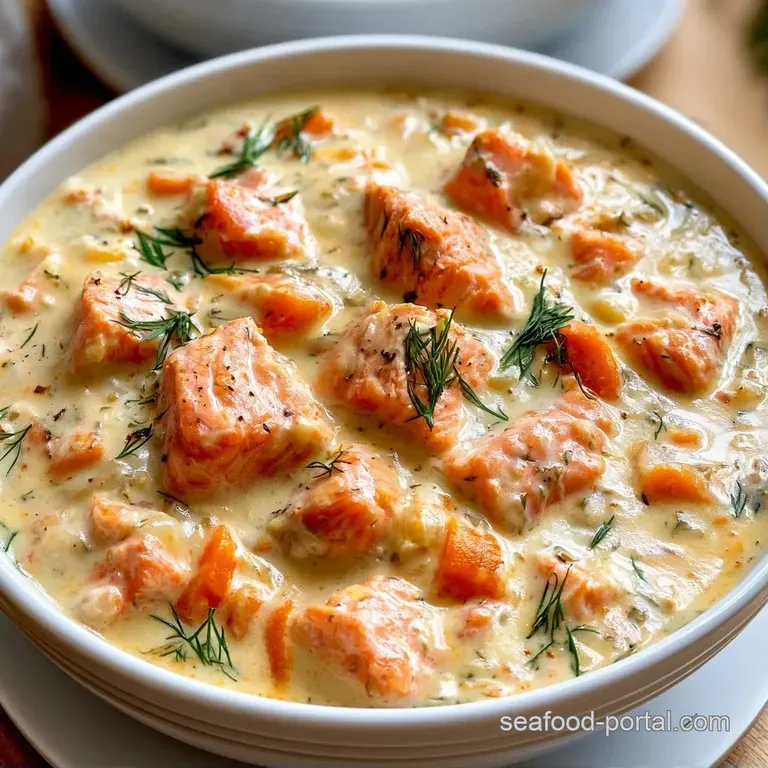
Even a basic Salmon Chowder can occasionally go wrong. Here are some quick fixes.
Fixing Curdled Cream
This usually occurs if the soup boils too vigorously once the cream is added. Should you notice small curds, whisk in a teaspoon of cornstarch dissolved in cold water. This will stabilize the base and restore a smooth texture.
Dealing with Hard Potatoes
If the fish is done but the potatoes remain hard, they were likely cut too big. Aim for a strict ½ inch next time. To fix it now, use a slotted spoon to lift out the fish, simmer the potatoes for an additional 5 minutes, then return the fish for 60 seconds.
Solving a Thin Base
If your chowder seems too thin, crush a few of the cooked potato pieces using the back of a spoon. This releases starch into the broth, providing a natural thickness without the need for extra flour.
Fun Flavor Twists
You can easily tweak this Salmon Chowder to fit your mood. If you want something with a deeper, saltier profile, try using smoked salmon. You'd follow the same steps, but add the smoked salmon right at the end just to warm through.
For those who want to avoid dairy, coconut milk works surprisingly well. It changes the flavor to something a bit more tropical, but the fat content keeps that rich mouthfeel. If you love seafood, you could add some shrimp or scallops. For a different way to prepare the fish first, you might look at how to pan fry salmon to get that crispy skin before adding it to a dish.
Dietary Adjustments
If you're cutting carbs, swap the potatoes for diced cauliflower. It won't thicken the soup as much, so you might need a splash more cream or a pinch of xanthan gum.
| Goal | What to change |
|---|---|
| More Smoke | Use smoked salmon fillets |
| Lighter Base | Use half and half instead of heavy cream |
| Extra Zest | Increase lemon juice to 2 tbsp |
Storing Your Leftovers
This Salmon Chowder keeps well in the fridge for about 2 days. Put it in a glass container with a tight lid. When you reheat it, do it slowly on the stove over low heat. If you microwave it on high, the salmon will overcook and become rubbery.
I don't recommend freezing this. The cream often separates during the freezing and thawing process, leaving you with a grainy texture. Instead, use any leftover fish stock or veggie scraps from the prep to make a quick broth for another meal.
If you have leftover salmon fillets, you can use them in other ways. If you're in a rush, learning Stove in 15 Minutes recipe in 15 minutes is a great skill for weeknight meals.
Plating Like a Pro
To make your Salmon Chowder look like it came from a restaurant, focus on the colors. The orange of the salmon and the green of the dill look great against the white cream.
Serve the soup in wide, shallow bowls. Top with a generous pinch of fresh dill and the sliced green onions. A crack of fresh black pepper on top adds a nice visual contrast.
I love serving this with a piece of crusty sourdough bread. The bread is great for soaking up the last bits of the creamy broth. For those who prefer something different, a light side salad with a vinaigrette helps balance the richness.
Debunking Soup Myths
Some people think you have to sear the salmon before adding it to the Salmon Chowder. This is a myth. Searing adds a nice crust to a fillet, but in a soup, that crust just disappears and can actually make the fish tougher. Poaching is the better way.
Another common myth is that you need a flour roux to make a chowder thick. While a roux works, using Yukon Gold potatoes provides a cleaner flavor and a more natural texture.
You might also hear that any potato works. In reality, waxy potatoes like red ones don't break down enough, leaving the Salmon Chowder feeling thin.
Final Pro Tips
Chef's Note: Always taste for salt right before serving. The saltiness of your fish stock can vary, and the lemon juice will change how you perceive the salt.
When you're cleaning up, save your onion skins and carrot ends in a freezer bag. Once the bag is full, boil them with water to make a free, homemade vegetable stock.
Finally, remember that the Salmon Chowder is done the moment the salmon turns opaque. If you keep it on the heat for even two minutes too long, you'll lose that flaky texture. Turn off the burner and let the residual heat do the work.
High in Sodium
810 mg 810 mg of sodium per serving (35% 35% of daily value)
The American Heart Association recommends a daily sodium limit of 2,300mg, with an ideal limit of 1,500mg for most adults to reduce the risk of cardiovascular disease.
Tips to Reduce Sodium
-
Swap the Fish Stock-30%
Replace the standard fish stock with a low-sodium or no-salt added version to significantly decrease the base sodium content.
-
Omit Added Salt-25%
Reduce or eliminate the 1 tsp of added salt; the natural sodium in the salmon and stock provides plenty of seasoning.
-
Increase Citrus-10%
Add an extra teaspoon of fresh lemon juice to brighten the dish, which enhances flavor perception and reduces the craving for salt.
-
Enhance Aromatics
Increase the amount of fresh dill, minced garlic, and black pepper to add depth and complexity without adding any sodium.
Recipe FAQs
How do you make a fish chowder with a cream base?
Stir heavy cream into the simmering broth and vegetables right before adding the raw salmon. This keeps the texture smooth and prevents the fish from overcooking.
What traditional ingredients define a seafood chowder?
Focus on a base of onion, carrots, celery, and Yukon Gold potatoes for heartiness. Fresh dill and lemon juice are added at the end to balance the rich flavors.
What can you do with leftover salmon fillets?
Pan-sear or grill them with minimal seasoning to highlight the fresh fish. If you enjoyed mastering temperature control here, the same skill applies when you grill flounder for a smoky finish.
Is it true that you can freeze cream based chowder without losing quality?
Surprisingly, no. The cream typically separates during the freezing and thawing process, leaving the soup with a grainy consistency.
Creamy Salmon Chowder 2