Potato Crusted Cod Recipe
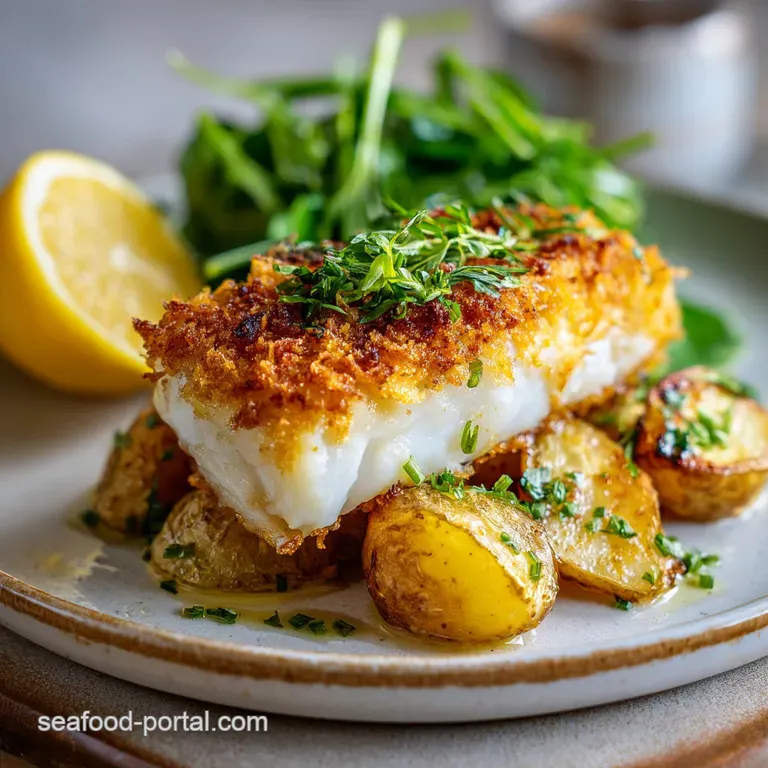
- Time: Active 10 minutes, Passive 15 minutes, Total 25 minutes
- Flavor/Texture Hook: Shattering golden crust with a zesty, smoky finish
- Perfect for: Busy weeknights where you want a high end bistro feel without the effort
- The Secret Behind This Potato Crusted Cod Recipe
- The Science of Why it Works
- Critical Numbers for Success
- Gathering Your Fresh Elements
- Essential Kitchen Gear Required
- Simple Steps to Crispy Fish
- Fixing Common Cooking Mistakes
- Delicious Crust Variations to Try
- Adjusting Portions for Groups
- My Final Take on Seafood Myths
- Smart Storage and Zero Waste
- Plating Like a Seafood Pro
- Recipe FAQs
- 📝 Recipe Card
Honestly, I used to think a Potato Crusted Cod Recipe was something only fancy restaurants could pull off with a deep fryer. I remember one specific Tuesday night where I tried to use actual grated potatoes, and it turned into a soggy, starchy disaster that stuck to the pan.
I almost gave up on the idea entirely until I realized that the secret was sitting in my pantry the whole time in a box of instant potato flakes.
By using flakes instead of fresh potatoes, we skip the moisture battle entirely. The result is a crust that stays crispy even if the fish sits for a few minutes. You get that incredible contrast between the salty, smoky exterior and the mild, buttery interior of the cod.
It is a total lifesaver for those nights when you want something that feels special but you only have about 25 minutes to get dinner on the table.
We are going to walk through the science of why this works, the exact steps to ensure your crust never slides off, and some quick tricks I have picked up after making this dozens of times. Let’s get that oven preheated and crack on.
The Secret Behind This Potato Crusted Cod Recipe
The magic here lies in the "crush factor." Unlike traditional flour breading, which can become pasty if the fish releases too much moisture, potato flakes are designed to absorb liquid and expand. This creates a protective shell that locks the juices inside the fillet.
When you bite in, you aren't just getting crumbs; you're getting a structural, crispy lattice that holds its shape.
The Science of Why it Works
Starch Dehydration: The potato flakes undergo rapid moisture loss in the oven, creating a rigid, glass like structure that shatters upon impact. Protein Denaturation: The Dijon mustard acts as a chemical binder, using its acidity to slightly "cook" the surface proteins, ensuring the crust sticks firmly to the fish.
When we look at Fish Recipes across different cultures, the goal is always to protect the delicate flesh from direct, harsh heat. This potato barrier acts like a culinary insulation.
Optimizing Surface Moisture
I cannot stress this enough: dry your fish. If there is a layer of water on the cod, the mustard will slide right off, and your crust will end up in a pile at the bottom of the pan. Use paper towels and press firmly. We want the surface of the cod to be tacky, not wet.
Leveraging Potato Starch
Potato flakes are essentially pure starch. Unlike wheat flour, which develops gluten and can become chewy, potato starch remains crisp and light. This is why the texture feels so much more refined than a standard breaded fish.
Utilizing Elevated Airflow
If you bake the fish directly on a solid sheet pan, the bottom will steam. I always suggest using a wire cooling rack placed inside your baking sheet. This allows the hot air to circulate under the fish, giving you a 360 degree crunch without having to flip the delicate fillets.
Critical Numbers for Success
To get this right every single time, you need to hit these three precision checkpoints. I used to eyeball it, but once I started using a thermometer and a timer, the results became consistent.
- Oven Temperature: 200°C (400°F). This is the "sweet spot" where the crust browns before the fish overcooks.
- Internal Doneness: 63°C (145°F). Cod goes from silky to dry in a matter of seconds; pull it when it hits this mark.
- Coating Thickness: 3 mm. You want enough potato to provide a crunch, but not so much that it overwhelms the flavor of the cod.
| Feature | Stovetop Searing | Oven Baking (This Recipe) |
|---|---|---|
| Texture | Very crispy bottom, soft top | Uniformly crispy all around |
| Difficulty | High (Fillets often break) | Low (No flipping required) |
| Fat Content | Requires more oil for frying | Minimal oil needed for browning |
While a Homemade Fish Cakes recipe is great for using up leftovers, this oven baked method is much faster for a fresh dinner. It avoids the mess of hot oil splattering all over your stove, which is always a win in my book.
Gathering Your Fresh Elements
Selecting the right fish is half the battle. Look for cod that is translucent and firm to the touch. If it looks "milky" or has a strong odor, keep looking. We want that clean, oceanic scent that characterizes high-quality seafood.
| Ingredient | Science Role | Pro Secret |
|---|---|---|
| Cod Fillets | Lean Protein | Pat dry with three layers of paper towels for better adhesion. |
| Potato Flakes | Structural Starch | Use unseasoned flakes to control the salt levels yourself. |
| Dijon Mustard | Emulsified Binder | The vinegar in the mustard brightens the fish's natural oils. |
| Smoked Paprika | Flavor Enhancer | Adds a "fire roasted" aroma without needing a grill. |
Now, let's look at the full list of what we need. Don't worry if you're missing one specific spice; this recipe is incredibly forgiving as long as you keep the potato to mustard ratio the same.
For the Fish
- 4 (6 oz) Cod Fillets: Fresh or thawed. Why this? Cod is sturdy enough to hold the weight of the potato crust.
- Substitute: Haddock or Pollock. They have a similar flake structure.
- 0.5 tsp Sea salt: Fine grain is best.
- Substitute: Kosher salt (use double the amount).
- 0.25 tsp Cracked black pepper: Freshly ground.
- Substitute: White pepper for a milder, earthy heat.
- 1 tbsp Lemon juice: Freshly squeezed.
- Substitute: White wine vinegar if you are out of lemons.
For the Shattering Crust
- 1.5 cups Unseasoned potato flakes: The star of the show. Why this? Provides a consistent, repeatable crunch every time.
- Substitute: Crushed potato chips (reduce the sea salt if using).
- 1 tbsp Fresh parsley: Finely minced.
- Substitute: Fresh chives or dried dill.
- 0.5 tsp Garlic powder: For savory depth.
- Substitute: Onion powder.
- 0.5 tsp Smoked paprika: For color and aroma.
- Substitute: Regular paprika or a pinch of cayenne.
- 2 tbsp Extra virgin olive oil: Helps with browning.
- Substitute: Melted butter for a richer, more indulgent flavor.
For the Healthy Binding Agent
- 3 tbsp Dijon mustard: The "glue." Why this? It adds a tangy kick that cuts through the starch.
- Substitute: Whole grain mustard or a mix of mayo and lemon.
- 1 tsp Lemon zest: For aromatic brightness.
- Substitute: Lime zest for a tropical twist.
Essential Kitchen Gear Required
You don't need a professional kitchen, but two pieces of equipment make a massive difference here. First, a digital meat thermometer. Seafood is expensive, and overcooking it is a tragedy. Second, a wire cooling rack that fits inside a rimmed baking sheet.
This is how we get the bottom as crispy as the top.
- Baking Sheet: Standard half sheet size.
- Wire Rack: To lift the fish for airflow.
- Shallow Bowls: Two of them for the "binder" and "crust" stations.
- Microplane: To get that fine, aromatic lemon zest.
- Parchment Paper: Line the tray under the rack for easy cleanup.
Simple Steps to Crispy Fish

Right then, let's get into the flow. The goal is to keep one hand "wet" and one hand "dry" so you don't end up with "club hand" that thick layer of breading that gets stuck to your fingers instead of the fish.
Preparing the Fillets
- Preheat your oven to 200°C (400°F) and set your wire rack over a lined baking sheet.
- Dry the 4 (6 oz) Cod Fillets thoroughly. Note: Any surface moisture will cause the crust to steam and fall off.
- Season both sides with 0.5 tsp Sea salt, 0.25 tsp Cracked black pepper, and 1 tbsp Lemon juice.
Constructing the Potato Coating
- Combine 1.5 cups Unseasoned potato flakes, 1 tbsp Fresh parsley, 0.5 tsp Garlic powder, and 0.5 tsp Smoked paprika in a shallow bowl.
- Drizzle 2 tbsp Extra virgin olive oil into the flakes and toss with a fork until the flakes look like damp sand. Note: This ensures the crust browns evenly without burning.
- Mix 3 tbsp Dijon mustard and 1 tsp Lemon zest in a separate small bowl.
Applying the Binder
- Brush a thin, even layer of the mustard mixture over the top and sides of each fillet.
- Press the cod firmly into the potato flake mixture until a thick, golden layer adheres.
Achieving the Perfect Crust
- Place the coated fillets onto the wire rack, leaving space between them for airflow.
- Bake for 15 minutes until the crust is deeply golden and the fish flakes easily with a fork. Pull it when the internal temperature hits 63°C (145°F).
Chef's Tip: Freeze your butter for 10 minutes and grate a tiny bit over the top of the potato crust right before it goes in the oven. The tiny cold shards of fat will melt slowly, creating localized "micro frying" zones for extra crunch.
Fixing Common Cooking Mistakes
Even with a simple Potato Crusted Cod Oven method, things can go sideways. The most common heartbreak is the "Soggy Bottom Syndrome." This happens when the fish sits in its own juices.
Preventing a Loose Crust
If your crust is sliding off like a loose sweater, you likely didn't press the potato flakes in firmly enough. You want to actually use the palm of your hand to anchor those flakes into the mustard binder. Another culprit is using too much mustard; you want a thin "glue," not a thick sauce.
Avoiding Dry Fish
Cod is very lean. If you leave it in the oven even three minutes too long, it goes from "velvety" to "cardboard." This is why that thermometer is your best friend. If you don't have one, look for the "flake." Take a fork and gently twist it in the thickest part of the fish.
If it separates into clean layers easily, it's done.
| Problem | Root Cause | Solution |
|---|---|---|
| Crust is pale | Not enough oil in flakes | Ensure oil is tossed thoroughly into the potato flakes before coating. |
| Fish is watery | Frozen fish not thawed properly | Thaw in the fridge for 24 hours and pat dry multiple times. |
| Bottom is soggy | No airflow under fish | Use a wire rack to allow heat to circulate under the fillet. |
If you ever find yourself with extra cod and want to try something different, the seasoning profile here actually works wonderfully when adapted into a Chicken Fried Steak recipe — just swap the fish for tenderized beef and use the same potato flake technique!
Delicious Crust Variations to Try
Once you've mastered the basic Simple Potato Crusted Cod, it's time to play with the flavor map. The beauty of this recipe is how easily it adapts to different cuisines just by swapping the spices in the potato mixture.
- The Heat Seeker: Add 0.5 tsp of cayenne pepper and a tablespoon of nutritional yeast to the flakes for a "cheesy" spicy kick.
- The Mediterranean: Swap the parsley for dried oregano and add 2 tablespoons of finely grated Parmesan cheese to the crust.
- The Zesty Herb: Use a mix of dill, chives, and tarragon for a bright, spring inspired flavor.
Mastering the Spicy Kick
If you want a "Buffalo" version, mix a teaspoon of hot sauce into your Dijon mustard binder. It gives the fish a gorgeous orange hue and a lingering heat that pairs perfectly with a cooling side of coleslaw.
Going Mediterranean
Adding Parmesan to the potato flakes is a game changer. The cheese melts and acts as a secondary binder, creating a lace like "frico" texture within the potato crust. Just be sure to reduce your added sea salt, as the cheese is naturally salty.
Adjusting Portions for Groups
Scaling this Potato Chip Crusted Cod Recipe (or the flake version) is straightforward, but there are some math traps to avoid. If you are doubling the recipe for a dinner party, do not simply double the spices.
- Scaling Down (1-2 people): Cut the ingredients in half, but keep the oven temperature the same. Check the fish 2 minutes earlier, as smaller batches sometimes cook faster due to better airflow.
- Scaling Up (8+ people): Use two separate baking sheets. Do not crowd the fish on one tray, or they will steam instead of crisp. For the spices, use 1.5x the amount rather than 2x to avoid over seasoning.
- Baking Large Batches: If you're doing a big tray, lower the oven temperature by about 10 degrees and extend the time by 3-5 minutes to ensure even heat distribution.
My Final Take on Seafood Myths
I used to believe that you had to flip fish halfway through cooking to get it crispy. This is a myth that leads to many broken fillets. With the wire rack method, the heat hits the bottom of the fish through the rack, meaning you never have to touch it until it's time to plate.
Another common misconception is that "fresh is always better." Honestly, high-quality "flash frozen" cod is often "fresher" than the "fresh" fish at the counter that has been sitting on ice for three days. Don't be afraid of the freezer aisle; just make sure you thaw it slowly in the fridge.
Smart Storage and Zero Waste
Leftover Quick Potato Crusted Cod is a rare sight in my house, but if you have some, you need to store it correctly to maintain that crunch.
- Fridge: Keep in an airtight container for up to 2 days. To reheat, avoid the microwave at all costs it will turn the crust into mush. Instead, pop it back into a 180°C (350°F) oven or an air fryer for 4-5 minutes.
- Freezer: I don't recommend freezing the cooked fillets as the potato crust loses its structural integrity. However, you can freeze the raw, coated fillets for up to 1 month. Bake them straight from frozen, adding about 8-10 minutes to the cook time.
- Zero Waste Tip: If you have leftover potato flake mixture, don't throw it out! It makes an incredible crunchy topping for a macaroni and cheese or a vegetable gratin. You can also use the lemon peels (after zesting) to infuse olive oil for a later salad dressing.
For another luxurious way to use up seafood scraps or smaller pieces of cod, check out this Lobster Stew recipe. It’s a great way to ensure nothing goes to waste in your kitchen.
Plating Like a Seafood Pro
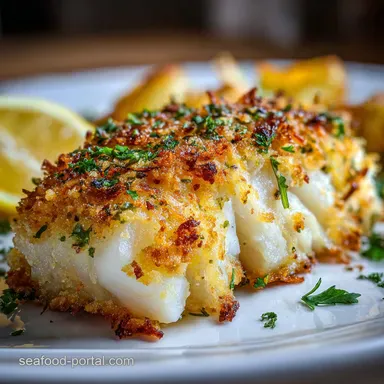
The contrast between the golden brown crust and the snow white fish is beautiful on its own, but a few small touches can make it look like it came from a high end kitchen.
- The Swoosh: Take a spoonful of tartar sauce or a lemon garlic aioli and make a bold "swoosh" across the plate before laying the fish on top.
- Height: Lean the fillet against a small mound of smashed peas or roasted asparagus to give the dish some architectural height.
- The Finishing Touch: A final sprinkle of fresh parsley and a wedge of lemon on the side isn't just for looks; that hit of fresh acid right before eating wakes up all the flavors.
- Contrasts
- Shattering crunch vs. silky tenderness.
- Brightness
- Lemon zest vs. smoky paprika.
- Richness
- Pungent Dijon vs. buttery cod.
Enjoy your kitchen win! This recipe has saved my sanity more times than I can count, and I hope it becomes a staple in your rotation too. Trust me, once you go potato crusted, those standard breadcrumbs will feel like a distant memory.

Recipe FAQs
Is potato crusted cod healthy?
Yes, when prepared correctly. This recipe uses baking instead of frying and relies on healthy fats from olive oil, offering lean protein from the cod. Using potato flakes provides fiber and a satisfying crunch without excessive calories.
How long to bake potato crusted cod at 375 degrees?
Bake for about 15-18 minutes. The key is an internal temperature of 145°F (63°C), ensuring the fish is flaky and cooked through. Keep an eye on the crust's golden brown color.
What's the best seasoning for cod fish?
Smoked paprika and garlic powder are excellent. They add a savory depth and subtle smokiness that complements the mild cod without overpowering it. Lemon zest and fresh parsley also provide bright, aromatic notes.
What to serve with potato crusted cod for dinner?
Serve with roasted asparagus or a simple green salad. Creamy sides like The Best Twice Baked Potato Recipe: A Creamy Comfort Classic also pair beautifully. A light lemon dill sauce or tartar sauce complements the dish well.
Can I use fresh potatoes instead of flakes?
No, stick with potato flakes for best results. Freshly grated potatoes release too much moisture, which can steam the fish and prevent the crust from becoming crispy, unlike the flakes that absorb moisture and create a shatteringly crisp coating.
Why is my potato crust soggy?
A soggy crust usually means there wasn't enough airflow or the fish was too wet. Ensure you're using a wire rack over a baking sheet to allow air circulation beneath the fish. Patting the cod fillets very dry before applying the mustard binder is crucial.
Can I make the potato crust ahead of time?
Yes, the dry potato flake mixture can be prepared in advance. Store the seasoned flakes in an airtight container at room temperature for up to a week. Just add the oil and mustard binder right before coating the fish for optimal crispness.
Potato Crusted Cod Recipe
Ingredients:
Instructions:
Nutrition Facts:
| Calories | 287 kcal |
|---|---|
| Protein | 31.8 g |
| Fat | 8.1 g |
| Carbs | 18.4 g |
| Fiber | 1.4 g |
| Sugar | 0.8 g |
| Sodium | 478 mg |
