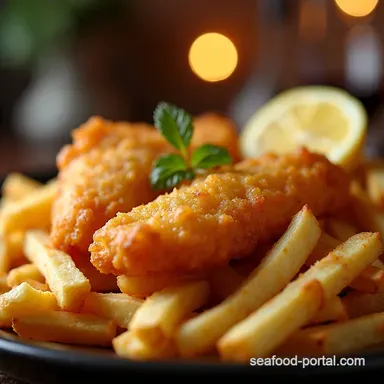
Crispy Fish and Chips with Carbonated Batter

- Total1 Hrs 5 Mins
- Protein38.1 g
- Calories903 kcal
- Time: 15 min active + 30 min cooking + 20 min soaking
- Flavor & Texture: Chestnut brown crunch with a fluffy interior
- Perfect for: A cozy weekend treat
Crispy Homemade Fish and Chips
The sound of a battered fillet hitting 375°F oil is the best part. It sizzles instantly, creating a shell that shatters when you bite into it.
You can get this result at home without a commercial fryer. The goal is a sharp contrast between the crisp outer layer and the tender, flaky fish inside.
This classic fish and chips meal depends on temperature control. If the oil drops too low, the batter absorbs grease instead of puffing up.
Why the Crunch Stays
- Double Frying: The first fry softens the potato starch, while the second fry browns the outside.
- Cold Bubbles: Ice-cold sparkling water creates tiny air pockets that lift the batter.
The oil must stay hot. When cold fish enters the pan, the temperature drops, so frying in small batches keeps the crust from getting soggy.
| Method | Time | Texture | Best For |
|---|---|---|---|
| Oven Bake | 25 min | Soft/Tender | Healthier option |
| Double Fry | 30 min | Shattering Crunch | Authentic taste |
What Each Part Does
| Component | Purpose | Substitute Notes |
|---|---|---|
| Russet Potatoes | High starch for fluffiness | Yukon Gold: Waxier, less fluffy inside |
| Cornstarch | Creates a snappier crust | Rice flour: Lighter, but different snap |
| Sparkling Water | Adds lift and lightness | Still water: Results in a denser crust |
| White Vinegar | Keeps chips from breaking | Lemon juice: Similar acidity, works well |
The Shopping List
- 2 lbs Russet potatoes, peeled and cut into thick batons
- 1 quart Vegetable oil
- 1 tsp salt
- 1 tbsp White vinegar
- 1½ lbs Cod or Haddock fillets, patted dry Why this? Firm white fish holds its shape in batter
- 1 cup All-purpose flour
- ½ cup Cornstarch
- 1 tsp Baking powder
- 1 tsp salt
- 1 cup Cold sparkling water Why this? Carbonation creates a light, airy texture
- ½ cup Vegetable oil
Gear for the Fry
A heavy-bottomed pot or a Dutch oven works best because it holds heat better than a thin pan. You'll also need a wire cooling rack for draining the chips.
Bringing It Together
1. Preparing the Chips for Maximum Crunch
To remove excess starch, soak the sliced potatoes in cold water with 1 tbsp white vinegar for 20 minutes. Drain the water and pat the potatoes completely dry.
Bring the vegetable oil to 325°F (163°C). Fry the potato batons in two batches for 5–7 minutes until pale and soft, which prevents the oil temperature from dropping too low. Use a slotted spoon to transfer them to a wire rack.

2. Creating the Airy Batter
In a large bowl, mix 1 cup all-purpose flour, ½ cup cornstarch, 1 tsp baking powder, and 1 tsp salt. Slowly add 1 cup ice-cold sparkling water, stirring gently with a fork until combined. Let a few small lumps remain. Note: Overmixing develops gluten, which makes the batter chewy
3. The Final Golden Fry
Increase the oil heat to 375°F (190°C). Lightly dust each cod or haddock fillet in plain flour, then dip them into the batter for a full coating.
Carefully slide 2 pieces of fish into the oil at once. Fry for 4–6 minutes, flipping once, until the crust is a deep golden brown and the core temperature is 145°F (63°C). This is the standard for fish according to FoodSafety.gov.

4. Finishing the Chips
While the fish is resting, fry the pre-cooked chips again in the 375°F (190°C) oil for 2–3 minutes until they are chestnut brown and crisp.
Drain the fish and chips on paper towels and season them immediately with 1 tsp salt.

Avoiding Common Pitfalls
If the batter slides off the fish, it's usually because the fillets were damp. Moisture creates a barrier that prevents the batter from sticking.
When the chips come out limp, the oil was likely too cool or the pan was overcrowded. This drops the temperature and steams the potatoes instead of frying them.
Batter Slipping Off
Ensure the fish is bone-dry before dredging in flour. The flour acts as a primer for the batter.
Soggy Potato Chips
Fry in smaller batches. If the oil isn't bubbling aggressively when the chips go in, wait another minute.
Overcooked Fish
Use a thermometer. Fish cooks quickly, and a few extra minutes can turn a tender fillet into something dry.
| Problem | Root Cause | Solution |
|---|---|---|
| Greasy Batter | Oil temp too low | Use a thermometer; fry fewer pieces |
| Pale Chips | Second fry too short | Fry until deep golden brown brown |
| Rubbery Crust | Batter overmixed | Stir gently; leave some lumps |
Budget Alternatives
| Original Ingredient | Substitute | Impact |
|---|---|---|
| Cod / Haddock | Pollock | Similar flavor, usually cheaper |
| Vegetable Oil | Canola Oil | Neutral taste, similar fry point |
Storage and Reheating
Store leftover fish and chips in a sealed box in the fridge for up to 2 days. Keep in mind that the crust will lose its snap in the refrigerator.
Do not use a microwave to reheat, as it makes the batter rubbery. Instead, use an air fryer or an oven at 400°F (200°C) for 5–8 minutes. This re-crisps the shell. Leftovers should be reheated to 165°F (74°C) per USDA FSIS guidelines.
Flavor Twists
Lemon Pepper Zest
Stir 1 tsp of lemon pepper and a pinch of paprika into the flour mixture for a more zesty, vibrant crust.
Spicy Cajun Twist
Mix 1 tbsp of Cajun seasoning into the batter for an added kick of heat. For those hosting a crowd, a Clam Dip Recipe serves as an excellent accompanying appetizer.
Serving Your Meal

Serve the fish and chips immediately while the heat is still peaking. I like a generous squeeze of fresh lemon and a drizzle of malt vinegar to cut through the richness of the fry.
A side of tartar sauce or mushy peas completes the meal. The acidity of the vinegar and lemon balances the fats, making every bite feel fresh.
Critical in Sodium
1286 mg of sodium per serving (56% of daily value)
American Heart Association recommendation: no more than 2,300 mg of sodium per day
Tips to Reduce Sodium
-
Reduce Potato Salt
Omit or significantly reduce the salt added to the potatoes; instead, rely on the vinegar for flavor.
-
Minimize Batter Salt
Decrease the amount of salt in the flour mixture or replace it with onion powder for a savory profile.
-
Swap Baking Powder
Use a sodium-free baking powder alternative to reduce the hidden sodium in the batter.
-
Boost Herbs and Spices
Mix smoked paprika, dried oregano, or black pepper into the dredging flour to add complexity without adding sodium.
-
Add Fresh Citrus
Squeeze fresh lemon juice over the fried fish to brighten the taste and mimic the sharpness of salt.
Recipe FAQs
Can I fry the potatoes and fish in the same oil?
Yes, fry the chips first at 325°F before increasing the heat to 375°F for the fish.
Tip: this order helps keep potato starch from affecting the fish batter's crispness.
How to reheat leftovers without losing the crunch?
Use an air fryer or oven at 400°F (200°C) for 5–8 minutes. When reheating cooked leftovers, check with a food thermometer that the center reaches 165°F (74°C); the appliance temperature and time alone do not confirm this.
Tip: avoid the microwave as it makes the batter rubbery. When reheating cooked leftovers, check with a food thermometer that the center reaches 165°F (74°C); the appliance temperature and time alone do not confirm this.
Why soak the potatoes in vinegar water?
This process removes excess starch to help the chips get crispier.
Tip: drain and pat them completely dry before frying to prevent oil splatters.
Crispy Fish and Chips