Spider Roll Sushi: Crispy and Authentic
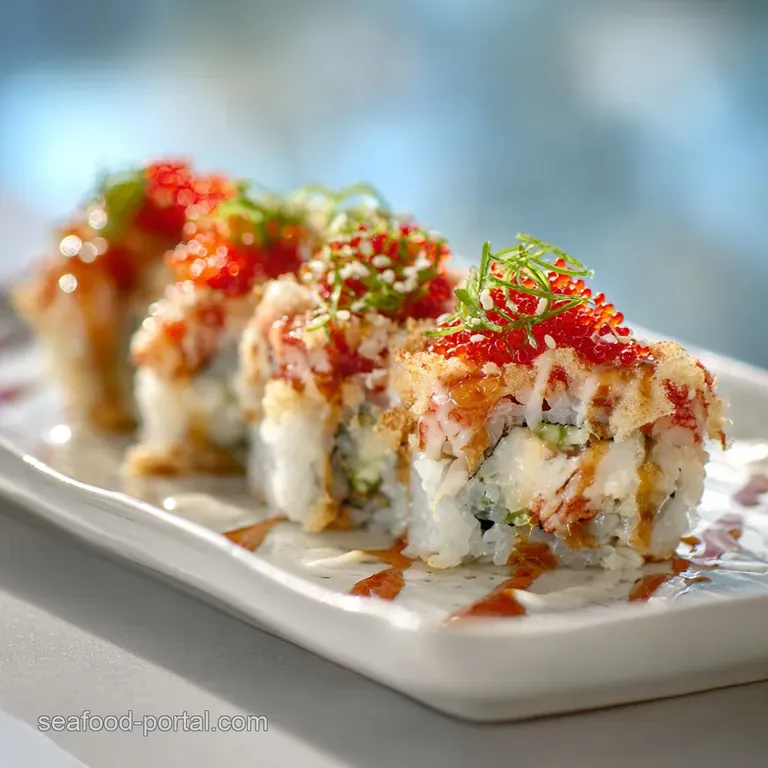
- Time: Active 30 minutes, Passive 15 minutes, Total 45 minutes
- Flavor/Texture Hook: Shatteringly crisp crab legs with peppery sprouts and a creamy sriracha kick.
- Perfect for: An adventurous date night or a vibrant weekend sushi party.
- How to Actually Nail This Spider Roll Sushi
- Why This Works
- Component Analysis for Superior Results
- Gathering Your Essentials
- Equipment Needed for Rolling
- Step-by-Step Instructions
- Troubleshooting Guide
- Scaling Your Sushi Night
- Flavor Variations to Try
- Debunking Common Sushi Rice and Crab Myths
- Preservation Secrets and Zero Waste
- Perfect Complements
- Recipe FAQs
- 📝 Recipe Card
How to Actually Nail This Spider Roll Sushi
The first time I tried to fry a soft shell crab, it was a total disaster. I didn't dry it enough, and when it hit the hot oil, it popped like a firecracker, sending oil everywhere and leaving me with a soggy, sad mess. But when you get it right, that first bite of a Spider Roll Sushi is pure magic.
You get that loud, audible crunch from the legs peeking out of the roll, followed by the sweet, briny meat of the crab body and the tangy zip of the vinegar soaked rice. It is a bold, street style experience that puts every other roll to shame because it refuses to be subtle.
The hero here is undoubtedly the soft shell crab. This isn't just any seafood, it is a crab caught right after molting, meaning the entire shell is edible and becomes a crispy vehicle for flavor.
If you try to swap this for imitation crab or even tempura shrimp, you lose the "spider" effect - those iconic, spindly legs that give the roll its name and its unique texture. Substitutes just fall short because they lack the specific sweetness and the varied textures of the crab’s claws and body.
This recipe is all about the contrast. We are playing with hot and cold, crunchy and soft, and sweet and spicy. We use 4 Prime sized soft shell crabs that are cleaned and patted bone dry to ensure the batter clings like a second skin.
When that crab hits the 375°F (190°C) oil, the carbonation in the sparkling water expands instantly, creating tiny air pockets that lead to a crust that shatters when you bite into it.
It is vibrant, it is messy in the best way possible, and it is exactly what your sushi night has been missing.
Why This Works
- Carbonation Expansion: Using ice cold sparkling water in the batter introduces carbon dioxide, which creates a lighter, airier crust that doesn't soak up excess oil.
- Starch Synergy: Mixing all purpose flour with cornstarch lowers the overall protein content, preventing the development of tough gluten and ensuring the coating stays crispy rather than bready.
- Moisture Management: Patting the crab extremely dry and dredging it in dry starch before battering creates a "glue" layer that prevents the steam from the crab from pushing the crust off during frying.
- Thermal Contrast: The 375°F (190°C) oil temperature is high enough to flash fry the crab in 3-4 minutes, cooking the delicate meat through without making it rubbery.
- Rice Seasoning Balance: The specific ratio of rice vinegar, sugar, and salt provides the necessary acidity to cut through the richness of the fried crab and the creamy avocado.
| Crab Thickness | Frying Temperature | Cook Time | Visual Doneness Cue |
|---|---|---|---|
| Small (Hotel) | 375°F (190°C) | 2 minutes | Golden brown and floating |
| Medium (Prime) | 375°F (190°C) | 3-4 minutes | Mahogany brown and stiff legs |
| Large (Jumbo) | 375°F (190°C) | 5 minutes | Deep bronze and silent sizzling |
To get the best results, always fry in small batches. If you crowd the pot with all four crabs at once, the oil temperature will plummet, and you’ll end up with greasy seafood instead of that vibrant, street style crunch we are after.
Component Analysis for Superior Results
| Ingredient | Science Role | Pro Secret |
|---|---|---|
| Japanese Rice | High starch content provides the "stick" needed for structural integrity. | Rinse until the water is crystal clear to remove excess surface starch that makes rice gummy. |
| Soft Shell Crab | Provides the primary protein and the "spider" visual. | Use "Prime" sized crabs for the best ratio of meat to crispy shell. |
| Egg Yolk | Acts as an emulsifier in the batter for better fat distribution. | Keep the yolk chilled until the very second you mix the batter to keep everything cold. |
| Rice Vinegar | Denatures some surface proteins on the rice to keep grains distinct. | Fold it in while the rice is steaming hot so the grains absorb the flavor deeply. |
When you are working with the rice, remember that the seasoning isn't just for flavor. The sugar and vinegar actually help preserve the rice at room temperature for a few hours, which is vital for a long sushi making session.
Just don't skip the fanning process, as cooling the rice quickly gives it that characteristic glossy sheen.
Gathering Your Essentials
For the rice and base: 2 cups (400g) Japanese short grain rice Why this? Essential for the right stickiness and chew. 2.25 cups (540ml) Water 1/4 cup (60ml) Rice vinegar Why this? Adds the necessary bright acidity. 2 tbsp (25g) Granulated sugar 1 tsp (6g)
Sea salt
For the soft shell crab tempura: 4 Prime sized soft shell crabs, cleaned and thawed 1/2 cup (65g) All purpose flour 1/2 cup (65g) Cornstarch Why this? For a lighter, crispier fry than flour alone. 1 Egg yolk, chilled 3/4 cup (180ml) Ice cold sparkling water 2 cups Neutral oil for frying
For the roll and fillings: 4 sheets Nori seaweed 1 English cucumber, julienned 1 large Avocado, sliced thinly 1 bunch Kaiware daikon sprouts Why this? Adds a peppery, fresh bite. 3 tbsp Kewpie mayo 1 tbsp Sriracha 2 tbsp Unagi sauce
| Original Ingredient | Substitute | Why It Works |
|---|---|---|
| Soft Shell Crab | Tempura Jumbo Shrimp | Similar crunch. Note: You lose the "legs" visual and the unique crab flavor. |
| Kaiware Sprouts | Radish Matchsticks | Provides the same peppery kick and crisp texture. |
| Rice Vinegar | Apple Cider Vinegar | Similar acidity. Note: Adds a slight fruity note that changes the profile. |
| Kewpie Mayo | Standard Mayo + Sugar | Mimics the sweetness. Note: Standard mayo lacks the deep umami of Kewpie's egg yolk only base. |
If you are looking for a milder, creamier alternative for a second roll, my Salmon Avocado Sushi Roll is a total crowd pleaser and uses many of the same ingredients. It is a great way to use up the extra avocado and cucumber you'll have on hand.
Equipment Needed for Rolling
To get that restaurant quality look, you really need a bamboo sushi mat (makisu). I highly recommend wrapping it in plastic wrap before you start. This prevents the rice from sticking to the bamboo slats and makes cleanup a breeze. You’ll also want a very sharp chef's knife.
A dull knife will squash your beautiful roll and squeeze out the avocado, ruining the presentation.
A heavy bottomed pot, like a Dutch oven, is best for frying the crabs. It holds heat much better than a thin skillet, which means the oil temperature won't bounce around as much. A thermometer is also non negotiable here.
Frying at 375°F (190°C) is a specific target; any lower and the crab gets oily, any higher and the delicate batter burns before the legs get crispy.
step-by-step Instructions
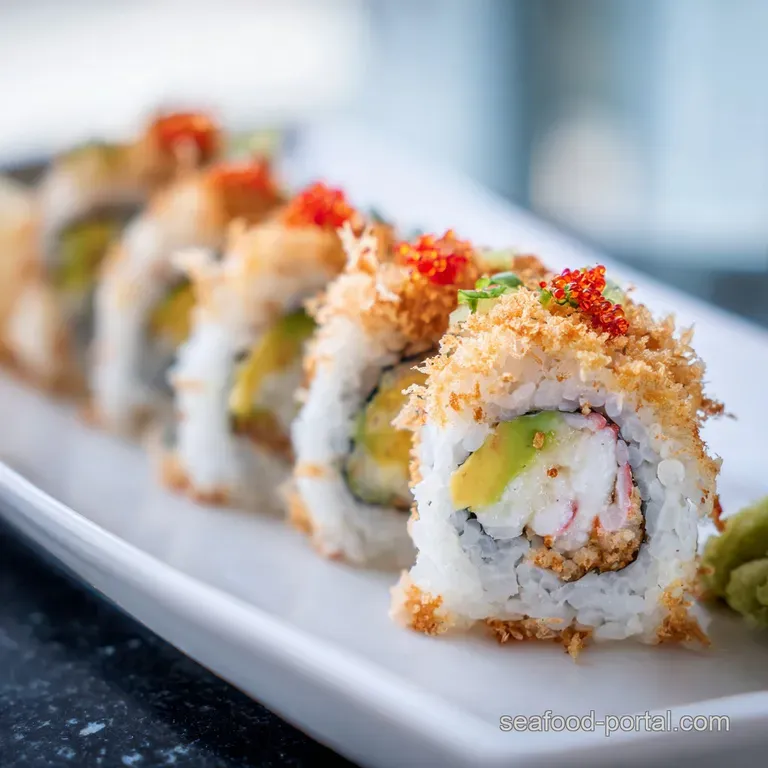
- Rinse the Japanese short grain rice in a bowl of cold water, swirling with your hand and draining, until the water runs clear. Cook with 2.25 cups (540ml) of water in a rice cooker. While the rice is still steaming hot, gently fold in the rice vinegar, sugar, and salt using a wooden paddle. Fan the rice for 5 minutes to cool it to room temperature and give it a glossy finish.
- Prepare the soft shell crabs by snipping off the face behind the eyes and removing the apron and gills if your fishmonger hasn't already. Pat them extremely dry with paper towels until no moisture remains on the surface.
- Heat 2 cups of neutral oil in a heavy bottomed pot to exactly 375°F (190°C).
- In a medium bowl, whisk the 1/2 cup (65g) flour, 1/2 cup (65g) cornstarch, chilled egg yolk, and 3/4 cup (180ml) ice cold sparkling water. Mix until just combined, leaving a few lumps so the batter remains light and airy.
- Dredge each crab lightly in a little extra cornstarch, then dip into the tempura batter. Carefully lower into the hot oil and flash fry for 3-4 minutes until the exterior is mahogany brown and the legs are stiff. Drain on a wire rack.
- Place a bamboo sushi mat on your workspace and cover with plastic wrap. Lay half a sheet of nori on the mat. Spread about 1/2 cup of the seasoned rice over the entire surface of the nori, leaving no gaps.
- Flip the nori over so the rice is now facing down on the plastic wrap. This is the "inside out" style.
- Place one fried soft shell crab in the center of the nori, making sure the legs stick out past the edges of the seaweed. Add a few cucumber matchsticks, 2-3 slices of avocado, and a pinch of kaiware sprouts.
- Lift the edge of the mat and roll tightly, using your fingers to keep the fillings in place. Squeeze firmly but gently until the roll feels solid and uniform.
- Use a sharp, wet chef's knife to slice the roll into 8 even pieces. Drizzle with the combined Kewpie mayo and sriracha, then finish with a decorative drizzle of unagi sauce.
Troubleshooting Guide
Why Your Crab Isn't Crunchy
The biggest culprit is usually moisture or temperature. If the crab wasn't dried properly, the steam from the meat will trapped under the batter, making it soggy within seconds. Alternatively, if your oil wasn't hot enough, the batter will absorb the oil instead of crisping up.
Always use a thermometer to verify you are at 375°F (190°C).
Fixing a Loose Roll
If your Spider Roll Sushi is falling apart when you cut it, your rice might be too dry or you didn't apply enough pressure. Ensure the rice is still slightly tacky when you roll. When using the bamboo mat, give the roll a final, firm "hug" with the mat to compress the grains and lock the fillings in.
| Problem | Root Cause | Solution |
|---|---|---|
| Batter peeling off | Crab was too wet | Pat dry with multiple paper towels until bone dry. |
| Rice sticking to hands | Hands are dry | Keep a bowl of "Tezu" (water and a splash of vinegar) nearby to dip fingers. |
| Crab legs are soft | Oil temp too low | Wait for oil to return to 375°F (190°C) between batches. |
Common Mistakes Checklist
- ✓ Never overmix the tempura batter; lumps are actually your friend for a flaky texture.
- ✓ Don't use warm water for the batter; ice cold is mandatory for the "thermal shock" crunch.
- ✓ Always slice with a wet knife; starch on the rice will grab the blade and tear the nori otherwise.
- ✓ Ensure the nori is fresh; if it’s chewy or bendy before you start, it’s stale and won't snap.
- ✓ Pat the avocado dry if it's very ripe so it doesn't slip out of the roll.
If you're still practicing your rolling technique, start with a Classic California Roll to get the hang of the rice tension before moving onto the more complex Spider Roll.
Scaling Your Sushi Night
Reducing the Batch
If you are only cooking for two, you can easily halve this recipe. Use 2 crabs and 1 cup of dry rice. For the egg yolk, beat one egg in a small bowl and use exactly half. Since you are using less oil to fry, be even more vigilant with the thermometer, as the temperature will fluctuate more rapidly in a smaller volume of oil.
Feeding a Crowd
Doubling this recipe to 8 rolls is a great idea for a party. However, don't double the spices or salt linearly; use about 1.5x the salt and spices to avoid over seasoning. The most important part of scaling up is the frying. You must fry the crabs in batches of two.
If you fry all 8 at once, you’ll drop the oil temperature by 50 degrees and end up with a soggy mess. Keep the finished crabs in a 200°F (95°C) oven on a wire rack to stay warm and crisp while you finish the rest.
Flavor Variations to Try
The Kimchi Fusion Twist
For a bold, street style upgrade, add a thin layer of chopped kimchi inside the roll alongside the cucumber. The fermented funk and spicy crunch of the kimchi play incredibly well with the sweet crab meat. You can even swap the Sriracha mayo for a Gochujang infused mayo to double down on those Korean flavors.
The Soy Paper Swap
If someone in your group isn't a fan of the "ocean" taste of nori, use yellow or green soy paper (mamenori). It has a neutral flavor and a beautiful, vibrant appearance that makes the mahogany colored crab legs really pop visually. It’s also slightly more delicate, so handle with care when rolling.
Debunking Common Sushi Rice and Crab Myths
One of the biggest myths is that you must use "Sushi Grade" labels for everything. While important for raw fish, since we are frying our crab, you just need high-quality, fresh soft shell crabs. There is no such thing as "sushi grade" for cooked ingredients.
Another common misconception is that you should press the rice into the nori. You actually want to spread it gently. Pressing smashes the grains, destroying the "air" in the rice and making the roll dense and heavy.
Many people also believe that you can't use frozen soft shell crabs. Honestly, unless you live right on the coast during molting season, frozen is often better because they are processed and frozen immediately at their peak.
Just ensure they are fully thawed and, as I've mentioned probably ten times now, patted completely dry.
Preservation Secrets and Zero Waste
Storage and Reheating
Spider Roll Sushi is best eaten immediately while the crab is hot and the rice is room temperature. However, if you have leftovers, store them in an airtight container in the fridge for up to 24 hours.
The rice will harden, but you can "revive" it by letting it sit at room temperature for 30 minutes before eating. To get the crab crunchy again, you can pop the individual slices into an air fryer at 350°F (180°C) for 2-3 minutes.
Zero Waste Tips
Don't throw away those cucumber seeds or avocado skins! The watery centers of the cucumber can be muddled into a refreshing gin cocktail or a glass of sparkling water. If you have extra tempura batter, dip some onion rings or sweet potato slices in it for a quick side snack.
Any leftover sushi rice can be turned into "sushi cereal" (just kidding, don't do that) or fried up the next day with a little soy sauce and sesame oil for a quick breakfast fried rice.
Perfect Complements
A Spider Roll Sushi is a meal in itself, but it loves company. A simple miso soup with silken tofu provides a warm, savory contrast to the cold rice. If you want to lean into the street food vibe, serve it with a side of edamame tossed in garlic and chili flakes.
For drinks, a crisp Japanese lager or a dry sparkling sake works wonders. The carbonation in the drink mirrors the lightness of the tempura batter and helps cleanse the palate between those rich, creamy avocado bites.
If you are going non alcoholic, a cold iced green tea with a squeeze of lemon is the ultimate refreshing side.
Recipe FAQs
What is in a spider sushi roll?
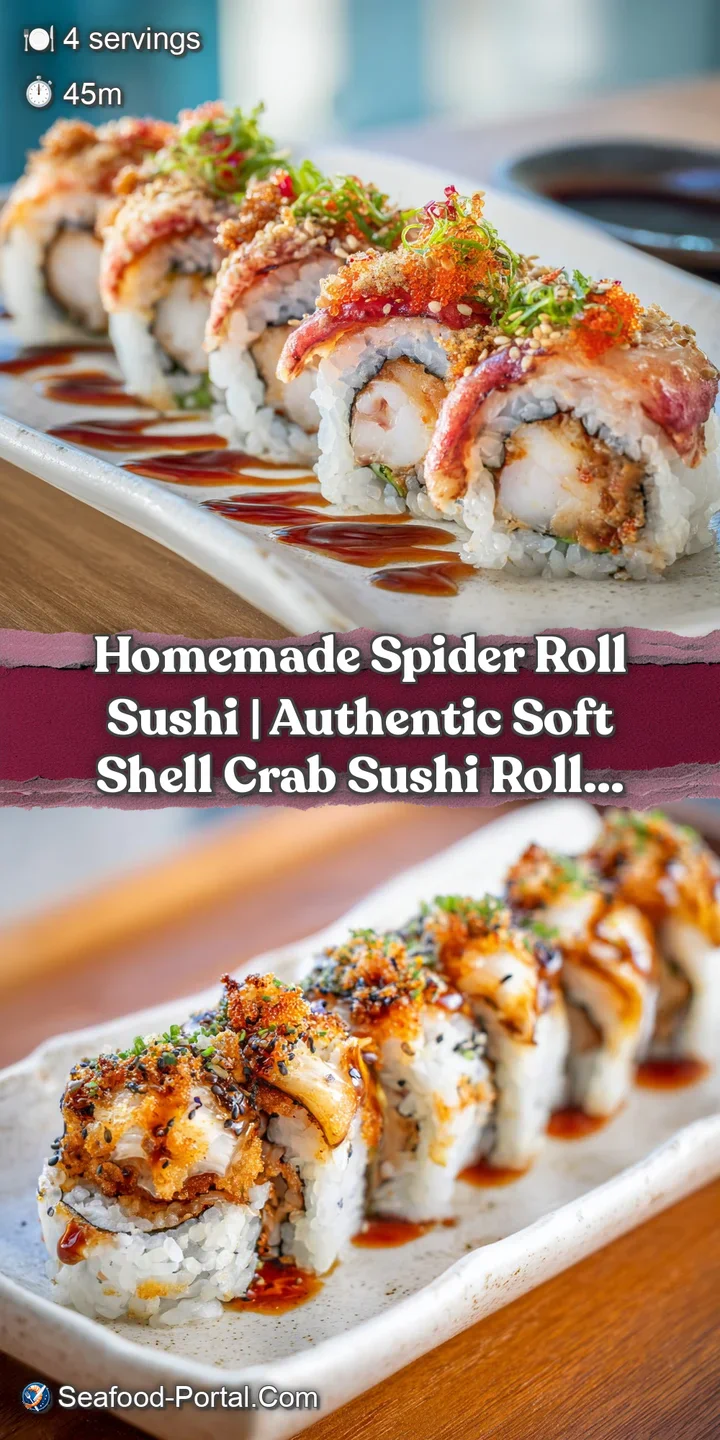
It features crispy fried soft shell crab, cucumber, avocado, and daikon sprouts. This is wrapped in nori and seasoned Japanese short grain rice, then finished with a drizzle of Kewpie mayo, Sriracha, and unagi sauce.
Is the spider roll the unhealthiest sushi option?
No, it is generally considered higher in calories than raw rolls due to the fried crab. With 867 calories per serving, it is denser than simple sashimi or vegetable only rolls, though it remains a balanced meal when enjoyed in moderation.
Can sushi help lower cholesterol?
Not necessarily, especially when consuming fried varieties like this roll. While fish contains heart healthy fats, the frying process for the soft shell crab adds saturated fats that do not support cholesterol management.
Can sushi help with constipation?
Possibly, if the roll includes fiber rich ingredients. The cucumber, avocado, and daikon sprouts provide dietary fiber that can assist with digestion compared to refined carbohydrate meals.
How to ensure the rice has a glossy, professional finish?
Fan the rice for 5 minutes immediately after mixing in the vinegar, sugar, and salt. If you enjoyed the precision required to achieve this texture, see how we apply similar perfect rice consistency across our other Japanese recipes.
Is it true the rice must be hot when adding seasonings?
Yes, the rice must be steaming hot to properly absorb the vinegar, sugar, and salt mixture. Folding the seasoning into hot rice ensures each grain is evenly coated before cooling to room temperature.
How to prevent the tempura batter from becoming soggy?
Pat the crabs extremely dry with paper towels before dredging them in the batter. Using ice-cold sparkling water also helps create a lighter, crisper crust that adheres well to the crab during the flash fry process.
Homemade Spider Roll Sushi
Ingredients:
Instructions:
Nutrition Facts:
| Calories | 867 calories |
|---|---|
| Protein | 29.9 g |
| Fat | 26.1 g |
| Carbs | 126.6 g |
| Fiber | 3.8 g |
| Sugar | 9.2 g |
| Sodium | 718 mg |
