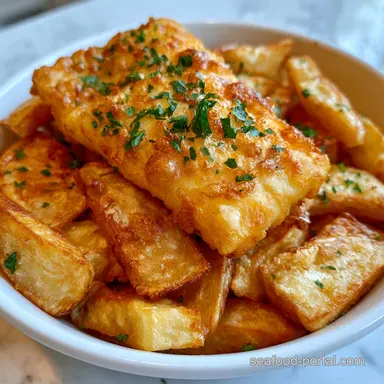
Shattering-Crisp Haddock Fish and Chips

- Total45 Mins
- Protein39.0 g
- Calories817 kcal
- Time: 15 min active and 30 min cooking
- Flavor & Texture: Briny, golden-brown crunch paired with tender, flaky fish
- Perfect for: A cozy weekend meal or a classic British-style spread
Haddock Fish and Chips
Strolling through a British coastal town, the scents of hot oil and malt vinegar fill the air. This dish is a true cultural icon. Its magic lies in the stark contrasts: the shattering crunch of the batter against tender, steaming flakes of fish, complemented by salty, pillowy chips.
You don't require a commercial fryer to achieve a "chippy" style result. By applying a few specific techniques, you can create that same deep-gold crust right in your home kitchen.
The objective is a light, airy coating that isn't greasy. When the oil temperature is precise, the batter puffs up immediately, locking the moisture inside the haddock.
Why the Steps Matter
- Sparkling Water: The carbonation creates tiny air bubbles that expand rapidly in the heat. This keeps the batter light and airy instead of dense.
- The Flour Dredge: A light coating of plain flour acts like a primer. It gives the wet batter something to grip so it doesn't slide off the fish.
- Par-boiling: Simmering the potatoes first creates a starchy outer layer. This ensures the chips are fluffy inside and crisp outside without needing three different fry stages.
The Basics
This version focuses on the contrast between the cold batter and the hot oil. I prefer using a deep pot rather than a shallow pan to keep the oil temperature stable. It makes the cooking process much more consistent.
If you're deciding between haddock or cod for fish and chips, haddock usually has a slightly sweeter flavor and a finer flake. Both work, but haddock holds up beautifully in a fry.
The Building Blocks
- 1½ lbs haddock fillets, cut into 3-oz pieces
- ½ cup all-purpose flour
- 1 tsp salt
- ½ tsp black pepper
- 1 cup all-purpose flour
- 1 tsp baking powder
- 1 cup ice-cold sparkling water
- ½ tsp salt
- 2 lbs russet potatoes, peeled and cut into thick batons
- 3 cups vegetable oil
- 1 tsp sea salt
The quality of your fish makes the dish. Look for fillets that are firm and smell like the ocean. For the chips, russet potatoes are the best choice because their high starch content leads to a better crunch.
| Original Ingredient | Substitute | Why It Works |
|---|---|---|
| Sparkling Water (1 cup) | Club Soda (1 cup) | Similar carbonation levels. Note: Ensure it's unsweetened |
| Haddock (1½ lbs) | Cod (1½ lbs) | Similar lean, white flesh. Note: Cod flakes slightly larger |
| Vegetable Oil (3 cups) | Canola Oil (3 cups) | Neutral flavor and high smoke point |
Tools You'll Need
Use a thick-walled pot for better heat retention, which stops the oil from cooling too rapidly when you add the chilled fish. A wire rack is also necessary, as resting the fish on paper towels can make the bottom soggy.
Step-by-step Instructions
Step 1: Prepare the potatoes
Put the potato batons into a pot of salted water, bring to a boil, and simmer for 5 minutes. After draining, allow them to steam-dry on a tray for 5 minutes. Note: This removes surface moisture for a better sear.
Step 2: Mix the cold batter
In a medium bowl, whisk together 1 cup all-purpose flour, baking powder, and ½ tsp salt. Gradually stir in ice-cold sparkling water, whisking lightly until just combined. Keep the bowl chilled in the refrigerator until you are ready to fry.
Note: A few lumps are fine; overmixing makes the batter tough.

Step 3: Coat the fish
Dry the haddock fillets thoroughly using paper towels. Season them with 1 tsp salt and ½ tsp black pepper. Lightly coat each piece in ½ cup all-purpose flour, shaking off any excess.
Step 4: Heat the oil
Warm 2 inches of vegetable oil in a pot until it reaches 375°F (190°C).
Step 5: Fry the fish
Submerge a floured fillet in the chilled batter, let the extra drip off for one second, and carefully lower it into the oil. Fry for 4–6 minutes, flipping once, until the crust is dark golden and the internal temperature reaches 145°F (63°C). For safety, you can consult USDA fish temperature guidelines. Move to a wire rack.

Step 6: Fry the chips
Keep the oil temperature at 375°F (190°C). Fry the par-boiled potatoes in small batches for 5–8 minutes until golden brown and crisp. Using batches prevents the homemade fish and chips from becoming too oily.
Step 7: Final touch
Drain the potatoes on paper towels and toss immediately with 1 tsp sea salt.

Problems and Solutions
Batter failures are typically caused by incorrect temperatures or too much surface water. If the fish is too damp, the coating simply won't adhere. Similarly, if the oil cools down too much, the batter absorbs the grease instead of pushing it out.
Avoiding Batter Slip
This happens when water gets trapped between the fish and the flour. Pat the fillets until they are completely dry.
Controlling Oil Temperature
Cold food lowers the oil's heat. Fry in small batches and wait for the oil to sizzle vigorously before adding the next piece.
| Problem | Root Cause | Solution |
|---|---|---|
| Batter slips off | Damp fish | Pat fillets dry; use a thin flour dredge |
| Greasy crust | Oil temperature too low | Use a thermometer; fry in smaller batches |
| Soggy chips | Overcrowded pot | Fry potatoes in 2-3 separate batches |
Make It Your Own
Adjusting the batter's flavor is simple. For an extra kick, mix a pinch of smoked paprika or cayenne pepper into the flour dredge. If you'd prefer a different fish, halibut is a wonderful substitute, although the cooking time may change depending on the thickness of the fillet.
An air fryer is a great option for a lighter version, but it lacks that classic "chippy" crunch. For the most authentic texture, I suggest using the stovetop.
Keeping It Fresh
Store any leftovers in an airtight container in the fridge for up to 3 days, as per USDA FSIS guidelines.
Fried food does not freeze well because the batter loses its structure. To reheat, avoid the microwave. Use an air fryer at 375°F (190°C) for 3–5 minutes, or a preheated oven at 400°F (200°C) until the crust sizzles and the fish reaches 165°F (74°C) in the thickest part.
This brings back the crispiness.
Serving Suggestions

Serve this with plenty of malt vinegar and a wedge of fresh lemon. The acidity cuts through the richness of the fried batter. I also like a side of mushy peas for the full experience.
If you want to move away from the traditional pub vibe, you can serve the fish with a Beurre Blanc sauce for a more refined, buttery finish. Tartar sauce is the standard choice, but a spicy remoulade adds a great zing to the plate.
Critical in Sodium
1450 mg of sodium per serving (63% of daily value)
American Heart Association recommendation: no more than 2,300 mg of sodium per day
Tips to Reduce Sodium
-
Omit Added Salt
Reduce or completely remove the salt from the flour coating and the batter to significantly lower the sodium content.
-
Swap Potato Seasoning
Replace the sea salt on the russet potatoes with smoked paprika, garlic powder, or onion powder for a savory flavor.
-
Use Citrus for Flavor
Squeeze fresh lemon juice over the fried haddock just before serving to provide a zesty brightness that mimics the taste of salt.
-
Add Fresh Herbs
Mix dried thyme, oregano, or fresh parsley into the flour mixture to add aromatic depth without adding sodium.
-
Check Your Water
Ensure you are using plain sparkling water rather than mineral water, as some brands contain added sodium salts.
Your Questions, Answered
What is the calorie count per serving of haddock fish and chips?
One serving contains 817 kcal.
Tip: share the portion if you are looking for a lighter meal.
Is it true that any potato works for the chips?
Actually, no. Russet potatoes are required for the correct starch level and texture.
Tip: cut them into thick batons to ensure they stay fluffy inside.
Why does the batter slip off the fish?
Surface moisture prevents the coating from adhering to the fillets.
Tip: pat the haddock completely dry with paper towels before dredging in flour.
How do you keep fried haddock crispy?
Transfer the fried fish to a wire rack instead of paper towels to prevent steaming.
Tip: use ice-cold sparkling water in the batter for a lighter, crunchier result.
Crispy Haddock Fish and Chips