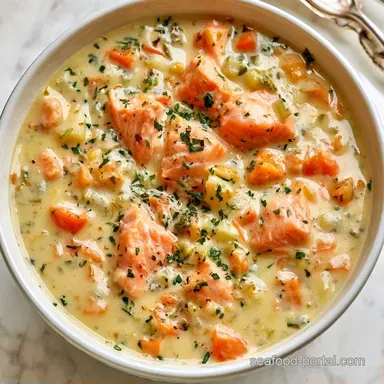
Creamy Salmon Chowder with Canned Salmon
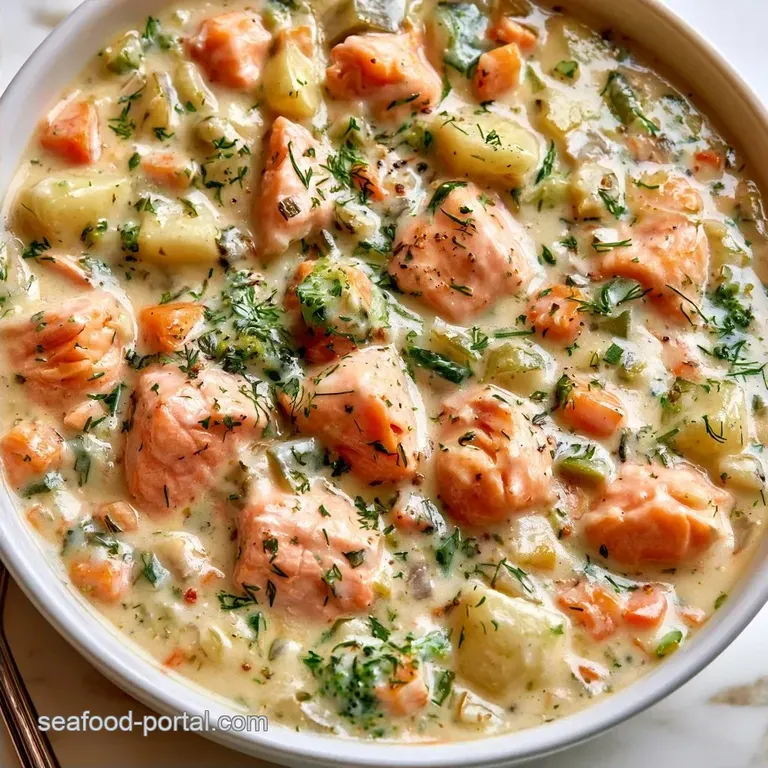
- Timing: 10 min active / 20 min cooking
- Flavor Profile: Creamy, filling, and accented with lemon
- Great for: Easy weeknight meals or affordable meal prep
The scent of butter browning with celery and onions is the perfect start to a drizzly Tuesday. I recall a night a while back when my fridge was virtually empty, except for a few potatoes and some canned pink salmon hiding in the cupboard.
Not wanting to brave the weather, I decided to see what I could whip up with what I had.
That spontaneous trial evolved into this Salmon Chowder. I discovered that you don't actually need fresh fillets to get that deep, briny essence of a seafood soup. Canned salmon is actually more durable during the simmer, meaning you can avoid the common pitfall of rubbery, overcooked fish.
You can look forward to a thick, hearty bowl that hits all the right comfort notes. The magic of this chowder is the balance between the earthy potatoes and a bright splash of lemon juice. It's humble, honest food that tastes like it simmered for hours, despite taking only thirty minutes.
Why This Salmon Chowder Works
- The Flour Roux: Dusting the vegetables with flour before stirring in the stock establishes a stable foundation. This keeps the cream from breaking and gives the Salmon Chowder a thick consistency without requiring a full quart of heavy cream.
- Acid Balance: A squeeze of lemon juice brightens the creaminess of the half and half. It refreshes the flavor of the canned fish and prevents the Salmon Chowder from feeling overly heavy.
If you are looking for some variety, you may appreciate the clear, briny nature of a Rhode Island Clam Chowder recipe as a contrast to this creamy version.
| Version | Prep Effort | Texture | Best For |
|---|---|---|---|
| Fast (Canned) | Very Low | Consistent/Hearty | Weeknights |
| Classic (Fresh) | Medium | Flaky/Delicate | Special Dinners |
Essential Recipe Specs
This Salmon Chowder is designed for speed. We use Yukon Gold potatoes because they hold their shape better than Russets, which tend to fall apart and make the soup grainy.
For a a more specific nutritional look, you can check the USDA FoodData Central for pink salmon values.
- For a quicker result
- Use frozen corn to skip the draining step.
- For a thicker soup
- Cut potatoes into smaller 1/4 inch cubes.
- For a lighter feel
- Swap half and half for whole milk.
Shopping List Breakdown
Here is what you need for this Salmon Chowder. I suggest using a heavy bottomed pot to keep the heat even.
- Unsalted Butter (3 tbsp): Provides the fat for the roux. Why this? Controls salt levels better than salted butter.
- Yellow Onion (1 medium, diced): The aromatic base. Why this? Milder sweetness than red onions.
- Celery (2 stalks, diced): Adds a subtle salty crunch. Why this? Classic mirepoix component.
- Carrot (1 medium, diced): For color and sweetness. Why this? Balances the savory fish.
- Garlic (2 cloves, minced): Pungent depth. Why this? Fresh garlic beats powder here.
- All purpose Flour (3 tbsp): The thickener. Why this? Standard for a smooth roux.
- Seafood Stock (3 cups): The liquid gold. Why this? Intensifies the oceanic flavor.
- Yukon Gold Potatoes (3 medium, cubed): The heart of the dish. Why this? Naturally creamy texture.
- Corn (1 cup, frozen or canned): Pop of sweetness. Why this? Contrast to the savory salmon.
- Dried Dill (1 tsp): The classic seafood herb. Why this? Pairs perfectly with pink salmon.
- Canned Pink Salmon (2 x 6oz cans, flaked): The protein. Why this? Budget friendly and shelf stable.
- Half and half (1 cup): For the creamy finish. Why this? Richer than milk, lighter than cream.
- Salt (½ tsp): Basic seasoning. Why this? Enhances all other flavors.
- Black Pepper (¼ tsp): Subtle heat. Why this? Cuts through the fat.
- Fresh Lemon Juice (1 tbsp): The brightness. Why this? Essential for balancing canned fish.
Equipment Needed
For this Salmon Chowder, I recommend a 5 quart Dutch oven, as the thick walls keep the half and half from scorching on the bottom. A heavy stockpot is a great alternative.
You will also need a whisk to keep the stock smooth, a sharp chef's knife for the dicing, and a wooden spoon to stir the vegetables.
The Cooking Process
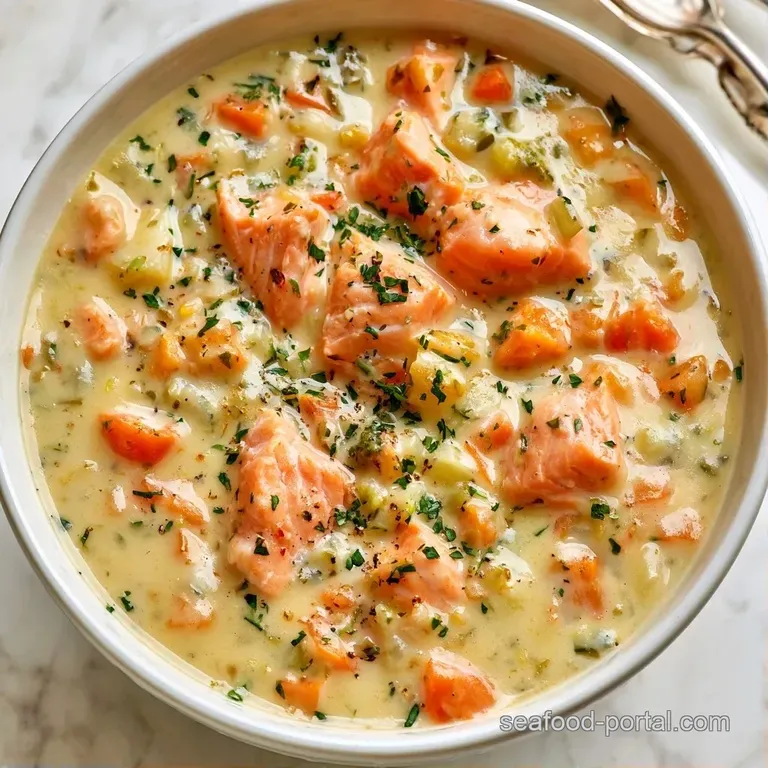
Follow these instructions to have your Salmon Chowder ready in 30 minutes.
- Melt the butter in your Dutch oven over medium heat. Note: Keep it bubbly, but don't let it brown.
- Toss in the diced onion, celery, and carrot. Sauté for 5–7 minutes until the onions look translucent and the vegetables are soft.
- Stir in the minced garlic. Cook for 1 minute until you smell that garlic aroma, ensuring it doesn't brown.
- Mix in the flour. Stir for 2 minutes until the flour smells slightly nutty.
- Slowly whisk in the seafood stock. Stir continuously until the liquid is smooth and lump free.
- Add the cubed potatoes. Bring to a light boil, then turn the heat to low and cover; simmer for 10–12 minutes until the potatoes are fork tender.
- Stir in the dried dill and corn.
- Gently fold in the flaked canned salmon. Note: Don't stir too much or the fish will break apart into the sauce.
- Pour in the half and half, lemon juice, salt, and pepper. Heat through gently until the Salmon Chowder is steaming, but keep it from reaching a full boil.
Chef's Note: If the canned salmon has too many bones for your taste, spend a minute picking through the flakes before adding them to the pot.
Avoiding Kitchen Disasters
Texture is often the biggest challenge when preparing a creamy Salmon Chowder. If the consistency seems too watery, simply simmer it without a lid for an additional 5 minutes to reduce the liquid.
You can also use a spoon to crush some of the potato pieces along the edge of the pot; the resulting starch will naturally thicken the chowder.
If the flavor of the fish is too intense, you may have overused the canned salmon or forgotten the lemon juice. The acidity from the lemon is essential for masking that "canned" quality and creating a fresher taste. For a different twist, this guide on how to pan fry salmon offers tips on searing fresh chunks to use as a garnish.
To ensure the half and half doesn't curdle, maintain low heat once the dairy is stirred in. High temperatures cause the proteins in the cream to clump, which ruins the smooth finish of your Salmon Chowder.
Adjusting Watery Consistency
If the base remains thin, the flour may not have cooked long enough or the stock was added too rapidly.
Balancing Strong Fish Tastes
Different brands of canned salmon vary in their salt levels and overall "fishiness."
Avoiding Dairy Curdling
Separation typically occurs if the soup reaches a boil after the cream has been added.
| Problem | Root Cause | Solution |
|---|---|---|
| Soup is too thin | Roux undercooked or too much stock | Simmer uncovered or crush potatoes |
| "Canned" taste | Insufficient acid | Stir in more fresh lemon |
| Curdled cream | Temperature too high | Remove from heat immediately and stir |
What to Serve This With
A buttery, toasted slice of sourdough is the perfect companion for this creamy Salmon Chowder. The bread's natural tang provides a refreshing balance to the soup's decadence.
If you prefer a lighter option, a crisp green salad with a zesty vinaigrette is a fantastic choice. The peppery bitterness of arugula or kale creates a lovely contrast against the sweet corn and creamy potatoes.
For a more substantial meal, serve this alongside steamed asparagus or roasted Brussels sprouts. The charred notes of the vegetables harmonize well with the briny flavors of the Salmon Chowder.
Storage & Reheating
Keep any remaining Salmon Chowder in an airtight glass jar; it will keep in the refrigerator for up to 3 days. I suggest against freezing this dish due to the fish and cream content, as the potatoes often turn mealy and the cream tends to split during thawing.
When you're ready to eat again, warm the soup in a small saucepan on a low setting. I'd steer clear of the microwave to prevent uneven heating, which might curdle the cream. If the consistency has thickened during storage, stir in a bit of milk or water. Be careful to stir slowly so the salmon pieces stay intact.
For a zero waste approach, keep the liquid from the canned salmon if you've bought a premium brand. Although I used broth in this version, that canning liquid can provide an extra boost of flavor. Additionally, any remaining celery leaves can be chopped and sprinkled on top as a fresh garnish.
Mix It Up
This recipe is a great baseline, but you can easily tweak it. If you want a Salmon Chowder with Canned Salmon and Potatoes that's a bit more "rustic," try adding a diced russet potato alongside the Yukon Golds.
For a smoky twist, stir in a teaspoon of smoked paprika during the roux phase. This gives the Salmon Chowder a flavor similar to smoked salmon without the high cost.
If you're looking for a different way to use your seafood, this creamy base also works well as a Creamy Sauce for Salmon if you omit the potatoes and corn.
- For a thinner soup
- Add 1/2 cup extra seafood stock.
- For a zesty kick
- Double the lemon juice and add a pinch of cayenne.
- For a heartier meal
- Add a diced cooked potato from the night before.
| Ingredient | Budget Swap | Impact | Savings |
|---|---|---|---|
| Seafood Stock | Chicken Broth | Less "ocean" flavor | Low |
| Half and Half | Whole Milk | Less rich/creamy | Low |
| Yukon Gold | Russet Potatoes | Grainier texture | Low |
This Canned Salmon Chowder is the ultimate proof that you don't need expensive ingredients to make a meal that feels like a hug in a bowl. Whether you're making a quick Salmon Chowder with Canned Salmon for a Tuesday night or prepping a big pot for the family, the key is that balance of cream and citrus.
The convenience of using a Chowder with Canned Salmon means you can keep all these ingredients in your pantry for those days when you just can't face the grocery store. Just remember to keep that heat low when adding your cream, and you'll have a smooth, comforting Salmon Chowder every single time.
Trust me, once you try this version with Canned Salmon, you'll stop seeing the can as a compromise and start seeing it as a shortcut. Enjoy your Salmon Chowder!
Recipe FAQs
Should I rinse canned salmon?
No, just drain it. Rinsing removes the natural oils and flavor that help enrich the broth.
Which ingredients are required?
You will need butter, onion, celery, carrot, garlic, flour, seafood stock, Yukon Gold potatoes, corn, dried dill, pink salmon, half and-half, lemon juice, salt, and pepper. These create a balanced, traditional seafood profile.
Is canned salmon the best choice?
Yes, because its texture remains firm. It provides hearty chunks that won't disappear into the liquid during the simmering process.
What makes this chowder thick and rich?
Cooking the flour with sautéed vegetables. If you mastered the thickening process here, see how the same principle works in our creamy lobster sauce.
How do you incorporate the cream base?
Pour in the half and-half after the potatoes are tender. Heat the soup gently over low heat to avoid curdling the dairy.
Can I use leftover cooked fillets?
Yes, simply flake them into pieces. Gently fold them in at the very end to keep the chunks intact.
Is it true that boiling the soup after adding dairy improves the flavor?
Not true. Boiling the half and-half can cause the soup to break and separate, ruining the smooth consistency.
How should I reheat this soup?
Warm it in a small pot over low heat. This prevents the intense hot spots common in microwaves that can curdle the cream.
Creamy Salmon Chowder