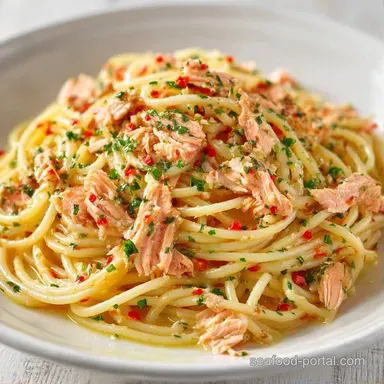
Canned Salmon Spaghetti: Silky and Zesty
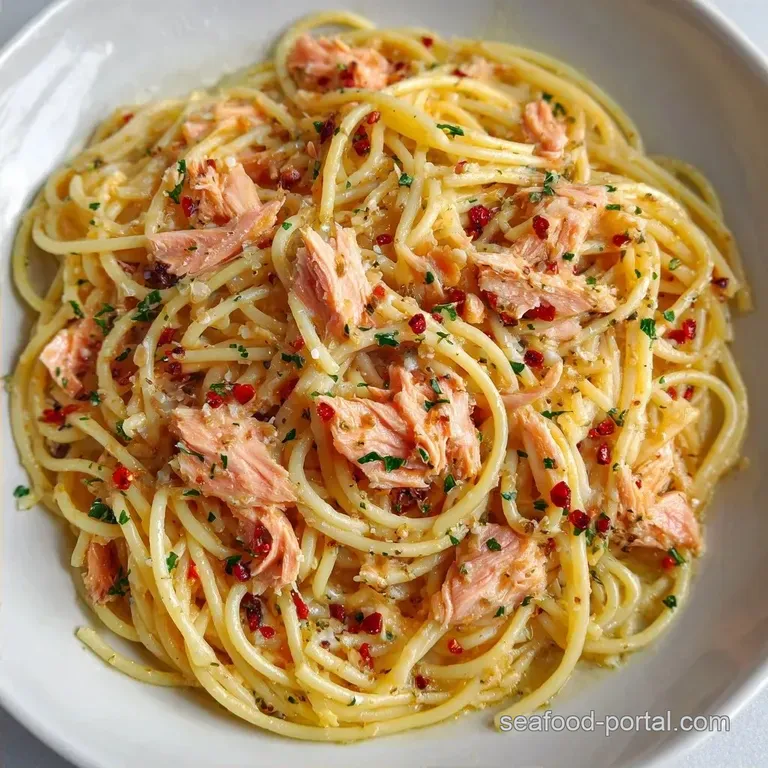
- Time: 5 min active + 15 min cook
- Flavor/Texture Hook: Zesty lemon with velvety, glossy noodles
- Perfect for: Lazy weeknight dinners or a high protein lunch
- Canned Salmon Spaghetti That Actually Tastes Fresh
- The Pantry Component Breakdown
- Tools For The Job
- The Ingredient List
- Steps To The Finish
- Fixing Your Pasta Mishaps
- Adjusting For More Guests
- Salmon Pantry Myths
- Storing And Saving Leftovers
- Best Pairings For This
- High in Sodium
- Recipe FAQs
- 📝 Recipe Card
The smell of garlic hitting hot olive oil is usually where my kitchen confidence starts, but it was the scent of searing salmon and fresh lemon that actually changed how I view "pantry meals." I grew up in a house where canned fish was a staple, not out of necessity, but because that's how coastal families in places like Portugal or Italy often treat their larders.
There's a specific, nostalgic aroma when tinned fish hits a pan - it's briny, salty, and deeply savory.
For a long time, I thought using canned fish in pasta was just a "budget" move. I was wrong. When you treat canned salmon with the same respect as a fresh fillet - searing it to get those crispy brown edges and balancing it with high acid lemon - it becomes something else entirely.
This Canned Salmon Spaghetti is my go to when I have zero energy but still want a meal that feels intentional.
You can expect a dish that isn't "fishy" in a bad way, but rather bright and punchy. The magic happens in the final toss, where the Parmesan and pasta water transform into a glossy glaze. Trust me on this, don't skip the searing step, or you'll miss the best part of the texture.
Canned Salmon Spaghetti That Actually Tastes Fresh
Right then, let's get into why this actually works. Most people just stir canned fish into hot pasta, which results in a mushy, bland mess. To make this a real meal, we need to manipulate the textures.
The Sear: Browning the salmon flakes creates a concentrated flavor and a bit of a "crust" that contrasts with the soft noodles.
The Starch Bind: Using the salty, cloudy water from the pasta pot helps the oil and lemon juice cling to the spaghetti instead of pooling at the bottom. According to Serious Eats, that starchy water acts as a bridge between the fat and the liquid.
The Acid Balance: Lemon zest provides the floral aroma, while the juice cuts through the richness of the salmon and Parmesan.
The Fat Emulsion: Mixing the olive oil with the pasta water and cheese creates a light, velvety sauce that feels rich without needing a drop of heavy cream. This is similar to how the sauce binds in my best tuna casserole recipe, though this version is much lighter.
| Method | Time | Texture | Best For |
|---|---|---|---|
| Quick Sear | 20 mins | Crispy bits, glossy sauce | Weeknights |
| Classic Poach | 30 mins | Tender, uniform fish | Slow Sundays |
| Cold Salad | 15 mins | Fresh, firm, chunky | Meal prep |
The Pantry Component Breakdown
I like to think of the ingredients as a team. If one person doesn't show up, the whole vibe changes.
| Ingredient | Science Role | Pro Secret |
|---|---|---|
| Canned Salmon | Protein & Body | Drain it well so it sears, doesn't steam |
| Lemon Zest | Top note Aroma | Zest before juicing or it's impossible |
| Pasta Water | Emulsifier | Keep it boiling; the starchier, the better |
| Parmesan | Salt & Thickness | Use the real stuff, not the green shaker can |
Tools For The Job
You don't need a professional kitchen for this. A large pot for the pasta and a wide skillet are the only non negotiables. I prefer a stainless steel or cast iron skillet because they hold heat better for that initial salmon sear.
Tongs are also essential here - you can't really "stir" spaghetti without breaking the noodles or losing the sauce.
The Ingredient List
- 8 oz (225g) spaghetti Why this? Classic shape for maximum sauce cling
- 1 tbsp (15ml) salt Why this? Seasons the pasta from the inside out
- 1 can (6 oz / 170g) canned salmon, drained and flaked Why this? Convenient, omega-3 rich protein
- 2 tbsp (30ml) extra virgin olive oil Why this? High flavor profile for the base
- 3 cloves (15g) garlic, minced Why this? Essential aromatic punch
- 1/2 tsp (3g) red pepper flakes Why this? Subtle back end heat
- 1 large lemon, zested and juiced Why this? Brightness that cuts through fish oils
- 1/4 cup (10g) fresh parsley, chopped Why this? Fresh, grassy finish
- 1/4 cup (25g) grated Parmesan cheese Why this? Adds umami and thickens the sauce
- 1/4 cup (60ml) reserved pasta water Why this? The "glue" for the sauce
| Original Ingredient | Substitute | Why It Works |
|---|---|---|
| Spaghetti | Linguine or Fettuccine | Similar starch release. Note: Wider noodles hold more salmon |
| Canned Salmon | Canned Tuna (drained) | Similar protein profile. Note: Lacks the richness of salmon |
| Parmesan | Pecorino Romano | Saltier, sharper punch. Note: Reduce added salt in pasta water |
| Parsley | Fresh Basil | Sweet, peppery notes. Note: Adds a more Italian flavor profile |
Steps To The Finish
Right then, let's crack on. Keep your skillet ready so the pasta doesn't sit and get gummy.
- Bring a large pot of salted water to a boil. Add spaghetti and cook for 1 minute less than the package directions. Note: This ensures it finishes cooking in the sauce.
- Before draining, scoop out 1/2 cup of the starchy pasta water and set it aside.
- While the pasta cooks, heat olive oil in a skillet over medium heat.
- Add the drained salmon flakes, spreading them out to sear undisturbed for 2-3 mins until golden brown and sizzling.
- Stir in the minced garlic and red pepper flakes, sautéing for 30 seconds until the garlic is fragrant and soft.
- Lower the heat and stir in the lemon juice and zest.
- Add the drained spaghetti directly into the skillet.
- Pour in the reserved pasta water and grated Parmesan cheese.
- Toss vigorously with tongs for 60 seconds until the liquid reduces into a glossy sauce that coats the noodles.
- Fold in the fresh parsley just before serving.
Chef's Note: To get the salmon even crispier, pat the flakes dry with a paper towel before they hit the pan. Moisture is the enemy of the sear!
Fixing Your Pasta Mishaps
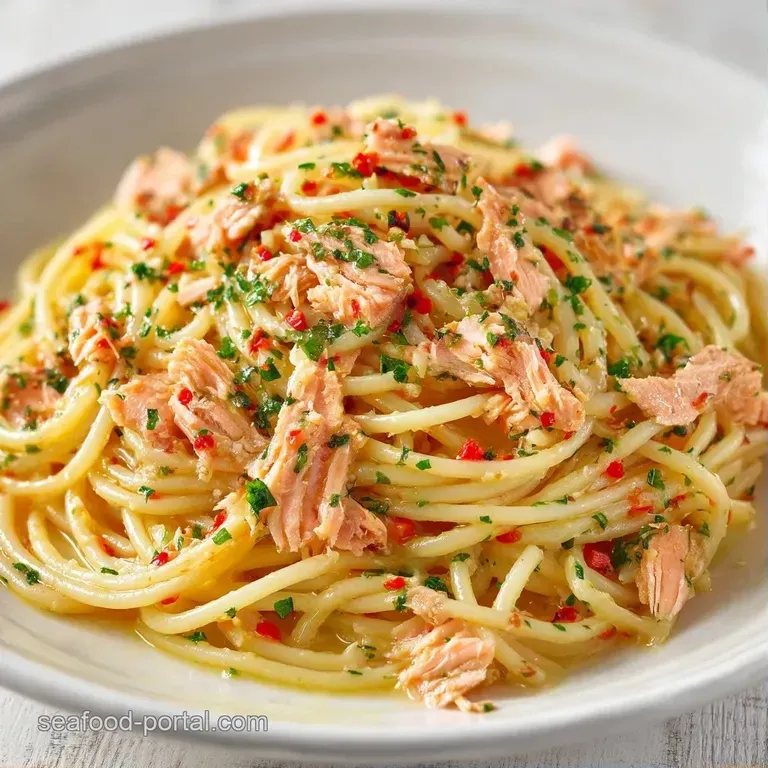
Even the best of us have those days where the sauce just isn't cooperating. Usually, it comes down to the water to fat ratio.
The sauce is too dry
If the pasta looks matte or the noodles are sticking together, you likely didn't use enough pasta water or the heat was too high. The sauce should look like a thin glaze, not a dry coating.
The salmon is too mushy
This happens if you stir the salmon too much during the searing phase. You have to let it sit. If it's already mushy, you can't "un mush" it, but adding a bit more lemon zest can distract from the texture.
The flavor is too muted
Canned fish can sometimes be bland. If the dish tastes "flat," it's almost always a lack of acid or salt. A final squeeze of fresh lemon right before eating usually wakes everything up.
| Problem | Root Cause | Solution |
|---|---|---|
| Clumpy Cheese | Heat too high | Remove from heat before adding Parmesan |
| Burnt Garlic | Sautéed too long | Start over; burnt garlic ruins the whole pot |
| Bland Taste | Not enough salt | Add a pinch of salt or more lemon juice |
Common Mistakes Checklist:
- ✓ Did you undercook the pasta by 1 minute?
- ✓ Did you sear the salmon without stirring?
- ✓ Did you save the pasta water BEFORE draining?
- ✓ Did you zest the lemon before juicing it?
- ✓ Did you use freshly grated cheese instead of pre shredded?
Adjusting For More Guests
If you're feeding a crowd, don't just double everything blindly. Pasta water behaves differently in larger volumes.
For a 2x batch, I suggest increasing the garlic and red pepper flakes to only 1.5x. Too much garlic in a large pan can easily burn before the salmon is done. Also, reduce the total liquid (pasta water) by about 10%, as a larger mass of pasta retains more moisture and produces more of its own steam.
If you're making this for just one person, use a smaller skillet. A giant pan will evaporate the pasta water too quickly, leaving you with a dry dish. Reduce the cooking time for the final toss by about 20 seconds.
If you find yourself with extra canned salmon, you might want to try making some crispy salmon cakes for an appetizer.
Salmon Pantry Myths
Let's clear a few things up. First, some people think you need to rinse canned salmon to remove the "fishy" smell. Don't do this! You'll wash away the natural oils that help the fish sear and provide the depth of flavor. The lemon juice handles the smell perfectly.
Another common myth is that you should rinse your pasta after draining. Please, never do this. Rinsing removes the starch that we desperately need to make the sauce velvety. The starch is what makes this Canned Salmon Spaghetti feel like a restaurant dish rather than a dorm room meal.
Storing And Saving Leftovers
This dish is best eaten immediately, but it does keep. Store leftovers in an airtight container in the fridge for up to 3 days.
When reheating, avoid the microwave if you can. The microwave tends to make the salmon rubbery and the pasta mushy. Instead, put the pasta back in a skillet over medium heat with a tiny splash of water or a knob of butter. This re emulsifies the sauce and brings back that glossy finish.
For zero waste, don't throw away the lemon peel after zesting. You can toss it into a jar of vinegar for 2 weeks to make a quick citrus cleaner, or freeze the peels to use in your next batch of baked goods.
Best Pairings For This
Since the Canned Salmon Spaghetti is quite rich and zesty, you want sides that provide a fresh, crisp contrast.
A simple arugula salad with a light balsamic glaze is a winner here. The peppery greens cut through the Parmesan and salmon perfectly. If you want something heartier, roasted asparagus or sautéed spinach with a hint of nutmeg works beautifully.
For a drink, a crisp, cold Sauvignon Blanc or a sparkling water with a lime wedge mirrors the acidity of the lemon in the pasta. It keeps the palate clean between bites of that savory, salty fish.
High in Sodium
840 mg 840 mg of sodium per serving (37% 37% of daily value)
The American Heart Association recommends a daily sodium limit of no more than 2,300 mg, with an ideal limit of 1,500 mg for most adults to reduce cardiovascular risk.
Tips to Reduce Sodium
-
Reduce Pasta Water Salt-30%
The 1 tbsp of salt in the boiling water is a major contributor. Reduce this to 1/2 teaspoon or omit it entirely, as the salmon and cheese already provide salt.
-
Choose Low-Sodium Salmon-20%
Substitute regular canned salmon with a no-salt-added version or rinse the drained salmon under cold water to remove excess brine.
-
Limit Parmesan Cheese-15%
Reduce the amount of grated Parmesan or substitute a portion of it with nutritional yeast for a similar nutty, cheesy flavor with less sodium.
-
Enhance with Aromatics
Increase the amount of fresh parsley and lemon zest to provide a bright, bold flavor profile that reduces the need for added salt.
Recipe FAQs
What is the best way to eat canned salmon?
Sear it in olive oil first. This creates a golden-brown crust that offsets the soft texture of canned fish and adds a savory depth to the dish.
How to make an easy dish with canned fish?
Toss drained salmon with spaghetti, garlic, and lemon. This simple combination creates a bright, filling meal in just 20 minutes.
What is the cheapest dish we can make with salmon?
Canned salmon spaghetti is a top budget choice. It uses pantry staples to stretch one can into two servings. If you enjoy budget-friendly seafood, our classic tuna casserole is another great option.
Is canned salmon spaghetti a quick meal for weeknights?
Yes, it is ready in 20 minutes. The prep is minimal, and the salmon is seared while the pasta boils, making it an efficient one-pan finish.
Is it true that canned salmon makes the pasta too mushy?
No, this is a common misconception. Searing the salmon undisturbed for 2-3 minutes ensures a crispy texture that contrasts perfectly with the noodles.
How to get the sauce to coat the noodles perfectly?
Toss vigorously with tongs for 60 seconds. Combining reserved starchy pasta water with Parmesan cheese allows the liquid to emulsify into a glossy sauce.
What is the best way to reheat leftovers?
Use a skillet over medium heat. Adding a tiny splash of water helps re-emulsify the sauce and prevents the salmon from becoming rubbery.
Canned Salmon Spaghetti in 20 Minutes