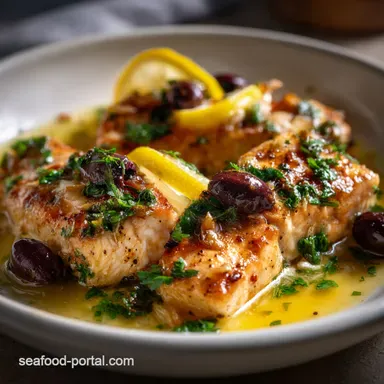
Mediterranean Fish Fillets with Fish Stock

- Total28 Mins
- Protein30.6 g
- Calories351 kcal
- Time: 5 min active + 20 min baking + 3 min rest
- Flavor & Texture: Zesty, bright citrus notes with flaky, tender white fish
- Perfect for: Vibrant dinner gatherings or a light, fresh weekday meal
Baked Mediterranean Fish Fillets
Stop settling for fish that turns into a rubbery sponge or a gray, mushy mess on the plate. It usually happens because the fillets are too wet when they hit the heat, which creates steam instead of a proper roast.
This approach fixes that. By focusing on moisture control and a specific sauce ratio, you get fillets that stay tender and bright.
These Mediterranean fish fillets bring together the zest of lemon and the warmth of smoked paprika for a dish that looks as vibrant as it tastes.
What Keeps It Flaky
- Surface Dryness: Patting the fillets completely dry ensures the heat penetrates the fish evenly by removing excess surface moisture.
- Acid-Fat Shield: An emulsion of lemon juice and olive oil guards the lean proteins. This creates a protective layer that maintains a juicy interior during cooking.
| Method | Time | Texture | Best For |
|---|---|---|---|
| Oven Baked | 15-20 mins | Tender and uniform | Large fillets or gatherings |
| Pan-seared | 8-12 mins | Crispy exterior | Single servings, quick meals |
Ingredient Role Breakdown
- 2 (6 oz) cod or halibut fillets
- 1/2 tsp salt
- 1/4 tsp black pepper
- 2 tbsp extra-virgin olive oil
- 2 tbsp fish stock
- 1 tsp lemon juice
- 1 tbsp fresh lemon juice
- 3 garlic cloves, minced
- 1 tsp dried oregano
- 1 tsp smoked paprika
- 2 tbsp chopped fresh parsley
- 1 tsp lemon zest
| Ingredient | Role | If You Don't Have It |
|---|---|---|
| Cod or Halibut | Lean protein source | Tilapia or Mahi Mahi (adjust time) |
| Lemon Juice | For brightness and tenderizing | White wine vinegar (use less) |
| Smoked Paprika | Earthy depth and color | Sweet paprika (less smokiness) |
| Olive Oil | Conducts heat and adds moisture | Avocado oil |
Gear for This Recipe
No special equipment is needed. A standard baking sheet and parchment paper are the only essentials. I find it helpful to use a whisk or fork to combine the lemon juice and oil into a smooth sauce.
Bringing It Together
Preparing the Fillets
Step 1: Set your oven to 400°F (200°C) and prepare a baking tray by lining it with parchment.
Step 2: Run cool water over the 2 (6 oz) Cod or Halibut fillets. Use paper towels to pat them thoroughly dry. Note: Excess water is why fish gets mushy.
Step 3: Arrange the fillets on the parchment. Season both sides with 1/2 tsp salt and 1/4 tsp black pepper.
Assembling the Sauce
Step 4: In a small bowl, whisk together 2 tbsp extra virgin olive oil, 2 tbsp fish stock with 1 tsp lemon juice, 1 tbsp fresh lemon juice, 3 minced garlic cloves, 1 tsp dried oregano, 1 tsp smoked paprika, and 1 tsp lemon zest.
Step 5: Stir in 2 tbsp chopped fresh parsley until the sauce is well combined.

Baking the Fish
Step 6: Spread the sauce generously over each fillet, ensuring the tops and sides are fully coated.
Step 7: Bake for 15–20 minutes until the fish reaches an internal temperature of 145°F (63°C) or the flesh flakes easily with a fork.
Step 8: Take the fish out of the oven and let it rest for 3 minutes to let the juices redistribute.

Fixing Common Problems
If your fish sticks to the pan, it's usually because the parchment paper shifted or the sauce didn't coat the bottom edges. If the fillets are different thicknesses, the thinner ones will finish first. I suggest pulling them out individually once they flake.
To avoid overcooking, start checking the temperature at the 15-minute mark. Fish continues to cook for a minute or two after it leaves the oven, so pull it just as it hits the target.
| Problem | Fix |
|---|---|
| Sticking to pan | Use parchment paper and coat edges with oil |
| Rubbery texture | Use a thermometer to stop at 145°F |
| Uneven cooking | Group fillets by thickness or pull early |
Serving and Garnish Tips

To make this look like a restaurant dish, focus on color balance. The red-orange of the smoked paprika is the base, but adding fresh green accents makes it pop. I like to add a few halved kalamata olives and a sprinkle of fresh parsley right before serving.
For a full meal, serve these on a bed of fluffy quinoa or sautéed spinach. If you want something even more indulgent, a creamy caper sauce on the side adds a great salty punch.
Storage Guidelines
Keep any leftover fish in an airtight container in the fridge. According to USDA guidelines for leftovers, perishable food should be used within 3 to 4 days, but for fish, I recommend eating it within 2 days for the best quality.
Do not freeze this dish once cooked. White fish often becomes grainy and loses its structure after freezing and thawing.
To reheat, place the fillets in a baking dish and cover them with foil to trap moisture. Bake at 300°F (150°C) for 5-8 minutes. Ensure the fish reaches a safe reheating temperature of 165°F (74°C) before eating.
Flavor Twists
| Original Ingredient | Substitute | Why It Works |
|---|---|---|
| Cod/Halibut | Salmon | Richer fat content. Note: Use an easy baked salmon method for better results |
| Parsley | Fresh Basil | Adds a sweeter, peppery note |
| Smoked Paprika | Cumin | Shifting the flavor toward a North African profile |
Sun-Dried Tomato & Caper
Add a tablespoon of chopped sun-dried tomatoes and a teaspoon of drained capers to the sauce. This adds a salty, umami depth that pairs well with the lemon.
Olive & Artichoke Heart
Top the fillets with thin slices of marinated artichoke hearts and green olives before baking. These roast in the sauce and become tender and fragrant.
Common Questions
Can I use a different fish if I can't find cod?
Halibut works perfectly as a substitute.
Tip: choose fillets around 6 oz to maintain consistent cooking times.
How do I avoid overcooking the fish?
Bake for 15–20 minutes until the flesh flakes easily with a fork.
Tip: use a meat thermometer to check that the center is opaque.
How can I keep the fish from sticking to the pan?
Line your baking sheet with parchment paper.
Tip: pat the fillets completely dry before adding the sauce.
Is this recipe dairy-free?
The ingredients used here are already dairy-free.
Tip: stick to the extra virgin olive oil for the best flavor.
How should I store the leftovers?
Keep the fish in a sealed container in the refrigerator.
Tip: consume within 2 days for the best quality.
Why use 400°F instead of 350°F?
Higher heat ensures the fish cooks quickly without drying out.
Tip: let the fillets rest for 3 minutes before serving.
Baked Mediterranean Fish Fillets