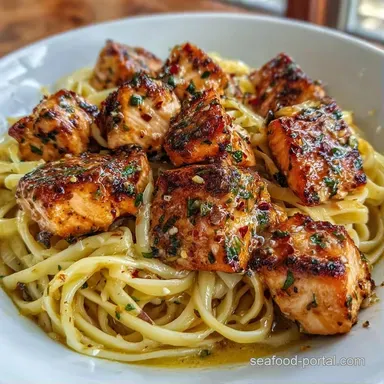
Garlic Butter Salmon Noodles: Silky and Rich
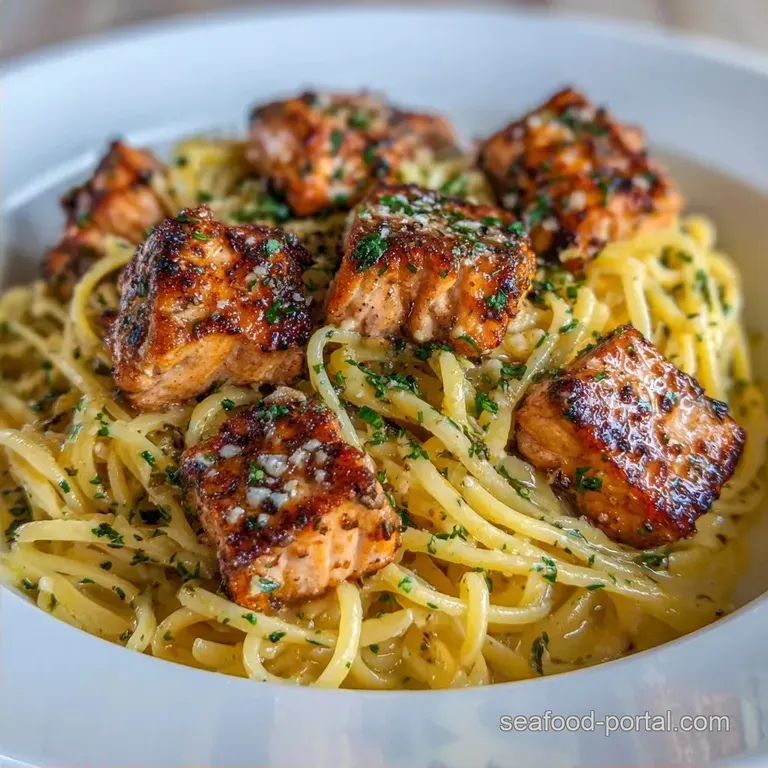
- Time: 5 min active + 15 min cook
- Flavor/Texture Hook: Silky butter sauce with golden crusted salmon cubes
- Perfect for: A high protein weeknight dinner that feels like a bistro meal
- Garlic Butter Salmon Noodles
- Why the Sauce Gets Velvety
- The Component Breakdown
- Essential Pan and Pot
- The Cooking Process
- Fixing Common Cooking Errors
- Troubleshooting Common Issues
- Customizing Your Flavor Profile
- Salmon Cooking Truths
- Saving and Reheating Tips
- Plating for the Wow
- Recipe FAQs
- 📝 Recipe Card
That high pitched hiss when the salmon cubes hit the shimmering oil is the best sound in my kitchen. I remember the first time I tried making a seafood pasta for a date, and I did everything "by the book," but the sauce just sat at the bottom of the bowl like a puddle of melted butter.
It was disappointing, and the noodles were bland, while the fish was just... there.
I spent the next few weekends messing around with how the sauce actually sticks to the pasta. I realized that the secret isn't adding more cream or flour, but using the cloudy, salty water the pasta boils in. Once I figured that out, everything changed.
Now, this is my go to when I want something that tastes expensive but doesn't require a culinary degree.
You can expect a dish where the salmon has a slight crust that almost shatters when you bite into it, contrasted by noodles coated in a glossy, lemon infused butter. These Garlic Butter Salmon Noodles are all about balance - the richness of the butter, the brightness of the lemon, and the punch of fresh garlic.
It's a fast, satisfying meal that doesn't compromise on flavor.
Garlic Butter Salmon Noodles
The real magic here is the contrast in textures. You have the tender, flaky salmon and the al dente bite of the linguine, all tied together by a sauce that feels heavy on the tongue but light on the palate.
It's the kind of meal that makes your house smell like a professional seafood spot within ten minutes of starting.
Most people overcook their salmon in pasta dishes, turning the fish into rubbery chunks. The trick is the over high heat sear and then removing the fish from the pan entirely while you build the sauce. This ensures the salmon stays juicy inside while maintaining that golden exterior.
If you've ever wondered why restaurant pasta looks so glossy, it's because they don't just toss the noodles in butter. They create a tiny emulsion. By whisking that starchy pasta water into the melted butter, you create a stable sauce that coats the noodles instead of sliding off.
It's a simple tweak, but it makes these Garlic Butter Salmon Noodles feel high end.
Why the Sauce Gets Velvety
Rather than using a heavy cream, we use a bit of kitchen physics to get that smooth texture.
- The Starch Bind: Pasta water contains released starches that act as a bridge between the fat (butter) and the liquid (lemon juice), stopping the sauce from separating.
- The Temperature Drop: Adding the noodles to the pan while they are steaming hot helps the sauce thicken instantly as it clings to the starch on the noodle surface.
- Fat Suspension: Butter provides the base, but the whisking action breaks the fat into tiny droplets that stay suspended in the lemon water mix.
- Residual Heat: Folding the salmon back in at the very end uses the residual heat of the pasta to warm the fish without overcooking the center.
| Fresh Salmon | Canned Salmon Shortcut | Impact on Result | Savings |
|---|---|---|---|
| Fresh Fillet | high-quality Canned | Softer texture, less crust | $5-10 per lb |
| Searing Step | Skip Searing | No golden crust, milder flavor | 5 mins time |
| Texture | Firm & Flaky | Flaked & Soft | Fresh is superior |
The Component Breakdown
When you're working with seafood, the quality of your base ingredients determines whether the dish tastes fresh or fishy.
| Ingredient | Science Role | Pro Secret |
|---|---|---|
| Pasta Water | Emulsifier | Always salt your water like the sea; it's your only chance to season the noodle. |
| Unsalted Butter | Flavor Base | Use unsalted so you can control the salt levels with the pasta water. |
| Fresh Lemon | Acid Balance | Add it at the end to keep the brightness from turning bitter. |
| Salmon Cubes | Protein Core | Pat them bone dry before searing to ensure a golden crust. |
Essential Pan and Pot
You don't need a professional kitchen, but the right tools make the process much smoother. I personally use a large stainless steel skillet because it handles the high heat for the salmon sear much better than non stick, which can sometimes struggle with very high temperatures.
A large pot for the linguine is a must. If the pot is too small, the noodles clump together, and you lose that individual strand texture. I also recommend a microplane or a very fine grater for the garlic.
The smaller the garlic pieces, the more evenly they distribute into the butter without leaving you with large, pungent chunks.
Finally, have a pair of tongs ready. Tossing Garlic Butter Salmon Noodles requires a gentle hand to avoid breaking the salmon cubes. A slotted spoon is also helpful for removing the fish from the pan while keeping the flavorful browned bits (the fond) at the bottom for the sauce.
The Cooking Process
Let's get into it. The goal is to move quickly once the pasta is done so everything hits the plate steaming hot.
Phase 1: The Pasta Base
Boil a large pot of heavily salted water. Add noodles and cook until al dente. Before draining, scoop out a small cup of the cloudy pasta water and set aside. Note: This water is the "liquid gold" that makes the sauce work.
Phase 2: The Golden Sear
Pat the salmon cubes completely dry with a paper towel. Season with salt and pepper. Heat olive oil in the skillet over medium high heat until it shimmers. Add salmon in a single layer and sear for 2–3 minutes per side without moving them until a golden brown crust forms.
Remove salmon from the pan and set aside on a plate.
Phase 3: The Emulsion
Reduce heat to medium. Melt the butter in the same skillet. Add minced garlic and sauté for 60 seconds until fragrant but not browned. Stir in the reserved pasta water and lemon juice, whisking constantly until the sauce looks velvety and glossy.
Phase 4: The Final Toss
Return the seared salmon and the cooked noodles to the skillet. Toss gently for 1 minute over low heat until the noodles are coated and the salmon is warmed through. Fold in fresh parsley just before serving.
Chef's Tip: If you want a deeper flavor, add a pinch of smoked paprika to the salmon before searing. It adds a subtle wood fired aroma that pairs beautifully with the lemon.
Fixing Common Cooking Errors
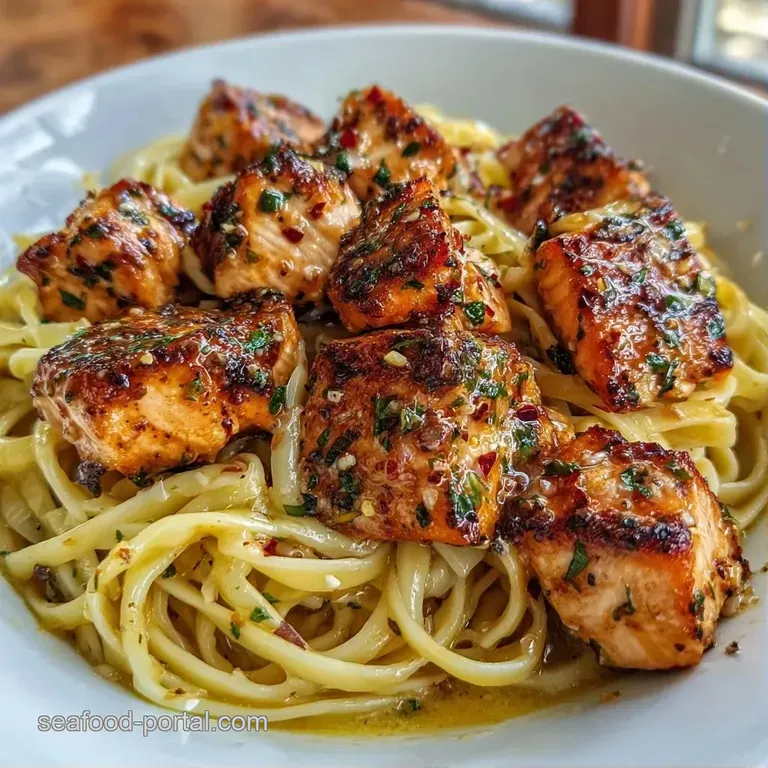
Even the best of us have days where the sauce breaks or the fish gets tough. Most of these issues come down to heat management.
Troubleshooting Common Issues
| Issue | Solution |
|---|---|
| Why Your Sauce Separated | If you see little beads of oil floating on top of your sauce, the emulsion has broken. This usually happens if the heat was too high when you added the butter or if you didn't use enough pasta water. |
| Why Your Salmon Is Rubbery | Overcooking salmon is the easiest mistake to make. If the fish feels springy or tough, it stayed in the pan too long. |
| Garlic Turned Brown | Brown garlic becomes bitter. If your garlic has turned a dark tan or brown, it's best to wipe the pan and start the butter phase over. The goal is a soft, pale gold color that smells sweet, not burnt. |
Common Mistakes Checklist
- ✓ Did you pat the salmon dry? (Wet fish steams, it doesn't sear)
- ✓ Did you save the pasta water before draining?
- ✓ Did you avoid stirring the salmon during the first 2 minutes of searing?
- ✓ Did you add the parsley at the very end to keep it vibrant green?
- ✓ Is the heat low before you toss the fish back in?
Customizing Your Flavor Profile
Once you've nailed the basic Garlic Butter Salmon Noodles, you can start playing with the ingredients. If you're feeling like something a bit more indulgent, you can add a splash of heavy cream during the emulsion phase. This turns it into a Creamy Salmon Pasta style dish.
For a bit of a kick, add a pinch of red pepper flakes when you sauté the garlic. The heat cuts through the richness of the butter and wakes up the lemon. If you have some capers in the fridge, toss a tablespoon in with the lemon juice for a briny, Mediterranean twist that works wonders with the salmon.
If you're looking for a different noodle experience altogether, you might enjoy the bold flavors of Soy Sauce pan fried Noodles, but for this specific recipe, keep the focus on the butter and garlic. You can also swap the linguine for fettuccine or even a gluten-free alternative, though you may need a bit more pasta water to achieve the same gloss.
Salmon Cooking Truths
There are a few things people always say about seafood that aren't actually true. Let's clear those up.
The biggest one is that searing salmon "seals in the juices." This is a total myth. Searing doesn't create a waterproof barrier; it just creates a flavorful crust through browning. Moisture loss happens regardless of how you start the cook, but the crust adds a depth of flavor that makes the moisture loss irrelevant.
Another common misconception is that you need to cook salmon until it's opaque all the way through. In reality, salmon is most tender when it's slightly translucent in the very center. Since we are tossing it back into hot pasta, the carryover heat will finish the cooking process without drying out the protein.
Saving and Reheating Tips
Seafood and pasta can be tricky to store because the fish can overcook during reheating.
Storage Guidelines Store any leftovers in an airtight container in the fridge for up to 2 days. Don't freeze this specific dish; the emulsion in the sauce will break upon thawing, and the salmon can become grainy and dry.
Reheating Strategy To keep the salmon from turning into rubber, avoid the microwave if possible. Instead, place a portion in a skillet over low heat. Add a teaspoon of water or a small knob of butter to loosen the sauce.
Cover the pan with a lid for 2-3 minutes just until warmed through.
Zero Waste Tips If you have salmon skin left over from the fillet, don't toss it! Dry it thoroughly, salt it, and fry it in a separate pan until it's a crisp cracker. It's a fantastic garnish for the top of your noodles.
Also, use any leftover lemon halves to zest into your morning yogurt or a salad dressing.
Plating for the Wow
Presentation is everything when you're trying to make a 20 minute meal look like a $30 entree. Start by using a carving fork to twirl the noodles into a tight nest in the center of a wide, shallow bowl. This creates height and keeps the sauce concentrated.
Carefully place the golden salmon cubes on top of the noodle nest, rather than mixing them all in. This ensures the crust stays visible and doesn't get lost in the pasta. Finish the dish with a final sprinkle of fresh parsley and a thin slice of lemon tucked to the side.
A final crack of fresh black pepper over the top adds a professional touch. If you have some high-quality parmesan, a light dusting can add a salty punch, but be careful not to overdo it, as the butter and garlic are already doing the heavy lifting in these Garlic Butter Salmon Noodles.
Recipe FAQs
How to make garlic butter salmon noodles?
Boil noodles, sear salmon, and emulsify a garlic butter sauce. Sauté garlic in butter, whisk in reserved pasta water and lemon juice, then toss everything together over low heat.
Why is my salmon rubbery?
You overcooked the fish. Salmon becomes tough and springy if it stays in the pan too long; stick to exactly 2–3 minutes per side to maintain a tender center.
Why did my sauce separate into little beads of oil?
The emulsion broke because the heat was too high or you lacked pasta water. Keep the heat at medium and use the reserved cloudy pasta water to bind the butter and lemon juice into a glossy sauce.
How to keep the garlic from turning bitter?
Sauté for only 60 seconds over medium heat. Remove the garlic from the heat as soon as it's fragrant; if it turns dark tan or brown, it will taste bitter.
Can I use a different type of pasta?
Yes, any long noodle works. While linguine or spaghetti are recommended, you can use other varieties. If you enjoyed mastering the pasta water emulsion here, see how that same starch-binding principle works in our classic tuna casserole.
What is the best way to get a golden-brown crust on the salmon?
Pat the cubes completely dry with a paper towel before searing. Heat olive oil until it shimmers and leave the salmon undisturbed for 2–3 minutes per side.
Is it true I should rinse the pasta before adding it to the sauce?
No, this is a common misconception. Rinsing removes the surface starch that allows the garlic butter sauce to cling to the noodles.
Garlic Butter Salmon Noodles: Silky