Seasoned Salmon: Smoky Crisp Crust
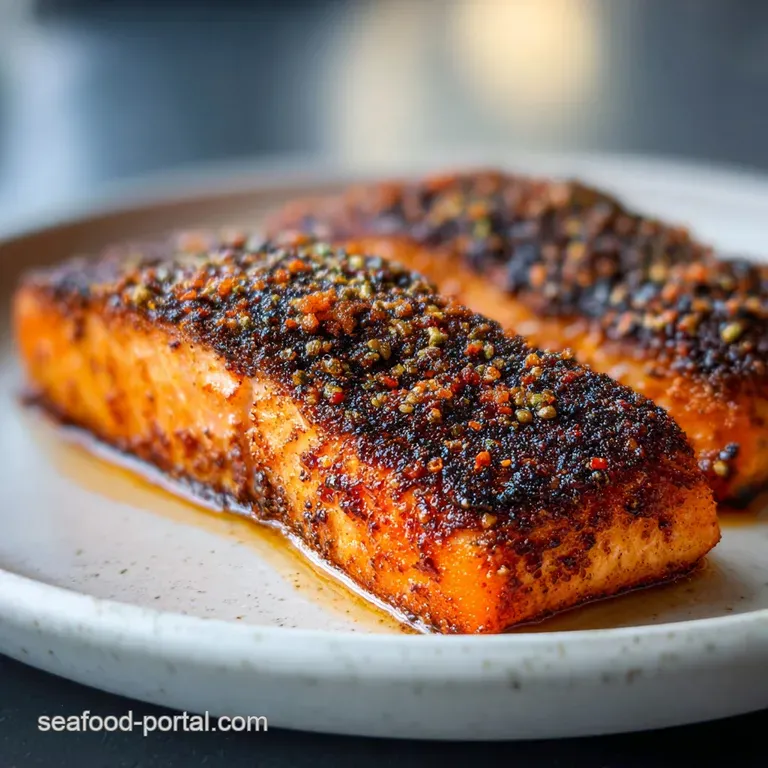
- Time: Active 10 minutes, Passive 12 minutes, Total 22 minutes
- Flavor/Texture Hook: Smoky sweet crust with a flaky, velvety interior
- Perfect for: High protein meal prep or a fast, fancy Friday night dinner
- Mastering the Perfectly Crispy Seasoned Salmon
- The Science of the Sear
- Essential Ingredient Deep Dive
- The Ultimate Flavor Toolkit
- The Best Cooking Tools
- Steps to Flaky Perfection
- Solving Common Texture Issues
- Flavor Variations and Adaptations
- Storage and Reheating Secrets
- Ideas for Side Dishes
- Recipe FAQs
- 📝 Recipe Card
Mastering the Perfectly Crispy Seasoned Salmon
The first time I really understood how to season salmon with confidence, I was standing on a pier in the Pacific Northwest, smelling the briny mist and watching a local cook throw fillets onto a flat top grill. The sound wasn't just a sizzle it was a rhythmic crackle as the spices met the hot metal.
I noticed he didn't just sprinkle salt; he massaged a dark, fragrant blend into the flesh, creating a barrier that looked almost like mahogany. When I took a bite, the outside didn't just have flavor, it had a physical snap that protected the tender meat inside.
That experience ruined mediocre fish for me forever. I used to think that "seasoning" meant just a pinch of salt and maybe some dried flakes of whatever was in the back of the pantry. I was wrong. Truly great seasoned salmon relies on the balance of sugars, salts, and aromatics that react with heat to form a crust.
It's the difference between a grey, soggy piece of fish and one that looks like it belongs on a magazine cover.
We’re going for a specific contrast here: the earthy punch of smoked paprika against the natural richness of the fish. If you’ve ever struggled with fish sticking to the pan or turning out bland, this approach changes everything. We aren't just adding flavor; we are building a protective, delicious shell.
Trust me, once you see that first flip and the golden brown crust, you’ll never go back to plain fillets.
The Science of the Sear
Maillard Reaction: The coconut sugar and proteins in the fish react under high heat to create hundreds of new flavor compounds and a deep brown crust. This only happens effectively if the surface is completely dry before you start.
Albumin Regulation: Cooking the salmon skin side down first for the majority of the time prevents the white protein (albumin) from pushing out too quickly, which keeps the fillet looking clean and tasting juicy.
Capillary Action: The salt in our dry rub draws out a tiny amount of moisture, which then dissolves the spices into a concentrated brine that the fish reabsorbs, seasoning it deeply rather than just on the surface.
Thermal Carry over: Salmon continues to cook for about 2 minutes after leaving the heat. Pulling it at 135°F (57°C) ensures it hits the velvety 145°F (63°C) mark on the plate rather than turning into dry driftwood.
| Cooking Method | Total Time | Texture Result | Best For |
|---|---|---|---|
| Stovetop | 8-10 mins | Maximum crispy skin and charred crust | Maximum flavor contrast |
| Oven Bake | 12-15 mins | Very even doneness, softer texture | Cooking for large groups |
| Air Fryer | 10-12 mins | Super fast and consistently flaky | Quick weeknight cleanup |
The stovetop method is my personal favorite because you can physically see the crust forming, much like the technique I use in my Salmon with Herb recipe. It gives you that tactile control that an oven just can't match.
Essential Ingredient Deep Dive
| Ingredient | Science Role | Pro Secret |
|---|---|---|
| Smoked Paprika | Provides fat soluble color and a deep, wood fired aroma. | Toast it slightly in your palm before rubbing to wake up the oils. |
| Coconut Sugar | Lowers the burning point just enough to caramelize without turning bitter. | Don't skip this; it provides the "grip" for the other spices. |
| Sea Salt | Breaks down muscle fibers to allow moisture retention. | Use flaky sea salt for "pops" of seasoning on the tongue. |
| Lemon Zest | Adds bright essential oils that cut through the heavy omega-3 fats. | Zest directly over the fish so the oils don't evaporate on the board. |
The Ultimate Flavor Toolkit
To get the most out of your seasoned salmon, you need ingredients that actually pull their weight. Here is exactly what you need to gather.
- 24 oz salmon fillets: Use four 6 oz fillets, ideally skin on for better texture. Why this? Skin acts as an insulator, preventing the delicate flesh from overcooking.
- 1 tbsp extra virgin olive oil: This is our heat conductor. Why this? It helps the dry rub stick and prevents the fish from tearing.
- 1 tbsp smoked paprika: For that deep, sunset orange glow.
- 1 tsp garlic powder: Provides a savory, umami base that fresh garlic can't match in a dry rub.
- 1 tsp onion powder: Adds a subtle sweetness and depth.
- 1 tsp dried oregano: Brings a hint of earthy, Mediterranean flair.
- 0.5 tsp ground cumin: Just enough to add a "what is that?" mysterious warmth.
- 0.5 tsp coconut sugar: This is the secret to the crust. Why this? It caramelizes faster than the protein, creating a beautiful shell.
- 1 tsp sea salt: Essential for drawing out the natural flavors of the sea.
- 0.5 tsp cracked black pepper: Provides a bit of back of-the throat heat.
- 1 tsp fresh lemon zest: The "brightness" that makes the whole dish sing.
- 2 tbsp fresh parsley: Finely chopped for a hit of garden freshness at the end.
- 1 lemon: Cut into wedges for serving.
| Original Ingredient | Substitute | Why It Works |
|---|---|---|
| Smoked Paprika | Chipotle Powder | Adds a similar smokiness but with a significant spicy kick. |
| Coconut Sugar | Brown Sugar | Similar moisture content and caramelization profile. Note: Slightly sweeter. |
| Extra Virgin Olive Oil | Avocado Oil | Higher smoke point, which is great if you like a very hot sear. |
| Salmon Fillets | Steelhead Trout | Very similar fat content and flake structure. Note: Usually thinner fillets. |
The Best Cooking Tools
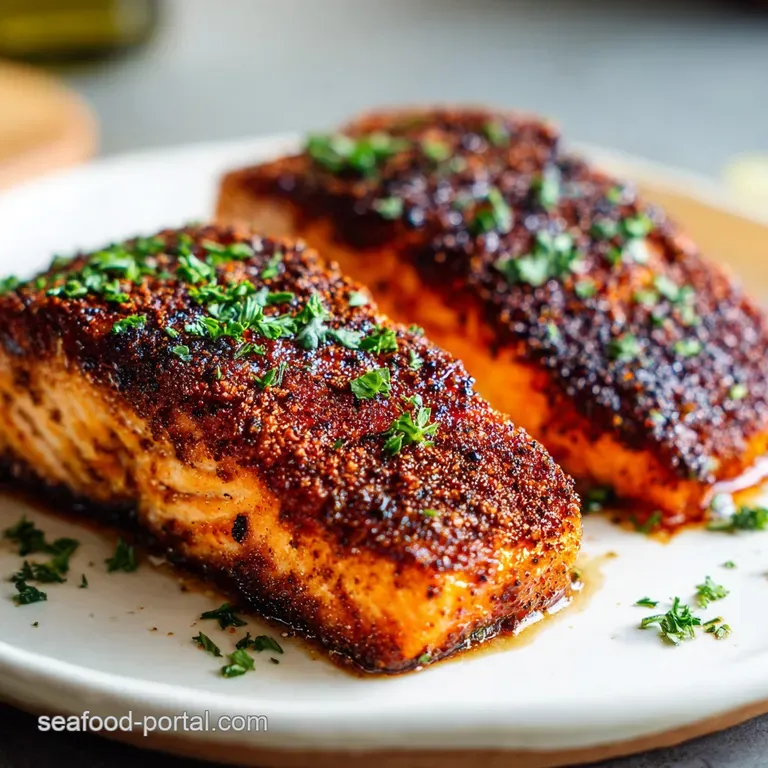
You don't need a professional kitchen, but a few specific items make the difference between a struggle and a success.
- Cast Iron Skillet: A heavy pan like a Lodge is king here. It holds heat so well that the temperature doesn't drop when the cold fish hits the surface.
- Fish Spatula: These are thin, flexible, and slotted. They slide under the skin without ripping it, which is vital for a clean flip.
- Paper Towels: This might be the most important "tool." You must pat the salmon bone dry. Any moisture on the surface will create steam, and steam is the enemy of a crisp crust.
- Microplane: For the lemon zest. You want tiny, fluffy clouds of zest, not thick bitter chunks of the white pith.
Steps to Flaky Perfection
- Dry the fillets. Use paper towels to pat the salmon dry on all sides, including the skin. Note: Surface moisture causes the fish to steam rather than sear.
- Mix the rub. In a small bowl, combine the smoked paprika, garlic powder, onion powder, oregano, cumin, coconut sugar, salt, and pepper.
- Oil the fish. Brush the 1 tbsp of olive oil evenly over the flesh side of the fillets.
- Apply the seasoning. Sprinkle the spice blend generously over the oiled side, pressing it in with your fingers. Until the flesh is completely coated in a dark spice layer.
- Heat the pan. Place your skillet over medium high heat for 3 minutes. Note: You want the oil to shimmer but not smoke aggressively.
- Start skin side down. Place the fillets in the pan, skin side down. Until the skin is crisp and releases easily from the pan (about 5-6 minutes).
- Flip carefully. Turn the fish over to the seasoned flesh side. Until a dark, caramelized crust forms (about 3-4 minutes).
- Zest and rest. Remove the fish from the heat, sprinkle with lemon zest and parsley, and let it rest for 2 minutes. Until the juices redistribute for a velvety texture.
Chef's Tip: If you are worried about what to season salmon with for a crowd, keep the rub separate. You can apply it at the very last second to ensure the salt doesn't cure the fish and make it "hammy" if it sits too long.
Solving Common Texture Issues
Why Your Salmon Sticks
The most frustrating part of fish is leaving half of it stuck to the bottom of the pan. This usually happens because of two things: either the pan wasn't hot enough to start with, or you tried to flip it too early.
Protein naturally "releases" from the cooking surface once the Maillard reaction has sufficiently hardened the exterior. If it's sticking, give it another 30 seconds.
Why the Spices Burn
If your crust looks black and tastes bitter rather than smoky and sweet, your heat is likely too high. The coconut sugar is great for caramelization, but it has a limit. Medium high is plenty. If you see the oil smoking excessively, turn the dial down.
| Problem | Root Cause | Solution |
|---|---|---|
| Dry/Chalky Fish | Overcooked past 145°F | Pull the fish at 135°F and let it carry over cook while resting. |
| Soggy Skin | Steaming in its own moisture | Pat dry and don't overcrowd the pan; leave 1 inch between fillets. |
| Bland Flavor | Seasoning only on the surface | Press the rub firmly into the flesh so it integrates with the fat. |
Common Mistakes Checklist
- ✓ Forgot to pat the fish dry (result: grey, mushy salmon).
- ✓ Used a cold pan (result: fish sticks and tears).
- ✓ Flipped too many times (result: the crust falls off).
- ✓ Cooked it straight from the fridge (result: cold center, burnt outside).
- ✓ Crowded the pan (result: the temperature drops and the fish boils).
Flavor Variations and Adaptations
If you want to scale this down for a solo lunch, just beat one egg and use half to help the spices stick, or simply use half a tablespoon of oil for two fillets. When scaling up for a dinner party, I suggest using the oven method.
For 8 to 12 people, sear the skin side in batches on the stove, then move them all to a large baking sheet to finish in a 400°F (200°C) oven for about 8 minutes. This keeps the kitchen from getting too smoky and ensures everyone eats at the same time.
The Mediterranean Twist
Swap the cumin and smoked paprika for dried thyme and a little extra oregano. Serve it with a dollop of Greek yogurt mixed with cucumbers. It’s a lighter, brighter version that’s perfect for summer.
The Spicy Kick
Add a half teaspoon of cayenne pepper to the rub. The coconut sugar will help balance the heat, creating a "hot honey" vibe without the actual honey. This version is fantastic when broken up into tacos.
Storage and Reheating Secrets
Seasoned salmon is surprisingly good the next day, though you will lose the "shatter" of the crust. Store it in an airtight container in the fridge for up to 3 days. To reheat, avoid the microwave at all costs! It turns the fats fishy and the texture rubbery.
Instead, place it in a cold oven, set it to 300°F (150°C), and take it out as soon as the oven reaches temperature.
For zero waste, take the skin off the leftovers and chop the meat into a "salmon salad" with a bit of mayo and celery. Or, use the leftover skin crisp it up in a dry pan until it’s like a cracker and crumble it over a salad.
Ideas for Side Dishes
This dish is bold, so it needs sides that can hold their own. I love serving this over a bed of garlicky quinoa or alongside some blistered green beans. If you want something more indulgent, it’s incredible with a Blackened Salmon with recipe style preparation, where the sauce adds a cooling element to the spice.
Another great option is to top the finished fillets with The 5Minute Creamy recipe. The dill and lemon in that sauce play beautifully with the smoked paprika in the rub.
- Sweet/Savory balance: The coconut sugar vs. the sea salt.
- Crisp/Tender balance: The seared crust vs. the flaky center.
- Bright/Rich balance: The lemon zest vs. the fatty salmon.
Remember, the goal with seasoned salmon is to let the fish be the star while the spices act as the supporting cast. Don't be afraid of the heat, don't be afraid of the salt, and definitely don't be afraid to get your hands a little messy pressing that rub into the fillets. Happy cooking!
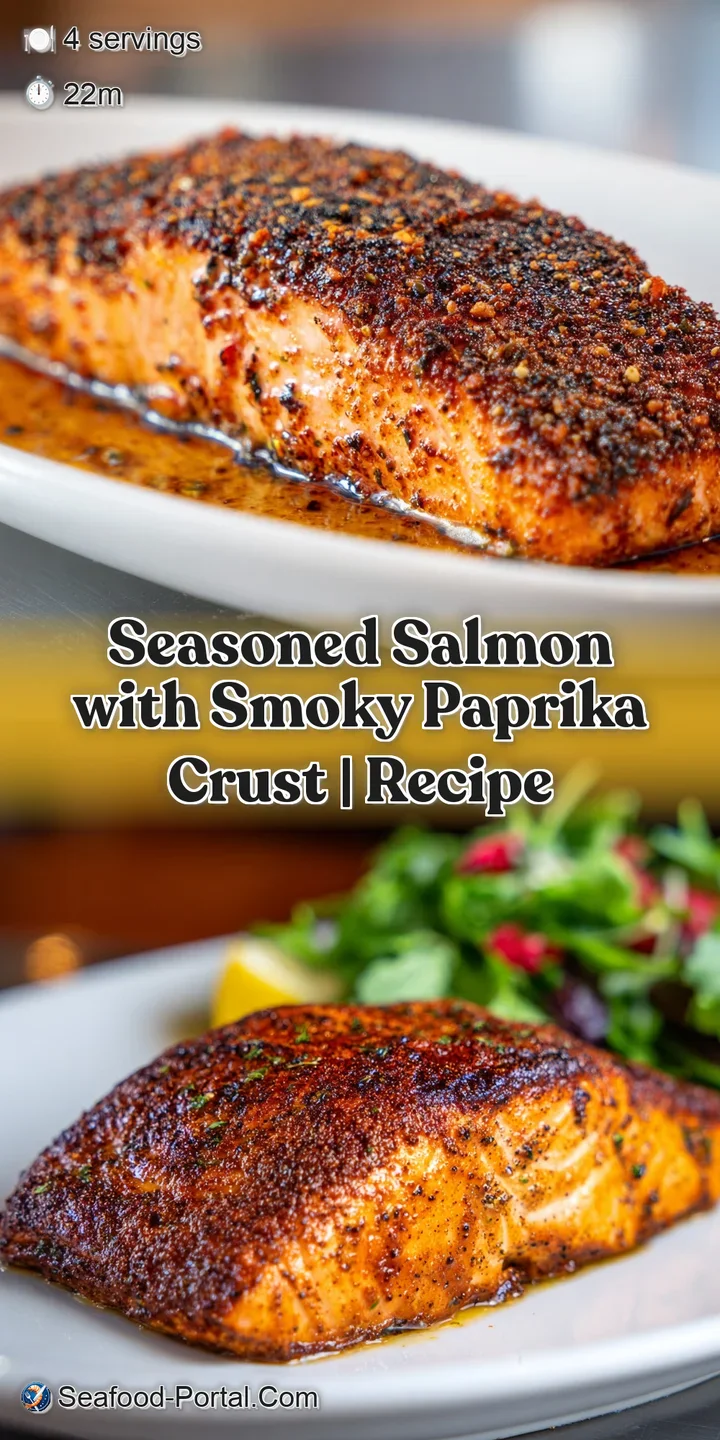
Recipe FAQs
What flavors go well with salmon?
Citrus, smoke, and dill are excellent pairings. The high fat content of salmon benefits from acidic elements like lemon zest to cut through the richness, balanced by earthy spices like smoked paprika.
Which season is best for salmon?
Wild salmon runs typically peak in summer months. However, farmed salmon is available consistently year round, making seasoning techniques more critical than seasonal timing for flavor.
What can I put on salmon to make it tasty?
A dry rub featuring salt, sugar, and aromatics is essential for taste and texture. Aim for a balance of salty (sea salt), sweet (coconut sugar for caramelization), and fragrant (garlic/onion powder).
What spice or herb goes well with salmon?
Smoked paprika and garlic powder form a strong base for most seasonings. For herbs, fresh dill or dried oregano provides a classic complementary note that enhances the fish's natural oils.
How do I ensure my seasoned salmon has a crispy crust?
Pat the fish completely dry, then sear it skin side down in a ripping hot cast iron skillet. The dry surface allows the sugars in the rub to caramelize instantly, which is a principle similar to achieving great texture in our Homemade Fish Cakes recipe.
Can I substitute brown sugar for coconut sugar in the seasoning rub?
Yes, brown sugar is a suitable substitute for coconut sugar. Brown sugar has a slightly higher moisture content, so it might melt faster, but it achieves the necessary caramelization for a crust.
What sauce should I pair with a smoky, seasoned salmon fillet?
A bright, cooling sauce cuts through the smoke and spice beautifully. Try a zesty lemon dill sauce, which adds necessary acidity and freshness to the rich fish.
Seasoned Salmon In 22 Minutes
Ingredients:
Instructions:
Nutrition Facts:
| Calories | 379 kcal |
|---|---|
| Protein | 34.2 g |
| Fat | 26.3 g |
| Carbs | 1.8 g |
| Fiber | 0.6 g |
| Sugar | 0.7 g |
| Sodium | 656 mg |
