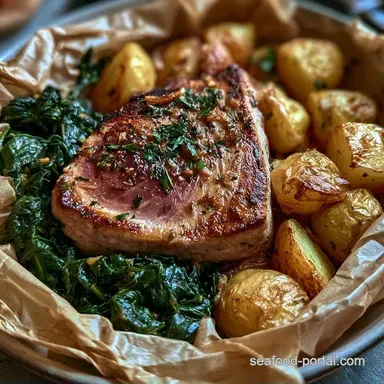
Parchment Packet Baked Tuna with Baby Potatoes
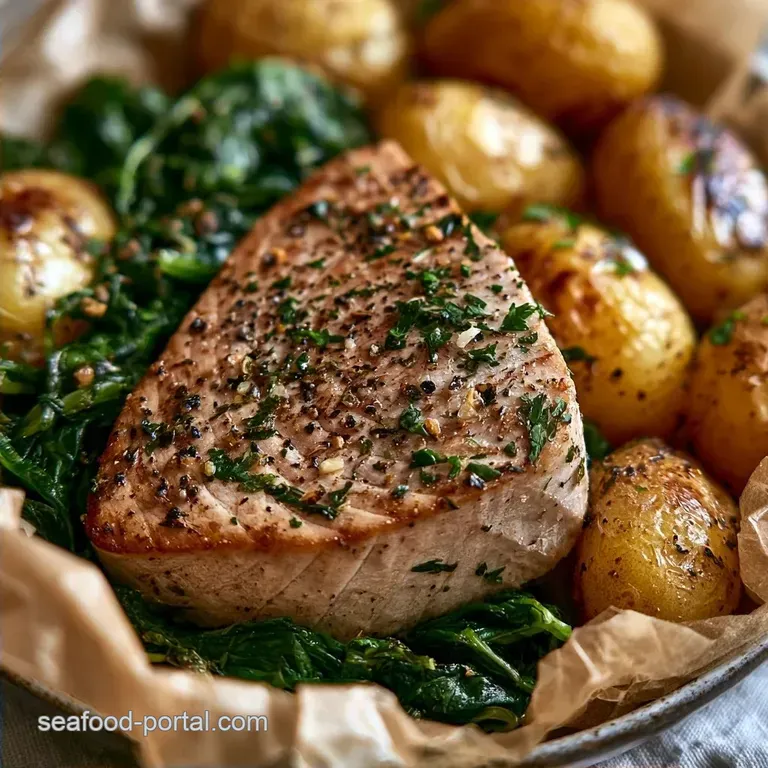
- Time:15 minutes active + 12 minutes cooking
- Flavor/Texture Hook: Buttery, lemon infused tuna with tender potatoes
- Perfect for: A healthy weeknight dinner for two
Parchment Packet Baked Tuna
The aroma of garlic, lemon, and butter hitting the oven heat is truly mouthwatering. I once invested in premium Ahi tuna steaks, only to overcook them in a skillet until they were gray, rubbery, and bland. Every home cook knows the disappointment of ruining an expensive piece of fish in a matter of seconds.
That's why I switched to the packet method. By sealing the ingredients in parchment paper, the fish steams in its own juices instead of just baking. The result is that melt-in-your mouth, velvety texture usually reserved for high end seafood restaurants.
Parchment Packet Baked Tuna is my favorite choice for an elegant dinner that requires very little effort. You get your protein, baby potatoes, and vegetables all contained in one simple envelope. Best of all, there are no pans to scrub and no oil splattering, just a delicious, clean plate.
The Quick Specs
The beauty of this method is the lack of fuss. You aren't hovering over a stove with a timer, worrying if the center is still raw or if the outside is charcoal. Instead, the paper acts as a buffer, delivering heat evenly.
Since the tuna is lean, the melted butter and olive oil create a protective layer. This stops the proteins from tightening up too quickly, which is why the fish stays plump. Trust me, once you see how the tuna steams alongside the sliced potatoes, you'll stop roasting your fish open air.
Why This Method Works
The logic here is simple and effective. It's all about managing moisture and heat.
- The Steam Chamber: The sealed parchment traps moisture, creating a pressurized environment that cooks the fish gently.
- Thermal Buffering: The paper prevents the direct, harsh heat of the oven from scorching the delicate tuna.
- Integrated Flavor: Because the juices can't escape, the tuna absorbs the garlic and lemon instead of the flavors evaporating into the oven.
The Ingredient Breakdown
Getting the right components is key for these heart healthy tuna steak recipes. You want ingredients that can handle the heat and complement the fish without overpowering it.
| Component | Purpose | Substitute Notes |
|---|---|---|
| Ahi Tuna | Main protein | Yellowfin works well; slightly milder |
| Baby Potatoes | Hearty base | Parsnips; takes slightly longer to soften |
| Baby Spinach | Nutrient rich bed | Kale or Swiss chard; holds structure better |
| Lemon Juice | Acid balance | Lime juice; adds a brighter, tropical note |
Tools You Will Need
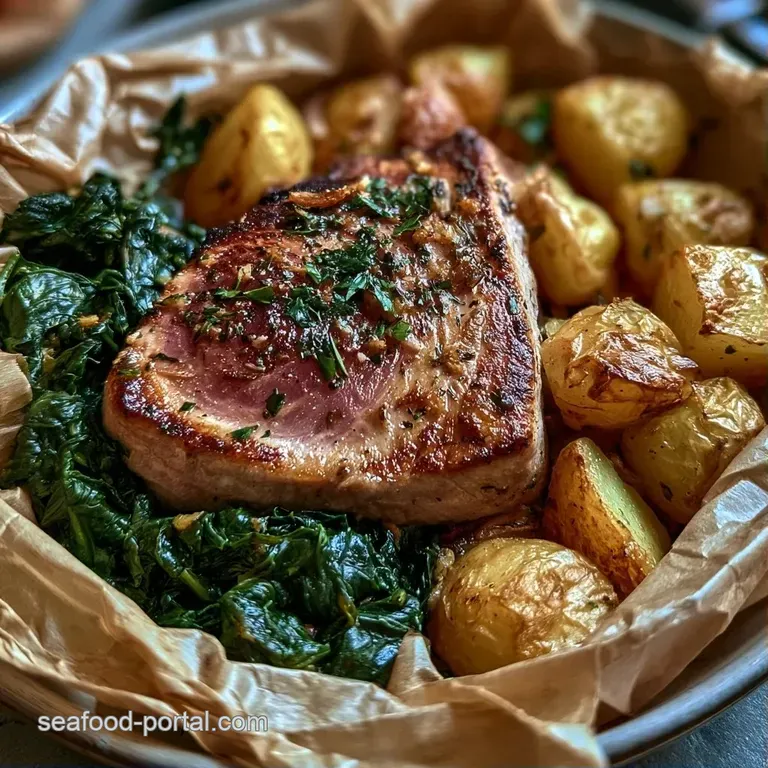
No fancy equipment is required; basic kitchen tools will work perfectly. I typically use a standard baking tray to keep the packets steady, but parchment paper is the real key here.
Ensure you use actual parchment paper, as wax paper will melt or smoke at 400°F (205°C), causing a messy situation. A brush is great for applying the butter mixture, but a spoon works just as well.
Step-by-step Cooking Process
Ready to start? This is a quick process, so have your prep finished before you turn on the oven.
Phase 1: Building the Foundation
- Preheat your oven to 400°F (205°C).
- Lay out two large sheets of parchment paper on your work surface.
- Place 1/2 cup of thinly sliced potatoes in the center of each sheet. Note: slice them to 1/8 inch so they finish cooking at the same time as the fish.
- Season the potatoes with 1 tbsp olive oil, salt, and pepper.
- Layer 1 cup of kale or spinach over the potatoes to form a vegetable base.
Phase 2: Preparing the Tuna
- Thoroughly pat the tuna steaks with paper towels. Note: removing surface water helps the butter stick.
- In a small bowl, combine melted butter, lemon juice, minced garlic, and oregano.
- Generously brush the butter mixture onto all sides of the tuna.
Phase 3: Sealing and Baking
- Set one steak on each vegetable bed and top with two lemon slices.
- Fold the parchment paper over the tuna and greens, crimping the edges tightly to form a sealed pouch.
- Put the pouches on a baking tray and cook for 12-15 minutes until packets are puffed and tuna feels springy.
Chef's Tip: If you prefer your tuna medium rare, remove the pouches at 12 minutes. For a fully cooked result, go for 15.
Fixing Common Issues
Even straightforward recipes can have hiccups. The biggest risk is overcooking; tuna quickly transforms from a juicy medium rare to a dry, gray block. For a flawless center, use a meat thermometer to hit 125°F (52°C).
A loose seal is another potential pitfall. If the packet leaks, steam escapes and the fish ends up roasted rather than steamed. To prevent this, create small, overlapping folds along the edge, similar to wrapping a gift.
Avoiding Rubbery Fish
This typically results from an oven that is too hot or leaving the fish in too long. Try decreasing the cooking time by 2 minutes next time.
Fixing Underdone Veggies
If your potato slices are too thick, they will remain hard by the time the fish is finished. Stick to a 1/8 inch slice.
Securing the Packet
Ensure your folds are firm. If a gap opens, you can use a strip of parchment as "tape" or simply adjust the fold.
| Problem | Root Cause | Solution |
|---|---|---|
| Gray/Dry Tuna | Overcooked | Reduce bake time by 2 mins |
| Hard Potatoes | Slices too thick | Cut to 1/8 inch rounds |
| Sauce Leaked Out | Poor seal | Crimp edges more tightly |
Switching Ingredients and Sizes
You can easily adapt this tuna recipe to suit different tastes. For a Mediterranean twist, place some kalamata olives and feta cheese over the spinach before folding the packet. For a Ginger Soy alternative, replace the lemon and butter with a blend of sesame oil, grated ginger, and soy sauce.
If you're out of tuna, this method works for various other fish. For example, baked pollock fish fillets respond well to this steaming process, although they might require a couple more minutes in the oven.
Adjusting the Portion
Scaling Down (1 Serving): Simply prepare a single packet. The baking time is nearly identical, but begin checking for doneness at the 10-minute mark.
Scaling Up (4+ Servings): Use two baking trays or cook in batches. Ensure the packets aren't crowded so that air can circulate; otherwise, cooking will take longer. To prevent over seasoning when doubling, only multiply the oregano and salt by 1.5x.
Choosing Your Method
| Feature | Oven Packet | Stovetop Pan |
|---|---|---|
| Moisture | High (Steamed) | Moderate (Seared) |
| Effort | Low (Hands off) | High (Active) |
| Cleanup | Very Low | Moderate |
Quick Decisions: Extra tang? → add 1 tsp lemon zest Spicier kick? → sprinkle red pepper flakes More earthiness? → double the oregano
Storage and Waste Tips
Keep any extras in a glass container for up to 2 days. I suggest avoiding the freezer for these packets, as the potatoes can become grainy once thawed. To reheat, warm the fish in a skillet on medium for 2 minutes. Avoid microwaving for too long to prevent the fish from becoming tough.
To minimize waste, don't throw away the lemon halves. Stir the leftover juice into your morning water or use the rinds for zesting another meal. For a crunchy snack, toss the potato peels with a little salt and oil and roast them separately.
Best Sides and Pairings
Because the Parchment Packet Baked Tuna already includes potatoes and vegetables, additional sides aren't strictly necessary. A fresh garden salad with a zesty vinaigrette offers a bright, acidic contrast to the rich, buttery fish. For those entertaining guests, a chilled glass of Sauvignon Blanc pairs beautifully.
For a truly decadent seafood platter, you might serve this alongside baked lobster tail to provide a variety of textures. Keep accompanying dishes simple to ensure the fresh taste of the Ahi remains the star of the show.
Now you're all set to dive in. This is a stress free approach to cooking expensive fish. Just remember to keep the slices thin and the packets sealed tight. Happy cooking!
Recipe FAQs
What is the ideal bake time for tuna packets?
Bake for 12 to 15 minutes at 400°F.
Tip: watch for the parchment to puff up as a sign that the fish is nearly done.
How to cook fresh tuna steaks in parchment?
Seal the fish and vegetables in folded parchment and bake.
Tip: use thinly sliced potatoes to ensure they cook through at the same rate as the tuna.
Which mistakes cause dry oven baked tuna?
Leaving the fish in the oven too long ruins the texture.
Tip: check for a springy feel to the touch to prevent overcooking.
Is it true that frozen tuna steaks can't be baked in packets?
No, this is a common misconception: thawed frozen steaks bake just as well as fresh ones.
Tip: ensure they are fully thawed and patted dry before applying the butter mixture.
Where should I serve these fish packets?
Place the sealed envelopes directly on individual plates.
Tip: if you loved the lemon garlic balance here, see how we use a similar acid technique in our pan seared flounder.
Suggested method for preparing fresh tuna for salad?
Sear the steaks quickly over high heat and slice thinly.
Tip: keep the center rare to ensure the final salad remains tender.
Parchment Packet Baked Tuna