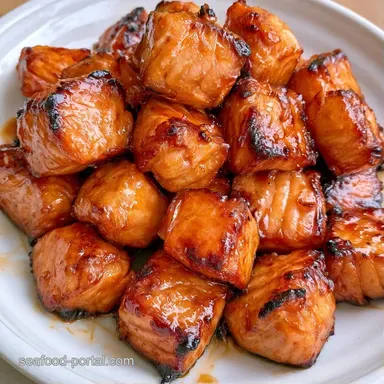
Crispy Miso Salmon Bites with Honey Glaze

- Time: 10 min active + 15 min cooking + 15 min resting
- Flavor & Texture: Salty-sweet glaze with a charred exterior and tender center
- Ideal for: Quick weeknight apps or high-protein snacks
Crispy Miso Salmon Bites
Imagine the smell of toasted sesame and fermented soy hitting the heat. These pieces hit the pan and immediately bubble, turning a dark golden brown. It is that specific contrast between the sticky, charred outside and the rich, tender fish that makes this dish a winner.
You get bold, vibrant flavors without needing a huge list of ingredients. This recipe delivers a high-end appetizer feel that works just as well as a main course.
The focus here is high heat and fast cooking. You want the glaze to bubble and brown quickly so the fish inside stays juicy.
Why These Bites Work
- Rapid Browning: The honey and miso contain natural sugars. When they hit the broiler or air fryer, they caramelize fast, creating a savory crust.
- Surface Area: Cutting the fish into small cubes increases the area for the glaze to cling to. This means more flavor in every single bite.
| Method | Time | Texture | Best For |
|---|---|---|---|
| Broiler | 4-6 mins | Charred top, soft bottom | High-contrast sear |
| Air Fryer | 7-9 mins | Evenly crispy edges | Consistent crunch |
The Flavor Base
White miso creates a salty, umami-rich base. Being milder than red miso, it helps keep the flavor profile balanced. Rice vinegar and sriracha introduce a tangy, spicy zest that complements the fatty salmon.
Honey serves as the sweetener and the binder. It ensures the glaze clings to the cubes and develops those caramelized, toasted spots. Fresh ginger adds a sharp, aromatic quality that makes the entire dish feel bright.
The Ingredient List
- 1 lb skinless salmon fillet
- 1 tbsp avocado oil Why this? Ideal for searing due to its high smoke point
- 2 tbsp white miso paste Why this? Less salty than red miso varieties
- 1 tbsp honey Why this? Produces a rich, deep amber glaze
- 1 tbsp low-sodium soy sauce Why this? Adds savory depth without oversalting
- 1 tbsp rice vinegar Why this? Cuts through the richness of the fish
- 1 tsp toasted sesame oil Why this? Contributes a warm, nutty fragrance
- 1 tsp fresh ginger, grated Why this? Provides a bright, zesty heat
- 1/2 tsp sriracha Why this? A gentle touch of spice
| Original Ingredient | Substitute | Why It Works |
|---|---|---|
| Honey | Maple Syrup | Comparable thickness. Note: Imparts a woody, autumnal flavor |
| White Miso | Yellow Miso | Similar salt level. Note: Has a slightly more fermented profile |
| Avocado Oil | Grapeseed Oil | Both are stable at high temperatures. Note: Neutral taste |
Tools You'll Need
You only need a few basics here. A medium bowl for mixing the glaze and a baking tray with parchment paper for the oven method. If you are using the air fryer, the basket is your only requirement. A digital meat thermometer is helpful to ensure the fish is safe without overcooking it.
Cooking Steps
- In a medium bowl, whisk together 2 tbsp white miso paste, 1 tbsp honey, 1 tbsp low-sodium soy sauce, 1 tbsp rice vinegar, 1 tsp toasted sesame oil, 1 tsp grated fresh ginger, and 1/2 tsp sriracha until smooth. Note: Ensure the miso is fully incorporated so you don't get salty clumps.

- Cut 1 lb skinless salmon fillet into 1-inch cubes and add them to the glaze. Toss gently to ensure every piece is fully coated.
- Let the salmon marinate at room temperature for 15 minutes.
- For Oven: Line a baking tray with parchment paper and set the broiler to high. Arrange the cubes in a single layer so they are not touching. Broil for 4–6 minutes until the tops are charred and deep golden brown.

- For Air Fryer: Preheat the air fryer to 400°F (200°C). Brush the basket with 1 tbsp avocado oil. Place the miso salmon bites in a single layer, cooking in batches if they do not fit, for 7–9 minutes, shaking halfway through.
- Cook until the salmon reaches a safe internal temperature of 145°F (63°C).
- Remove from heat immediately and garnish with toasted sesame seeds and sliced scallions.
Quick Fixes
If the glaze starts to smell like it is burning before the fish is done, your heat is too aggressive. Move the tray to a lower rack in the oven or drop the air fryer temp by 20 degrees.
Sticking usually happens when the pan isn't oily enough or the parchment paper is missing. Always use a non-stick surface or high-smoke point oil.
Burning the Glaze
The sugars in honey and miso turn from brown to black quickly. Keep a close eye on them during the last 2 minutes.
Salmon Sticking
Fish proteins bind to metal. Use avocado oil or parchment to create a barrier.
Overcooked Fish
If the salmon looks chalky or white albumin is leaking out, it has gone too far. Use a thermometer to pull it at exactly 145°F.
| Problem | Fix |
|---|---|
| Glaze burning | Lower heat or move tray down |
| Cubes sticking | Use more oil or parchment paper |
| Dry texture | Reduce cook time by 1-2 minutes |
Freshness and Storage
Keep cooked pieces in an airtight container in the fridge, where they remain fresh for up to 3 days. Per the USDA guidelines on leftovers, keep perishable items refrigerated to prevent bacterial growth.
Skip the microwave when reheating to avoid rubbery fish. Instead, place them back in the air fryer at 350°F (175°C) for 2–3 minutes, until a thermometer reads 165°F (74°C) in the thickest piece. This restores the crisp edges and refreshes the glaze.
Serving Suggestions

These are great on their own, but they shine when paired with a bright side. I like serving them over a bed of steamed bok choy or with a side of soy sauce noodles. For a lighter touch, serve them in a bowl with quinoa and sliced cucumber.
If you want an extra dipping element, a quick Japanese ginger sauce adds a zesty contrast to the rich miso glaze.
Flavor Swaps
For a more aggressive heat, increase the sriracha to 1 tsp or add a pinch of red pepper flakes to the marinade. This turns the miso salmon bites into a spicy appetizer.
If you prefer a different sweetness, swap the honey for maple syrup. It creates a deeper, more rustic flavor profile. For those avoiding gluten, ensure your soy sauce is replaced with tamari (labelled gluten-free) or coconut aminos and that the miso is labelled gluten-free, since some white miso contains barley.
This keeps the dish gluten-free without losing the salty punch. For this gluten-free version, also use products labelled gluten-free for all soy sauces.
High in Sodium
812 mg of sodium per serving (35% of daily value)
American Heart Association recommendation: no more than 2,300 mg of sodium per day
Tips to Reduce Sodium
-
Modify Miso Paste
Reduce the amount of white miso paste or look for a low-sodium miso alternative to significantly cut down on salt.
-
Swap Soy Sauce
Replace the low-sodium soy sauce with coconut aminos, which provides a similar umami taste with much less sodium.
-
Fresh Heat
Substitute the sriracha with freshly minced chili peppers or a pinch of red pepper flakes for heat without the added salt.
-
Enhance with Aromatics
Increase the amount of fresh grated ginger or add a squeeze of fresh lime juice to brighten the flavor profile without needing extra sodium.
Recipe FAQs
Can these salmon bites be baked?
Use the broiler on high for 4–6 minutes until charred.
Tip: Line your tray with parchment paper for easier cleanup.
How to use an air fryer for this recipe?
Set the air fryer to 400°F (200°C) and brush the basket with avocado oil.
Tip: Work in batches to ensure the cubes stay in a single layer.
Where should leftover salmon be kept?
Keep the cooked fish in the refrigerator.
Tip: Use a sealed glass container to preserve the glaze.
Why marinate the fish before cooking?
Marinating for 15 minutes at room temperature allows the miso and honey to penetrate the fish.
Tip: Do not over-marinate, as the acidity in the rice vinegar can change the texture.
Is red miso a suitable replacement?
Red miso works but provides a saltier and more intense flavor than white miso.
Tip: Reduce the soy sauce if using a saltier miso paste.
Caramelized Miso Salmon Bites