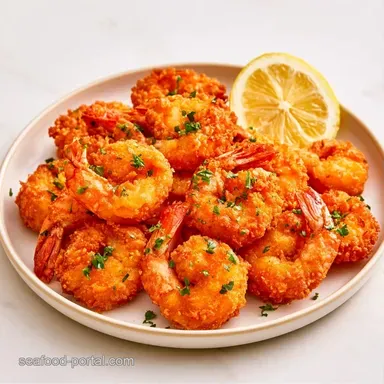
Crispy Fried Shrimp with Buttermilk

- Time: 15 min active + 20 min cooking + 15 min soaking
- Flavor & Texture: Savory, dark golden, and shattering
- Perfect for: Weekend family gatherings or beach-themed dinners
Easy Crispy Fried Shrimp
The sound of the crust cracking is the best part. When you hit that deep golden brown color in the pan, you know you've got the right balance of heat and seasoning. It is a savory, salty crunch that gives way to tender shrimp.
Making fried shrimp for a crowd is easier than it looks if you have your stations ready. You just need a soak, a dredge, and a pot of hot oil.
The goal is a coating that sticks. No one likes it when the breading slides off in the oil, so this method focuses on a "glue" that keeps everything locked in place.
Ingredient Deep Dive
- 1 lb large shrimp, peeled and deveined, tail-on
- 1 cup buttermilk
- 1/2 tsp salt
- 1/4 tsp black pepper
- 1 cup all-purpose flour
- 1/2 cup fine yellow cornmeal
- 1 tsp paprika
- 1 tsp garlic powder
- 1/2 tsp onion powder
- 1/4 tsp cayenne pepper
- 1/2 tsp salt
- 3 cups neutral oil
The buttermilk does a lot of heavy lifting. Its acidity softens the shrimp and helps the flour stick. If you don't have any, you can use whole milk mixed with a tablespoon of lemon juice.
Cornmeal is what gives this a coastal feel. It adds a grit and a crunch that flour alone can't provide. Fine yellow cornmeal is best, but you can use fine polenta if that is what you have.
The spice blend uses paprika and garlic powder for a deep, savory base. Cayenne adds a little kick, but you can swap it for more paprika if you want a mild version for kids.
Equipment Needed
For steady heat retention, a deep skillet or Dutch oven is your best bet. Use a wire rack for cooling, as placing fried items directly on paper towels can lead to sogginess; a rack allows for better air circulation.
How to Make It
Phase 1: The Flavor Soak
Combine 1 cup buttermilk with 1/2 tsp salt and 1/4 tsp black pepper, stirring well in a bowl. Stir in 1 lb peeled and deveined shrimp, ensuring they are well-coated, then let them marinate for 15 minutes. Note: This soak tenderizes the meat and prepares the surface for the breading.

Phase 2: The Seasoned Coating
Use a shallow dish to mix 1 cup all-purpose flour, 1/2 cup fine yellow cornmeal, 1 tsp paprika, 1 tsp garlic powder, 1/2 tsp onion powder, 1/4 tsp cayenne pepper, and 1/2 tsp salt. Stir the ingredients until thoroughly blended.
Phase 3: Achieving the Golden Fry
Bring 3 cups of neutral oil up to 350°F (180°C) in a Dutch oven or deep skillet. Take the shrimp from the buttermilk, allow the liquid to drain, and press them firmly into the flour blend until they are fully covered.
Gently place the shrimp into the hot oil in small batches. Brown for 2–3 minutes per side until the crust reaches a deep golden brown hue and the internal temperature is 145°F (63°C). Note: Don't overcrowd the pan or the oil temperature will drop, leading to a greasy crust.

Phase 4: The Proper Drain
Use tongs to lift the shrimp out and move them straight to a wire cooling rack for 2 minutes. This prevents the crust from steaming and helps it set before serving.
Key Techniques Explained
The Buttermilk Bridge: The thick liquid acts as a glue that binds the dry flour to the shrimp, which prevents the crust from peeling.
Cornmeal Crunch: Cornmeal doesn't absorb oil as quickly as wheat flour, which keeps the exterior shattering rather than soft.
Quick Fixes

If your breading is sliding off, the shrimp were likely too wet or the oil was too cool. Press the shrimp firmly into the flour to create a physical bond.
Rubbery shrimp happen when they stay in the oil too long. Use a thermometer to pull them at exactly 145°F.
If the oil starts smoking, it is too hot. Remove the pan from the heat and let it cool for a few minutes before adding more shrimp.
| Problem | Fix |
|---|---|
| Batter peeling off | Press flour in firmly and check oil temp |
| Rubbery texture | Remove from oil at 145°F (63°C) |
| Greasy coating | Fry in smaller batches to keep oil hot |
Storage and Leftovers
Store any remaining servings in a sealed container in the refrigerator for 3 to 4 days. I recommend lining the base with a paper towel to absorb extra moisture.
Skip the microwave when reheating to prevent the breading from getting soggy. Instead, use an air fryer set to 375°F (190°C) for 3–5 minutes or a 400°F (200°C) oven for 5 minutes. Be sure to follow the USDA guidelines for reheating by heating the food to 165°F (74°C). When reheating cooked leftovers, check with a food thermometer that the center reaches 165°F (74°C); the appliance temperature and time alone do not confirm this.
Easy Swaps
Swap the cornmeal for Panko breadcrumbs if you prefer a different texture. This creates a lighter, airier crust, but be mindful of the timing as it tends to brown more quickly.
These also work great as fried shrimp tacos. Simply tuck them into warmed corn tortillas and garnish with shredded cabbage slaw and a squeeze of lime.
To add a Cajun-style kick, stir 1/2 tsp of smoked paprika and a pinch of dried thyme into the flour.
Presentation Tips
The best fried shrimp platters are served with a side of cocktail sauce or a spicy remoulade. Pile them high on a platter with lemon wedges tucked between the pieces.
Another great option is a Po boy sandwich. Load a toasted baguette with the shrimp, lettuce, tomato, and a smear of mayo for a classic coast-style meal.
Recipe FAQs
Can you eat the tail of a shrimp if it's fried?
Yes, they are edible. The frying process makes the tails crunchy and flavorful.
What is Japanese fried shrimp called?
It is known as Ebi Fry. This style typically uses Panko breadcrumbs rather than a cornmeal blend.
How long does it take to fry shrimp?
Fry for 2–3 minutes per side. Remove them once the crust is deep golden brown and they hit 145°F (63°C) inside.
At what temperature should the oil be?
Heat the neutral oil to 350°F (180°C). This ensures the shrimp cook through without burning the exterior.
Do frozen shrimp work for this recipe?
Yes, if they are thawed. Pat them completely dry before the buttermilk soak to prevent the coating from sliding off.
Will this breading work for catfish?
Yes, it works well. The cornmeal and flour mixture provides a classic, sturdy crust for various white fish.
Crispy Fried Shrimp with Buttermilk