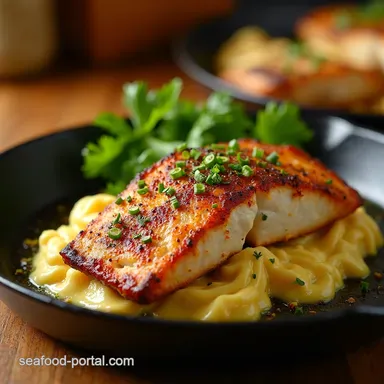
Cast Iron Char Perfectly Blackened Amberjack with Zesty Remoulade
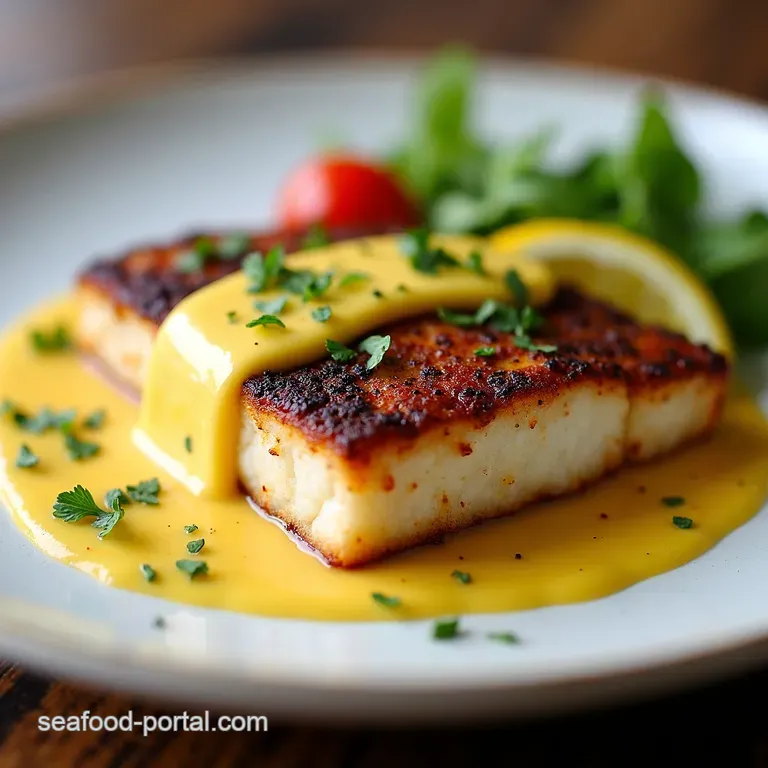
- The Allure of the Sear: Why Blackening Transforms Amberjack
- A Coastal Comfort Dish: Introducing Our Signature Beach House Recipe
- Assembling the Core Components for Superior Results
- Crafting the Essential Spice Rub: Secrets to Deep Umami
- Mastering the Preparation Phase: Preparing the Amberjack Fillets
- The High-Heat Dance: Executing the Perfect Blackening Technique
- Elevating the Experience: Recommended Pairings and Side Dishes
- Recipe FAQs
- 📝 Recipe Card
The Allure of the Sear: Why Blackening Transforms Amberjack
There are cooking techniques, and then there is blackening. This high heat, spice driven method, rooted deeply in Louisiana culinary tradition, transforms humble fish fillets into an unforgettable meal.
When applied to amberjack fish , which possesses a firm, meaty texture, the transformation is particularly spectacular. Blackening is often misunderstood; people assume it means burning the fish to a crisp.
In reality, it is a precise, aggressive searing process where a thick layer of seasoned butter and spices is rapidly cooked onto the exterior of the fillet. This creates an intensely flavoured, nearly black crust that seals in the moisture, ensuring the interior remains succulent and flaky.
If you’ve ever wondered about blackened fish perfection, this is where we start.
A Coastal Comfort Dish: Introducing Our Signature Beach House Recipe
This particular iteration of blackened amberjack recipe is designed for maximum flavour with minimum fuss the quintessential beach house meals experience.
We call it "Cast Iron Char: Perfectly Blackened Amberjack with Zesty Remoulade." It’s a dish that balances bold heat with creamy refreshment, clocking in at under 30 minutes total time. It’s the kind of impressive plate you can pull together after a long day in the sun.
While the technique is fiery, the fish itself remains mild and satisfying. If you’ve been hesitant about cooking fish because you worry about it falling apart, know that the heavy crust created here provides structural integrity, making it easier to handle.
Decoding the Magic: What Makes This Blackened Amberjack Approach Superior
Our approach focuses heavily on preparation and heat management. Many home cooks fail at blackening because their pan isn't hot enough, resulting in soggy, stewed spices rather than a true, aggressive sear.
For this blackened amberjack fish preparation, we are using firm, skinless fillets, approximately 1 inch thick, ensuring even cooking from crust to center. The goal is not to bake or steam the fish, but to achieve instant caramelization of the spices onto the surface.
This method avoids the dry texture sometimes associated with baked blackened fish , delivering a much more dynamic eating experience.
Flavor Profile Unpacked: Bold Spices Meet Delicate Fish
When considering is amberjack a white fish , you’ll find it’s a lean, firm fleshed fish with a clean, somewhat mild flavour that stands up beautifully to aggressive seasoning.
This allows the robust spice blend heavy on smoked paprika and garlic to truly shine without overpowering the natural character of the fillet. The resulting taste is smoky, savory, with a pronounced warmth from the cayenne, which is then expertly tempered by the cool, tart remoulade sauce we serve alongside.
It’s a symphony of textures and temperatures: hot, charred crust meeting cool, creamy sauce.
Setting the Scene: The Perfect Vibe for This Meal
This is not a formal dining room dish; it demands a relaxed atmosphere. Picture mismatched patio furniture, the sound of waves in the background, and maybe a cold, pale ale sweating on the table beside your plate.
This grilled blackened amberjack style, even when cooked indoors on the stove, evokes that coastal, carefree spirit. Set out simple sides like rice and greens, and let the powerful flavour of the fish be the star of the show.
Assembling the Core Components for Superior Results
To achieve that signature dark crust, ingredient selection and tool selection are non-negotiable. We are looking for ingredients that can withstand extreme heat without turning bitter or simply incinerating before the fish cooks through.
This stage is all about setup, ensuring that once the heat is cranked, we move swiftly through the process.
Related Recipes Worth Trying
- RestaurantQuality Blackened Salmon Recipe Paleo GF — Achieve the perfect charred crust on moist salmon every time with this straightforward Blackened Salmon Recipe Ready in 20 minutes
- Blackened Salmon with Dill Sauce Quick 30Min Dinner — Master easy Blackened Salmon with Creamy Dill Sauce Achieve a perfect Cajun char in 30 mins using this foolproof technique A stellar easy salmon dinner
- Blackened Salmon Tacos A Small Batch Recipe for Two — Craving Blackened Salmon Tacos This small batch recipe for two is a weeknight winner Flaky salmon tangy slaw and zesty sauce ready in 30 Get the recipe now
Crafting the Essential Spice Rub: Secrets to Deep Umami
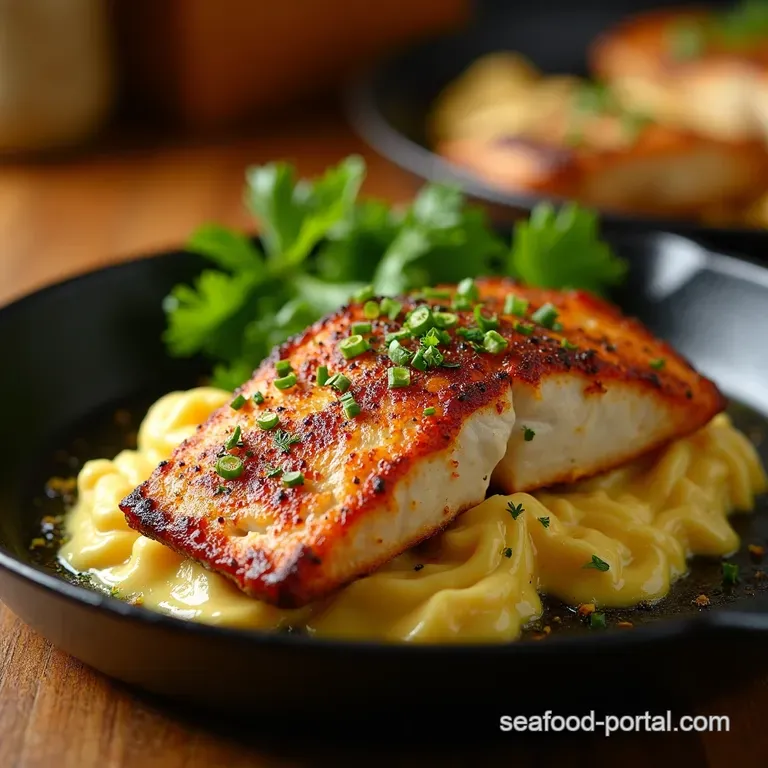
The spice blend is the heart of this recipe. It needs balance not just heat, but depth. We move beyond simple salt and pepper to create a foundational layer of flavour that clings beautifully to the fish.
Essential Pantry Stock: What You Absolutely Need
To build this robust seasoning, you must gather smoked paprika (essential for that deep, almost earthy colour), garlic powder, dried thyme, dried oregano, and a healthy dose of cayenne and black pepper. We pair these spices with a liberal amount of kosher salt to help draw out moisture and promote surface contact.
The quantities must be precise to ensure the coating is thick enough to form a crust but not so thick that it burns before the interior cooks.
Tool Talk: The Unskippable Cast Iron Requirement
For any serious attempt at blackened fish , a heavy bottomed cast iron skillet is essential. Stainless steel pans will scorch the spices unevenly, and non-stick surfaces cannot handle the sustained, intense temperature required.
Cast iron distributes heat evenly and retains it exceptionally well, which is precisely what we need to shock the surface of the amberjack fish and achieve that perfect char on the spice rub.
Spice Blend Ratios: Achieving the Perfect Blackening Crust Consistency
For four 6-ounce fillets, we use two tablespoons of smoked paprika, equal parts salt and garlic powder, and a teaspoon each of thyme, oregano, black pepper, and cayenne. Whisk these together thoroughly in a shallow dish.
This mixture should be plentiful enough to allow you to completely coat each fillet with a substantial layer. Don't be shy; this dry rub is what becomes the crust.
Mastering the Preparation Phase: Preparing the Amberjack Fillets
Before the spice hits the fish, preparation must be meticulous. The biggest enemy of a great sear is moisture. Take your 6-ounce, 1 inch thick amberjack fish fillets and pat them down aggressively with paper towels until they are bone dry on every surface.
Next, you’ll lightly brush all sides with melted, clarified butter or ghee this acts as the adhesive agent, ensuring the spice blend sticks firmly and evenly to the flesh.
The High Heat Dance: Executing the Perfect Blackening Technique
This is the performance phase. Speed and high heat are your friends here. You should have your remoulade sauce mixed and ready, your pan preheating, and your fish coated before you ever turn on the burner beneath the skillet.
Coating Protocol: Ensuring Maximum Spice Adhesion
Once buttered, dredge each fillet heavily into the prepared spice blend. Press the mixture onto the sides firmly, ensuring that every visible patch of fish is covered in a thick, dark layer of seasoning. The thickness of this coating is what defines the successful blackened amberjack .
Heat Management: Reaching the Exact Temperature for Searing
Place your empty cast iron skillet over medium high to high heat. You need to let this pan preheat, undisturbed, for at least five to seven minutes. The skillet must be smoking hot before the fish goes in this is critical.
If you are nervous about the smoke, ensure your ventilation hood is on full blast and perhaps crack a window.
Flipping Finesse: Identifying When to Turn Your Blackened Amberjack
Carefully place the coated fillets into the searing hot, dry pan. You should hear an immediate, aggressive sizzle. Do not move them for three to four minutes. The crust needs time to form and set.
You will know it’s time to flip when the crust is deep mahogany brown (not black and ashy) and easily releases from the pan surface. Flip gently and cook the second side for another three to four minutes, until the fish flakes easily.
Resting Rites: Allowing Juices to Settle Post Sear
As soon as the fish reaches that perfect internal temperature ( 145° F/ 63° C), remove it immediately from the heat. Transfer the blackened amberjack fillets to a wire rack set over a baking sheet.
Letting them rest for just two minutes allows the internal juices, driven to the center by the high heat, to redistribute back into the flesh, maximizing tenderness.
Elevating the Experience: Recommended Pairings and Side Dishes
The intensity of the blackened amberjack fish calls for cooling, contrasting accompaniments that balance the heat without muddying the bold flavour profile.
Optimal Partner Dishes to Complement Spicy Amberjack
To truly honour this as a satisfying beach house meals staple, pair it with something bright and slightly acidic. Creamy coconut lime rice provides a wonderful textural and flavour counterpoint.
Alternatively, simple roasted sweet potato wedges bring a touch of natural sweetness that tempers the spice beautifully. Don't forget a vibrant green vegetable; sautéed asparagus or crisp green beans tossed with toasted pecans provide necessary crunch.
Addressing Common Queries: Tips for Cooking Thicker Portions
If your amberjack fillets are significantly thicker than the recommended 1 inch, you risk burning the crust before the center is done. For pieces exceeding 1.5 inches, finish them in a moderate oven ( 375° F / 190° C) for 5– 7 minutes immediately after searing both sides on the stovetop.
This hybrid approach ensures even cooking while still achieving that characteristic blackened crust.
Flavor Longevity: How Long Does Cooked Amberjack Last?
Cooked blackened amberjack maintains its flavour quite well, though the crust will soften. Store leftovers in an airtight container in the refrigerator for up to three days.
For reheating, avoid the microwave, which can steam the fish; instead, warm it gently in a skillet over low heat or flash it briefly in a low oven.
Creative Flavor Twists: Exploring Mild Variations on the Blackened Theme
For those who find cayenne overwhelming, you can dial back the heat while preserving the colour and flavour complexity. Reduce the cayenne to a quarter teaspoon and boost the smoked paprika to three tablespoons.
You can also infuse the butter used for dredging with a smashed clove of garlic for an added aromatic layer, making this a richer, slightly less aggressive take on the blackened amberjack recipe .
Recipe FAQs
What’s the secret to getting that perfect crust on my Blackened Amberjack without burning the spices?
The trick lies entirely in the heat management! You need a smoking hot cast iron skillet preheat it empty for at least five minutes. The spice blend needs an immediate, aggressive sear, so if the pan isn't hot enough, the butter burns and the spices turn bitter instead of charring beautifully.
Don't be a shrinking violet with the heat!
My kitchen filled with smoke last time I tried blackening; is there any way to make less smoke?
Ah, the inevitable smoke cloud! It’s part and parcel of the technique, but you can mitigate it. Firstly, ensure your Amberjack fillets are patted completely dry, as excess moisture creates steam. Secondly, use clarified butter or ghee instead of regular butter, as the milk solids in standard butter burn faster.
And finally, for goodness sake, open all the windows and crank the extractor fan make it a proper cross breeze, like you’re airing out the cottage after a winter storm!
Ah, the inevitable smoke cloud! It’s part and parcel of the technique, but you can mitigate it. Firstly, ensure your Amberjack fillets are patted completely dry, as excess moisture creates steam. Secondly, use clarified butter or ghee instead of regular butter, as the milk solids in standard butter burn faster.
And finally, for goodness sake, open all the windows and crank the extractor fan make it a proper cross breeze, like you’re airing out the cottage after a winter storm!
Can I use a different fish instead of Amberjack in this recipe?
Absolutely! This blackening technique is fantastic on any firm, thick cut white fish. Mahi Mahi, Swordfish, or even thick fillets of Grouper take the spice blend wonderfully. Just ensure whatever you use is cut to about an inch thick so it can handle the high heat without overcooking before the crust forms properly.
How do I know when the fish is perfectly cooked I don't want dry fish!
Since Blackened Amberjack cooks so quickly over high heat, it’s easy to overdo it. Aim for an internal temperature of 145°F (63°C). Visually, the flesh should be opaque all the way through and should flake easily when gently pressed with a fork, much like properly cooked pastry.
Always let it rest for two minutes off the heat, as it continues to cook slightly.
I've made too much spice blend; how should I store leftovers?
That spice blend keeps beautifully, much like a good batch of curry powder. Store any leftover dry spice mix in an airtight container away from direct sunlight and heat a cool pantry is perfect.
It should hold its potency for at least six months, ready for your next fish fry or perhaps sprinkled over some roasted potatoes.
Cast Iron Blackened Amberjack