Breaded Baked Fish Recipe: Crispy & Flaky
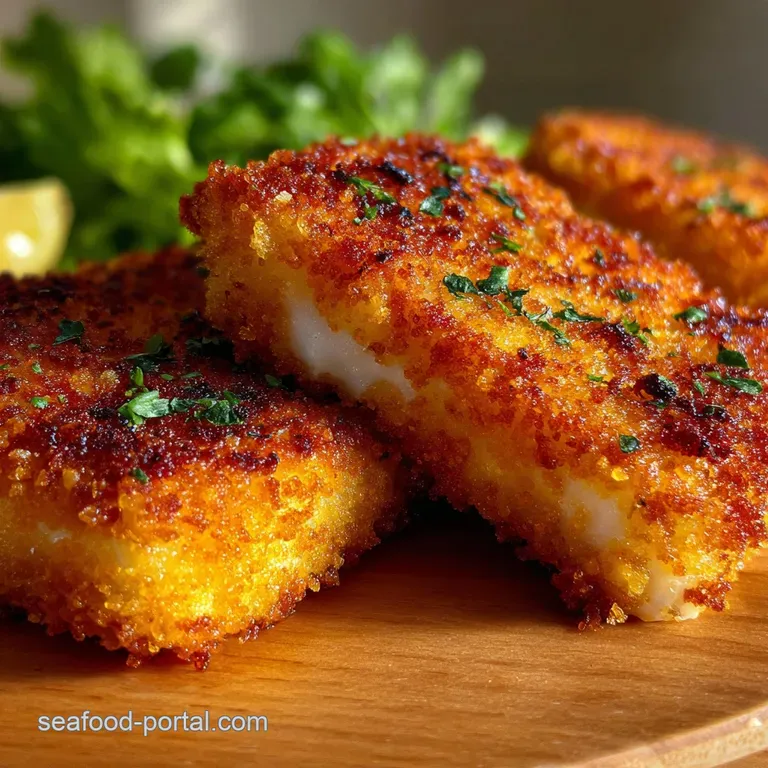
- Time: Active 10 minutes, Passive 10 minutes, Total 20 minutes
- Flavor/Texture Hook: Shattering panko crust with zesty lemon and silky, flaky white fish.
- Perfect for: Busy weeknights where you want restaurant quality results with zero stress.
- Create the Best Breaded Baked Fish Recipe
- Science Behind the Golden Crunch
- Essential Specifications and Yield Data
- Choosing Your Primary Building Blocks
- Tools for Better Kitchen Efficiency
- Step-by-Step Oven Baking Method
- Troubleshooting Your Texture Problems
- Scaling for Your Needs
- Flavor Variations for Every Palate
- Busting Common Cooking Myths
- Storage and Zero Waste
- Plating for Visual Appeal
- Recipe FAQs
- 📝 Recipe Card
Create the Best Breaded Baked Fish Recipe
I still remember the first time I tried to make a breaded fish dinner from scratch. I was so excited, thinking I'd created a masterpiece, only to pull a tray of pale, limp fillets out of the oven. The breading was sliding off like a wet blanket, and the fish itself had the texture of a kitchen sponge.
I ended up eating a bowl of cereal that night while staring at my soggy failure, wondering what went wrong.
That disaster sent me on a mission to find a breaded baked fish recipe that actually worked. I tried every trick in the book - double dredging, freezing the fish, using different oils - but nothing quite hit the mark until I learned about the "mayo binder" method.
Now, when I hear that specific shatter of the panko crust as the fork breaks through, I know I’ve finally nailed it.
This isn't just another boring dinner; it's a study in contrasts. You get the salty, golden crunch of the parmesan panko exterior followed immediately by the velvety, steaming interior of the cod.
The hint of smoked paprika gives it a depth that makes you forget it only took 20 minutes to pull together. Trust me, once you try this method, you'll never go back to the messy egg wash routine again.
Science Behind the Golden Crunch
Understanding how heat interacts with moisture is the secret to a successful breaded baked fish recipe. We're essentially trying to fry the breading while steaming the fish simultaneously, which requires a bit of kitchen physics to pull off without ending up with a mess.
- Fat Based Insulation: Using mayonnaise as a binder creates a lipid barrier that prevents the natural juices of the fish from soaking into the breadcrumbs, ensuring they stay crisp.
- Starch Gelatinization: Pre toasting the panko in olive oil begins the browning process before the fish even hits the oven, which is essential because fish cooks too fast to brown raw crumbs.
- Protein Denaturation: The parmesan cheese melts and then solidifies, acting like a structural glue that holds the panko flakes together in a tight, crunchy matrix.
- Maillard Reaction: The combination of the smoked paprika and parmesan creates a savory depth of flavor that develops at lower temperatures than traditional searing.
| Method | Time | Texture | Best For |
|---|---|---|---|
| Oven Bake | 10 minutes | Evenly crisp | Healthy weeknight |
| Air Fryer | 8 minutes | Extra crunch | Small batches |
| Pan Fry | 6 minutes | Rich and buttery | Maximum flavor |
Whether you are looking for more Fish Recipes or just want a reliable Tuesday night meal, choosing the right method depends on your equipment. The oven is my go to because it allows for 360 degree airflow if you use a wire rack.
Essential Specifications and Yield Data
To get the most out of this dish, you need to pay attention to the thickness of your fillets. Most white fish like cod or haddock come in varied thicknesses, but we are aiming for about 1 inch. If your fish is thinner, you'll need to pull it out a few minutes early to prevent it from turning into leather.
| Ingredient | Fresh Option | Shortcut | Trade off |
|---|---|---|---|
| White Fish | Fresh Atlantic Cod | Frozen Tilapia | Frozen must be thawed and dried |
| Breadcrumbs | Freshly grated loaf | Boxed Panko | Panko provides a better shatter |
| Seasoning | Fresh garlic/herbs | Garlic powder/Paprika | Powder distributes more evenly |
The balance of flavors here is a simple map: the panko provides the crunch, the lemon zest brings the brightness, and the Dijon mustard adds a tiny bit of "zing" that cuts through the richness of the mayonnaise binder. It’s all about hitting those different notes on your palate at once.
Choosing Your Primary Building Blocks
The ingredients you select for your breaded baked fish recipe will dictate the final texture. I always opt for Panko over traditional breadcrumbs because panko is jagged and airy, providing far more surface area for that golden brown finish we all crave.
| Component | Science Role | Pro Secret |
|---|---|---|
| Panko | Large surface area | Toast them in oil first! |
| Mayonnaise | Fat based barrier | Seals in the natural juices. |
| Parmesan | Protein structure | Adds a savory, salty crust. |
When it comes to the fish, I prefer a sturdy white fillet like Cod or Haddock. Tilapia works in a pinch, but it's thinner and can easily overcook. If you're feeling adventurous, you can even use this same breading technique on an Almondine Fish recipe if you swap some panko for crushed almonds.
- 1.5 lbs white fish fillets: Why this? Cod or Haddock holds its shape best under a heavy crust. (Substitute: Tilapia or Pollack)
- 0.5 tsp fine sea salt: Why this? Fine salt penetrates the fish flesh more evenly. (Substitute: Kosher salt)
- 0.25 tsp cracked black pepper: Why this? Adds a subtle heat without overpowering. (Substitute: White pepper)
- 1.5 cups Panko breadcrumbs: Why this? Essential for the signature crunch. (Substitute: Crushed crackers)
- 0.25 cup grated Parmesan cheese: Why this? Provides saltiness and helps the crust stick. (Substitute: Pecorino Romano)
- 1 tsp smoked paprika: Why this? Adds color and a hint of woodsy flavor. (Substitute: Sweet paprika)
- 1 tsp garlic powder: Why this? Distributes flavor better than fresh garlic in dry coatings. (Substitute: Onion powder)
- 2 tbsp extra virgin olive oil: Why this? Helps the panko brown in the oven. (Substitute: Melted butter)
- 0.33 cup mayonnaise: Why this? The ultimate moisture lock binder. (Substitute: Greek yogurt)
- 1 tbsp Dijon mustard: Why this? Adds tang and emulsifies the binder. (Substitute: Yellow mustard)
- 0.5 lemon, zested: Why this? Brightens the heavy flavors of the breading. (Substitute: Lime zest)
Tools for Better Kitchen Efficiency
You don't need a professional kitchen, but a few specific tools make this breaded baked fish recipe much easier. The most important is a rimmed baking sheet paired with a wire cooling rack. This allows heat to circulate under the fish, preventing the bottom from steaming and getting mushy.
Chef Tip: Freeze your fish for just 10 minutes before breading. This firms up the proteins and makes it much easier to handle without the fillets breaking apart in your hands.
I also recommend using a microplane for the lemon zest and the parmesan. The finer the zest, the more it integrates into the crust without leaving big, bitter chunks. If you're using a stand mixer such as KitchenAid to prep other parts of your meal, that's great, but for this recipe, a simple whisk and a couple of shallow bowls are all you need.
step-by-step Oven Baking Method
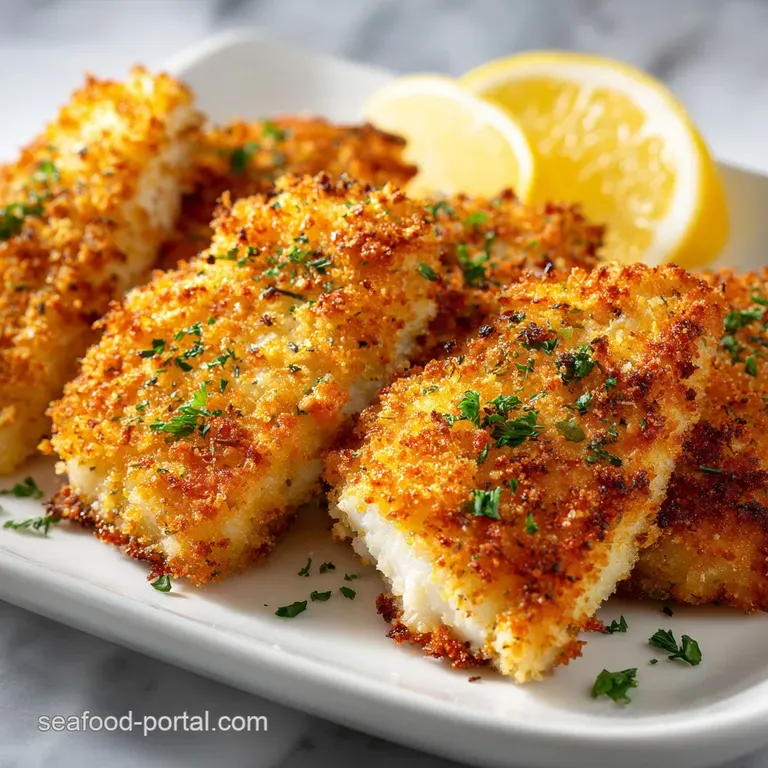
- Preheat your oven to 425°F. Note: A high temperature is crucial for a fast cook and a crispy exterior.
- Pat the 1.5 lbs white fish fillets completely dry with paper towels. Note: Surface moisture is the enemy of a crisp crust.
- Combine the 1.5 cups panko, 0.25 cup parmesan, 1 tsp smoked paprika, 1 tsp garlic powder, and 2 tbsp olive oil in a bowl.
- Toast the panko mixture in a skillet over medium heat for 3 minutes until it smells nutty and looks golden.
- Mix the 0.33 cup mayonnaise, 1 tbsp Dijon, and lemon zest in a separate small bowl.
- Season the fillets with 0.5 tsp salt and 0.25 tsp black pepper.
- Brush a thin, even layer of the mayonnaise mixture over the top and sides of each fillet.
- Press the toasted panko mixture firmly onto the mayonnaise coated fish until no white fish is visible.
- Place the fish on a wire rack set over a baking sheet.
- Bake for 10 minutes until the fish flakes easily with a fork and the crust is dark gold.
Troubleshooting Your Texture Problems
Why Your Breading is Falling Off
This usually happens because the fish was too wet before you applied the binder. Fish naturally releases water as it sits, so if you don't pat it dry right before the mayo goes on, a layer of steam will form between the meat and the crust, causing it to slide right off.
Why the Bottom is Soggy
If you aren't using a wire rack, the fish is sitting in its own juices. Even at 425°F, that liquid won't evaporate fast enough to keep the bottom breading crisp. If you don't have a rack, preheat the baking sheet itself so the fish hits a hot surface immediately.
| Problem | Root Cause | Solution |
|---|---|---|
| Pale crust | Not enough fat | Increase olive oil or pre toast longer |
| Dry fish | Overcooking | Use a thermometer; pull at 145°F |
| Loose breading | Not enough binder | Apply thicker mayo layer and press hard |
Checking your progress is key to avoiding these issues.
- ✓ Pat fish dry twice - once when you unpack it, and once right before breading.
- ✓ Use room temperature mayonnaise for easier spreading.
- ✓ Don't overcrowd the baking sheet; leave at least 2 inches between fillets.
- ✓ Let the fish rest for 2 minutes after baking to let the juices redistribute.
Scaling for Your Needs
If you are cooking for a crowd, you can easily double this breaded baked fish recipe. However, don't just double the spices blindly. I recommend 1.5x the salt and spices for a double batch to avoid it becoming overly salty.
You'll definitely need to work in batches or use two separate baking sheets to ensure proper airflow.
For a smaller portion, like a dinner for two, you can halve the recipe easily. If you have a stray half egg from another recipe, you can mix it into the mayo binder for extra "grip," though it's not strictly necessary.
Reduce the cook time by about 2 minutes if you're using smaller, individual pieces of fish like nuggets.
| Servings | Fish Weight | Panko Amount | Pan Size |
|---|---|---|---|
| 2 people | 0.75 lbs | 0.75 cup | 9x9 inch |
| 4 people | 1.5 lbs | 1.5 cups | 13x18 inch |
| 8 people | 3 lbs | 3 cups | Two 13x18 inch |
Remember that when scaling up, the baking time usually remains the same as long as the oven remains at the correct temperature and you haven't overcrowded the pans. If the oven temperature drops because you've put in too much cold fish at once, add 3-5 minutes to the clock.
Flavor Variations for Every Palate
One of my favorite things about a Mediterranean Fish Fillets recipe is the acidity, which you can mimic here by adding a teaspoon of dried oregano and some crushed red pepper flakes to your panko mix. It completely changes the vibe of the dish.
- The Spicy Kick: Add a half teaspoon of cayenne pepper and a teaspoon of chili powder to the breading.
- The Herb Garden: Mix in 2 tablespoons of freshly chopped parsley and chives into the panko after toasting.
- The Nutty Crunch: Replace half of the panko with crushed pecans or almonds for a richer flavor profile.
But what about using different binders? I've tried Greek yogurt, and while it works, it's more acidic and less rich than mayo. Honestly, don't even bother with low-fat mayo here; the fat is what creates the barrier that keeps your fish from getting soggy.
Busting Common Cooking Myths
"You must use a flour egg-crumb dredge for it to stick." This is one of the biggest myths in home cooking. While that method works for deep frying, in the oven, it often creates a thick, doughy layer that never fully cooks.
The mayonnaise method is actually superior for baking because it's an emulsion of fat and egg that bonds perfectly to the fish proteins.
"Fresh fish shouldn't smell like anything." While mostly true, all fish has a slight scent of the sea. If it smells "fishy" or like ammonia, it's past its prime. However, a quick soak in milk for 10 minutes can actually neutralize some of those stronger fishy odors by binding to the trimethlyamine in the fish.
Storage and Zero Waste
Leftover breaded fish can be kept in an airtight container in the fridge for up to 2 days. To reheat, avoid the microwave at all costs! It will turn your beautiful crust into a rubbery mess.
Instead, pop it back into a 350°F oven or an air fryer for 5 minutes until it's warmed through and the crust recrisps.
For zero waste, don't throw away those lemon halves after zesting. Slice them up and roast them alongside the fish; the juice becomes sweeter and more concentrated, making for an incredible squeeze of flavor at the table.
If you have leftover panko mixture, store it in a jar and use it as a crunchy topping for macaroni and cheese or roasted vegetables later in the week.
Plating for Visual Appeal
When it's time to serve, I love to place the fillets on a bed of bright green sautéed spinach or alongside some roasted asparagus. The contrast of the golden crust against the green vegetables makes the plate look like it came out of a professional kitchen.
Add a final dusting of fresh parsley and a wedge of that roasted lemon on the side. The bright yellow pops against the deep mahogany of the smoked paprika crust. Remember, we eat with our eyes first, and a little bit of color goes a long way in making a simple weeknight meal feel like a special occasion.
Trust me, your family will be asking for this one every week!
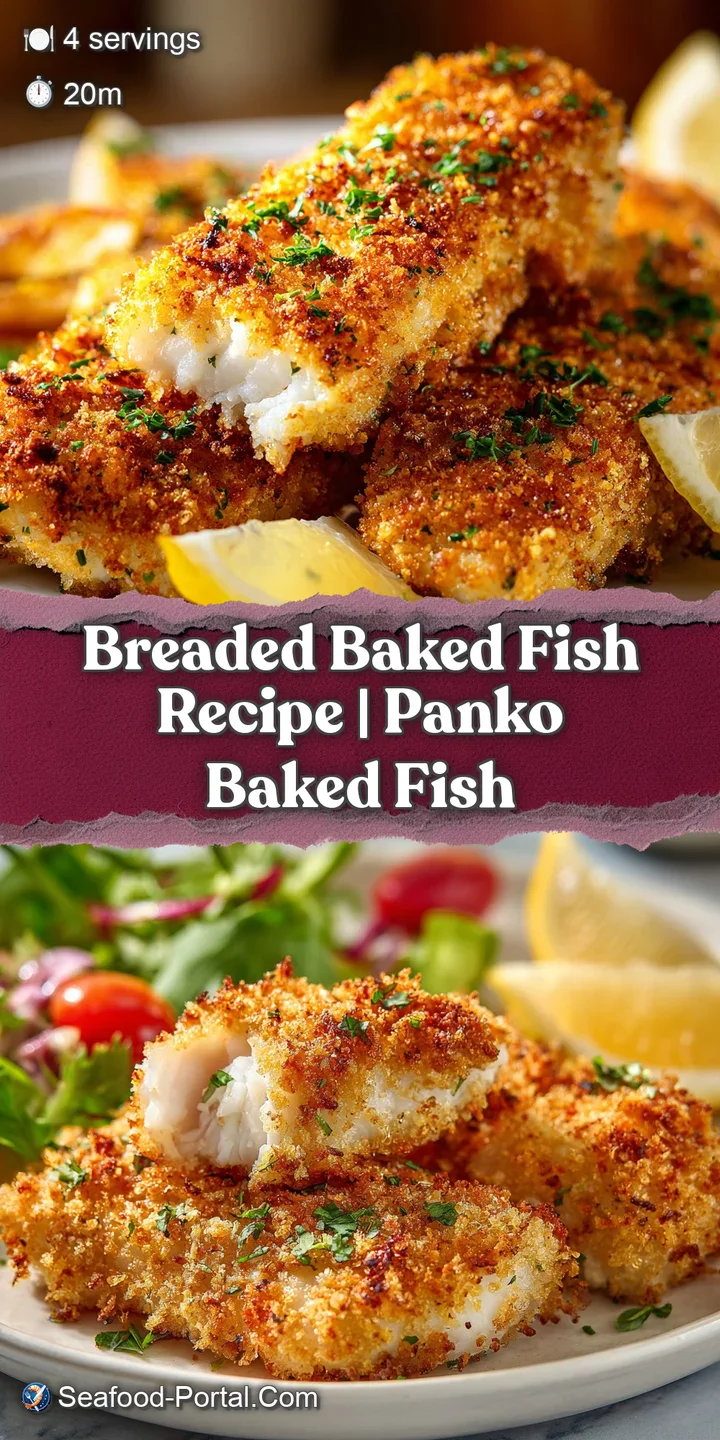
Recipe FAQs
How long should breaded fish be in the oven?
About 10-12 minutes. This is typically enough time for the fish to cook through and the breading to become golden brown and crispy, especially at a high oven temperature of 425°F. Keep an eye on it as cooking times can vary based on fillet thickness.
How to make breadcrumbs for fish in the oven?
Toast panko breadcrumbs with oil and seasonings. In a skillet, toast 1.5 cups of panko with 2 tablespoons of olive oil, 1/4 cup grated Parmesan cheese, 1 teaspoon smoked paprika, and 1 teaspoon garlic powder for about 3 minutes until golden and nutty. This pre-toasting ensures maximum crunch.
How do I get breadcrumbs to stick to fish?
Use a fat-based binder like mayonnaise. Brush a thin layer of mayonnaise evenly over the dry fish fillets, then firmly press the toasted panko mixture onto the coated fish until no fish is visible. The fat in the mayo creates a surface that the breadcrumbs adhere to exceptionally well.
Do you bake fish covered or uncovered in the oven?
Uncovered, on a wire rack. Baking uncovered allows the heat to circulate evenly, promoting crispiness on all sides of the breading. Placing the fish on a wire rack set over a baking sheet prevents the bottom from becoming soggy by allowing steam to escape.
Can I use frozen fish for this recipe?
Yes, but thaw and dry it thoroughly first. While fresh fish is ideal, frozen fish can be used if completely thawed. Ensure you pat it exceptionally dry with paper towels before applying the binder and breadcrumbs, as any residual moisture will hinder crispiness.
What is the secret to crispy breading on baked fish?
Pre-toasting the panko and using a fat-based binder. Toasting the panko breadcrumbs beforehand initiates the browning process, and using mayonnaise as the binder creates a barrier that prevents moisture from the fish from making the coating soggy. If you enjoyed controlling the texture here, see how the same principles of fat-based binding for crispiness apply in our Tartar Sauce Recipe: Easy Homemade Sauce for Fried Fish.
What type of fish works best for breaded and baked?
Sturdy white fish fillets are best. Cod, haddock, or tilapia are excellent choices because they hold their shape well under the breading and don't fall apart easily during baking. For a different texture and flavor profile, explore how similar techniques can be applied to Pan Seared Salmon: Ultra Crispy Skin Lemon Butter Sauce Recipe.
Breaded Baked Fish
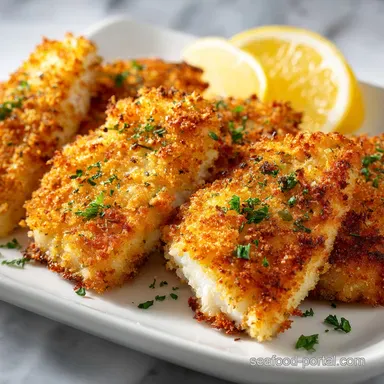
Ingredients:
Instructions:
Nutrition Facts:
| Calories | 449 kcal |
|---|---|
| Protein | 35.3 g |
| Fat | 25.0 g |
| Carbs | 17.6 g |
| Fiber | 1.1 g |
| Sugar | 1.2 g |
| Sodium | 585 mg |
