Sesame Seared Tuna Recipe
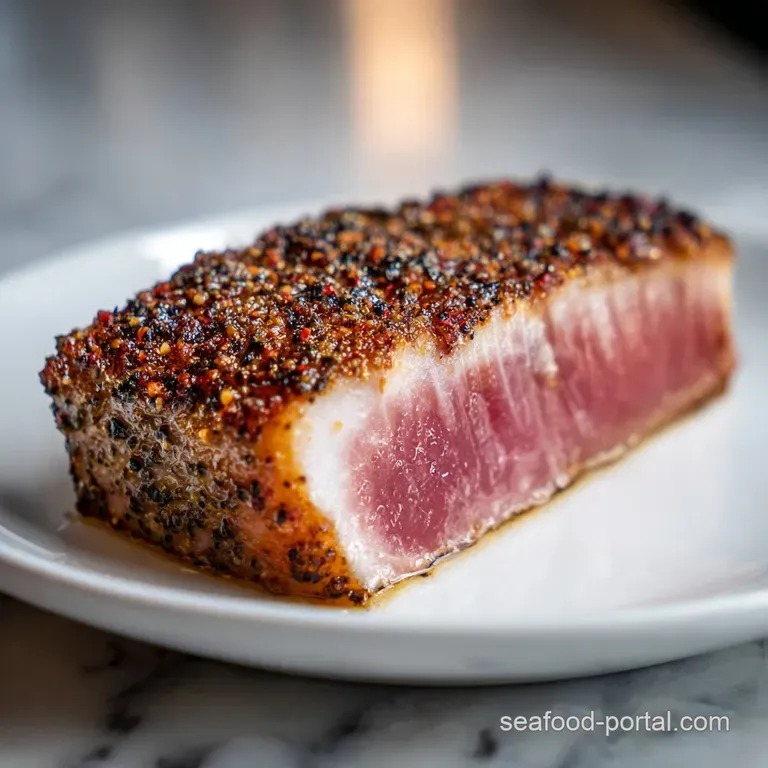
- Time: Active 10 mins, Passive 2 mins, Total 12 mins
- Flavor/Texture Hook: Nutty, toasted crunch with a silky, cool interior
- Perfect for: Impressive date nights or high protein post workout meals
- The Science of Flash Searing Success
- Vital Specs for Kitchen Success
- Essential Components for Umami Depth
- Ingredients and Smart Substitutes
- Proper Tools for Searing Fish
- Precise Steps for Flash Searing
- Fixing Common Seared Tuna Mistakes
- Creative Flavor and Texture Swaps
- Keeping Your Leftover Tuna Fresh
- Best Ways to Plate Fish
- Very High in Sodium
- Recipe FAQs
- 📝 Recipe Card
The Science of Flash Searing Success
Thermal Inertia: A thick, 1.5 inch steak provides enough mass to resist heat penetration, keeping the center cool while the outside browns.
Seed Carbonization: Sesame seeds contain oils that toast rapidly, creating a fragrant, structural "shield" that adds crunch before the fish proteins can over tighten.
Surface Desiccation: Removing every drop of surface moisture allows the oil to instantly reach 400°F, ensuring the Maillard reaction happens in seconds rather than minutes.
| Steak Thickness | Internal Temp | Rest Time | Visual Cue |
|---|---|---|---|
| 1 inch | 115°F (Rare) | 2 mins | Pink edges, deep red core |
| 1.5 inches | 120°F (Rare) | 3 mins | 1/8 inch grey band only |
| 2 inches | 125°F (Med Rare) | 4 mins | Warm center, translucent core |
If you find yourself craving more raw preparations after mastering this, you might enjoy the clean flavors found in a Proper Ahi Tuna recipe. The contrast between the marinated raw cubes in poke and the over high heat crust we are building here is a great way to see how versatile this fish really is.
Vital Specs for Kitchen Success
When we talk about "success" with a seared tuna recipe, we are looking for three specific things: a dry surface, a heavy pan, and high smoke point oil. I always reach for my cast iron skillet for this. It holds heat like a champion, meaning when the cold tuna hits the pan, the temperature does not plummet.
If you use a thin non stick pan, you will likely end up steaming the fish instead of searing it.
Another thing I learned the hard way: do not use olive oil. It will smoke and turn bitter before it gets hot enough to toast those sesame seeds. Use avocado oil or another neutral oil with a high smoke point. Also, keep your lime juice and soy sauce separate until the very end.
Adding liquid to the pan during the sear is the fastest way to lose that "shatter" texture we are aiming for.
Essential Components for Umami Depth
- 2 Ahi (Yellowfin) tuna steaks: 6 oz each, at least 1.5 inches thick. Why this? Thickness is insurance against overcooking the delicate center.
- 1 tbsp Avocado oil: High smoke point. Why this? Prevents acrid, burnt flavors during the over high heat flash sear.
- 1 tsp Coarse Kosher salt: For surface seasoning. Why this? Larger grains provide a better crust than fine table salt.
- 1 tsp Cracked black pepper: Floral heat.
- 2 tbsp White sesame seeds: Toasted flavor.
- 1 tbsp Black sesame seeds: Visual contrast and earthiness.
- 1/2 tsp Garlic powder: Savory base layer.
- 2 tbsp Low sodium soy sauce: The salt element for the sauce.
- 1 tbsp Fresh lime juice: Bright acidity to cut the fat.
- 1 tsp Toasted sesame oil: Deep, nutty aroma for the drizzle.
- 1/2 tsp Wasabi paste: Pungent heat.
- 1 tsp Grated fresh ginger: Zesty, spicy top notes.
| Component | Science Role | Pro Secret |
|---|---|---|
| Ahi Tuna | Myoglobin rich protein | Pat dry with paper towels twice to ensure a crust |
| Sesame Seeds | Lipid rich coating | Press firmly into the flesh so they don't fall off |
| Lime Juice | Acidic denaturant | Adds "brightness" that balances the heavy tuna fats |
The relationship between the fat in the tuna and the acid in the lime is what makes this dish feel light rather than heavy. It is a classic pairing that works every time.
Ingredients and Smart Substitutes
I always tell people to buy the best tuna they can afford. Look for "Saku" blocks or sushi grade loins that are deep red, almost purple, with no brown spots. If you can't find Ahi, Albacore works, but it is much leaner and will dry out faster, so you have to be even quicker with the sear.
| Original Ingredient | Substitute | Why It Works |
|---|---|---|
| Avocado Oil | Grapeseed Oil | Similar high smoke point and neutral flavor profile |
| White Sesame Seeds | Crushed Macadamias | Adds a fatty, tropical crunch. Note: Different flavor profile |
| Wasabi Paste | Horseradish | Provides a similar nasal clearing heat and pungency |
| Soy Sauce | Tamari | Keeps the dish gluten-free with the same salty umami |
If you are a fan of these bold, Asian inspired flavors, you should definitely look at my Tuna Tataki FlashSeared recipe. It uses a very similar searing method but focuses on a citrus forward ponzu sauce that is absolutely incredible for summer dining.
Proper Tools for Searing Fish
You don't need a kitchen full of gadgets, but a few specific items will make your life much easier. First, a heavy bottomed skillet is mandatory. Cast iron is the gold standard, but a heavy stainless steel pan (like an All Clad) also works.
Avoid air fryers or baking for this specific result, as they cannot provide the immediate conductive heat needed for a 60 second sear.
You will also want a set of sturdy tongs. You need to be able to flip the tuna and hold it on its sides to sear the edges. A small whisk or even just a fork is fine for the sauce, and a microplane is the best way to get that fresh ginger into a fine paste. Finally,, a very sharp knife is essential for slicing.
If your knife is dull, it will tear the beautiful crust right off the fish as you cut it.
Precise Steps for Flash Searing
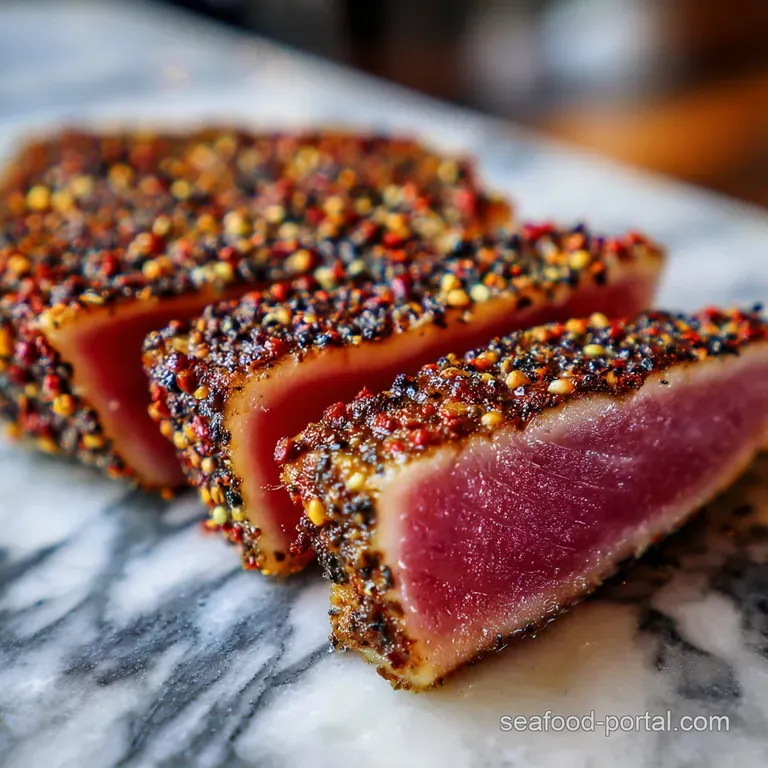
- Dry the fish. Pat the tuna steaks with paper towels on all sides until bone dry. Note: Surface moisture creates steam, which prevents a crispy crust.
- Mix the coating. Combine white seeds, black seeds, salt, pepper, and garlic powder on a flat plate.
- Crust the tuna. Press each side of the tuna firmly into the seed mixture. until completely coated.
- Prepare the sauce. Whisk soy sauce, lime juice, sesame oil, wasabi, and ginger in a small bowl.
- Heat the pan. Add avocado oil to the skillet over high heat until the oil shimmers and barely smokes.
- Start the sear. Place tuna in the pan carefully. until you hear a loud, constant sizzle.
- Flip the steaks. Cook for exactly 45-60 seconds per side until the seeds are golden brown.
- Sear the edges. Use tongs to hold the steaks upright, searing the thin sides for 15 seconds each.
- Rest the protein. Move the tuna to a cutting board and let it sit for 2-3 minutes. Note: This allows heat to stabilize without overcooking the core.
- Slice and serve. Cut into 1/2 inch thick slices using a long, smooth drawing motion with your knife.
Chef's Tip: If you are worried about the seeds burning, you can lightly mist the tuna with oil before pressing it into the seeds. This helps the seeds "fry" rather than just toast against the dry pan.
Fixing Common Seared Tuna Mistakes
The most common heartbreak is the "grey band." This happens when the heat is too low, forcing you to leave the fish in the pan longer to get color, which eventually cooks the middle. If your tuna looks like a cooked hamburger in the center, your pan wasn't hot enough.
On the flip side, if the seeds are black and bitter, your oil reached its flash point too early.
Why Your Crust Is Falling Off
If the sesame seeds are ending up in the pan instead of on the fish, it usually means the tuna wasn't pressed firmly enough into the coating, or the pan wasn't lubricated enough. The seeds need a little bit of fat to "bond" to the protein as they toast.
| Problem | Root Cause | Solution |
|---|---|---|
| Seeds are falling off | Surface was too dry or not pressed | Press seeds into the fish firmly; use a tiny bit of oil on the flesh |
| Fish is tough/grey | Overcooked by slow heat | Use a heavier pan and much higher heat for a shorter time |
| Sauce is too salty | Too much soy or no acid | Add an extra squeeze of lime or a teaspoon of honey to balance |
Common Mistakes Checklist
- ✓ Skipping the "pat dry" step (results in a soggy, grey exterior)
- ✓ Using a non stick pan (cannot get hot enough for a proper crust)
- ✓ Fiddling with the fish too much (let it sit undisturbed for the full 60 seconds)
- ✓ Slicing immediately (the crust will shatter and fall apart)
- ✓ Using "previously frozen" tuna that hasn't been drained of its liquid properly
Creative Flavor and Texture Swaps
If you want to move away from the sesame crust, you can try a "Blackened" version using Cajun spices. The high heat works beautifully with paprika and cayenne. Just be aware that spices burn much faster than seeds, so you might need to drop the cook time by 10 seconds.
Forging a Togarashi Kick
For those who love heat, replace half of the black pepper with Shichimi Togarashi. This Japanese spice blend adds nori, orange peel, and chili flakes, which provides a much more complex "background" heat to the seared tuna recipe.
Swapping for a Citrus Herb Rub
If you want something fresher, skip the seeds and use a mix of lemon zest, cracked fennel seeds, and dried oregano. This gives the tuna a Mediterranean vibe that pairs beautifully with a side of roasted tomatoes or a light arugula salad.
- For a crunchier bite
- Mix in some panko breadcrumbs with the sesame seeds.
- For a sweeter finish
- Add a teaspoon of brown sugar to the dry rub (watch closely, as sugar burns fast!).
- For a smoky flavor
- Use smoked sea salt instead of regular kosher salt.
Keeping Your Leftover Tuna Fresh
Storage: Store any leftover seared tuna in an airtight container in the fridge for up to 2 days. Because the center is raw, you really don't want to push it past 48 hours. I actually prefer eating the leftovers cold, sliced thin on top of a salad or in a wrap.
Zero Waste: If you have small "end pieces" that are a bit more cooked through, don't toss them! Flake them into a bowl, mix with a little mayo and sriracha, and you have an incredible spicy tuna spread for crackers or toast.
Reheating: Honestly, don't do it. Reheating seared tuna in a microwave will turn the velvety center into a dry, rubbery block. If you absolutely must have it warm, give it a 15 second flash in a hot pan just to take the chill off. But trust me, cold seared tuna is a delicacy on its own.
Best Ways to Plate Fish
Presentation is half the battle with Ahi. I like to fan the slices out on a dark plate to make that bright pink color pop. Drizzle the wasabi lime shoyu right over the center of the slices, but leave the ends of the fish dry so the seeds stay crunchy.
- Ginger Soy Slaw
- A crunchy, acidic salad balances the richness of the fish.
- Smashed Cucumber Salad
- Cold, crisp, and refreshing with plenty of rice vinegar.
- Coconut Rice
- The creaminess of the rice acts as a perfect foil to the sharp wasabi sauce.
I usually finish the plate with some fresh scallions or a few sprigs of cilantro. It adds a bit of "life" to the dish and smells fantastic as you bring it to the table. This is one of those recipes that makes people think you spent all afternoon in the kitchen, but between us, we know it was just a few minutes of over high heat bravery.
Enjoy every bite!
Very High in Sodium
1525 mg mg of sodium per serving (66% of daily value)
The American Heart Association recommends limiting sodium intake to no more than 2,300mg per day for most adults. This recipe exceeds that recommendation.
Tips to Reduce Sodium in Your Ahi Tuna Recipe:
-
Reduce Soy Sauce-20%
Use 1 tbsp of low-sodium soy sauce instead of 2 tbsp. Soy sauce is a significant source of sodium in this recipe.
-
Decrease Added Salt-25%
Reduce the amount of coarse Kosher salt from 1 tsp to 1/2 tsp. Taste and adjust after cooking, if needed.
-
Spice it Up
Instead of salt, enhance the flavor with more cracked black pepper, fresh ginger, garlic, or a pinch of red pepper flakes.
-
Lime Boost-5%
Increase the amount of fresh lime juice from 1 tbsp to 2 tbsp. The acidity will add flavor and reduce the need for salt.
-
Fresh Herbs
Experiment with fresh herbs such as cilantro or chives to add flavor without adding sodium.
-
Omit Garlic Powder-5%
Garlic powder can contribute to the overall sodium levels. Opt to use fresh garlic or omit entirely for a slight reduction.
-
Skip Wasabi-5%
Consider skipping the wasabi paste or using it sparingly, as some brands contain added sodium. Alternatively, try a wasabi alternative, like horseradish.
Recipe FAQs
What is the best way to sear tuna?
Use extremely high heat in a heavy pan. Heat your cast iron or stainless steel skillet until the oil shimmers right before smoking, then sear the coated tuna for only 45 to 60 seconds per side.
Should you marinate tuna before searing?
No, avoid marinating the raw fish. Marinating adds moisture, which prevents the high heat from creating the desired crust; instead, apply a dry coating just before searing.
Should I sear tuna in butter or oil?
Use a high smoke point oil like avocado or grapeseed. Butter burns quickly at the necessary searing temperatures, leading to bitter, scorched flavors on your crust.
What to put on seared tuna?
Use a sharp, acidic, and savory sauce to complement the rich fish. A simple mixture of soy sauce, fresh lime juice, ginger, and wasabi creates a perfect finishing drizzle.
How long should I cook seared tuna steaks?
Cook for 45 to 60 seconds per side for rare, thick steaks. You are looking for a quick crust formation, aiming for an internal temperature around 115°F; the time depends heavily on the thickness of your cut.
Is it true that I must use sushi grade tuna for searing?
Yes, always use sushi or sashimi grade tuna for searing. Since the center remains raw, you must ensure the fish has been handled and stored appropriately to mitigate any safety risks associated with uncooked proteins.
How to ensure my sesame seed crust adheres during searing?
Press the coating firmly onto the tuna immediately after patting the fish dry. Ensure all sides are completely coated, and if you are worried about adhesion, lightly brush the fish with oil before applying the seed mixture.
Sesame Seared Tuna Recipe
Ingredients:
Instructions:
Nutrition Facts:
| Calories | 361 kcal |
|---|---|
| Protein | 45g |
| Fat | 17g |
| Carbs | 6g |
| Fiber | 2g |
| Sugar | 1g |
| Sodium | 1525mg |
