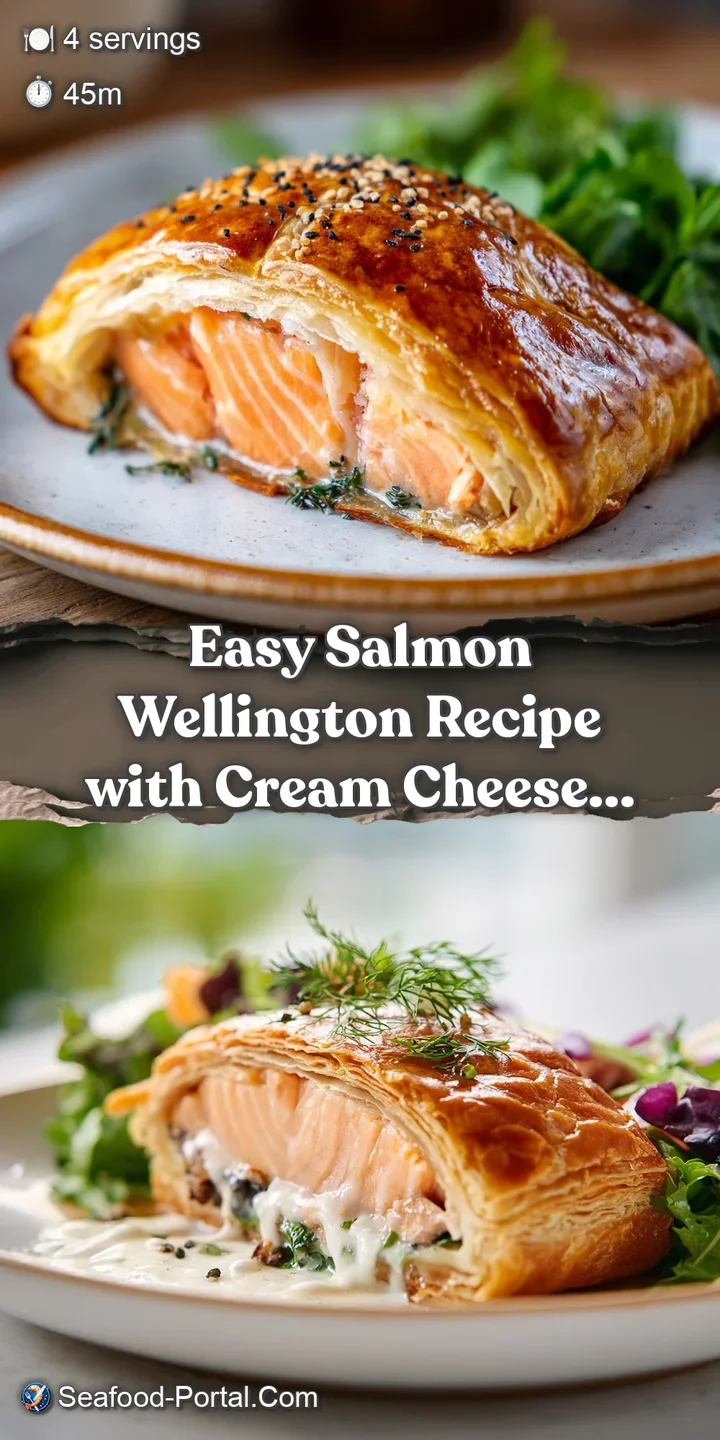
Salmon Wellington Recipe with Cream Cheese
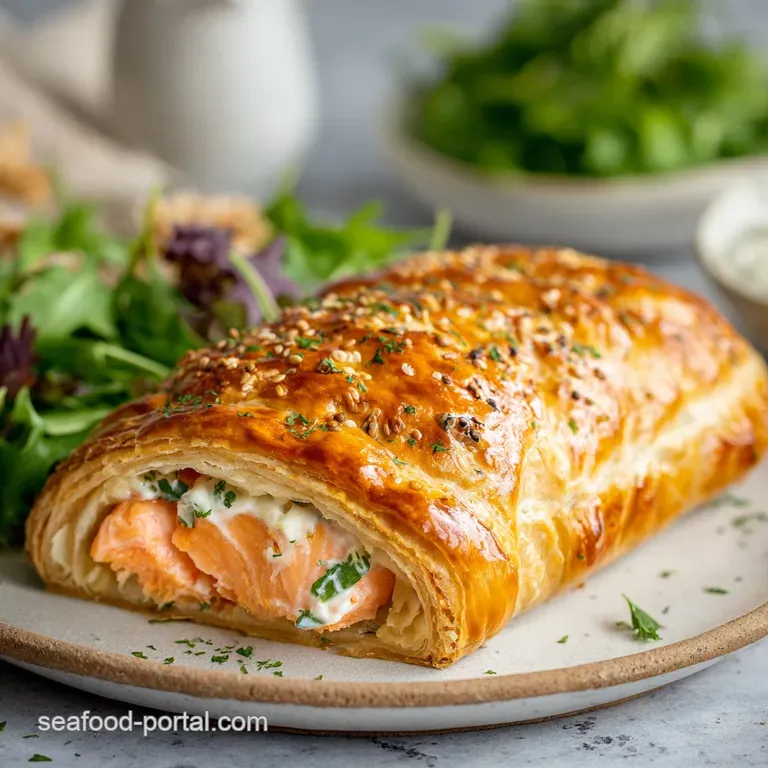
- Time: Active 20 minutes, Passive 25 minutes, Total 45 minutes
- Flavor/Texture Hook: Shatter crisp pastry and silky salmon
- Perfect for: Intimate date nights or festive holiday dinners
- Essential Timing and Serving Metrics
- The Physics of the Steam Barrier
- Component Analysis for Optimal Flavor
- Necessary Gear for Better Baking
- Precision Technique for Perfect Assembly
- Fixing Common Pastry Baking Errors
- Smart Swaps for Dietary Needs
- Maintaining Texture During Cold Storage
- Ideal Pairings for Rich Seafood
- Recipe FAQs
- 📝 Recipe Card
The first time I attempted a salmon wellington recipe, it was a total disaster. I was so excited about that golden crust that I ignored the moisture hiding in the spinach. When I pulled it out of the oven, the top looked beautiful, but the bottom was a literal sponge of greyish water.
I remember the sound of my fork hitting it not a crisp "shatter," but a sad, wet thud. It was a humbling moment that sent me back to the drawing board to figure out how to keep that pastry dry.
Since then, I've obsessed over the "dry seal" method. You want to walk into the kitchen and smell that rich, toasty aroma of browning butter, not steaming fish. Now, when I pull this out of the oven, the sizzle of the fat against the baking sheet tells me everything I need to know.
It’s a dish that feels fancy, but once you understand the trick to managing the moisture, it’s actually quite straightforward. We've all been there with the soggy bottoms, but those days are over for you.
Essential Timing and Serving Metrics
One of the biggest hurdles is knowing exactly when the fish is done without cutting into your beautiful lattice work. If you follow these visual and temperature cues, you'll get that translucent, tender center every single time. It's all about the thickness of your 600g center cut fillet.
| Thickness | Internal Temp | Rest Time | Visual Cue |
|---|---|---|---|
| 1 inch (2.5 cm) | 145°F (63°C) | 5 minutes | Pastry is deep mahogany brown |
| 1.5 inches (3.8 cm) | 145°F (63°C) | 8 minutes | Steam vents show clear juices |
| Individual cuts | 140°F (60°C) | 3 minutes | Edges are firm to touch |
Success depends on that resting period. If you slice it the second it leaves the oven, the velvety juices will run right out, and your pastry will lose its structural integrity. Let the carryover cooking do the heavy lifting while you get the sauce ready.
The Physics of the Steam Barrier
Hydration Control: By sautéing the spinach and then squeezing it through a kitchen towel, you remove the cellular water that would otherwise turn the puff pastry into a soggy mess.
The 150g of cream cheese then acts as a thermal insulator, preventing the salmon's natural oils from soaking directly into the dough.
Component Analysis for Optimal Flavor
Understanding how your ingredients interact is the difference between a good meal and one your friends will ask for every year. We are using specific components here to ensure the 600g of salmon stays protected during the over high heat bake.
| Ingredient | Science Role | Pro Secret |
|---|---|---|
| Puff Pastry | Steam leavened structure | Keep it ice cold until the very moment of wrapping |
| Cream Cheese | Moisture barrier/fat source | Use full fat only; low-fat has too much water |
| Lemon Zest | Acidic brightness | Zest directly over the fish to catch the oils |
| Fresh Spinach | Fiber and contrast | Squeeze until it feels like a dry ball of clay |
If you love these citrus and herb notes, this flavor profile is very similar to my Salmon with Herb recipe, which is a great weeknight alternative when you don't have puff pastry on hand.
Component Analysis for Optimal Flavor
This shopping list is focused on high impact ingredients. I always recommend getting the 600g center cut fillet because the uniform thickness ensures the tail doesn't overcook while the middle stays raw.
- 600g center cut salmon fillet: Why this? Uniform thickness ensures even cooking throughout the entire pastry wrap.
- Substitute: Steelhead trout (similar fat content and texture).
- 1 sheet puff pastry: Why this? Provides the iconic buttery, flaky layers through steam evaporation.
- Substitute: Phyllo dough (use 6-8 layers brushed with butter for crunch).
- 150g cream cheese: Why this? Creates a rich, velvety barrier between the wet spinach and dry pastry.
- Substitute: Thickened Boursin or goat cheese for extra tang.
- 2 cups fresh baby spinach: Why this? Adds an earthy flavor and vibrant color contrast to the pink fish.
- Substitute: Finely chopped kale (sauté longer to soften).
- 2 tbsp fresh dill: Why this? The classic aromatic partner for salmon; cuts through the rich fat.
- Substitute: Fresh parsley or fennel fronds.
- 1 lemon, zested and juiced: Why this? The acid balances the heavy cream cheese and buttery pastry.
- Substitute: 1 tbsp bottled lemon juice and a pinch of dried lemon peel.
- 1/2 cup crème fraîche: Why this? Bases our sauce with a cultured, slightly nutty acidity.
- Substitute: Full fat sour cream or Greek yogurt.
- 1 tbsp Dijon mustard: Why this? Adds a sharp "bite" to the sauce and helps emulsify it.
- Substitute: Whole grain mustard for added texture.
Necessary Gear for Better Baking
You don't need a professional kitchen, but a few specific tools make the assembly of this salmon wellington recipe much easier. I've found that using a chilled baking sheet actually helps the pastry bottom set before the butter starts to melt too quickly.
- Heavy Baking Sheet: A rimmed sheet prevents any stray juices from hitting your oven floor.
- Parchment Paper: Non negotiable for ensuring the bottom doesn't stick and tear.
- Offset Spatula: Perfect for spreading the 150g of cream cheese mixture without tearing the delicate fish.
- Pastry Brush: Essential for a thin, even egg wash that creates that lacquer like shine.
- Instant Read Thermometer: The only way to guarantee a 145°F center.
Precision Technique for Perfect Assembly
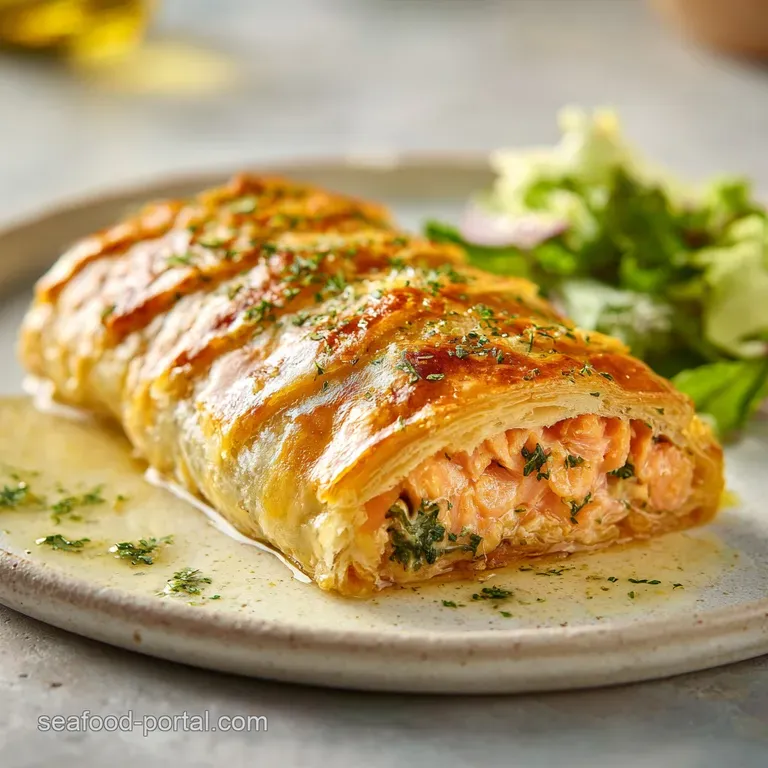
Let’s get into the process. The key here is temperature control keep your pastry cold and your spinach dry.
- Squeeze the spinach. Sauté 2 cups of baby spinach with the minced garlic, then place in a clean kitchen towel and wring it out over the sink. Note: You want it as dry as possible to prevent a soggy bottom.
- Mix the filling. Combine the 150g softened cream cheese, dried spinach, 2 tbsp dill, and lemon zest in a small bowl.
- Prep the fish. Pat the 600g salmon fillet completely dry with paper towels and season with 0.5 tsp salt and 0.25 tsp pepper.
- Roll the pastry. Lay the cold puff pastry on parchment paper and lightly roll it out so it's about 2 inches wider than your fish on all sides.
- Layer the flavors. Spread the cream cheese mixture in a rectangle on the pastry, then place the salmon directly on top.
- Seal the deal. Fold the pastry edges over the salmon, brushing with egg wash (1 egg beaten with 1 tbsp water) to act as glue.
- Flip and vent. Carefully flip the Wellington so the seam is on the bottom, then score the top with a sharp knife. Wait for the aroma of cold dough and fresh dill.
- Bake to gold. Bake at 400°F (200°C) for 25 minutes until the pastry is deep gold and the air smells like a French bakery.
- Whisk the sauce. While it rests, whisk the 1/2 cup crème fraîche, 1 tbsp Dijon, lemon juice, and 1 tbsp chives.
- Serve. Slice with a serrated knife to maintain the "shatter" of the crust.
Chef's Tip: If you have time, pop the fully assembled Wellington into the freezer for 10 minutes before it goes into the oven. This "shocks" the butter in the pastry, leading to a much higher rise and crispier layers.
Fixing Common Pastry Baking Errors
Even with a great plan, things happen. If your pastry is browning too fast but the fish is still cold, don't panic. Just tent the top loosely with foil to deflect the direct heat.
To Prevent the "Soggy Bottom"
This usually happens because of trapped steam. Make sure your oven is fully preheated to 400°F (200°C) before the Wellington goes in. A cold oven allows the butter to melt before the flour sets, leading to a greasy, flat crust.
To Avoid "The Great Leak"
If the cream cheese starts oozing out the sides, your seal wasn't tight enough. Use the tines of a fork to crimp the edges firmly, just like you would for a pie crust.
| Problem | Root Cause | Solution |
|---|---|---|
| Raw pastry inside | Oven too hot | Lower temp to 375°F and bake 5 mins longer |
| Dry salmon | Overcooked | Use a thermometer; pull at 140°F for carryover |
| Pale crust | Not enough egg wash | Brush generously and include the 1 tbsp water |
Common Mistakes Checklist
- ✓ Forgot to pat the salmon dry (creates steam inside the wrap).
- ✓ Using "spreadable" cream cheese tubs (too much moisture/oil).
- ✓ Skipping the vents on top (steam must escape or the pastry bursts).
- ✓ Slicing immediately (the juices will soak the bottom crust).
- ✓ Rolling the pastry too thin (it will tear during the flip).
Smart Swaps for Dietary Needs
If you're cooking for someone with specific needs, this dish is surprisingly adaptable. For another variation of the core flavor, check out my Crispy Skin Salmon recipe, which is naturally gluten-free if you skip the flour dusting.
- For Individual Portions: Cut the 600g salmon into four equal blocks and wrap them in smaller pastry squares. Reduce cook time to 18-20 minutes.
- For a dairy-free Alternative: Use a vegan cream cheese (cashew based works best) and brush the pastry with olive oil or almond milk instead of an egg wash.
- For High Impact Umami: Add 1 tsp of miso paste to the cream cheese mixture for a deep, savory richness that pairs beautifully with the fish.
Maintaining Texture During Cold Storage
Storage: Keep leftovers in an airtight container in the fridge for up to 2 days. The pastry will soften, but the flavor remains excellent.
Reheating: Avoid the microwave! It will turn your pastry into rubber. Instead, place slices in a 350°F (175°C) oven or air fryer for 8-10 minutes until the crust recrisps and the center is warm.
Freezing: You can freeze the unbaked Wellington for up to 2 months. Wrap it tightly in plastic wrap and then foil. Bake directly from frozen at 375°F (190°C) for 40-45 minutes.
Zero Waste Tip: Don't throw away those puff pastry scraps! Brush them with the remaining egg wash, sprinkle with cinnamon sugar or parmesan, and bake them alongside the Wellington for a quick "chef's snack."
Ideal Pairings for Rich Seafood
Because this salmon wellington recipe is quite rich and buttery, you want sides that offer contrast. Think bright, acidic, or crunchy.
- Roasted Asparagus: A quick toss in olive oil and lemon juice provides a snappy texture.
- Arugula Salad: The peppery bite of raw arugula with a simple vinaigrette cuts through the cream cheese.
- Honey Glazed Carrots: The sweetness complements the natural flavors of the salmon.
Debunking Kitchen Myths
One common myth is that you must sear the salmon before wrapping it. Please don't do this! Searing the fish first almost guarantees it will be overcooked and dry by the time the pastry is golden. The salmon cooks perfectly from raw inside its little pastry oven.
Another misconception is that you need a complicated lattice cutter for the top. A simple sharp knife used to score a diamond pattern looks just as professional and allows the steam to escape just as well.
If you enjoy this style of cooking, you might also want to try a Blackened Salmon with recipe for a completely different spice forward experience. Whatever path you choose, just remember: dry spinach is happy spinach!
Recipe FAQs
What is the difference between salmon en croute and wellington?
They are often used interchangeably, but Wellington implies a specific rich filling. Salmon en Croute simply means salmon baked in pastry, but Wellington traditionally requires a duxelles (mushroom paste) or, in this case, a rich, binding barrier like spinach and cream cheese.
What is the salmon version of Wellington?
Salmon Wellington is the direct equivalent to the classic Beef Wellington. It substitutes the beef tenderloin with a large salmon fillet, usually encased in a moisture blocking layer like the spinach cream cheese mixture we use here.
What sauce for Salmon Wellington?
A light, acidic sauce cuts the richness of the pastry perfectly. A classic pairing is a creamy lemon dill sauce, often using crème fraîche or heavy cream to maintain a velvety texture that complements the fish beautifully.
What kind of salmon is best for Wellington?
A thick, center cut fillet of King (Chinook) or Atlantic salmon is ideal. You need a fillet that is uniform in thickness (about 1.5 inches) so it cooks evenly by the time the puff pastry is golden brown.
Do I need to sear the salmon before wrapping it in pastry?
No, searing is generally discouraged for Wellington style baking. Searing adds an unnecessary layer of complexity and moisture risk; the salmon cooks perfectly from raw inside the pastry shell, provided your oven temperature is hot enough (400°F).
How do I prevent the bottom crust from getting soggy?
Eliminate all excess moisture from your filling components first. You must thoroughly sauté the spinach to remove water and squeeze it completely dry before mixing it with the cream cheese binder, which acts as the ultimate moisture shield.
Can I use frozen salmon for this recipe?
No, stick with fresh or fully thawed, patted dry salmon. Frozen salmon releases excessive water during thawing and cooking, which will guarantee a soggy bottom, ruining the structural integrity you need for a successful Wellington.
Salmon Wellington Recipe
Ingredients:
Instructions:
Nutrition Facts:
| Calories | 872 kcal |
|---|---|
| Protein | 42g |
| Fat | 62g |
| Carbs | 31g |
| Fiber | 2g |
| Sugar | 3g |
| Sodium | 640mg |
