Baked Salmon Asparagus Foil Packs Recipe
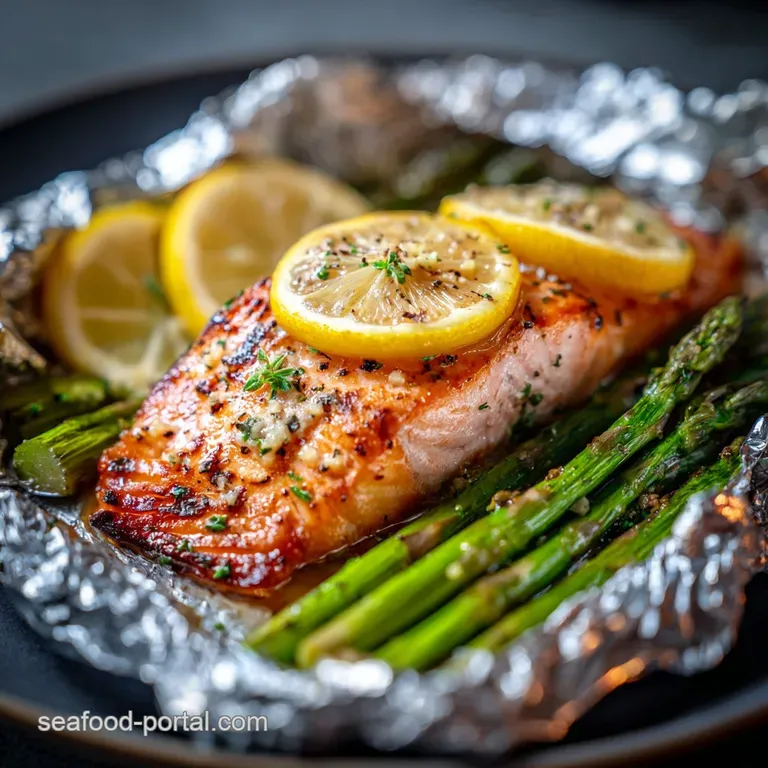
- Time: Active 10 minutes, Passive 15 minutes, Total 25 minutes
- Flavor/Texture Hook: Flaky, buttery salmon with snap tender asparagus
- Perfect for: Busy weeknight dinners or healthy meal prep for beginners
- Harnessing Steam for This Baked Salmon Asparagus Foil Packs Recipe
- Component Deep Dive and Selection Guide
- Selecting the Finest Ingredients for Your Foil Packs
- Simple Tools for a Mess Free Cooking Experience
- Mastering the Art of Building Flavor Layers
- Navigating Potential Pitfalls for Flaky Salmon Results
- Personalizing Your Baked Salmon Asparagus Foil Packs Recipe
- Strategic Storage and Repurposing Your Extra Portions
- Perfect Pairings to Round Out Your Meal
- Scaling Guidelines for Groups
- Recipe FAQs
- 📝 Recipe Card
Harnessing Steam for This Baked Salmon Asparagus Foil Packs Recipe
The real hero here isn't the oven it's the humidity. When you seal those packets tightly, you're creating a high pressure steam chamber that prevents the protein fibers in the salmon from tightening and drying out.
This method is much more forgiving than pan searing, where a thirty second delay can mean the difference between juicy and dry.
The Physics of the Pouch
Vapor Pressure Infusion: As the butter melts and the lemon juice heats, they turn into flavored steam that penetrates the porous surface of the salmon. This ensures the garlic and oregano flavors aren't just sitting on top but are actually integrated into the meat.
Synchronizing Cook Times
One of the trickiest parts of a "one pan" meal is ensuring the veg and the protein finish at the same time. Since we’re using 6 oz fillets, they need about 12 to 15 minutes.
By trimming the woody ends of 1 lb of fresh asparagus, we ensure the stalks are thin enough to reach that perfect "snap tender" state in that exact window. If you have jumbo asparagus, you might need to slice them lengthwise so they don't end up undercooked while the fish is done.
Maximizing Aromatic Infusion
Don't just sprinkle the garlic on top. By mixing the 3 cloves of minced garlic into the 3 tablespoons of melted unsalted butter first, you create a fat soluble flavor delivery system.
Fat carries flavor better than water or air, so that garlic butter mixture acts as a vehicle, coating every crevice of the fish and the asparagus.
| Thickness of Fillet | Internal Temperature | Rest Time | Visual Cue |
|---|---|---|---|
| 0.5 inch | 145°F | 2 minutes | Opaque throughout |
| 1 inch | 145°F | 3 minutes | Flakes easily with fork |
| 1.5 inches | 145°F | 5 minutes | Center is no longer translucent |
Choosing the right thickness is vital because it dictates how long you can keep that steam trapped before the fish begins to overcook. If you're working with thinner tail pieces, decrease the oven time by about 3 minutes to keep them from becoming tough.
Component Deep Dive and Selection Guide
| Ingredient | Science Role | Pro Secret |
|---|---|---|
| Salmon Fillets | Primary Protein | Room temp fish cooks more evenly than cold. |
| Unsalted Butter | Fat & Emulsifier | Use high-quality grass fed butter for a richer mouthfeel. |
| Fresh Lemon Juice | Acidic Brightener | Adds "top notes" that cut through the fish's fat. |
| Kosher Salt | Moisture Retention | Coarse grains dissolve slower, seasoning the meat deeply. |
I always reach for kosher salt specifically Diamond Crystal if I can find it because the hollow flakes stick better to the salmon's surface. Also, when it comes to the lemon, don't just use the juice.
The zest contains essential oils that provide a much more intense citrus aroma without adding extra liquid.
Selecting the Finest Ingredients for Your Foil Packs
You don't need a massive grocery list for this, but the quality of these few items makes or breaks the dish. Since we aren't using heavy sauces, the natural flavor of the salmon really shines through.
- 4 (6 oz) salmon fillets: Look for bright flesh and a firm texture. Why this? Even sizing ensures all four packets finish cooking at the same moment. (Substitute: Steelhead trout; it has a similar fat content and texture.)
- 1 lb fresh asparagus: Choose stalks that are firm, not limp. Why this? Asparagus provides a built in "rack" for the salmon to sit on. (Substitute: Thinly sliced zucchini or green beans.)
- 2 tsp extra virgin olive oil: Just enough to coat the greens. Why this? Prevents the asparagus from sticking to the foil before the butter melts. (Substitute: Avocado oil for a more neutral flavor.)
- 3 tbsp unsalted butter, melted: The base of our sauce. Why this? Butter provides a velvety finish that oil alone can't achieve. (Substitute: Ghee or a high-quality vegan butter.)
- 3 cloves garlic, minced: Essential for that classic aroma. Why this? Fresh garlic is significantly more pungent than the jarred stuff. (Substitute: 1 tsp garlic powder in a pinch.)
- 1 tbsp fresh lemon juice: For acidity. Why this? Reacts with the protein to keep it tender. (Substitute: White wine like Sauvignon Blanc.)
- 1 tsp lemon zest: For essential oils. Why this? Adds fragrance that survives the high heat of the oven. (Substitute: 0.5 tsp dried lemon peel.)
- 1 tsp dried oregano: For an earthy, herbal backbone. Why this? Dried herbs actually stand up better to the steaming process than fresh. (Substitute: Dried thyme or Italian seasoning.)
- 1 tsp kosher salt & 0.5 tsp black pepper: Fundamental seasoning. Why this? Enhances every other flavor in the packet. (Substitute: Sea salt or lemon pepper seasoning.)
- 1 lemon, thinly sliced: For presentation and extra infusion. Why this? The slices act as a heat shield for the top of the fish. (Substitute: Thinly sliced orange for a sweeter profile.)
- 2 tbsp fresh parsley, chopped: The final fresh touch. Why this? Adds a pop of color and a grassy finish. (Substitute: Fresh chives or dill.)
Chef's Tip: Freeze your butter for 10 minutes before melting it if you want it to have a slightly nuttier, "brown butter" aroma when it eventually hits the salmon in the oven.
Simple Tools for a Mess Free Cooking Experience
You really don't need much, which is the beauty of this meal. A standard 12 inch roll of heavy duty aluminum foil is your best friend here. Regular foil can tear easily, and if you get a leak, you lose all that precious steam.
I also suggest using a large rimmed baking sheet this isn't for the cooking itself, but to catch any accidental drips if a packet isn't sealed perfectly.
A small glass bowl for whisking the garlic butter is helpful, and a sharp chef’s knife for trimming the asparagus is a must. If you want to be precise (and I recommend you do!), keep an instant read thermometer nearby.
It’s the only way to be 100% sure the salmon has hit that magical 145°F mark without ripping every packet open to check.
Mastering the Art of Building Flavor Layers
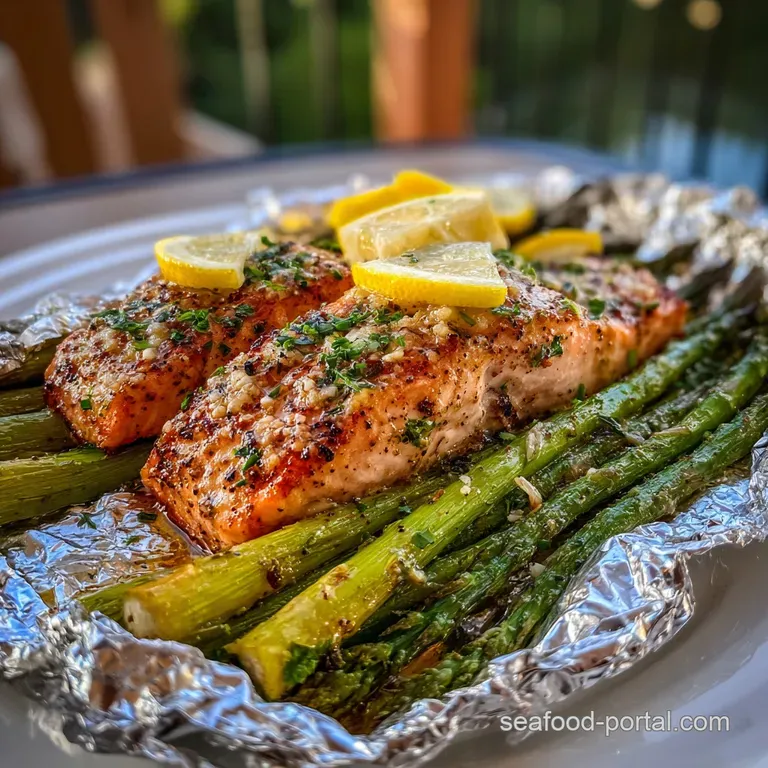
- Heat the oven. Set it to 400°F (200°C). Note: A hot oven ensures the steam creates quickly inside the packs.
- Prepare the foil. Cut four 12x12 inch squares of heavy duty aluminum foil.
- Oil the greens. Toss 1 lb of trimmed asparagus with 2 tsp olive oil and a pinch of salt. until evenly coated.
- Create the base. Divide the asparagus into four piles in the center of each foil sheet.
- Position the salmon. Place one 6 oz fillet on top of each asparagus bed. nestling it firmly.
- Whisk the sauce. Combine 3 tbsp melted butter, 3 cloves minced garlic, 1 tbsp lemon juice, 1 tsp zest, and 1 tsp oregano.
- Drizzle and season. Spoon the butter mixture over the fillets, then sprinkle with 1 tsp salt and 0.5 tsp pepper.
- Add lemon rounds. Place 2 slices of lemon on top of each seasoned fillet.
- Seal the packs. Fold the sides of the foil over the fish and crimp the edges tightly creating a leak proof tent.
- Bake the packs. Place on a baking sheet and cook for 15 minutes until the salmon is flaky and the packets are puffed.
Before serving, I like to let the packets sit for about 2 minutes. This allows the juices to redistribute so they don't all run out the second you tear the foil. When you finally open them, do it carefully the steam that rushes out is incredibly hot, but the smell is pure heaven.
Navigating Potential Pitfalls for Flaky Salmon Results
Even with a recipe this simple, things can go sideways. The most common issue is "the white stuff" that's albumin, a protein that pushes to the surface when salmon is cooked too fast or too high. It's totally safe to eat, but it usually means your fish is a bit overexposed to heat.
Avoiding the "Soggy Vegetable" Trap
Asparagus can turn into a grey, mushy mess if it sits in too much liquid for too long. To prevent this, make sure you aren't adding extra water to the packets. The moisture from the lemon juice and the fish itself is plenty.
Also, ensure your oven is fully preheated; if the packets heat up too slowly, the vegetables steam for too long before the fish is done.
Rescuing Overcooked Salmon
If you accidentally left them in for 20 minutes and the fish feels firm and dry, don't panic. The best fix is a fat heavy garnish. This is where extra Salmon Sauces recipe comes in handy. A quick dollop of Greek yogurt mixed with dill or even an extra drizzle of melted butter can mimic the moisture that was lost in the oven.
| Problem | Root Cause | Solution |
|---|---|---|
| Salmon is dry | Cooked too long | Check internal temp at 12 mins next time. |
| Leaking packets | Poorly crimped edges | Use heavy duty foil and double fold the seams. |
| Bland flavor | Not enough salt | Season both the asparagus AND the fish generously. |
For more tips on handling tricky fish situations, especially if you're starting with a block of ice, my Frozen Salmon Savior recipe has some life saving techniques.
Common Mistakes Checklist:
- ✓ Don't skip the lemon zest; it provides the "aroma" while the juice provides the "tartness."
- ✓ Avoid using "regular" foil if possible; heavy duty prevents accidental punctures from asparagus ends.
- ✓ Pat the salmon completely dry with a paper towel before adding the butter sauce to ensure it sticks.
- ✓ Give the garlic a full 5 minutes to sit after mincing before adding it to the butter; this activates the allicin for better flavor.
- ✓ Don't overcrowd the baking sheet leave space between the packs for air to circulate.
Personalizing Your Baked Salmon Asparagus Foil Packs Recipe
I love this recipe because it’s a blank canvas. If you're bored with the standard lemon garlic profile, you can easily pivot.
Swapping for a Mediterranean Vibe
Replace the oregano with dried basil and add a few halved cherry tomatoes and kalamata olives to the packet. The tomatoes will burst during the baking process, creating a light, jammy sauce that pairs beautifully with the asparagus. This version feels very similar to my Salmon in Foil recipe which uses a rich tomato base.
Incorporating a Spicy Kick
If you like heat, whisk 0.5 tsp of red pepper flakes or a teaspoon of Sriracha into the melted butter mixture. The steam will carry that spice throughout the entire packet. You could also swap the lemon for lime and use cilantro instead of parsley for a "Salmon Fajita" style pack.
| Fresh Version | Shortcut Version | Flavor Impact |
|---|---|---|
| Fresh Garlic Cloves | Jarred Minced Garlic | Fresh is sharper/sweeter; jarred can be bitter. |
| Fresh Lemon Juice | Bottled Lemon Juice | Bottled lacks the bright, floral notes of fresh zest. |
| Fresh Parsley | Dried Parsley | Dried parsley has almost no flavor; skip it if not fresh. |
Strategic Storage and Repurposing Your Extra Portions
You can keep these foil packs in the fridge for up to 3 days. I actually recommend keeping them in the foil if you can, just to keep the fish from drying out in the refrigerator air. When you're ready to eat, don't microwave them in the foil (for obvious reasons!).
Slide the contents onto a microwave safe plate and heat on 50% power.
For zero waste, those woody asparagus ends you trimmed off? Don't toss them! Toss them in a bag in the freezer. When the bag is full, simmer them with some onion scraps and peppercorns to make a light vegetable stock for risotto or soup.
If you have leftover salmon, it’s incredible the next day flaked over a cold grain bowl or mixed into a quick salmon salad with a little mayo and capers.
Perfect Pairings to Round Out Your Meal
Since this is a low carb, protein heavy dish, I usually like to serve it with something that can soak up any leftover garlic butter. A side of fluffy jasmine rice or some roasted baby potatoes works wonders.
If you're keeping things light, a simple cucumber salad with a vinegar based dressing provides a nice crunch to contrast the velvety salmon.
If you’re looking for a different texture entirely, you might enjoy my Pan Seared Salmon recipe which focuses on getting that ultra crispy skin that you just can't get in a foil pack. But for a meal that’s healthy, fast, and requires almost zero cleanup, nothing beats the convenience of the foil pack. It’s the ultimate "I don't feel like cooking" dinner that still tastes like a five star meal.
Scaling Guidelines for Groups
If you're cooking for one or two, this recipe is a dream. Just halve everything. You don't even need to change the cook time! However, if you're scaling up for a dinner party:
- Scaling Up (8-12 servings): Don't double the salt and spices exactly. Use about 1.5x the amount of salt and pepper, then taste the butter mixture before drizzling. You'll likely need to bake in batches unless you have a very large oven, as overcrowding the oven racks can lower the temperature and lead to uneven steaming.
- Scaling Down: You can easily make a single pack. Use a small toaster oven to save energy the cook time remains exactly the same.
Regardless of how many you make, the key is the seal. As long as that steam stays inside, you’re guaranteed a flavorful, moist result every single time. Happy cooking!
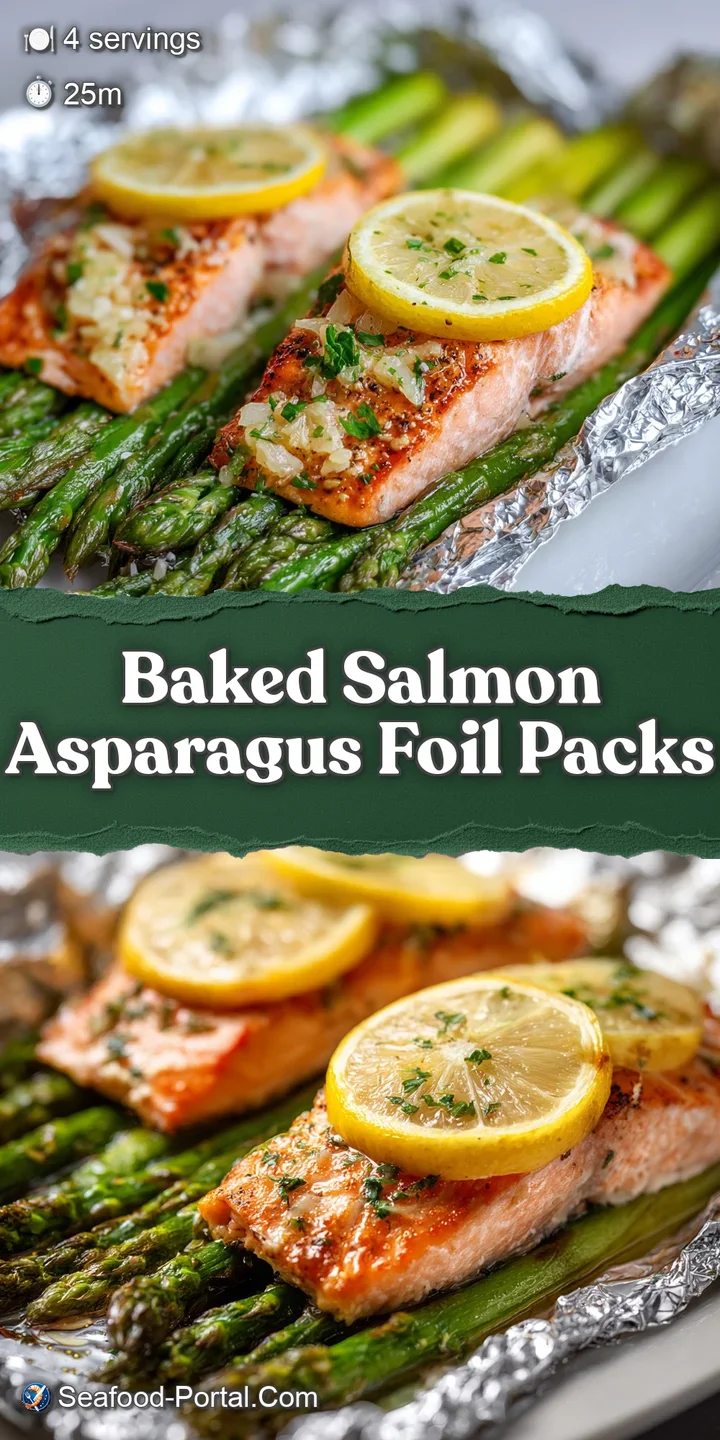
Recipe FAQs
Can you bake salmon in foil with asparagus?
Yes, this method is ideal. The foil traps steam released from the fish and vegetables, cooking them simultaneously in a moist, flavorful environment.
How long to cook salmon in foil package?
Bake for 12 to 15 minutes. This range ensures the salmon reaches the safe internal temperature of 145°F, depending on the thickness of your fillets.
Is it better to bake salmon at 350 or 400 in foil?
400°F is generally better for foil packs. A higher temperature ensures the foil creates steam quickly, which locks in moisture and cooks the asparagus properly.
What temperature to cook salmon and asparagus in the oven?
Set your oven to 400°F (200°C). This heat level balances the need to roast the asparagus slightly while keeping the salmon tender inside the sealed pouch.
How to prevent white protein (albumin) from oozing out of the salmon?
Cook the salmon just until it flakes easily. The white substance is safe, but excessive amounts indicate overcooking or cooking at too high a direct heat; aim for an internal temperature of 145°F.
What is the trick to ensuring the asparagus cooks fully in the same time as the fish?
Trim the asparagus stalks thinly and consistently. If you have very thick stalks, consider slicing them lengthwise before placing them under the fillet to match the cooking curve of the salmon, much like ensuring even heat transfer when mastering the Almondine Fish recipe.
Can I use herbs other than oregano in the foil pack?
Yes, feel free to substitute the herbs. If you prefer a bright, citrusy finish, swap the oregano for fresh dill, which pairs wonderfully with salmon and can be used in our Creamy Lemon Dill recipe.
Salmon Asparagus Foil Packs
Ingredients:
Instructions:
Nutrition Facts:
| Calories | 482 kcal |
|---|---|
| Protein | 37.3 g |
| Fat | 33.7 g |
| Carbs | 5.9 g |
| Fiber | 2.4 g |
| Sugar | 1.1 g |
| Sodium | 645 mg |
