Tuna on Salad Recipe with Lemon: Zesty & Crunchy
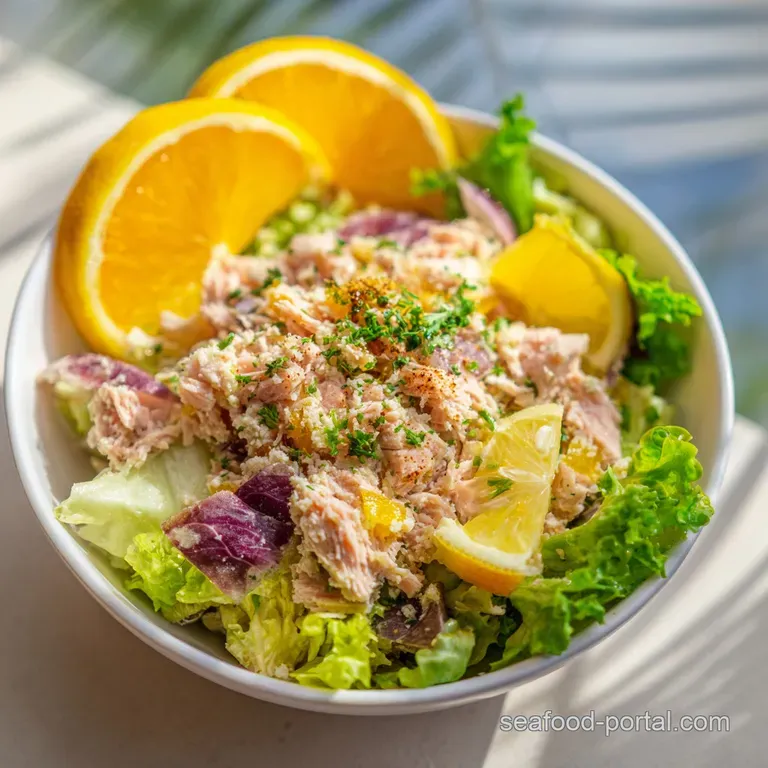
- Time: Active 10 minutes, Passive 0 minutes, Total 10 minutes
- Flavor/Texture Hook: Zesty, herbaceous, and incredibly crunchy
- Perfect for: Quick office lunches, meal prep, or a light summer dinner
- Vibrant Tuna on Salad Recipe with Lemon
- Science of Bright Flavor Layers
- Essential Prep and Texture Benchmarks
- Component Analysis for Peak Freshness
- Simple Tools for Better Texture
- Step by Step Texture Integration
- Solving Sogginess and Flavor Imbalance
- Global Twists on the Classic
- Preservation and Refreshing Leftover Greens
- Ideal Pairings for Light Lunches
- High in Sodium
- Recipe FAQs
- 📝 Recipe Card
Vibrant Tuna on Salad Recipe with Lemon
The sharp, citrusy mist from a freshly squeezed lemon hitting a bowl of flaked fish is one of those kitchen smells that instantly wakes up the senses. I remember the first time I moved away from the heavy, mayo laden scoops of my childhood and tried something lighter.
I had two cans of tuna, a half dead bunch of parsley, and a lemon that was rolling around the back of the crisper drawer. That makeshift lunch changed how I viewed "pantry meals" forever.
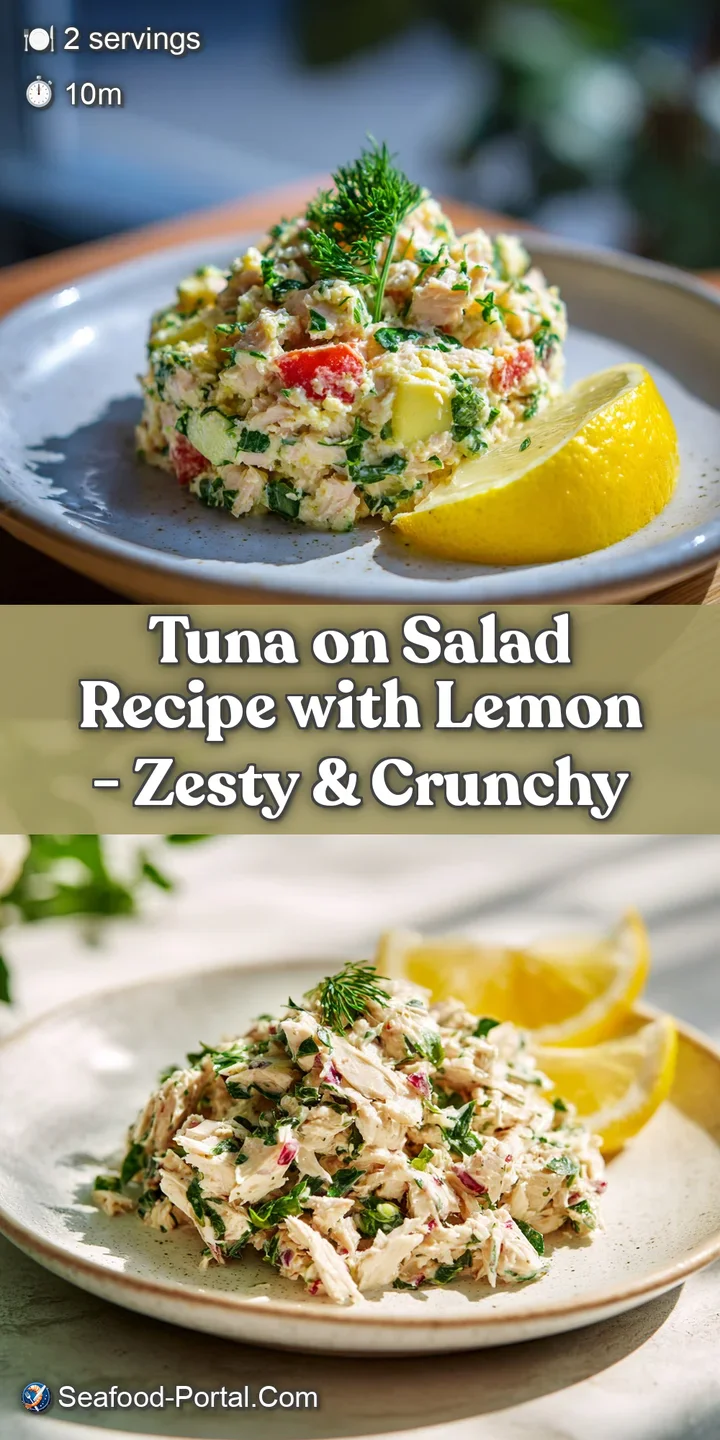
This Tuna on Salad Recipe with Lemon and Herbs offers a bright, flavorful lunch that's ready in minutes. It's about letting the actual ingredients speak for themselves rather than drowning them in a thick dressing.
We're looking for that specific shatter of a cold cucumber against the silky, protein rich flakes of albacore, tied together by a golden stream of extra virgin olive oil.
The secret isn't just in the ingredients, but in the order you introduce them. If you toss the greens too early, they'll wilt under the weight of the lemon juice. If you don't drain the tuna properly, the whole thing becomes a watery mess.
We're aiming for a salad that feels vibrant, clean, and restorative, not a soggy afterthought.
Science of Bright Flavor Layers
- Acid Induced Denaturation: The citric acid in the lemon juice slightly firms up the tuna proteins, creating a tighter, more "meaty" texture that holds up against the crunch of the vegetables.
- Emulsification Stability: Dijon mustard acts as a natural bridge between the oil and lemon juice, creating a velvety coating that clings to the leaves instead of sliding to the bottom of the bowl.
- Cellular Osmosis Control: Adding salt to the dressing rather than directly onto the cucumbers prevents them from releasing their water too quickly, which keeps the salad crisp for longer.
- Aromatic Infusion: The fat in the olive oil absorbs the essential oils from the fresh dill and parsley, carrying those herbal notes to every corner of your palate.
| Prep Path | Active Time | Resulting Texture | Best Outcome |
|---|---|---|---|
| Hand Flaked | 2 mins | Large, meaty chunks | Premium presentation |
| Fork Mashed | 1 min | Fine, uniform flakes | Sandwiches or wraps |
| Food Processor | 30 secs | Pâté like consistency | Dips and spreads |
There is a massive difference between tuna that has been obliterated into a paste and tuna that is gently broken into shards. For a salad base, we want the "Premium" path. Large chunks allow the dressing to coat the surface without making the fish feel mushy or heavy.
Essential Prep and Texture Benchmarks
Getting this right requires hitting three specific precision checkpoints. First, the weight of your tuna matters; we are using exactly 10 oz (two 5oz cans) of solid white albacore. Second, the temperature of your greens should be ice cold pull them from the fridge only when you are ready to plate.
Finally, the "drain factor" is non negotiable. You want that tuna as dry as possible before the oil hits it.
| Source Material | Preparation Need | Flavor Impact | Cost Impact |
|---|---|---|---|
| Canned Albacore | Drain thoroughly | Mild, clean, firm | Very affordable |
| Jarred Ventresca | Use oil from jar | Rich, buttery, silky | Premium price |
| Seared Fresh Tuna | Chill then flake | Steak like, savory | Highest cost |
Choosing your fish determines the soul of the dish. While fresh seared tuna is a luxury, a high-quality canned albacore provides a consistent, flaky texture that works brilliantly with the sharp Dijon and lemon. If you find yourself wanting a more traditional texture, you might find my Classic Tuna Salad Recipe hits that nostalgic spot with a slightly different herb profile.
Component Analysis for Peak Freshness
Ingredient Deep Dive
| Component | Science Role | Pro Secret |
|---|---|---|
| Extra Virgin Olive Oil | Fat carrier for flavor | Use a peppery finishing oil for extra kick |
| Fresh Lemon Zest | High note aromatics | Only grate the yellow part; the white pith is bitter |
| Dijon Mustard | Emulsifying agent | Whisk into the lemon juice before adding oil |
| Solid White Albacore | Primary protein structure | Look for "pole and line caught" for better flake integrity |
You'll need exactly 3 tbsp of extra virgin olive oil to get the right mouthfeel. Anything less and the salad feels astringent; anything more and it becomes greasy. For the citrus, use 2 tbsp of freshly squeezed lemon juice avoid the bottled stuff, as it lacks the volatile oils that give this dish its zing.
The crunch comes from 1/2 cup of diced English cucumber and 1 stalk of diced celery. I prefer English cucumbers because the skin is thin and the seeds are negligible, meaning they won't water down your dressing.
Mix in 1/4 cup of very finely minced red onion and a handful of fresh Italian flat leaf parsley (1/4 cup) and fresh dill (2 tbsp).
Smart Substitutions
- Extra Virgin Olive Oil: Avocado oil. It has a similarly high fat content but a much more neutral flavor profile.
- Lemon Juice: White wine vinegar. It provides a sharp acidity, though you'll miss the specific floral notes of the lemon zest.
- Dijon Mustard: Stone ground mustard. It adds a rustic, seedy texture while performing the same emulsifying job.
- English Cucumber: Persian cucumbers. These are moisture rich but much smaller, so you'll need about three of them.
- Red Onion: Shallots. These offer a more delicate, garlicky sweetness that won't linger as long on your breath.
- Mixed Baby Greens: Arugula. This adds a peppery bite that stands up well to the lemon and herbs.
Simple Tools for Better Texture
You don't need a high end kitchen to pull this off, but a few specific tools make the job easier. A microplane is essential for getting that 1 tsp of fine lemon zest without the bitter pith.
A glass mason jar is actually my favorite way to make the dressing you can shake it vigorously to ensure the Dijon, oil, and 1/2 tsp of sea salt are perfectly combined.
A sharp chef's knife is non negotiable for the 1/4 cup of red onion. You want it minced so finely it almost disappears into the tuna, providing flavor without the jarring crunch of a large onion chunk.
Finally, a large stainless steel bowl gives you enough room to toss the 4 cups of mixed baby greens without bruising the delicate leaves.
step-by-step Texture Integration
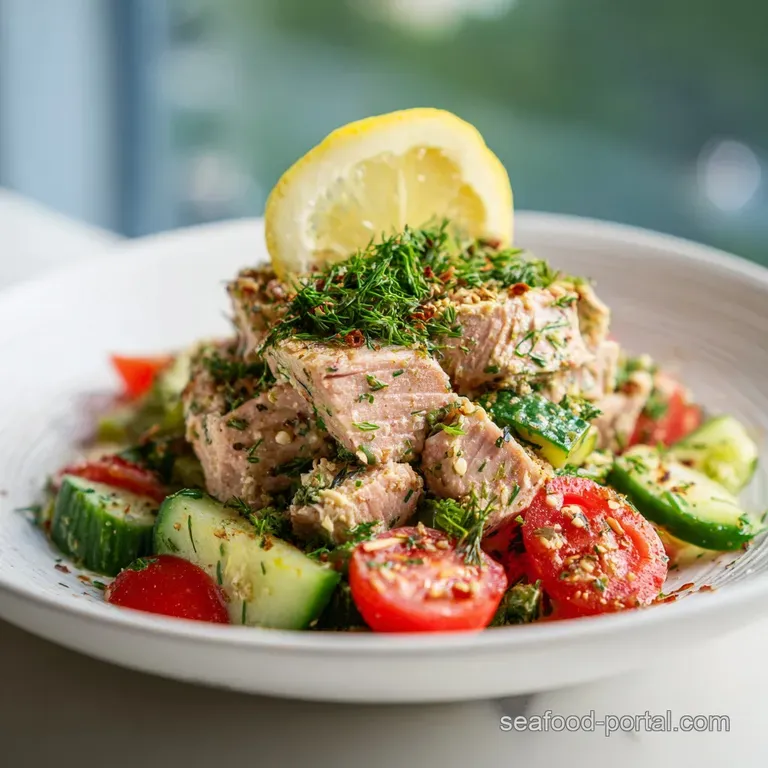
Emulsify the Zesty Dressing
In a small bowl or jar, combine the 3 tbsp extra virgin olive oil, 2 tbsp lemon juice, 1 tsp zest, 1 tsp Dijon, 1/2 tsp sea salt, and 1/4 tsp cracked black pepper. Whisk or shake until the mixture looks opaque and slightly thickened. Note: This ensures the fat and acid won't separate on the leaves.
Flake and Infuse
Open the two 5oz cans of tuna and drain them completely by pressing the lid into the can. Transfer the tuna to a medium bowl and use a fork to break it into large shards. Pour half of the dressing over the tuna and toss gently.
Note: Letting the fish marinate for just 2 minutes helps the salt and acid penetrate the protein.
Add the Crunch
Fold in the 1/2 cup diced cucumber, 1/4 cup minced red onion, 1 stalk of diced celery, 1/4 cup chopped parsley, and 2 tbsp minced dill. Stir gently to combine. Wait until the herbs are fully coated and fragrant before moving to the final assembly.
The Final Assembly
Place the 4 cups of baby greens in a large bowl. Drizzle with the remaining dressing and toss lightly with your hands or tongs. Stop when the leaves look glossy but not heavy.
Plate and Garnish
Divide the dressed greens between two plates. Top each with a generous mound of the tuna mixture. Finish with an extra crack of black pepper or a tiny pinch of sea salt. Serve immediately while the greens are still lofted and crisp.
Solving Sogginess and Flavor Imbalance
Managing High Moisture Vegetable Runoff
If your salad ends up in a pool of water, it's usually because the cucumbers or tuna weren't dry enough. The salt in the dressing draws moisture out of vegetables over time. If you aren't eating immediately, keep the vegetables and the dressing separate.
Balancing Intense Zest and Pith
Sometimes a lemon can be overly bitter. This happens if you grate too deep into the white pith or if the lemon is underripe. To fix this, add a tiny pinch of sugar or a drop of honey to the dressing. It doesn't make it sweet; it just rounds off the sharp edges.
| Problem | Cause | Solution |
|---|---|---|
| Wilted Greens | Dressing added too early | Dress the leaves only seconds before serving |
| Bland Flavor | Not enough salt/acid | Add an extra squeeze of lemon and a pinch of salt |
| Fishy Aftertaste | Poorly drained tuna | Press the tuna until no liquid remains in the can |
Chef's Tip: If your red onion feels too aggressive, soak the minced pieces in cold water for 5 minutes, then drain and pat dry. This removes the sulfurous "bite" while keeping the flavor.
Common Mistakes Checklist
- ✓ Don't skip the lemon zest; it contains the essential oils that provide the main aroma.
- ✓ Ensure the tuna is "Solid White Albacore" for the best flaked texture.
- ✓ Use fresh herbs only; dried dill or parsley will taste dusty in a fresh salad.
- ✓ Don't over mix the tuna into a paste; keep those meaty chunks intact.
- ✓ Serve on chilled plates to keep the baby greens from wilting too fast.
Global Twists on the Classic
Mediterranean Feast Style
Swap the celery for 1/4 cup of halved kalamata olives and 2 tbsp of drained capers. This adds a briny depth that works beautifully with the lemon. You could even add some crumbled feta cheese for a creamy contrast.
Spicy Citrus Kick
Add 1/2 tsp of red chili flakes or a finely diced jalapeño to the vegetable mix. The heat plays incredibly well against the cooling cucumber and the bright acidity of the lemon. If you want a more decadent version of this, you might enjoy The Quintessential Creamy recipe which focuses on a richer texture.
Preservation and Refreshing Leftover Greens
Storage Guidelines
This salad is best enjoyed immediately. However, the tuna mixture (tuna, veggies, herbs, and dressing) will stay fresh in an airtight container in the fridge for up to 2 days. Do not store the greens with the dressing on them, as they will turn into a slimy mess within an hour.
Zero Waste Tips
Don't throw away the celery leaves! Chop them up along with the stalk; they have an intense celery flavor that adds another layer of herbal goodness. If you have leftover lemon halves, toss them into a container of water in the fridge for a quick citrus infusion.
Ideal Pairings for Light Lunches
If you want to turn this into a larger meal, a thick slice of toasted sourdough rubbed with a garlic clove is the perfect companion. The crunch of the toast mimics the crunch of the celery and cucumber. For a lighter side, a simple cup of tomato soup or a handful of salty kettle chips provides a nice savory balance.
If you're hosting a brunch, this salad looks beautiful served inside an avocado half or a hollowed out tomato. It turns a simple pantry meal into something that looks quite sophisticated. For those who prefer a more traditional deli style meal, pairing this with a side of The Proper Classic recipe can offer a fun "tuna two ways" tasting plate for guests.
- If you want more crunch, add 2 tbsp of toasted sunflower seeds at the very end.
- If you want more healthy fats, fold in half a diced avocado just before serving.
- If you want a portable lunch, pack the tuna mixture in the bottom of a jar and layer the greens on top to prevent wilting.
The beauty of this recipe lies in its simplicity. By respecting the ingredients and following the science of layering flavors, you turn a few cans of fish into a meal that feels like a treat. Trust me, once you go lemon herb, the mayo heavy versions of the past will start to lose their luster.
Right then, let's get that lemon zested and start flaking!
High in Sodium
880 mg mg of sodium per serving (38% % of daily value)
The American Heart Association recommends limiting sodium intake to about 2,300mg per day.
Tips to Reduce Sodium in This Recipe
-
Choose Low-Sodium Tuna-20%
Opt for low-sodium or no-salt added canned tuna. Rinsing the regular tuna thoroughly before using can also help reduce the sodium content.
-
Reduce Added Salt-25%
Decrease the amount of sea salt used in the recipe. Start by using 1/4 teaspoon or less, and adjust to taste.
-
Enhance Lemon Flavor-10%
Increase the amount of lemon juice and zest to enhance the overall flavor profile, allowing you to further reduce the added salt without sacrificing taste. Consider adding a splash more lemon juice to the tuna mixture.
-
Fresh Herbs
Use a generous amount of fresh herbs like parsley and dill to boost the flavor. Fresh herbs provide flavor without adding any sodium.
Recipe FAQs
What herbs are good in tuna salad?
Dill and parsley are the best primary choices. Dill provides an unmistakable anise like freshness, while flat leaf parsley offers a clean, green foundation. Always use fresh herbs for this zesty preparation.
What does Matthew McConaughey put in his tuna salad?
He reportedly favors a simple mix focusing on quality ingredients. While his exact recipe varies, McConaughey's known preference leans toward fresh, less processed components, often involving mustard, lemon, and minimal heavy binders like mayonnaise.
Do tuna and lemon go together?
Yes, lemon is essential for balancing the richness of canned tuna. The acidity cuts through the oil and protein, making the entire dish taste brighter and lighter. The citric acid slightly firms the fish proteins, improving texture.
What does Martha Stewart put in her tuna salad?
Martha Stewart often emphasizes crunch and binding agents like Dijon mustard. Her recipes typically include finely chopped celery, sometimes fresh tarragon, and a higher ratio of acid to fat for a clean finish, similar to how we ensure the dressing emulsifies properly here.
How do I stop my tuna salad from tasting too fishy?
Drain the canned tuna very thoroughly, pressing out all residual water and oil. Next, introduce acid early; the lemon juice in the dressing begins to neutralize any strong odors upon contact. If you find yourself needing a richer, comforting alternative, consider the techniques in our Classic Tuna Casserole recipe to mask fishiness with cheese.
How to incorporate cucumber for maximum crunch?
Dice the English cucumber finely and pat it dry with a paper towel before adding to the mix. Avoid salting the cucumbers directly, as this draws out too much moisture prematurely. The goal is to incorporate the cucumber late in the process, just before the final toss.
What is the best way to combine oil and lemon juice for the dressing?
Whisk Dijon mustard into the lemon juice first, then slowly stream in the olive oil while continuously whisking rapidly. This technique ensures a stable emulsion where the mustard acts as the bridge between the fat and the acid.
Mastering this emulsification principle is key to a dressing that coats rather than separates; you can apply this same stable fat-acid logic when making a vinaigrette for a green salad.
Lemon Herb Tuna Salad
Ingredients:
Instructions:
Nutrition Facts:
| Calories | 397 kcal |
|---|---|
| Protein | 39.1 g |
| Fat | 24.2 g |
| Carbs | 7.7 g |
| Fiber | 1.8 g |
| Sugar | 3.4 g |
| Sodium | 880 mg |
