Lemon Garlic Salmon: Flaky and Buttery
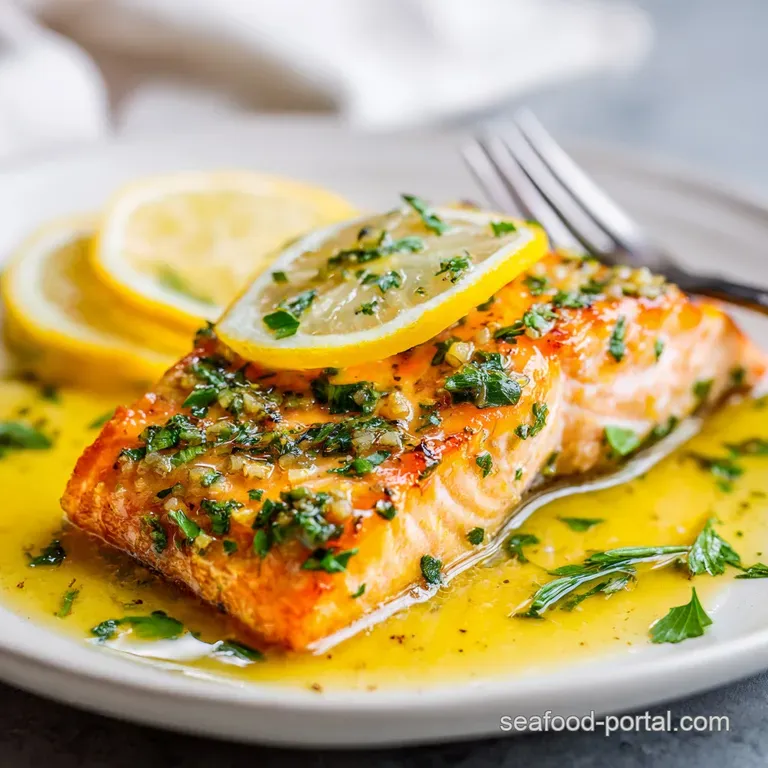
- Time: Active 5 minutes, Passive 15 minutes, Total 20 minutes
- Flavor/Texture Hook: Flaky, buttery, and zesty
- Perfect for: Stress free weeknight dinners or meal prep
- An Easy Salmon Recipe with Lemon and Garlic
- Timing and Specs for Success
- Quality Ingredients Create Better Flavor
- Basic Kitchen Tools You Need
- Steps for the Flakiest Result
- Fixing Texture and Flavor Issues
- Adjusting the Recipe Size
- Cooking Myths Debunked
- Variations for Your Weekly Routine
- Storing and Reheating Your Leftovers
- How to Plate Your Dinner
- Recipe FAQs
- 📝 Recipe Card
An Easy Salmon Recipe with Lemon and Garlic
The smell of a kitchen where garlic is meeting warm butter is probably one of the top five scents on earth. I remember the first time I tried to make salmon for a date years ago. I didn't use a recipe, I didn't use a timer, and I definitely didn't use enough fat.
The result was a piece of fish so dry it practically turned to dust the moment a fork touched it. It was gray, sad, and tasted like a salty eraser. Discover our simple and delicious Easy Salmon Recipe with Lemon and Garlic, your new go to for a quick and flavorful meal.
We have all been there, staring at a beautiful, expensive piece of fish and worrying about ruining it. But here is the thing: salmon is actually quite forgiving if you treat it with a little bit of respect and a lot of citrus.
This specific method uses a foil tent, which is basically a high tech steam room for your dinner. It traps all that moisture and forces the lemon juice and garlic to penetrate deep into the flesh. You won't find any rubbery textures here, just velvety flakes that melt away.
I have made this dozens of times now, for everything from "I'm too tired to move" Tuesdays to "my parents are coming over" Saturdays. It works because it relies on the physics of gentle heat rather than aggressive searing.
You get that vibrant, aromatic finish without having to scrub a heavy pan or worry about oil splattering across your backsplash. Let's get into why this works so well.
Timing and Specs for Success
- Fat Emulsion: Whisking lemon juice into melted butter creates a temporary suspension that coats the fish evenly rather than just sliding off into the pan.
- The Steam Tent: Folding the foil creates a micro environment that prevents the dry oven air from pulling moisture out of the lean protein fibers.
- Carryover Cooking: Removing the fish at 145°F (63°C) ensures the internal temperature doesn't spike into the "dry zone" during the resting period.
- Acid Penetration: The citric acid in the lemon juice partially breaks down the surface proteins, allowing the garlic and salt to move deeper into the fillet.
| Method | Total Time | Texture | Best For |
|---|---|---|---|
| Oven Foil Tent | 20 minutes | Silky and tender | Maximum juiciness |
| Pan Seared | 12 minutes | Crispy skin/firm | Toasted flavor |
| Air Fryer | 15 minutes | Roasted/Charred | Quick solo meals |
When you are deciding which path to take, think about what you are serving it with. If you want something that mimics a creamy lemon garlic sauce without the heavy cream, the foil tent is your best friend because it creates its own natural "jus" at the bottom of the packet. This liquid is gold don't you dare throw it away! Pour it right over some jasmine rice or some roasted asparagus.
Quality Ingredients Create Better Flavor
| Ingredient | Science Role | Pro Secret |
|---|---|---|
| Salmon Fillet | High fat protein base | Choose center cut for even cooking |
| Unsalted Butter | Moisture and mouthfeel | Whisk until cloudy for better coating |
| Fresh Garlic | Aromatic pungency | Mince by hand for better oil release |
| Lemon Juice | Acidic brightness | Use room temp lemons for more juice |
Choosing the right fish is half the battle won. I always look for a 1.5 lbs salmon fillet that has consistent thickness from end-to-end. If one side is two inches thick and the other is a thin tail piece, the tail will turn into jerky before the center is even warm.
If you can only find a tapered piece, just tuck the thin tail underneath itself to create a uniform thickness.
To make this Easy Salmon Recipe with Lemon and Garlic, you'll need the following:
- 1.5 lbs salmon fillet: Why this? Farmed is fattier; wild caught is leaner and cooks faster.
- Substitute: Arctic Char (similar fat profile) or Steelhead Trout.
- 1 tsp kosher salt: Why this? Larger grains are easier to sprinkle evenly.
- Substitute: Sea salt (use slightly less if the grain is fine).
- 0.5 tsp cracked black pepper: Why this? Freshly cracked provides a floral heat.
- Substitute: White pepper for a more subtle, earthy spice.
- 4 tbsp unsalted butter, melted: Why this? Provides the fat needed to keep the fish moist.
- Substitute: Ghee or a high-quality olive oil.
- 2 tbsp fresh lemon juice: Why this? Cuts through the richness of the butter and fish.
- Substitute: Lime juice (yields a more tropical vibe).
- 4 cloves garlic, finely minced: Why this? Mincing creates more surface area for flavor release.
- Substitute: 1 tsp garlic powder (if you are in a massive rush).
- 1 tbsp fresh parsley, finely chopped: Why this? Adds a grassy, fresh finish to the heavy fats.
- Substitute: Fresh dill or chives.
- 1 whole lemon, sliced into thin rounds: Why this? Protects the top of the fish from direct heat.
- Substitute: Orange slices for a sweeter, citrusy profile.
Basic Kitchen Tools You Need
You really don't need a professional kitchen for this. A standard rimmed baking sheet is essential because it catches any juices that might escape the foil. If you use a flat cookie sheet, you're just asking for a smoky oven and a grease fire and nobody wants that on a Tuesday night.
I usually use a heavy duty aluminum foil because it holds its shape better when you are making the tent, which is vital for trapping that steam.
Chef Tip
Before you even touch the fish, freeze your butter for about 10 minutes then grate it if you don't want to melt it. However, for this specific recipe, melting and whisking it with the lemon juice is the way to go because it ensures every millimeter of the salmon is coated in that garlic lemon butter goodness.
Steps for the Flakiest Result
- Preheat your oven to 400°F (200°C). Line a large rimmed baking sheet with aluminum foil or parchment paper. Note: Preheating is non negotiable for even heat distribution.
- Pat the salmon fillets bone dry with paper towels to ensure the glaze adheres properly. You'll see the surface go from shiny to matte.
- In a small mixing bowl, whisk together the melted butter, lemon juice, minced garlic, and parsley. Note: Whisking emulsifies the fat and acid temporarily.
- Place the salmon in the center of the foil. Season generously with salt and pepper, then pour the butter lemon garlic mixture over the fillets.
- Top the salmon with lemon slices. Fold the edges of the foil up and over the salmon to create a loose tent, leaving a small gap at the top for steam to escape. The foil should not touch the top of the fish.
- Bake for 12-15 minutes until the salmon is flaky and reaches an internal temperature of 145°F (63°C).
- Open the foil carefully—watch for the puff of hot steam—and let it rest for 2 minutes.
- Spoon the collected butter sauce from the foil back over the fish before serving. The surface should look glistening and vibrant.
Fixing Texture and Flavor Issues
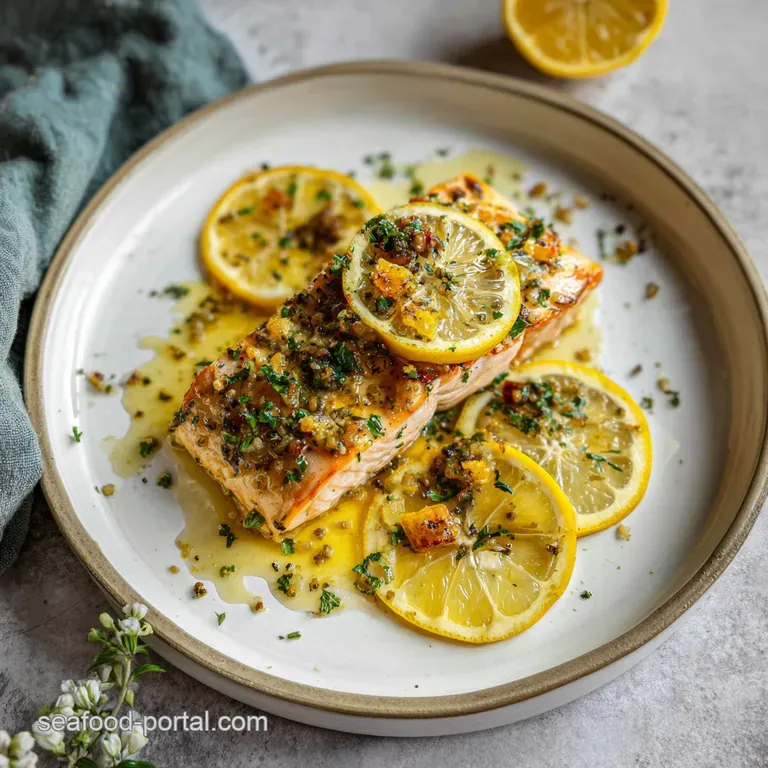
Handling White Protein Spots
If you see white, gooey stuff bubbling out of your salmon, don't panic. It's called albumin. It is just a protein that gets pushed out when the muscle fibers contract too quickly. It is perfectly safe to eat, but it usually means the oven was a bit too hot or you cooked it just a minute too long.
To avoid it, make sure you don't skip the "tenting" step, which buffers the heat.
Preventing Green Garlic Color
Sometimes garlic can turn a strange blue or green color when it hits acid (like lemon juice). This is a natural reaction between the sulfur in the garlic and the enzymes in the citrus. It looks weird, but it tastes totally fine.
To prevent it, use the freshest garlic possible and don't let the garlic sit in the lemon juice for more than a few minutes before putting it in the oven.
| Problem | Root Cause | Solution |
|---|---|---|
| Salmon is dry/tough | Overcooked or heat too high | Pull from oven at 140°F; let carryover reach 145°F |
| Soggy surface | Foil tent too tight | Leave a 1 inch gap at the top for steam release |
| Garlic tastes bitter | Garlic was burnt | Ensure garlic is submerged in butter/under lemon slices |
Common Mistakes Checklist
- ✓ Never skip drying the fish; moisture on the surface prevents the butter from sticking.
- ✓ Don't wrap the foil too tight; the air needs room to circulate and steam the fish.
- ✓ Check the internal temp at the 12 minute mark; every oven runs differently.
- ✓ Use fresh lemon juice; the bottled stuff has a metallic aftertaste that ruins the delicate fish.
- ✓ Let the fish rest; this allows the juices to redistribute so they don't run out when you cut it.
Adjusting the Recipe Size
When you're scaling this Easy Salmon Recipe with Lemon and Garlic down for one or two people, it's pretty straightforward. Use half the salmon and half the ingredients, but keep an eye on the clock. Smaller fillets, especially if they are thin, can cook in as little as 10 minutes.
Use a smaller baking dish or just a smaller piece of foil to keep the steam concentrated around the fish.
If you are scaling up for a crowd (doubling to 3 lbs of salmon), I recommend using two separate foil packets rather than one giant one. Why? Because a massive packet takes longer to heat through in the center, which means the edges of your fish will be overdone by the time the middle is safe to eat.
Also, when doubling the spices, use about 1.5 times the salt and pepper first, then taste the sauce. You can always add more, but you can't take it away once it's baked into the fibers.
Cooking Myths Debunked
Many people believe you must bring salmon to room temperature before cooking to ensure evenness. In reality, with a 20 minute cook time at 400°F, the difference is negligible and actually increases the risk of bacterial growth. You can pull it straight from the fridge, pat it dry, and get to work.
Another common myth is that searing the salmon first "locks in the juices." Science tells us this isn't true; searing creates flavor through a chemical reaction on the surface, but it doesn't create a moisture proof barrier. In fact, if you want a crispy skin dinner, you should pan fry it, but if you want the juiciest possible interior, the foil bake method is actually superior because it prevents evaporation.
Variations for Your Weekly Routine
If you want to turn this into a full sheet pan meal, you can toss some thin asparagus or halved cherry tomatoes onto the baking sheet around the foil packet. They will roast in the same 15 minutes it takes the fish to cook. Just toss them in a little olive oil, salt, and pepper first.
Ingredient Decision Shortcuts
- If you want a spicy kick: Add 0.5 tsp of red chili flakes to the butter mixture.
- If you want more herb flavor: Swap the parsley for fresh dill or tarragon.
- For a dairy-free option: Use a high-quality extra virgin olive oil instead of butter.
Storing and Reheating Your Leftovers
Leftover salmon is a gift from the food gods if you treat it right. It will stay fresh in an airtight container in the fridge for up to 3 days. I don't recommend freezing cooked salmon, as the texture becomes grainy and mealy once thawed. It is much better to eat it cold over a salad the next day.
When it comes to reheating, the microwave is your enemy. It will turn your succulent fish into a rubber ball in thirty seconds. Instead, put the salmon back in a piece of foil with a splash of water or a tiny knob of butter.
Heat it in a 275°F (135°C) oven for about 8-10 minutes until just warmed through. This low and slow approach preserves that silky texture we worked so hard to achieve.
For a zero waste tip: if you have leftover skins or small scraps, fry them up in a pan until they are "shatter" crispy and use them as a salty topping for a bowl of ramen or a grain bowl. Even the leftover lemon slices can be chopped up and stirred into a pasta dish for a concentrated punch of citrus flavor.
How to Plate Your Dinner
Presentation matters, even if it's just you and the dog in the kitchen. I like to serve this salmon right on top of a bed of garlic mashed potatoes or some fluffy quinoa. The grains or potatoes act as a sponge for that extra lemon garlic butter that pools in the bottom of the foil.
Garnish with an extra sprinkle of fresh parsley and a final crack of black pepper right before it hits the table. The contrast between the pink fish, the yellow lemon rounds, and the vibrant green herbs makes the whole thing look like it came out of a professional kitchen.
It is a simple, honest meal that proves you don't need a hundred ingredients to make something that tastes like a luxury. Just good fish, plenty of garlic, and the right amount of heat. Enjoy your meal!

Recipe FAQs
How to ensure the salmon reaches the perfect internal temperature?
Check the internal temperature at the 12-minute mark. The salmon is fully cooked and safe to eat once it reaches an internal temperature of 145°F (63°C) and flakes easily with a fork.
Is it necessary to pat the salmon dry before adding the glaze?
Yes, this is essential. Drying the surface with paper towels until it turns matte ensures the butter and garlic mixture adheres properly to the fish rather than sliding off.
How to avoid overcooking the fish in the oven?
Monitor your oven closely during the final three minutes of the 15-minute cook time. Since every oven runs differently, checking early prevents the salmon from drying out or becoming rubbery.
How to properly reheat leftover salmon without making it dry?
Wrap the salmon in foil with a small splash of water or a tiny knob of butter. Avoid using the microwave, as it will rapidly turn your tender fish into a rubbery texture.
Is it true I should wrap the foil tightly around the salmon?
No, this is a common misconception. You must leave a small gap at the top of your foil tent to allow steam to escape, which helps the fish cook evenly without getting soggy.
How to achieve a similar restaurant quality crust on other salmon dishes?
Apply the same surface drying technique used here to other preparations. If you enjoyed mastering that moisture control step, you can use it to achieve a perfectly crispy crust in high heat recipes.
Can I freeze the cooked salmon for later?
No, freezing cooked salmon is not recommended. The texture will become grainy and mealy once thawed, so it is best to store it in the refrigerator for up to 3 days and enjoy it cold.
Lemon Garlic Baked Salmon
Ingredients:
Instructions:
Nutrition Facts:
| Calories | 461 kcal |
|---|---|
| Protein | 34.7 g |
| Fat | 34.8 g |
| Carbs | 2.4 g |
| Fiber | 0.6 g |
| Sugar | 0.8 g |
| Sodium | 585 mg |
