Tuna Fish Casserole: Rich and Crispy
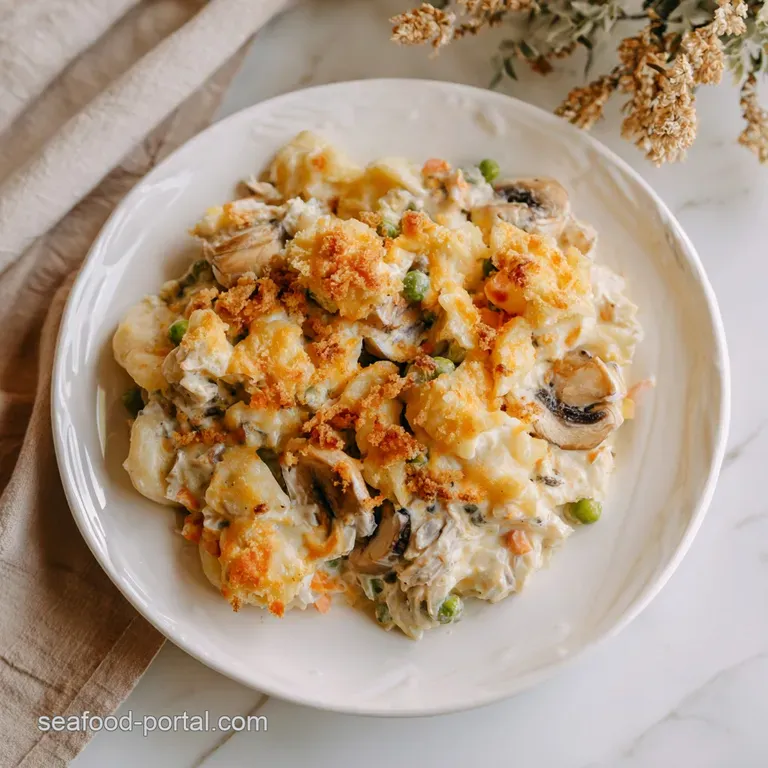
- Time: Active 20 minutes, Passive 25 minutes, Total 45 minutes
- Flavor/Texture Hook: Silky cheddar sauce paired with a shatter crisp potato chip crust.
- Perfect for: Cozy Sunday dinners or a sophisticated take on nostalgic comfort food.
- Mastering The Silky Layers Of Tuna Fish Casserole
- Essential Recipe Specs For The Home Kitchen
- Selecting The Finest Components For Maximum Flavor
- Ingredient Deep Dive
- Kitchen Tools Required For A Velvety Sauce
- Detailed Preparation Steps From Stovetop To Oven
- Solving Texture Problems and Common Cooking Mistakes
- Simple Modifications For Every Specific Dietary Need
- Maintaining Freshness Through Proper Storage Techniques
- Flavorful Serving Suggestions For The Whole Family
- Very High in Sodium
- Recipe FAQs
- 📝 Recipe Card
Mastering The Silky Layers Of Tuna Fish Casserole
Do you hear that? It is the distinct, rhythmic crinkle snap of a bag of kettle cooked potato chips being crushed by hand. That sound always takes me back to my grandmother’s kitchen, but while she reached for the red and white soup cans, I’ve learned that the real magic happens when you build those flavors from the ground up.
There is a specific aroma that fills the house when a proper roux starts to turn golden in the pan nutty, toasted, and full of promise that a tin of condensed soup just can't replicate.
Most versions of this dish end up as a monochromatic mush, but we are going for something entirely different here. We want the noodles to have a slight bite, the peas to pop with sweetness, and the tuna to remain in distinct, flaky chunks rather than dissolving into the sauce.
It’s about creating a balance between the richness of the sharp white cheddar and the bright, acidic zing of a little Dijon mustard.
We’ve all had that one "heavy" casserole that feels like a lead weight in your stomach. By using a blend of whole milk and a splash of stock, we keep the sauce light enough to be approachable but thick enough to cling to the wide egg noodles.
This is the version you serve when you want to prove that "retro" doesn't have to mean "outdated." It’s fresh, it’s vibrant, and honestly, that chip crust is a total game changer.
Essential Recipe Specs For The Home Kitchen
Before we get our hands messy, let’s look at the hard data that makes this dish tick. Precision is the difference between a soggy mess and a dish that everyone asks for a second helping of.
We are working with specific ratios to ensure the sauce doesn't break and the noodles don't drink up every drop of moisture before the dish hits the table.
The Texture Balance: This recipe relies on a 2.5:1 ratio of milk to stock. This specific blend ensures the sauce is creamy but has enough savory depth from the chicken or vegetable stock to keep it from tasting one dimensional.
Using a full 12 oz of egg noodles provides the perfect surface area for our 1.5 cups of shredded cheddar to work its magic.
| Category | Measurement | Note |
|---|---|---|
| Active Prep | 20 minutes | Includes chopping parsley and grating cheese |
| Baking Time | 25 minutes | Oven set to 375°F (190°C) |
| Total Time | 45 minutes | From pantry to table |
| Yield | 6 servings | Generous portions for a hungry family |
The "Al Dente" Checkpoint
The first precision checkpoint is your noodle boil. You must pull the noodles 2-3 minutes earlier than the box suggests. Why? Because they will continue to hydrate and cook inside that bubbling cheese sauce in the oven.
If they are soft when they leave the pot, they will be mush when they leave the oven.
The Roux Color Metric
Your second checkpoint is the butter and flour mixture. You aren't looking for a dark brown "gumbo" roux. You want a "blonde" roux fragrant and slightly bubbly, which usually takes about 90 seconds. This ensures the raw flour taste is gone but the thickening power is at its peak.
The Bubble Border
The final checkpoint is the visual cue in the oven. You aren't just looking for brown chips; you are looking for the "bubble border." This is when the sauce at the very edges of the 9x13 dish is vigorously bubbling and turning slightly golden.
This indicates the internal temperature has reached roughly 165°F (74°C), making it safe and piping hot.
Selecting The Finest Components For Maximum Flavor
The soul of this Tuna Fish Casserole lives in the quality of the tuna and the sharpness of the cheese. I always tell my friends to skip the "chunk light" tuna in water for this specific bake. It’s too soft and often carries a metallic tang that can overwhelm the delicate sauce.
Instead, go for solid white albacore. It has a meaty texture that stands up to the heavy egg noodles.
Temperature Control: Use room temperature milk when building your sauce. If you pour ice cold milk into a hot roux, the fat in the butter can seize, creating tiny lumps that are nearly impossible to whisk out. Set your 2.5 cups of milk on the counter while you boil the water for the noodles.
| Method | Time | Texture | Best For |
|---|---|---|---|
| Oven Bake | 25 minutes | Crispy top, bubbly edges | Maximum flavor depth |
| Stovetop Only | 10 minutes | Very creamy, no crust | Quick weeknight lunch |
| Air Fryer | 12 minutes | Extra crunchy top | Small batch leftovers |
When it comes to the "crunch factor," the type of chip matters. Standard thin potato chips tend to dissolve into the grease of the cheese. Kettle cooked chips are sliced thicker and fried differently, giving them a structural integrity that survives the 25 minutes in the oven.
They provide a "shatter" effect that contrasts beautifully with the silky interior.
Ingredient Deep Dive
| Ingredient | Science Role | Pro Secret |
|---|---|---|
| Wide Egg Noodles | Structural Base | Use noodles with ripples to "trap" more cheese sauce in every bite. |
| Unsalted Butter | Fat Medium | Using unsalted lets you control the saltiness from the celery salt and chips. |
| Solid Albacore | Protein Mass | Drain it thoroughly; excess canning liquid will thin out your velvety sauce. |
| Dijon Mustard | Emulsifier | The acid cuts through the heavy fat of the cheddar, brightening the whole dish. |
In my kitchen, we never use pre shredded cheese. Those bags are coated in potato starch or cellulose to keep the shreds from sticking together, but that same coating prevents the cheese from melting into a smooth, cohesive sauce. For a truly homemade creamy tuna casserole, take the extra three minutes to grate a block of sharp white cheddar yourself. You’ll notice the sauce is significantly more velvety and has a much better "pull."
Kitchen Tools Required For A Velvety Sauce
You don't need a high end kitchen to make a world class casserole, but a few specific tools will make your life much easier. First and foremost is a heavy bottomed saucepan. Thin pans have "hot spots" that can scorch your milk or burn your roux before the flour is properly cooked.
A cast iron enameled pot or a multi clad stainless steel pan is your best friend here.
A balloon whisk is also non negotiable. When you are pouring in those 2.5 cups of milk, you need to be whisking constantly to incorporate the liquid into the flour and butter. If you use a spoon, you'll likely end up with "flour pockets" that burst open later and ruin the texture.
I also recommend a large 9x13 inch ceramic or glass baking dish. These materials hold heat evenly, ensuring the middle of the casserole is just as hot as the edges.
Chef's Tip: Before you start your roux, place your drained tuna in a small bowl and flake it with a fork into large chunks. If you flake it too finely, it disappears into the sauce. You want "bites" of fish, not a tuna flavored paste.
Detailed Preparation Steps From Stovetop To Oven
- Preheat and Prep. Set your oven to 375°F (190°C). Lightly grease a 9x13 inch baking dish with butter or cooking spray. Note: Preheating is vital so the chip topping crisps up before the noodles overcook.
- Boil the Noodles. Bring a large pot of salted water to a boil. Add the 12 oz of wide egg noodles. Cook for 2-3 minutes less than the package directions.
- Add the Peas. During the last 60 seconds of the noodle boil, drop in 1 cup of frozen sweet peas. Note: This thaws and blanches them perfectly without requiring a separate pot.
- Drain and Set Aside. Drain the noodles and peas immediately. Don't rinse them; the starch on the noodles helps the sauce stick.
- Create the Roux. Melt 4 tbsp of unsalted butter in a saucepan over medium heat. Whisk in 1/4 cup of all purpose flour. Cook for 1-2 minutes until it smells like toasted bread.
- Build the Sauce. Slowly pour in 2 1/2 cups of milk and 1/2 cup of stock. Whisk constantly for 3-5 minutes until the sauce is thick enough to coat a spoon.
- Incorporate Flavors. Remove from heat. Stir in 1 tsp Dijon mustard, 1/2 tsp onion powder, 1/4 tsp celery salt, and 1 cup of the grated white cheddar until the sauce is glossy and smooth.
- Combine Everything. In the large noodle pot, gently fold the noodles, peas, and 11 oz of flaked tuna with the cheese sauce.
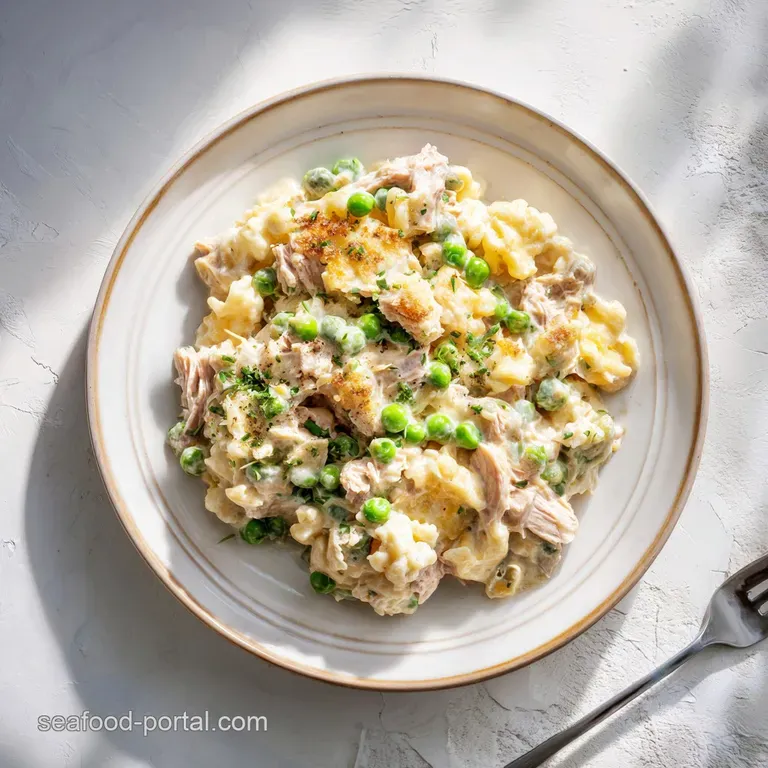
- Assemble the Dish. Pour the mixture into the prepared 9x13 dish. Evenly sprinkle the remaining 1/2 cup of cheese and 2 cups of crushed kettle chips over the top.
- Bake to Golden. Bake for 20-25 minutes until the edges are bubbling and the top is a deep golden brown. Garnish with minced parsley.
Solving Texture Problems and Common Cooking Mistakes
One of the most frequent complaints I hear about Tuna Fish Casserole is that it turns out dry. This usually happens because the noodles were cooked all the way through in the water, and then they proceeded to absorb every drop of the cheese sauce while in the oven. It’s a classic hydration issue.
If you find your dish is too dry, try increasing the milk by a 1/4 cup next time, or ensure you are pulling those noodles out of the boiling water while they still have a firm center.
Why Your Sauce Turns Watery
If you notice a watery residue at the bottom of your dish, it’s likely from the tuna or the peas. If you don't drain the tuna well enough, the canning liquid (either water or oil) will separate from the cheese sauce under high heat.
Similarly, if you use canned peas instead of frozen, they carry much more internal moisture that can leak out.
Why The Topping Gets Soggy
The "soggy chip" syndrome is usually caused by covering the dish with foil. While it’s tempting to cover it to prevent burning, the foil traps steam, which turns your crispy kettle chips into limp, salty potato bits.
Always bake this dish uncovered to allow the moisture to evaporate and the chips to stay shatter crisp.
| Problem | Root Cause | Solution |
|---|---|---|
| Grit in Sauce | Pre shredded cheese | Grate your own cheese from a block for a smooth melt. |
| Bland Flavor | Lack of acidity | Add an extra teaspoon of Dijon or a squeeze of lemon juice. |
| Mushy Noodles | Over boiling | Boil for only 5-6 minutes; they must be firm before baking. |
Common Mistakes Checklist
- ✓ Never rinse your pasta after draining; the surface starch is the "glue" for your sauce.
- ✓ Use whole milk for the creamiest result; skim milk will make the sauce feel thin and "blue."
- ✓ Ensure the stock is at room temperature or warm before adding it to the roux.
- ✓ Don't over crush the chips; you want pea sized pieces, not potato dust.
- ✓ Let the casserole rest for 5 minutes after baking to let the sauce set.
Simple Modifications For Every Specific Dietary Need
We live in a world where everyone has different needs at the table. If you want to scale this recipe down for a solo dinner or up for a potluck, the math is relatively simple. For a half batch, use an 8x8 pan and reduce the baking time by about 5 minutes.
If you are doubling it, I recommend using two separate 9x13 dishes rather than one massive deep dish, as the center of a very deep casserole often stays cold while the edges burn.
The Salt Factor: When doubling the recipe, do not double the celery salt and onion powder immediately. Spices don't always scale linearly. Start with 1.5x the amount, taste your sauce, and then add more if needed.
The chips add a significant amount of salt, so it’s easy to cross the line into "too salty" territory.
| Servings | Noodles | Cheese | Pan Size |
|---|---|---|---|
| 2 People | 4 oz | 1/2 cup | Small oven safe skillet |
| 6 People | 12 oz | 1.5 cups | 9x13 inch dish |
| 12 People | 24 oz | 3 cups | Two 9x13 inch dishes |
For those looking for a different vibe, you can easily turn this into a "Tuna Melt" style variation. Swap the white cheddar for Swiss cheese and add a layer of sliced tomatoes just under the chip topping. It’s a great way to use up garden tomatoes in the summer while still getting that cozy casserole feel. If you are a fan of that classic sandwich flavor, check out my guide on how to make a tuna melt for more inspiration.
Maintaining Freshness Through Proper Storage Techniques
This Tuna Fish Casserole is actually one of those rare dishes that tastes even better the next day. As it sits in the fridge, the flavors of the onion powder, celery salt, and Dijon have more time to meld together. However, you have to be careful with the reheating process to avoid the dreaded "rubbery noodle."
Fridge Storage: Store leftovers in an airtight container for up to 3 days. To keep the topping as crispy as possible, store a small handful of extra crushed chips in a separate baggie and sprinkle them on just before reheating.
Freezer Instructions: You can freeze this casserole, but I recommend doing it before the final bake and without the chip topping. Wrap the unbaked mixture tightly in plastic wrap and then foil. It will stay fresh for up to 2 months.
When you're ready to eat, thaw it overnight in the fridge, add the chips and the final half cup of cheese, and bake as directed (you may need an extra 10 minutes of bake time).
Zero Waste Tip: Don't throw away the stems of the parsley! They are packed with flavor. Finely mince them and toss them into the cheese sauce while it's simmering. It adds a fresh, herbaceous note without wasting any of the bunch.
Flavorful Serving Suggestions For The Whole Family
When serving this dish, I love to lean into the contrast. Since the casserole is rich and creamy, a bright, acidic side dish is the perfect partner. A simple arugula salad with a lemon vinaigrette or some quick pickled cucumbers can cut right through the cheddar sauce and refresh your palate between bites.
If you are looking for more crunch, serving this with a side of roasted broccoli or charred green beans adds a nice charred flavor that complements the smokiness of the sharp cheddar.
And if you really want to go full "comfort mode," a side of garlic bread is never a bad idea for mopping up any leftover sauce on the plate.
Busting the "Canned is Better" Myth Some people swear by the nostalgic flavor of canned cream of mushroom soup. I used to be one of them until I realized that the "tinny" flavor was actually masking the taste of the tuna.
A homemade Mornay sauce (which is what we are making here) allows the sweetness of the peas and the meatiness of the albacore to shine through. It’s not more difficult; it’s just better ingredients.
Another myth is that you must use tuna in oil for "flavor." Actually, tuna in oil can make the casserole feel greasy. Since we are already adding 4 tablespoons of butter and 1.5 cups of cheese, there is plenty of high-quality fat in the dish.
Using tuna in water allows you to control the fat content and ensures the sauce remains stable and emulsified.
Whether you’re making this for a quick Tuesday night meal or a nostalgic weekend gathering, this Tuna Fish Casserole is proof that simple ingredients, handled with a bit of care and a lot of cheese, can create something truly spectacular. Enjoy the crunch!

Very High in Sodium
880 mg 880 mg of sodium per serving (38% 38% of daily value)
The American Heart Association recommends limiting sodium intake to less than 2,300mg per day, with an ideal limit of less than 1,500mg for most adults.
Tips to Reduce Sodium
-
Choose Low-Sodium Broth-25%
Replace the regular chicken or vegetable stock with a low-sodium or 'no salt added' version. This is a significant source of hidden sodium.
-
Select Lower Sodium Cheese-15%
Opt for a reduced sodium sharp white cheddar cheese or use slightly less cheese overall. Many cheeses, even when freshly grated, contain a noticeable amount of sodium.
-
Use Fresh Tuna or Water Packed Tuna-10%
If using canned tuna, choose 'in water, no salt added' varieties. Draining and flaking it yourself will minimize added sodium compared to seasoned or oil-packed versions.
-
Rethink Celery Salt-5%
Celery salt is a concentrated source of sodium. Replace the 1/4 tsp celery salt with 1/4 tsp celery seed and a pinch of regular salt if desired, or omit entirely.
-
Boost with Fresh Herbs and Spices
Enhance flavor without salt by using more fresh parsley or adding other fresh herbs like chives or dill. Consider adding black pepper for a little kick.
-
Be Mindful of Chip Topping-5%
Kettle cooked potato chips are often high in sodium. Consider using a lower sodium baked chip or a smaller amount for crunch, or substitute with toasted breadcrumbs.
Recipe FAQs
How to avoid mushy noodles in the casserole?
Cook your egg noodles for 2-3 minutes less than the package instructions. This ensures they remain al dente and hold their structure while baking in the cheese sauce for 20-25 minutes.
Why use kettle cooked potato chips for the topping?
They provide a superior, shatter crisp texture that holds up better under heat. If you enjoyed mastering the crispy, gooey textures here, you will appreciate how these chips maintain their crunch against the creamy Mornay sauce.
Is it true I should use canned cream of mushroom soup to save time?
No, this is a common misconception. Building a roux from butter and flour creates a richer, more authentic flavor profile that canned alternatives simply cannot match.
How to ensure the cheese sauce is perfectly smooth?
Whisk the milk and stock into your roux slowly and constantly. Adding the liquid gradually prevents flour clumps and allows the sauce to thicken into a silky base that coats the back of a spoon.
How to prevent the tuna from breaking apart too much?
Fold the flaked tuna into the sauce gently at the very end. Mixing too vigorously or too early will cause the fish to disintegrate into the sauce instead of remaining in satisfying, distinct chunks.
Is it necessary to preheat the oven to 375°F?
Yes, 375°F (190°C) is essential for the proper bake time. This temperature effectively bubbles the edges of the casserole and browns the potato chip topping without drying out the tuna and noodles inside.
How to incorporate the frozen peas without overcooking them?
Add them to the boiling pasta water during the final 60 seconds of cooking. This timing warms the peas through while keeping them bright green and firm enough to provide a pleasant pop of texture.
Homemade Tuna Fish Casserole
Ingredients:
Instructions:
Nutrition Facts:
| Calories | 601 kcal |
|---|---|
| Protein | 34 g |
| Fat | 25 g |
| Carbs | 58 g |
| Fiber | 3 g |
| Sugar | 6 g |
| Sodium | 880 mg |
