Grilled Lime Salmon with Avocado Mango Salsa
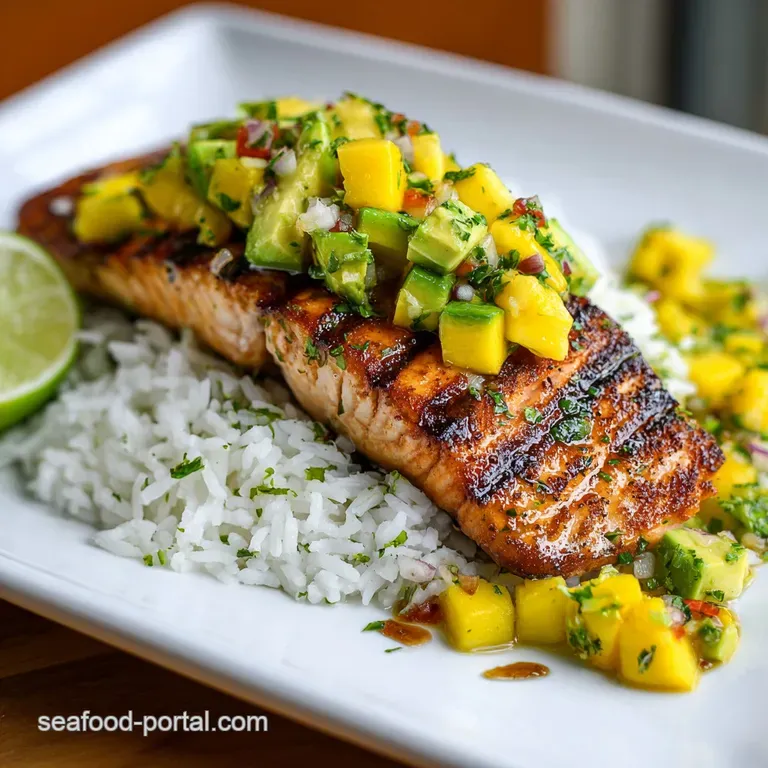
- Time: Active 15 minutes, Passive 15 minutes, Total 30 minutes
- Flavor/Texture Hook: Zesty, buttery, and tropical
- Perfect for: A quick weeknight dinner that feels like a vacation
- Refreshing Grilled Lime Salmon with Avocado Mango for Quick Dinners
- Why this Grilled Lime Salmon with Avocado Mango is Incredible
- The Science of the Sizzle and Tropical Aromas
- Prep Stats for Your Next Tropical Kitchen Escape
- Selecting Fresh Components for a Flavorful Coastal Feast
- Tools Required for a Perfectly Charred Salmon Result
- Step-by-Step Guide to Searing and Assembling Your Plate
- How to Fix Common Textural and Flavor Issues
- Creative Ways to Customize Your Tropical Salmon Dish
- Keeping Your Leftovers Fresh and Using Every Scrap
- Complementary Sides to Round Out Your Seafood Meal
- Cooking Myths Debunked
- High in Sodium
- Recipe FAQs
- 📝 Recipe Card
Refreshing Grilled Lime Salmon with Avocado Mango for Quick Dinners
The second those salmon fillets hit the hot grates, the air fills with this incredible sizzle and the sharp, bright scent of lime juice hitting the heat. I remember the first time I tried this combination; I was actually trying to clear out a random mango and a half empty can of coconut milk from my pantry.
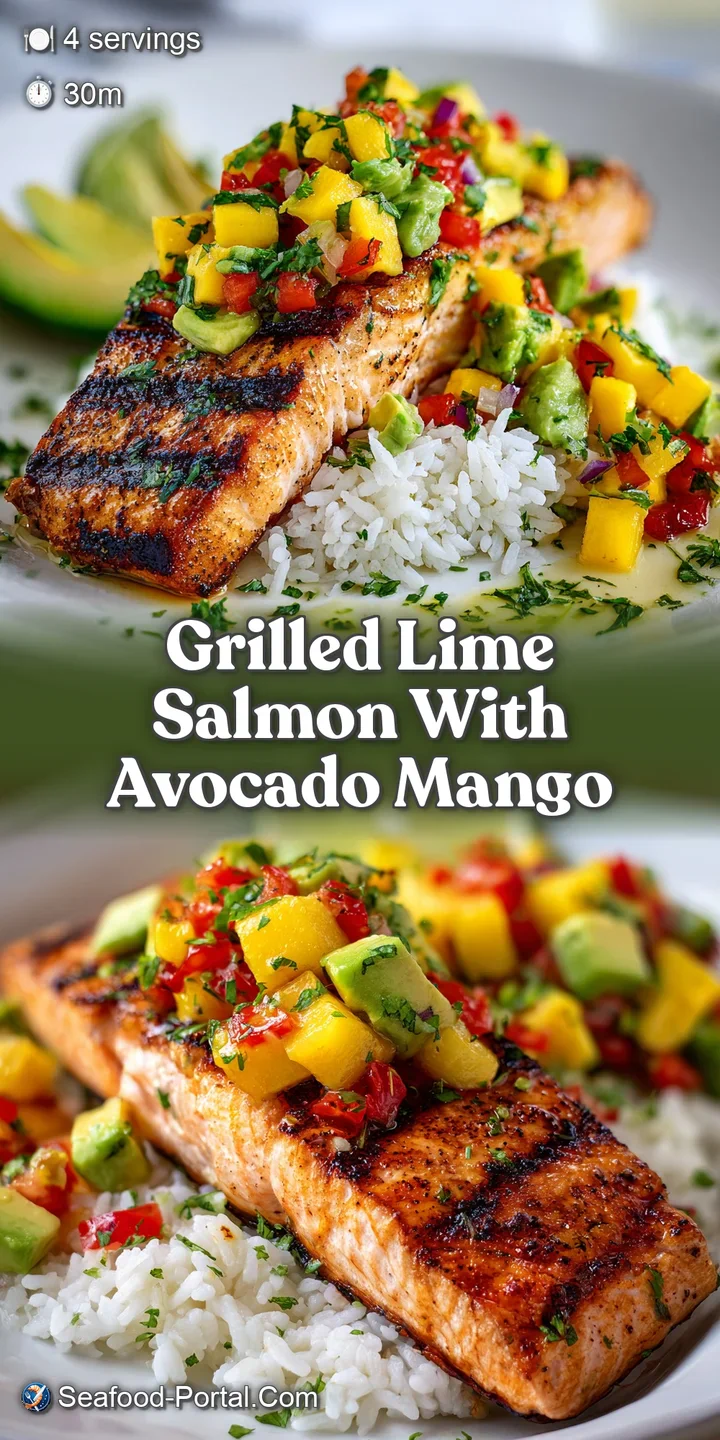
What started as a "kitchen sink" meal turned into the most requested dinner in my house because it hits every single taste bud. This recipe features flavorful Grilled Lime Salmon with Avocado Mango Salsa served alongside fluffy Coconut Rice.
You get the salt from the fish, the hit of acid from the lime, the creamy richness of the avocado, and that sweet, floral punch from the mango. It’s a total sensory overload in the best way possible.
I used to be terrified of overcooking fish, but once you nail the timing, it’s actually one of the fastest ways to get a high-quality meal on the table.
We’re going to walk through how to get that perfect char without the fish sticking, and how to make rice that actually tastes like coconut instead of just being mushy. It’s all about the order of operations.
Trust me, once you smell that coconut milk simmering on the stove, you’ll never go back to plain white rice again.
Why this Grilled Lime Salmon with Avocado Mango is Incredible
This dish works because it balances heavy fats with bright acids. The salmon and coconut milk provide a lot of richness, but the lime juice and jalapeño cut right through it, keeping your palate refreshed with every bite. It’s a classic example of "flavor layering" where each component does a specific job.
- Maillard Reaction: High heat transforms the natural sugars in the lime and mango marinade into a savory, caramelized crust.
- Emulsification: The fat in the avocado acts as a creamy bridge between the lean fruit and the oily fish.
- Starch Hydration: Simmering jasmine rice in coconut milk allows the grains to absorb fat, resulting in a velvety mouthfeel that stays moist even when reheated.
| Thickness | Internal Temp | Rest Time | Visual Cue |
|---|---|---|---|
| 0.5 inch | 145°F | 2 mins | Opaque and firm |
| 1 inch | 145°F | 3 mins | Flakes easily with fork |
| 1.5 inch | 145°F | 5 mins | Center loses translucency |
The resting time is non negotiable here. Just like a steak, the juices need a moment to settle back into the fibers of the fish. If you cut into it the second it leaves the grill, all that moisture will end up on your plate instead of in your mouth.
The Science of the Sizzle and Tropical Aromas
Understanding how heat affects seafood is the difference between a rubbery dinner and a restaurant quality meal. When we talk about Lime Salmon with Avocado Mango Salsa and Coconut Rice, we are managing three different temperature zones simultaneously.
Component Analysis
| Ingredient | Science Role | Pro Secret |
|---|---|---|
| Lime Juice | Denatures proteins | Don't marinate for more than 20 mins or the fish gets "mushy." |
| Coconut Milk | Adds lipid structure | Use full fat for the most distinct coconut aroma and silky rice. |
| Jalapeño | Provides capsaicin | Seed the pepper to control the heat without losing the grassy flavor. |
For another great way to use these citrus flavors, you might want to try a Zesty Grilled Salmon recipe which uses similar bright notes but in a taco format. It's a fun variation if you have leftovers of this salsa!
Prep Stats for Your Next Tropical Kitchen Escape
When you’re making Salmon with Avocado Mango Salsa and Coconut Rice, timing is everything. You want the rice to finish just as the salmon is finishing its rest. It takes exactly 15 minutes of prep to get everything chopped and 15 minutes of active cooking.
- Precision Checkpoint 1: Marinate the 4 Salmon Fillets (6 oz each) for exactly 15 minutes. Any longer and the acid starts to "cook" the fish prematurely.
- Precision Checkpoint 2: Keep the coconut rice at a bare simmer for 15 minutes; high heat will scorch the bottom of the pot.
- Precision Checkpoint 3: Ensure your grill or pan is at 400°F before the fish touches it to prevent sticking.
Selecting Fresh Components for a Flavorful Coastal Feast
- 4 Salmon Fillets (6 oz each), skin on: Look for fillets with uniform thickness. Why this? Skin on protects the flesh from overcooking and adds a lovely textural contrast.
- Substitute: Steelhead trout (similar fat content and flavor profile).
- 1.5 cups Jasmine Rice: The floral notes of jasmine complement the coconut. Why this? It has the perfect starch content to stay fluffy even when cooked in milk.
- Substitute: Basmati rice (lighter and more separated grains).
- 1 Large Mango, diced: It should be firm but give slightly under pressure. Why this? Firm mango holds its shape in the salsa without turning into mush.
- Substitute: Pineapple (provides a similar sweet and acidic punch).
- 13.5 oz Full fat Coconut Milk: Don't use the light version. Why this? The fat provides the characteristic creamy mouthfeel and prevents the rice from drying out.
- Substitute: Heavy cream mixed with coconut extract (if you're in a pinch).
- 1 Firm ripe Avocado, diced: Essential for the creamy element.
- Substitute: Diced cucumber (adds crunch, but lacks the fat).
- 2 tbsp Extra Virgin Olive Oil: For the marinade and to prevent sticking.
- 1/4 cup Fresh Lime Juice: Always use fresh; the bottled stuff tastes metallic.
- 2 cloves Garlic, minced: Adds a savory backbone to the citrus.
- 1/4 cup Red Onion, finely minced: Provides a sharp bite to cut the mango's sweetness.
Tools Required for a Perfectly Charred Salmon Result
You don't need a professional kitchen, but a cast iron skillet (like a Lodge) is a game changer here if you aren't using an outdoor grill. It holds heat beautifully, which is vital for getting that dark, caramelized sear. You’ll also need a heavy bottomed saucepan for the Coconut Rice Recipe.
A thick bottom prevents the coconut milk from burning.
A sharp chef's knife is non negotiable for the Avocado Mango Salsa Recipe. You want clean cubes of fruit, not mashed pulp. Finally, a thin metal spatula (often called a fish spatula) is your best friend. It’s flexible enough to slide under the delicate skin without tearing it.
step-by-step Guide to Searing and Assembling Your Plate
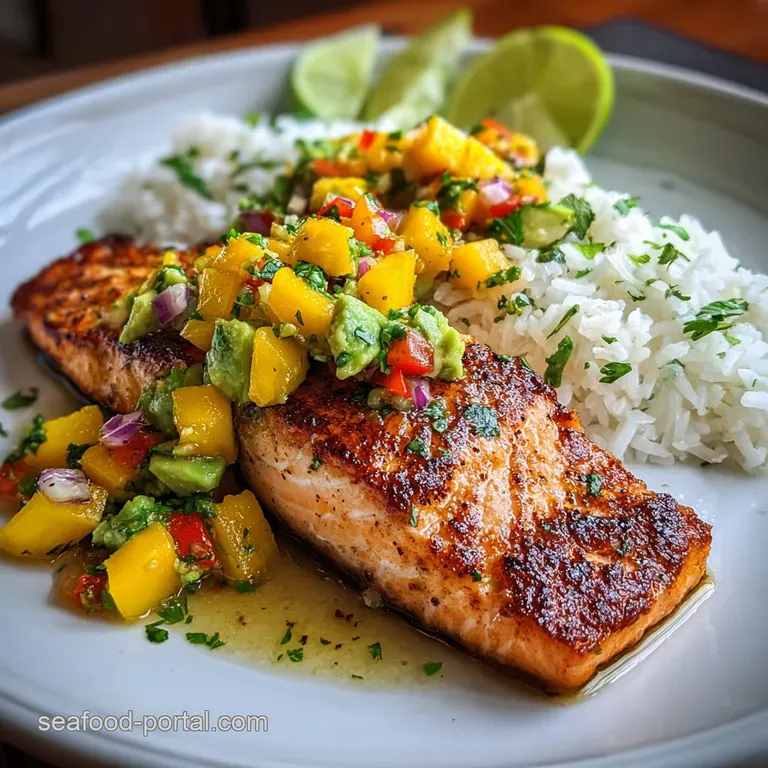
Simmering the Coconut Rice
Combine the 1.5 cups Jasmine Rice, 13.5 oz Full fat Coconut Milk, 1/2 cup Water, and 1/2 tsp Salt in a saucepan. Bring it to a gentle boil, then immediately turn the heat to low. Note: Stir once to ensure no rice is stuck to the bottom before covering. Let it cook for 15 minutes until the liquid is absorbed and the grains look plump and glossy.
Infusing the Cilantro Lime Salmon
In a shallow dish, whisk together the 2 tbsp Extra Virgin Olive Oil, 1/4 cup Fresh Lime Juice, 2 cloves Garlic, 1 tsp Kosher Salt, and 1/2 tsp Cracked Black Pepper. Place the 4 Salmon Fillets in the marinade, skin side up.
Note: We want the flesh to absorb the lime, not the skin. Let this sit for 15 minutes at room temperature.
Mixing the Avocado Mango Salsa for Salmon
While the fish marinates, combine the diced Mango, Avocado, 1/4 cup Red Onion, 1/4 cup Fresh Cilantro, minced Jalapeño, 1 tbsp Lime Juice, and a pinch of Sea Salt in a bowl. Toss very gently.
Note: We want to keep the avocado cubes intact. You should smell the freshness of the cilantro and the sweetness of the mango immediately.
Searing for a Charred Finish
Preheat your grill or pan over medium high heat. Place the salmon skin side down first. Cook for 4 to 5 minutes until the skin is crispy and releases easily from the surface. Carefully flip the fillets.
Assembling the Tropical Plate
Cook on the flesh side for another 3 to 4 minutes. You'll know it's done when the sides of the fillet turn a pale pink and the center is just barely translucent. Remove from heat and let it rest.
Fluff the coconut rice with a fork it should smell like a tropical dream. Scoop a generous portion of rice onto the plate, top with a salmon fillet, and spoon the Mango Salsa and Coconut Rice components over the top. The contrast of the hot fish and cold salsa is incredible.
How to Fix Common Textural and Flavor Issues
Why Your Salmon Sticks
This usually happens because the pan wasn't hot enough or you tried to flip it too early. Protein bonds with the cooking surface, and it only "releases" once the Maillard reaction has created a crust.
| Problem | Root Cause | Solution |
|---|---|---|
| Rubbery Salmon | Overcooking | Pull the fish at 140°F; carryover heat will finish it to 145°F. |
| Mushy Rice | Too much liquid | Measure the coconut milk and water precisely; don't eye ball it. |
| Bitter Salsa | Too much onion | Soak minced red onions in cold water for 5 mins to mellow them. |
Common Mistakes Checklist
- ✓ Pat the salmon dry with a paper towel before marinating (excess water prevents searing).
- ✓ Don't move the fish for the first 4 minutes; let the crust form.
- ✓ Use room temperature salmon fillets to ensure even cooking throughout.
- ✓ Wait to dice the avocado until the last possible second to prevent browning.
- ✓ Rinse your jasmine rice under cold water until it runs clear to remove excess starch.
If you find yourself struggling with the skin, you could try this Crispy Skin Salmon recipe which focuses entirely on that specific technique. It’s a great way to practice your heat management!
Creative Ways to Customize Your Tropical Salmon Dish
Adding a Spicy Kick
If the jalapeño isn't enough for you, try adding a teaspoon of Sriracha or red pepper flakes to the salmon marinade. The heat pairs beautifully with the coconut milk in the rice.
You could also swap the jalapeño for a habanero if you're feeling brave just be sure to mince it very finely so no one gets a massive spicy surprise.
Swapping the Protein
If you aren't a fan of salmon, this Lime Salmon with Avocado Mango Salsa and Coconut Rice method works perfectly with large shrimp or even firm white fish like halibut. For a shrimp version, reduce the cooking time to about 2 minutes per side. If you want something even faster on a busy night, a Blackened Salmon with recipe sauce is another excellent 30 minute option.
Making it Low Carb
To cut the carbs, you can swap the jasmine rice for cauliflower rice. To keep that tropical flavor, sauté the cauliflower rice with two tablespoons of coconut cream and a squeeze of lime juice. It won't have the same bite as jasmine rice, but it absorbs the flavors of the salsa perfectly.
Keeping Your Leftovers Fresh and Using Every Scrap
Storage: This dish is best fresh, but you can keep the cooked salmon and rice in an airtight container in the fridge for up to 3 days. Store the salsa separately! Mango and avocado release a lot of liquid as they sit, and you don't want that soaking into your rice.
Freezing: I don't recommend freezing the salsa the texture of the avocado and mango will be ruined. However, the coconut rice freezes beautifully for up to 2 months. The salmon can also be frozen, though it may lose some of its flaky texture upon reheating.
Zero Waste: Don't throw away those lime rinds! Toss them into a jar of water for a citrus infusion, or zest them before juicing to add to your next batch of cookies. If you have leftover salsa, it’s amazing on top of scrambled eggs the next morning or used as a dip with some corn chips.
Complementary Sides to Round Out Your Seafood Meal
Since this dish already has a starch (coconut rice) and a fruit/veg component (salsa), you really don't need much else. However, if you want to expand the spread, a simple side of grilled asparagus or charred bok choy works wonders. The bitterness of the greens balances the sweetness of the mango.
If you're looking for more inspiration for your next meal, I have a collection of Fish Recipes that range from crispy cod to lemony butter sauces. Sometimes, if I'm out of mango, I'll skip the salsa entirely and use The 5Minute Creamy recipe for a completely different flavor profile that still feels very high end.
Cooking Myths Debunked
Myth: You must flip salmon multiple times. Actually, flipping it once is the secret to success. Constant moving breaks the delicate flesh and prevents a solid crust from forming on the skin side. Let it sit and do its thing!
Myth: Rinsing rice is optional. For jasmine rice, rinsing is mandatory if you want those distinct, fluffy grains. If you don't rinse off the surface starch, the coconut milk will turn into a gummy paste instead of a light sauce for the rice.
Myth: Salmon should be "well done." Most chefs recommend serving salmon medium rare to medium (145°F). If you cook it until it's chalky and completely opaque throughout, you've lost all the healthy fats and moisture that make the fish so delicious. It should be flaky, not dry.
High in Sodium
815 mg mg of sodium per serving (35% % of daily value)
The American Heart Association recommends limiting sodium intake to about 2,300mg per day for overall cardiovascular health.
Sodium Reduction Tips for Salmon with Coconut Rice
-
Reduce Added Salt-25%
Significantly reduce or eliminate the added kosher salt (1 tsp) in the salmon marinade and the ½ tsp salt in the rice. Start with a pinch, taste, and add more only if necessary. This could reduce sodium by up to 25%.
-
Choose Low-Sodium Coconut Milk-20%
Standard coconut milk can contain added salt. Opt for a low-sodium or no-salt added version of coconut milk to significantly lower the sodium content of the rice dish. Look for brands clearly labelled.
-
Boost Flavor with Lime-15%
Enhance the flavor profile of both the salmon and the salsa with additional lime juice (beyond what is already called for). The acidity will brighten the dish and help to reduce reliance on salt. Add a squeeze more to the salsa and the salmon after cooking.
-
Amplify Spice Sensations-10%
Increase the amount of jalapeño (or add a pinch of cayenne) in the mango salsa to add heat. Spicy dishes often require less salt. Adjust to your spice preference, adding a little at a time.
-
Flavor with Herbs & Spices
Experiment with fresh herbs and spices beyond cilantro and pepper to add depth and complexity to the dish. Consider adding a pinch of cumin, coriander, or dill for a more nuanced flavor without adding any sodium.
Recipe FAQs
Should I marinate the salmon for longer than 20 minutes?
No, keep the marinade time under 20 minutes. The fresh lime juice acts as a mild acid, and if left too long, it begins to denature the salmon proteins, resulting in a mushy texture.
How to prevent the salmon skin from sticking to the grill grates?
Ensure the grill grates are clean and preheated to 400°F. Brush the hot grates with oil just before placing the skin side down, then do not attempt to flip the fillet for the first 4 to 5 minutes.
Can I substitute the Jasmine rice for something else?
Yes, you can substitute cauliflower rice for a low-carb option. Sauté the cauliflower rice with coconut cream and lime juice to maintain the tropical flavor profile.
Is it true that the internal temperature for salmon should be 165°F?
False. Cooking salmon to 165°F results in dry fish. The USDA standard is 145°F, but for the best texture here, pull it off the heat when the internal temperature reaches 140°F and let it rest.
How to keep the avocado in the salsa from turning brown quickly?
Toss the diced avocado immediately with an extra squeeze of lime juice. The acid acts as an antioxidant; for best results, assemble the salsa right before serving.
What is the key technique for fluffy, non-sticky coconut rice?
Rinse the rice until the water runs clear before simmering. This removes the surface starch that otherwise binds the grains together, leading to a gummy texture.
Can I use full fat canned coconut milk if I don't have light coconut milk?
Yes, use the full fat version for the best result here. The higher fat content provides the necessary richness and pronounced coconut aroma for the rice, similar to how fat impacts texture in our Classic Tuna Casserole recipe.
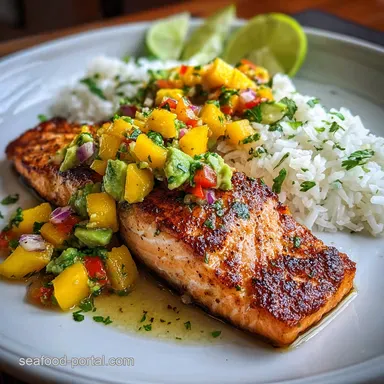
Grilled Lime Salmon Avocado Mango
Ingredients:
Instructions:
Nutrition Facts:
| Calories | 982 calories |
|---|---|
| Protein | 39g |
| Fat | 56g |
| Carbs | 76g |
| Fiber | 7g |
| Sugar | 16g |
| Sodium | 815mg |
