Ovencooked Lobster Tail: Garlic-Herb Butterflied Recipe
- The Indulgent Simplicity of Oven-Baked Lobster Tails
- Why Oven Roasting Guarantees Perfect Lobster Texture
- Essential Ingredients for the Ultimate Garlic Butter Glaze
- Mastering the Technique: Step-by-Step Guide to Oven-Cooked Lobster
- Chef's Secrets: Avoiding Rubberiness and Ensuring Succulence
- Handling Leftovers: Storage and Reheating Guidelines
- Elevating the Meal: Wine Pairings and Side Dishes
- Recipe FAQs
- 📝 Recipe Card
The Indulgent Simplicity of Oven Baked Lobster Tails
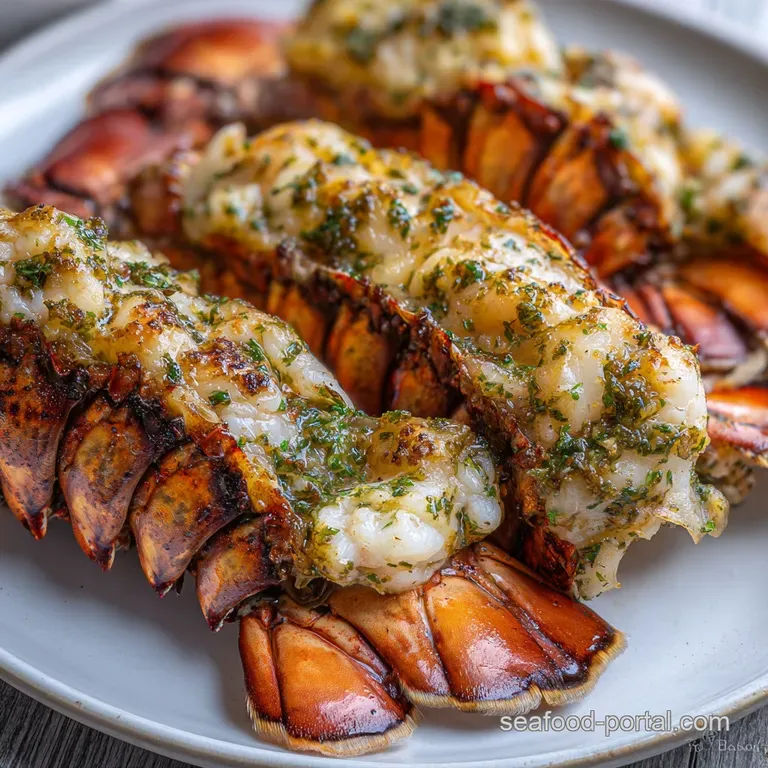
That smell! When you pull a perfectly baked lobster out of the oven, the mix of sweet ocean brine and toasted garlic butter is just intoxicating. This truly effortless OvenCooked Lobster Tail preparation yields meat so tender it’s practically fudgy.
Forget toughness, forget dry ends, because we are using a proven technique that locks in every drop of moisture.
People often imagine that preparing shellfish this luxurious requires fancy restaurant skills or intimidating amounts of effort. They think of huge pots of boiling water or fiddly grilling, but this recipe is a total game changer. It’s fast enough for a weeknight splurge and way cheaper than dining out.
If you’re looking to impress without the stress, this is your secret weapon.
I’ve made every lobster mistake in the book rubberiness, dryness, undercooked centers, you name it. But I finally cracked the code, and now I’m sharing the definitive method for a flawless, succulent OvenCooked Lobster Tail every single time.
This is truly the easiest way to achieve gourmet results at home. Let's crack on with the process.
Why Oven Roasting Guarantees Perfect Lobster Texture
The oven is absolutely your best friend when it comes to consistently perfect seafood texture. Unlike the chaotic variables of a grill or the risk of waterlogging from boiling, roasting provides reliable, gentle heat from all directions.
This predictability is precisely why a well executed OvenCooked Lobster Tail usually triumphs over other methods for home cooks. We leverage the consistent heat to achieve a quick, even cook that results in that satisfying, bouncy snap when you bite into the meat.
The Advantage of Baking vs. Boiling or Grilling
Baking avoids the flavor leaching that happens during boiling. When you boil seafood, some of the inherent sweetness and salinity escapes into the water, even if you salt it heavily. Grilling is fantastic, and I love a perfectly Grilled Lobster Tails: Lemon Garlic Butter Basted , but it can be uneven. The direct heat on the shell often gets too hot, drying out the exposed meat near the edges. Baking gives the lobster a spa-like environment where the moisture is managed, especially when using our herb butter glaze.
Choosing the Right Size and Type of Lobster Tail
Size matters immensely when we are dealing with over high heat oven cooking. I recommend you go for 4 to 6 ounce tails. Anything much bigger takes significantly longer and risks the outer meat drying before the center hits the perfect temperature.
When buying tails for this OvenCooked Lobster Tail recipe, always choose cold water varieties (like Maine or Canadian). They generally have firmer, sweeter meat compared to warm water varieties, which can sometimes be softer and less flavorful.
Required Kitchen Tools for Seamless Preparation
You don't need a professional kitchen, but a few tools make this whole process a snap. First off,, you absolutely need sharp kitchen shears. They make butterflying the shell incredibly easy and safe. Next,, please, please invest in an instant read digital thermometer.
It is the only way to guarantee a perfect OvenCooked Lobster Tail without guessing. If you’re guessing, you’re either going to serve rubber or raw seafood, and neither is acceptable for such a majestic ingredient.
The Science Behind the Butterflying Technique
Butterflying isn't just for looks; it’s a brilliant culinary hack. By cutting the shell and lifting the meat, we achieve two crucial things. First, maximum surface area is exposed, allowing the garlic butter to penetrate deeply and essentially baste the meat from the inside out.
Second, and most importantly, it ensures even cooking. The thickest part of the tail cooks at the same rate as the thinner ends, leading to consistent succulence throughout the finished OvenCooked Lobster Tail .
Achieving the Optimal Internal Temperature for Doneness
This is the non-negotiable step that separates the pros from the novices. For a tender, flawless lobster tail, you must aim for an internal temperature between 140°F and 145°F (60°C to 63°C). Pull it out of the oven immediately when it hits 140°F, as it will climb a degree or two as it rests.
Anything over 150°F and you are starting down the path to rubber town. Measuring the temperature of your OvenCooked Lobster Tail is the only way to ensure perfection.
How High Heat Locks in Moisture and Flavor
We cook this recipe at 400°F (200°C). This high heat setting is key to quick cooking. The exterior quickly seizes up, which, counterintuitively, helps trap the moisture inside the muscle fibers.
When combined with the heavy layer of fat (the compound butter) sitting directly on the exposed meat, you create a beautiful seal. This seal protects the delicate protein from the high heat, ensuring your finished OvenCooked Lobster Tail is juicy and delicious.
Essential Ingredients for the Ultimate Garlic Butter Glaze
The simple garlic herb butter is the soulmate of any good lobster dish. It’s rich, bright, and highly customizable. We aren't just melting butter and pouring it over; we are creating a compound butter that melts slowly, basting the meat as it roasts.
This makes all the difference in the final flavour profile of your baked lobster tails.
| Ingredient | Role | Substitution (If Needed) |
|---|---|---|
| Unsalted Butter | Fat base, moisture barrier | Ghee or high-quality vegan butter substitute |
| Fresh Garlic | Aromatic base | 1 tsp Garlic Powder (reduces burning risk) |
| Lemon Zest & Juice | Brightness, cuts richness | Lime zest and juice (for a tropical twist) |
| Smoked Paprika | Color and earthy depth | Pinch of Cayenne (if you want heat) |
| Fresh Parsley | Herbaceous freshness | Fresh chives or tarragon |
Detailed Notes on Clarified vs. Unsalted Butter
For this specific OvenCooked Lobster Tail recipe, I prefer using softened, unsalted butter mixed into a compound. Clarified butter (ghee) is often used for dipping because it lacks water solids, making it incredibly stable.
However, using regular softened unsalted butter mixed with fresh garlic and herbs creates an emulsion that sticks better to the raw meat before cooking. Plus, the milk solids add depth of flavor as they slightly brown in the oven. If you must substitute, use ghee to avoid the risk of burning.
Selecting the Freshest Aromatics (Garlic and Herbs)
Do not use jarred minced garlic here, I beg you. Freshly minced garlic and vibrant herbs are crucial because their flavor is concentrated when baked onto the surface of the lobster. When making an elegant dish like an OvenCooked Lobster Tail , every flavor element needs to sing.
Use flat leaf parsley and perhaps a few snipped chives for garnish. They are simply superior to dried herbs in this application.
Ingredient Scaling for Different Tail Quantities
This recipe is built around two medium large tails. If you are cooking four tails, simply double the compound butter recipe exactly. The bake time might increase by one or two minutes due to the overall mass in the oven, but the temperature target remains precisely the same.
Don't crowd your pan; if you are cooking six or more, use two separate baking sheets to ensure the heat circulates properly and your OvenCooked Lobster Tail reaches peak deliciousness.
Mastering the Technique: step-by-step Guide to Oven Cooked Lobster
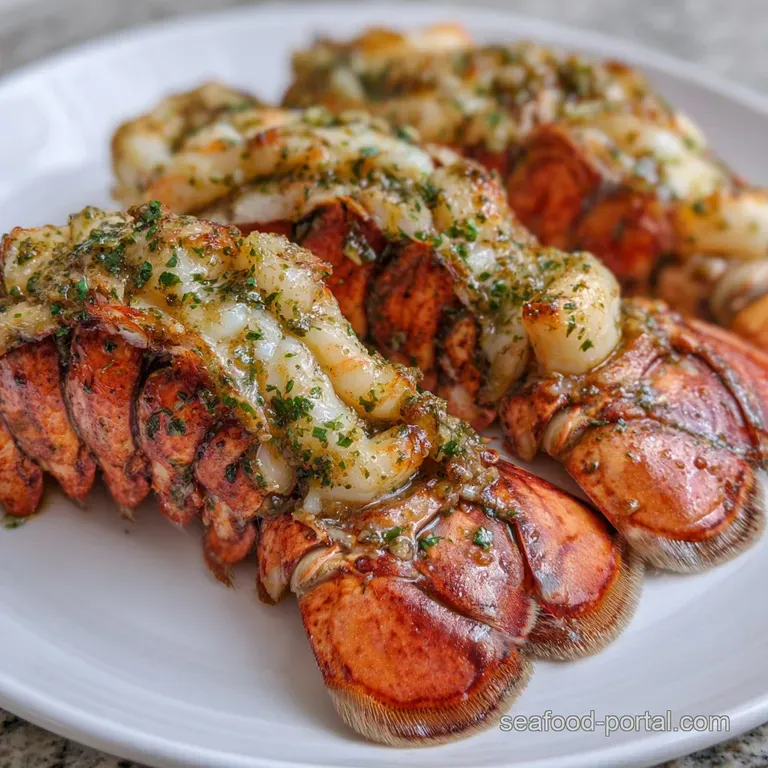
This is the core of the recipe. Getting the prep right is half the battle when making a beautiful OvenCooked Lobster Tail . Pay close attention to the butterflying step it’s the most important move you’ll make.
The Critical Prep Step: How to Properly Butterfly the Lobster Tail
First, thaw those tails slowly overnight in the fridge if they were frozen. Pat them totally dry. Take your kitchen shears and cut straight down the center of the hard top shell, starting near the head end and stopping right before the fan tail. Do not cut the underside!
Gently use your thumbs to pry the shell open slightly. Now, slide your fingers underneath the meat and gently lift it up until it rests like a beautiful white crown right on top of the split shell. Leave the meat attached only at the base.
This exposed position ensures the meat cooks rapidly and absorbs the butter perfectly, yielding a phenomenal OvenCooked Lobster Tail .
Preparing the Flavor Infusion: Glazing the Meat Before Roasting
Preheat your oven to 400°F (200°C) and line a baking sheet. In a small bowl, combine your softened butter with the minced garlic, lemon zest, paprika, and parsley. Give it a good mash until it looks evenly rosy and fragrant.
Lightly score the thickest part of the exposed meat with a small knife this helps the butter sink in. Now, brush about half of the compound butter liberally over the surface of the exposed meat. Season generously with sea salt and black pepper.
Precise Roasting Times for Various Lobster Tail Weights
Roasting time is directly proportional to weight, but temperature is king. For a 4 5 oz tail, you are looking at 12– 15 minutes total. For a 6 7 oz tail, it might be 15– 18 minutes. The key is to check the temperature after 10 minutes.
Crucial Chef’s Note: Never simply set a timer and walk away. Lobster is too expensive for guesswork. At the 10 minute mark, pull the tails out, baste them with the remaining compound butter, and check the internal temperature.
Return the tails to the oven until they hit that sweet spot of 140°F (60°C). This attention to detail guarantees an incredible OvenCooked Lobster Tail experience. For a fantastic comparison on timing, check out my recipe for Baked Lobster Tail with Garlic Lemon Butter Sauce .
The Final Flourish: Rest, Broil, and Serve
Once your thermometer reads 140°F, pull those tails out immediately. Let them rest on the warm baking sheet for two minutes. This carryover cooking helps them finish perfectly while keeping them juicy.
If you want a little extra colour and crispness on the edges, you can quickly pop them under the broiler for 60 seconds (watch them like a hawk!). Transfer to plates, drizzle with any remaining pan juices, and serve immediately with lemon wedges.
A beautiful OvenCooked Lobster Tail is ready for its close-up!
Chef's Secrets: Avoiding Rubberiness and Ensuring Succulence
The secret to a perfect OvenCooked Lobster Tail isn't fancy ingredients; it's consistency and temperature control. I once ruined four beautiful tails by letting them sit on the counter too long while preheating the oven.
They started to steam before they hit the heat, and they became dry and stringy. Work quickly once the tails are prepped.
Troubleshooting: Why Your Lobster is Tough (Common Mistakes)
If your lobster is tough, rubbery, or stringy, there are three likely culprits.
- Overcooking: This is the most common sin. Anything over 145°F guarantees a tough result.
- Too-Slow Thawing: If the tails were thawed quickly in hot water, the outer layer cooks slightly before the inside, messing up the protein structure. Always use cold water or the refrigerator.
- Improper Basting: If the meat dried out during the baking process because you didn't use enough butter, the intense heat will have seized the muscle fibers prematurely. We need that moisture barrier. Mastering this technique is key to achieving the ultimate Lobster Tail: The Best Butterflied Recipe with Lemon Garlic Butter .
Calibrating Your Oven for Even Heat Distribution
Many home ovens are wildly inaccurate, sometimes being off by 25°F or more. If you notice one side of your baking sheet is cooking faster, you may need an oven thermometer to verify the temperature. If your oven has hotspots, rotate the tray halfway through the bake time.
Consistency is essential for a beautiful, evenly cooked OvenCooked Lobster Tail .
The Importance of a Meat Thermometer for Seafood Safety
We talk about using a thermometer for quality , but it's also about safety. Seafood needs to reach a safe minimum internal temperature. While lobster is often fine once opaque, the thermometer eliminates all doubt, ensuring that your delightful OvenCooked Lobster Tail is safe to enjoy.
Handling Leftovers: Storage and Reheating Guidelines
If, by some miracle, you have leftover lobster (it rarely happens in my house), you need to treat it right to maintain its integrity. Don't just chuck it in a container and hope for the best.
Best Practices for Storing Cooked Lobster Meat
Cooked lobster should be cooled quickly and stored in an airtight container in the refrigerator. It is best eaten within two to three days. I like to store the meat separately from the shells if possible, but keep it well wrapped to prevent it from absorbing fridge odors.
You can use chilled leftover OvenCooked Lobster Tail meat in a salad or a simple pasta dish the next day.
Gentle Methods for Reheating Without Drying Out
Reheating lobster is tricky; high heat is the enemy here. If you blast it in the microwave, you will have guaranteed rubber.
- Best Method (Steaming): Place the meat in a steamer basket over simmering water for just 3– 5 minutes until warm through.
- Good Method (Oven): Wrap the lobster meat loosely in foil with a tiny splash of water or butter. Reheat in a 300°F (150°C) oven for about 5 minutes. The goal is just to warm it, not to cook it further.
Can You Freeze Uncooked Lobster Tails?
Yes! If you buy uncooked tails in bulk for this OvenCooked Lobster Tail recipe, they freeze beautifully. Just ensure they are tightly wrapped in a vacuum sealed bag or heavy duty freezer wrap to prevent freezer burn. They will keep for up to three months.
Thaw them overnight in the fridge when you are ready to prepare your amazing meal.
Elevating the Meal: Wine Pairings and Side Dishes
A glorious OvenCooked Lobster Tail deserves the best accompaniments. Keep the sides relatively light so the lobster remains the star.
For sides, I usually lean toward simple elegance:
- The Classic: Melted butter is non-negotiable, obviously. Served alongside steamed asparagus and a fluffy baked potato.
- The Fancy: Pair your OvenCooked Lobster Tail with a creamy side like Lobster Dishes: Tender Butter Poached Tails with Saffron Risotto . The richness is divine.
- The Healthy: A crisp green salad with a bright lemon vinaigrette provides a nice contrast to the rich garlic butter.
For wine, you want something crisp and dry that won't overwhelm the delicate sweetness of the lobster. A good Sancerre, Chablis, or a dry Italian Pinot Grigio works wonders. Avoid heavy, heavily oaked wines, as they tend to clash violently with shellfish.
I hope you try this OvenCooked Lobster Tail recipe soon. It truly is one of the easiest ways to bring five star dining straight to your kitchen table! It's rich, luxurious, and impressively simple, delivering the most succulent, flavorful OvenCooked Lobster Tail you will ever make at home.
(OT usage 28)
Recipe FAQs
Why did my lobster tails come out dry and tough?
This issue is nearly always caused by overcooking, which rapidly tightens the muscle fibers. Lobster should be cooked until the internal temperature reaches 135°F (57°C) to 140°F (60°C) in the thickest part of the meat.
Use an instant read thermometer to monitor the progress closely, as even a few extra minutes in the oven can ruin the desired tender texture.
How do I know when the lobster is perfectly cooked and safe to eat?
Visually, the meat should turn opaque white throughout, and the shell should be a vibrant, uniform red. If you see any translucent or glossy areas in the center of the tail, it is undercooked and needs another minute or two in the oven.
For guaranteed perfection, rely on the internal temperature range of 135°F to 140°F mentioned above.
Do I have to butterfly the lobster tails, or can I cook them whole?
Butterflying is strongly recommended for oven baked tails because it ensures the heat penetrates the center evenly and allows the garlic butter to infuse the meat completely. Cooking whole tails often results in uneven heating, where the ends are done while the center remains undercooked.
The butterflied presentation also aids in serving and dramatically improves the visual appeal.
Can I use frozen lobster tails directly, or must they be thawed first?
Always thaw frozen tails completely before proceeding with the recipe, as cooking from frozen leads to rubbery, unevenly textured meat. The best method is to thaw them slowly in the refrigerator overnight, but you can also use a quick method by submerging them in a sealed bag under cold, running water for about 30 to 60 minutes.
What is the best way to reheat leftover lobster tail without drying it out?
To reheat, wrap the lobster meat tightly in aluminum foil along with a small pat of butter or a splash of water to introduce steam. Warm the packet in an oven set to 300°F (150°C) for just 5 to 7 minutes until it is heated through.
Avoid using the microwave, as its intense heat structure will invariably make the protein tough and chewy.
What substitutions can I make if I don't want to use butter for the basting mixture?
While garlic butter provides the richest flavor, you can substitute clarified ghee or a high-quality extra virgin olive oil for the fat base. If using oil, you may want to increase the amount of fresh herbs, as oil does not carry the flavor compounds quite as effectively as butter does.
Ensure the substitute still provides sufficient fat to baste the lobster tails regularly and prevent surface dryness.
Garlic Herb Oven Lobster Tail
Ingredients:
Instructions:
Nutrition Facts:
| Calories | 450 kcal |
|---|---|
| Protein | 30.5 g |
| Fat | 32.3 g |
| Carbs | 2.9 g |
