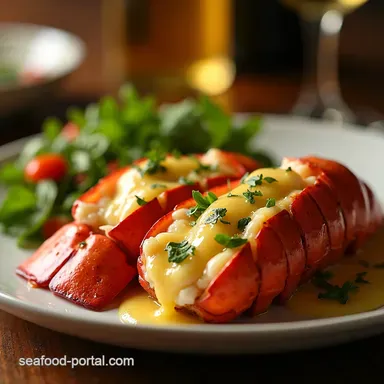
Simply Spectacular Ovenbaked Lobster Tails with Garlic Herb Butter
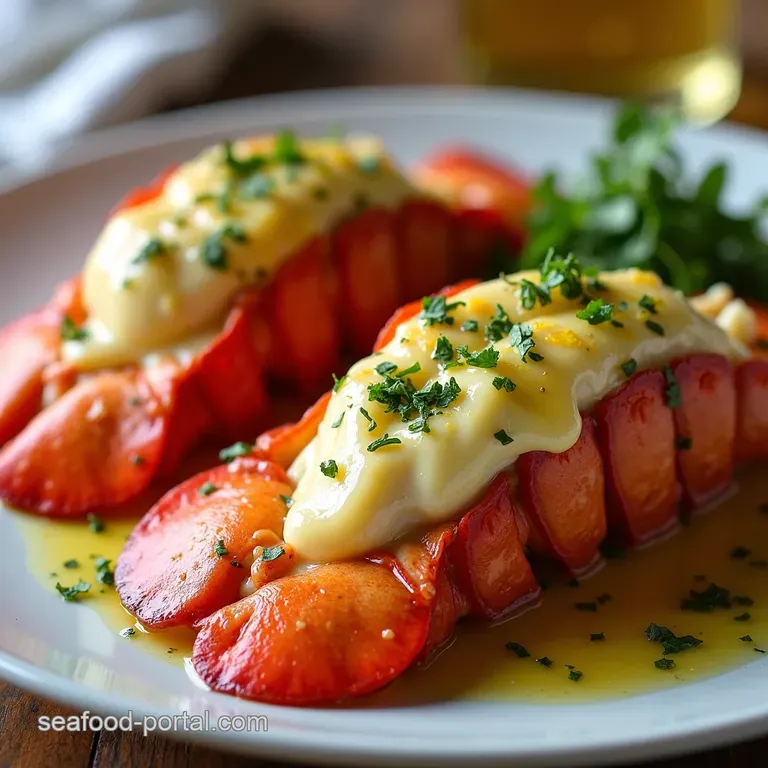
- Why Oven-Baked Lobster Tails Reign Supreme Over Boiling
- The Elegant Simplicity of Succulent Baked Seafood
- Gathering Your Components for Superior Oven-Baked Lobster Tails
- The Essential Method for Preparing Oven-Baked Lobster Tails
- Elevating Your Experience: Pairing and Storage Secrets
- Troubleshooting and Customizing Your Baked Lobster Journey
- Frequently Asked Questions
- 📝 Recipe Card
Why Oven Baked Lobster Tails Reign Supreme Over Boiling
When culinary indulgence calls, many immediately think of steaming pots or sizzling grills for seafood preparation. However, for consistently tender, flavour infused results with minimal fuss, the technique of baking lobster tails in the oven stands head and shoulders above the competition.
Boiling, while traditional, often leads to leaching of the lobster's natural, delicate flavour into the water, resulting in slightly duller meat. Grilling, conversely, carries the risk of drying out those precious pockets of sweetness if the heat isn't managed perfectly.
The Oven Baked Lobster Tails method, particularly when employing the shell splitting technique, allows the rich compound butter to penetrate deeply while the ambient heat gently coaxes the meat to perfection.
This approach is simply the most reliable route to achieving that restaurant quality texture every single time.
The Elegant Simplicity of Succulent Baked Seafood
There’s a magic that happens when simple, high-quality ingredients meet gentle, controlled heat. This preparation method transforms humble lobster tails into a breathtaking centerpiece.
It’s inherently straightforward the true complexity lies not in the technique, but in sourcing the best possible components. The goal of this Oven Baked Lobster Tail In Foil approach (though we prefer parchment for airflow) is to let the lobster’s natural sweetness sing, supported, but never overshadowed, by bright aromatics.
Achieving Flawless Results with Minimal Effort
The beauty of this Oven Baked Lobster Tails Recipe is its low demand on your time and technical skill. With only about 15 minutes of active preparation before the oven takes over, you can focus on accompanying side dishes or simply enjoying a glass of wine.
We aim for results that look spectacular the exposed, bright red and white meat glistening under melted butter but require almost no complex technique, placing this firmly in the easy difficulty bracket.
Setting the Scene: When to Serve These Gourmet Tails
While simple enough for a Tuesday night treat, these tails carry an undeniable air of celebration. Imagine serving these Best Oven Baked Lobster Tails for an anniversary dinner, a small gathering of friends, or as the star of a romantic, home cooked meal.
The presentation, achieved by elegantly butterflying the tails, immediately elevates the dish, making any occasion feel instantly more special without demanding hours spent hovering over a stove.
A Celebration of Sweet, Tender Lobster Meat
The ultimate reward of mastering How To Cook Lobster In The Oven is the texture achieved. The meat should yield easily, maintaining a satisfying springiness without any hint of rubberiness.
This succulence is directly attributable to the slow, even heat surrounding the meat as it bakes, protected somewhat by the shell yet bathed in flavourful fat. This gentle cooking environment preserves the integrity of the muscle structure, ensuring every bite is as tender as the last.
Gathering Your Components for Superior Oven Baked Lobster Tails
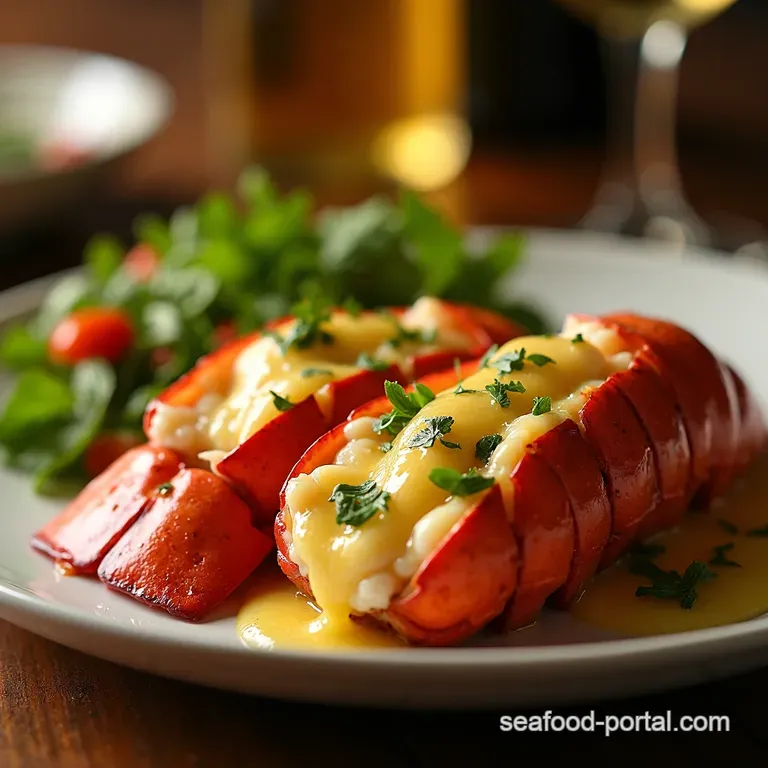
Success in any elegant dish starts with quality components. For this Lobster Tail With Garlic Butter masterpiece, the focus is on fresh aromatics and, naturally, excellent lobster.
We are using approximately 4 tablespoons of softened unsalted butter to coat two 6-to-8-ounce tails generously, alongside a couple of finely minced garlic cloves and fresh herbs, creating a robust foundation for flavour infusion.
The Core Components: Lobster and Seasoning Base
The seasoning base requires attention to detail. We combine the softened butter with two minced cloves of fresh garlic, finely chopped fresh parsley, and just half a teaspoon of fresh thyme leaves.
A crucial quarter teaspoon of fine sea salt and a pinch of freshly ground black pepper enhance the natural salinity of the seafood. For a subtle warmth and attractive colour, a tiny pinch of smoked paprika is highly recommended but entirely optional.
Procuring and Preparing Fresh Lobster Tails
Whether you purchase them fresh from the market or use high-quality frozen tails, proper thawing is paramount if you are not starting fresh. If using frozen, ensure they are fully thawed in the refrigerator overnight.
Regardless of their initial state, before any butter application, the tails must be meticulously patted dry using paper towels. Excess surface moisture is the enemy of good baking, as it encourages steaming rather than roasting.
Selecting The Perfect Finishing Touches
Beyond the baking butter, a final flourish is necessary to brighten the deep, rich flavour profile. Fresh lemon juice, applied right as the tails come out of the heat, provides essential acidity that cuts through the richness of the butter.
A final squeeze of fresh lemon is non-negotiable for balance in this Lobster In Oven Recipe .
Related Recipes Worth Trying
- Simple Baked Lobster Tails with GarlicHerb Butter Juicy Tender — This foolproof recipe shows you exactly how to bake lobster tails to juicy perfection using a vibrant garlicherb butter Say goodbye to overcooked seafood
- Broiled Frozen Lobster Tails Simple Garlic Herb Butter Recipe — Stop worrying about tough seafood Learn how to cook frozen lobster tails from frozen using a genius steamandbroil method for the plumpest results Simple...
- Foolproof Sous Vide Lobster Tails with GarlicHerb Butter — Achieve perfectly tender Sous Vide Lobster Tails every time This easy recipe uses precision cooking for unbelievably juicy meat ready fast enough for a...
The Essential Method for Preparing Oven Baked Lobster Tails
This process relies on a specific preparatory step that defines the success of How To Bake Lobster Tails : butterflying the shell to expose the meat. Preheat your oven to Oven Baked Lobster Tails 400 Degrees Fahrenheit (approximately 200° Celsius).
Line a sturdy baking sheet with parchment paper or foil for easy cleanup the melted butter is liquid gold you won't want to scrub off.
Prepping the Tails: Splitting and Cleaning for Maximum Butter Penetration
The most critical step is preparing the shell. Place the tail shell side down. Using sharp kitchen shears, carefully cut directly down the centre of the top shell, starting from the pointed end and stopping just before the thick meat end where the shell meets the body. Do not cut through the underside.
Gently pry the shell open along that cut. Now, lift the white meat gently up and place it nestled on top of the split shell halves. This technique not only looks magnificent but ensures the meat cooks evenly while staying saturated by the melting butter.
Baking Dynamics: Temperature and Timing Precision
Once butterflied, brush about half of your prepared garlic herb mixture liberally over the exposed meat. Place the tails on the prepared baking sheet. The Lobster Tail Baking Time And Temp sweet spot is 400° F for roughly 12 to 15 minutes, depending entirely on the size of your tails.
Smaller tails might be done closer to 12 minutes, while very large ones may require 16.
The Crucial Step: Basting for Unforgettable Moisture
During the baking process, the flavours locked within the melting butter need to circulate. About halfway through the cooking time, use a pastry brush to baste the exposed meat with the butter already pooled on the shell.
This continuous bathing keeps the surface moist and drives the garlic and herb essence into the meat fibres.
Checking for Doneness: Visual Cues for Perfection
Do not rely solely on time; rely on sight. The meat must be opaque white throughout and firm to the touch when gently prodded. If you are using an instant read thermometer, aim for an internal temperature of 140° F ( 60° C) at the thickest part of the tail.
Remember, lobster overcooks extremely quickly; pull it when it just reaches this point, as carryover heat will complete the process beautifully while you plate.
Elevating Your Experience: Pairing and Storage Secrets
Once removed from the heat, immediately brush the tails with the remaining reserved garlic butter and finish with a bright squeeze of fresh lemon juice. This final step is crucial for flavour contrast.
Serving Suggestions: What Complements Baked Lobster Best
To truly honour this elegant preparation, choose sides that offer textural and flavour counterpoints. Creamy Parmesan risotto or rich Dauphinoise potatoes pair beautifully, soaking up the extra garlic butter.
For a lighter approach, simple steamed asparagus or green beans tossed with toasted almonds provide a crisp, fresh counterpoint. A chilled, dry white wine like a Sancerre or Pinot Grigio complements the sweetness perfectly.
Safely Storing and Reheating Leftover Oven Baked Lobster Tails
Leftovers, though rare, are best handled with care to prevent drying. Store cooled lobster tails in an airtight container in the refrigerator for up to two days. To reheat, avoid the microwave.
Instead, place the tails (shell side down) on a foil lined tray, add a teaspoon of water or melted butter beneath the tail meat, cover tightly with foil, and warm in a 300° F ( 150° C) oven for 5 to 7 minutes until heated through.
Flavor Twists: Beyond Classic Garlic and Herbs
While the classic garlic and herb profile is superb, feel free to experiment. Consider incorporating ingredients like a teaspoon of Dijon mustard into the butter for a subtle tang, or adding a whisper of cayenne pepper for heat.
For a richer, more decadent feel, a splash of dry sherry can be whisked into the butter before application.
Troubleshooting and Customizing Your Baked Lobster Journey
Even with the straightforward nature of Oven Baked Lobster Tails , minor adjustments might be needed depending on your oven or the size of your catch.
Flavor Twists: Beyond Classic Garlic and Herbs
If you crave a different aromatic profile, try substituting the thyme with rosemary for a more robust, piney flavour that pairs wonderfully with the subtle smokiness from the paprika, if you chose to include it.
For an Asian inspired take, swap the herbs for finely grated fresh ginger and a drizzle of sesame oil in the butter mixture before baking.
Troubleshooting and Customizing Your Baked Lobster Journey
The most common pitfall is rubbery texture, which signals overcooking. If your tails are small, test them at the 10-minute mark. If you find the shells are darkening too quickly before the meat is cooked, loosely tent the tails with a small piece of foil for the remaining bake time to shield them slightly from direct heat while maintaining the excellent Lobster Tail Baking Time And Temp setting.
This ensures the interior cooks evenly before the exterior burns.
Frequently Asked Questions
How do I know when my Oven Baked Lobster Tails are perfectly cooked? I'm terrified of rubbery seafood!
That’s a very common fear nobody wants chewy lobster! The meat should turn opaque white all the way through and feel firm when gently pressed with a fork. For the most accurate results, use an instant read thermometer; the internal temperature should hit 140°F (60°C).
If you’re unsure, take them out just before they look done, as residual heat does the rest of the work.
Can I use frozen lobster tails for this recipe, or must they be fresh?
Absolutely, you can use frozen tails it saves a packet and they work brilliantly! The key is to thaw them properly overnight in the fridge, ensuring they are completely dry before you start buttering them.
Moisture is the enemy of a good bake, so give them a good pat down with paper towels before splitting and seasoning.
What's the best way to store any leftover Oven Baked Lobster Tails, and can I reheat them?
If you’re lucky enough to have leftovers, cool them quickly and store them in an airtight container in the fridge for up to two days don't leave them hanging about! Reheating should be gentle; the best method is to wrap them loosely in foil with a tiny knob of fresh butter and warm them in a low oven (around 300°F or 150°C) for just 5 8 minutes until warmed through.
Microwaving is a risky business with lobster!
My lobster meat didn't lift out easily when I tried to butterfly the shell. What did I do wrong?
That often happens if the initial cut wasn't deep enough or if the tail wasn't completely thawed. Remember to use sharp kitchen shears and cut firmly right down the centre spine of the top shell, stopping before you cut the underside membrane.
Then, gently use your fingers or a spoon to coax the meat up and lay it over the shell halves; this technique ensures it cooks evenly and looks smashing!
Are Oven Baked Lobster Tails high in calories, and what kind of sides go well with them?
Lobster itself is quite lean and protein packed, but the butter definitely adds richness, so enjoy it! To keep it balanced, pair them with lighter sides like steamed asparagus or a fresh green salad.
If you're after a proper treat, you can’t beat serving them alongside a creamy risotto or some roasted new potatoes it’s the perfect indulgence.
Foolproof Oven Baked Lobster Tails with Garlic Butter Recipe