Fresh Tuna Recipe with Lemon and Garlic
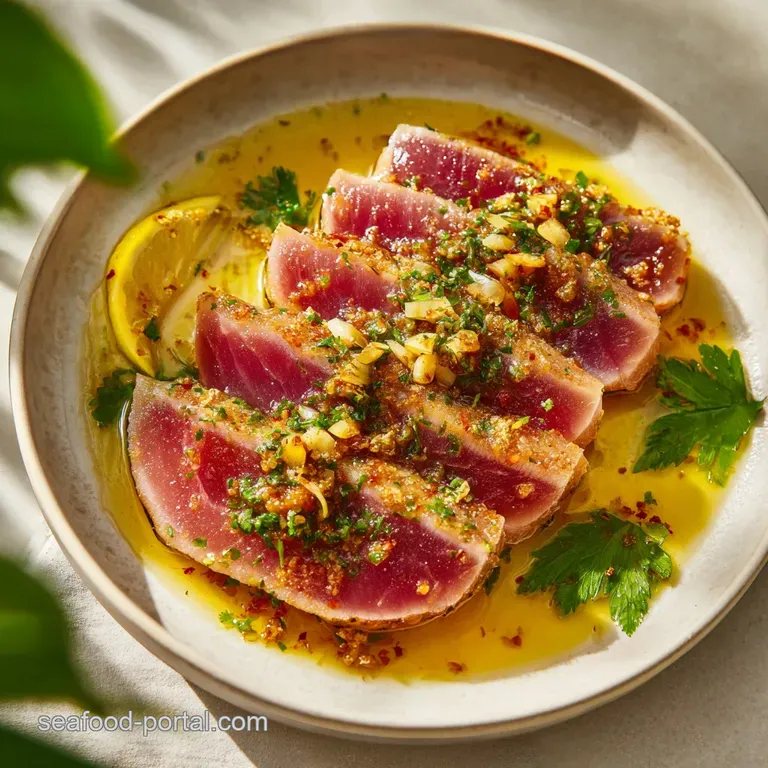
- Time: Active 15 mins, Passive 4 mins, Total 19 mins
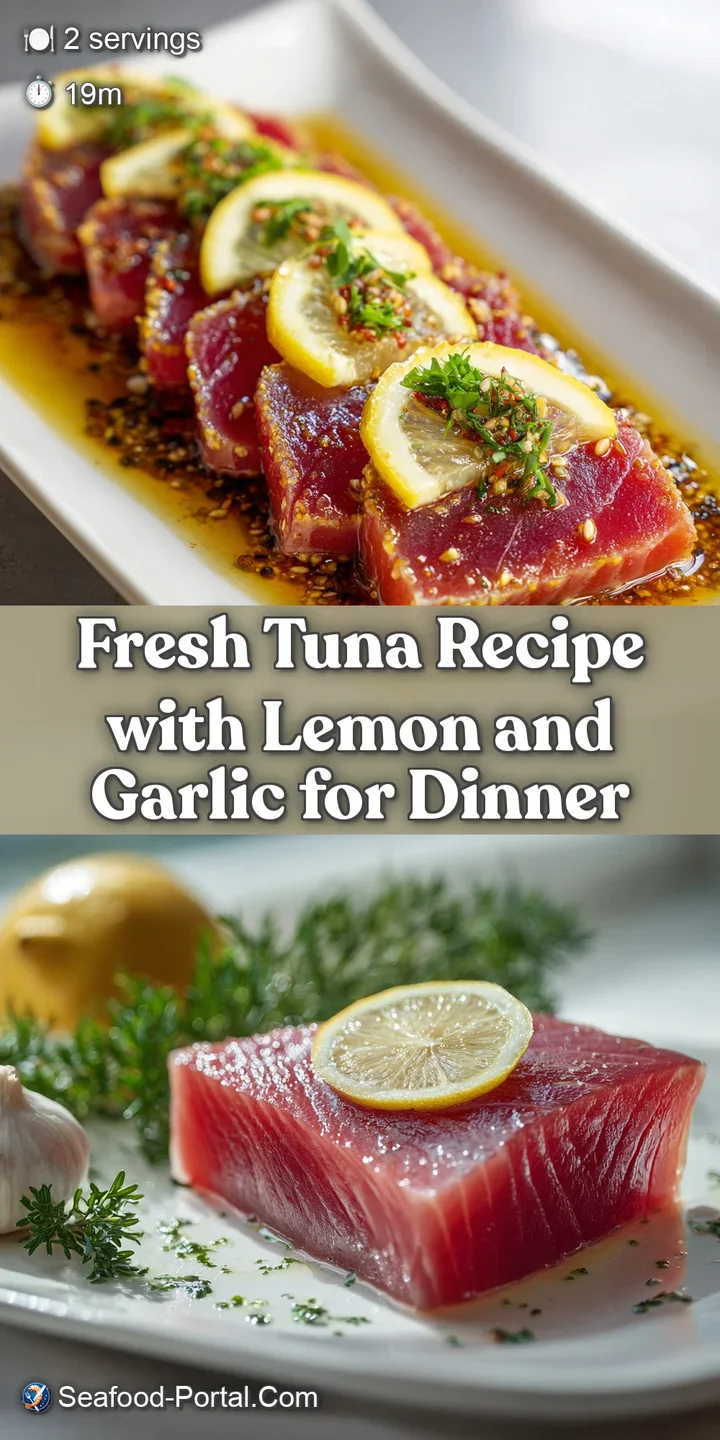
- Flavor/Texture Hook: Peppery, salt crusted exterior with a velvety, melt in-the mouth center
- Perfect for: Impressive date nights or a lightning fast, healthy weeknight dinner
- Master This Fresh Tuna Recipe with Lemon and Garlic
- The Physics of over High heat Searing
- Key Ingredients for Peak Flavor
- Essential Tools for Professional Searing
- Step By Step Preparation Guide
- Fixing Common Cooking Errors
- Scaling Your Meal Properly
- Storing and Reusing Leftovers
- Perfect Side Dish Pairings
- Very High in Sodium
- Recipe FAQs
- 📝 Recipe Card
Master This Fresh Tuna Recipe with Lemon and Garlic
The first time I tried to sear a tuna steak at home, it was a disaster. I was so worried about it being raw that I cooked it until it looked like a grey pencil eraser. It was dry, flavorless, and honestly, a bit heartbreaking given how much I'd spent on the fish.
But then I saw a chef at a tiny coastal shack in Sicily do something different. He didn't just "cook" the fish; he treated it like a high end steak, using a blistering hot pan and a clock. The sizzle was deafening, the aroma of garlic hitting hot oil was intoxicating, and the result was life changing.
This fresh tuna recipe with lemon and garlic will quickly become your go to weeknight dinner. We are going for a specific contrast here: a heavy, peppery crust that shatters slightly when you bite into it, giving way to a cool, silky middle.
It’s a dish that feels expensive but costs less than a takeout pizza and takes half the time to make. Trust me, once you nail the timing, you'll never order tuna at a restaurant again.
We're focusing on the harmony between the rich, fatty tuna and the sharp, clean notes of lemon. By "razor thinning" the garlic, we ensure it crisps up like little golden chips rather than burning into bitter nubs. It’s all about the heat and the timing.
Let’s get your skillet screaming hot and dive into the details of why this method actually works every single time.
The Physics of over High heat Searing
Maillard Reaction: High heat triggers a chemical reaction between amino acids and reducing sugars, creating that savory, browned crust.
Protein Denaturation: Quick searing prevents the internal proteins from tightening too much, which is what keeps the center velvety rather than chewy.
Acidic Brightening: The citric acid in the lemon juice breaks through the heavy fats of the fish, acting as a flavor enhancer that wakes up your palate.
Comparing Cooking Methods
| Method | Time | Texture Outcome | Best For |
|---|---|---|---|
| Stovetop (Cast Iron) | 4 mins | Hard crust, raw center | Traditional Ahi style |
| Oven (Broil) | 6 mins | Even browning, cooked through | Those who dislike raw fish |
| Air Fryer | 5 mins | Very dry exterior | Quick meal prep cleanup |
The stovetop method is my absolute favorite because it gives you total control. You can literally see the heat climbing up the side of the steak, which tells you exactly when to flip. If you use an oven, you lose that visual cue, and it's much easier to overcook the delicate interior.
Key Ingredients for Peak Flavor
Component Analysis Table
| Ingredient | Science Role | Pro Secret |
|---|---|---|
| Fresh Tuna | The structural protein | Use Ahi or Yellowfin; must be at least 1 inch thick to prevent overcooking. |
| Garlic Cloves | Aromatic infusion | Slice them so thin they're translucent; they'll toast into "chips" in the oil. |
| Lemon Zest | Volatile oil source | Grate only the yellow part; the white pith is bitter and ruins the fragrance. |
| Coarse Pepper | Texture agent | Crack the peppercorns yourself for a "shatter" effect that pre ground pepper lacks. |
For this dish, the quality of your fish is everything. If you can't find sushi grade tuna, look for "Previously Frozen" steaks that are firm to the touch and have a deep, uniform color. Avoid anything that looks dull or has "rainbow" shimmering scales on the surface, as that's a sign of oxidation. If you find yourself craving a more nostalgic vibe, you might enjoy the textures in my Classic Tuna Casserole recipe which uses canned tuna in a totally different, creamy context.
Essential Substitutions
| Original Ingredient | Substitute | Why It Works |
|---|---|---|
| Coarse Sea Salt | Kosher Salt | Similar grain size. Note: Provides even coverage without over salting. |
| Fresh Parsley | Fresh Cilantro | Adds a bright, citrusy note. Note: Changes the profile to a more Latin/Asian fusion. |
| Extra Virgin Olive Oil | Grapeseed Oil | Higher smoke point. Note: Use if you struggle with your oil smoking too early. |
Essential Tools for Professional Searing
You don't need a kitchen full of gadgets, but a cast iron skillet is a game changer here. It holds heat better than stainless steel or non stick, which is crucial for getting that instant "shatter" crust without the fish sticking. If you don't have one, use your heaviest stainless steel pan.
A set of fish spatulas is also incredibly helpful. They are thin and flexible, allowing you to slide under the steak without tearing the delicate crust we’re working so hard to build. And please, use a microplane for the lemon zest.
It produces a snow like texture that distributes the flavor evenly rather than leaving you with big, chewy bits of peel.
Chef's Tip: Freeze your garlic for 10 minutes before slicing. It firms up the cloves, making it much easier to get those paper thin, "Goodfellas style" slices that melt into the sauce.
step-by-step Preparation Guide
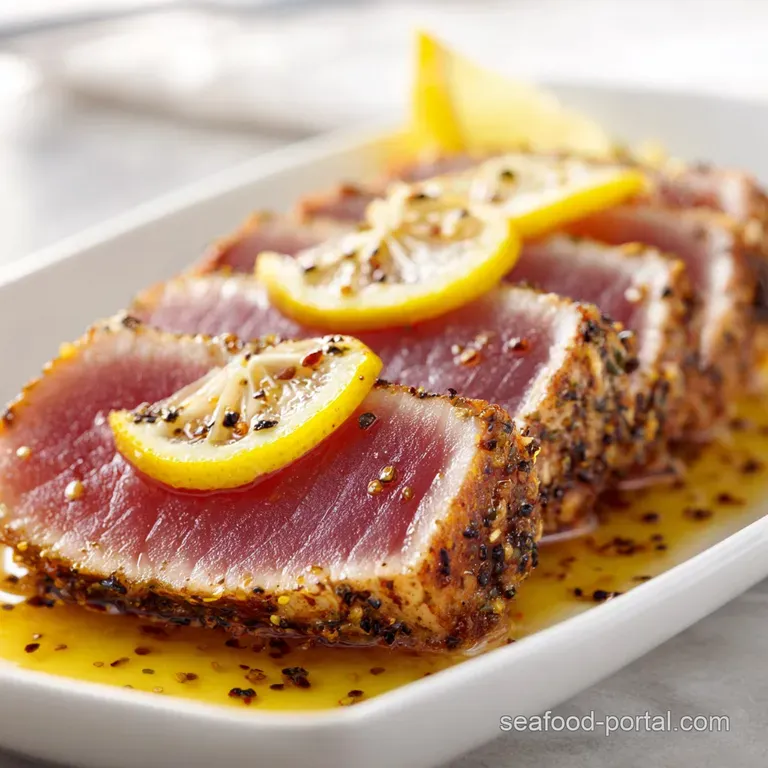
- Dry the fish. Pat the 2 (170g) tuna steaks with paper towels until they are bone dry. Note: Moisture is the enemy of a good sear; it creates steam instead of a crust.
- Season heavily. Press the 1 tsp (6g) sea salt and 1 tbsp (10g) cracked pepper firmly into both sides of the fish. The pepper should form a visible layer.
- Preheat the pan. Place your skillet over high heat for 3 full minutes. Wait until you see a faint wisp of smoke.
- Infuse the oil. Add the 3 tbsp (45ml) olive oil and the 15g of sliced garlic. Note: Only let the garlic dance in the oil for 30 seconds until it turns golden.
- Add the tuna. Carefully place the steaks in the pan, moving them away from you to avoid splashes. Listen for a loud, aggressive sizzle.
- Sear side one. Let the fish cook undisturbed for 1.5 to 2 minutes. Watch for the bottom 1/4 of the steak to turn opaque.
- The Flip. Flip the steaks gently. Add the 0.5 tsp (1g) red pepper flakes and 1 tsp (2g) lemon zest into the oil around the fish.
- Sear side two. Cook for another 1 to 2 minutes. The center should still look pink/red when viewed from the side.
- The Finishing touch. Pour the 1 tbsp (15ml) lemon juice over the steaks. The liquid will bubble and create a sudden steam cloud.
- Rest and garnish. Remove from heat immediately. Sprinkle with 1 tbsp (1g) parsley and let rest for 2 minutes before slicing.
Fixing Common Cooking Errors
Why Your Tuna Is Tough
The most common culprit is simply overcooking. Tuna is very lean, meaning it doesn't have the fat marbling of a ribeye to keep it moist. If you cook it past medium rare, the proteins tighten and squeeze out all the moisture, leaving you with a texture similar to canned tuna but drier.
Always pull the fish off the heat when the center is still bright red; the carryover heat will finish it to a perfect rare/medium rare.
Troubleshooting Table
| Problem | Root Cause | Solution |
|---|---|---|
| Garlic is black/bitter | Added too early or heat too high | Add garlic only 30 seconds before the fish or turn heat down slightly after adding. |
| No crust/grey color | Pan wasn't hot enough or fish was wet | Preheat until oil shimmers and always pat the fish dry with towels. |
| Fish sticks to pan | Tried to flip too early | Wait for the fish to "self release." The crust will let go of the pan once it's formed. |
Common Mistakes Checklist
- ✓ Never use a cold pan - it must be preheated for at least 3 minutes.
- ✓ Don't move the fish around once it hits the oil; let it sit to build the crust.
- ✓ Avoid using "low-fat" oil sprays; you need the fat for heat conduction.
- ✓ Ensure the lemon juice is fresh squeezed; bottled juice has a metallic aftertaste.
- ✓ Use a timer - 30 seconds can be the difference between silky and dry.
Scaling Your Meal Properly
If you're cooking for a crowd, don't try to cram four or five steaks into one pan. You'll drop the temperature of the skillet instantly, and the fish will steam in its own juices rather than searing. It's much better to work in batches.
Keep the first batch on a warm plate covered loosely with foil while you finish the second.
For scaling down to a single serving, the process is the same, but you might find the oil pools on one side of the pan. Just tilt the skillet occasionally to make sure the garlic doesn't burn in a dry spot. If you enjoy this flavor profile but want something more traditional for a family gathering, you could check out this Proper Tuna recipe which scales beautifully for large groups.
Storing and Reusing Leftovers
Storage: Put any leftovers in an airtight container in the fridge for up to 2 days. Be warned: the lemon juice will continue to "cook" the fish (like a ceviche) the longer it sits, so the texture will change.
Zero Waste: Don't throw away the garlic lemon oil left in the pan! It's liquid gold. Drizzle it over some steamed asparagus or stir it into a bowl of pasta the next day. If you have leftover tuna, don't reheat it it will become incredibly dry.
Instead, flake it cold over a Caesar salad or tuck it into a wrap with some avocado and sprouts for a killer lunch.
Perfect Side Dish Pairings
The Light & Zesty Pair
A simple arugula salad with shaved parmesan and a balsamic glaze is the ultimate partner for this tuna. The peppery bite of the greens mirrors the black pepper crust on the fish, while the acidity of the balsamic complements the lemon.
The Hearty Dinner Pair
If you're looking for something more substantial, try serving the steaks over a bed of garlic infused quinoa or a quick lemon risotto. The grains soak up the extra lemon garlic butter from the pan, making every bite incredibly flavorful.
Flavor Map List
- Sweet: The natural, mild sweetness of high-quality raw tuna.
- Savory: The deep, toasted notes of the razor thin garlic.
- Bright: The high toned zing of fresh lemon zest and juice.
- Rich: The velvety mouthfeel of the extra virgin olive oil and the rare fish center.
The beauty of this dish is its simplicity. You aren't masking the fish; you're just giving it the best possible supporting cast. It’s accessible, fast, and honestly, one of the most satisfying things you can cook in under 20 minutes. Give it a shot tonight just remember to trust the heat!
Very High in Sodium
1172 mg mg of sodium per serving (51% of daily value)
The American Heart Association recommends limiting sodium intake to no more than 2,300mg per day for most adults. This recipe exceeds half the daily recommended value in a single serving.
Tips to Reduce Sodium
-
Reduce Sea Salt-25%
The sea salt is a major source of sodium. Reduce the amount of sea salt from 1 tsp (6g) to 1/2 tsp (3g) or less. You can always add more at the table if needed, but starting with less is key.
-
Check Tuna Sodium-15%
Ensure your tuna steaks are fresh and naturally low in sodium. Avoid any pre-seasoned or marinated tuna, as these often contain added salt. Look for labels that say 'no salt added'.
-
Enhance Lemon Flavor-10%
Increase the lemon zest and juice. Add an extra 1/2 tsp of zest and a few drops of lemon juice after cooking to brighten the flavor and reduce the perceived need for salt.
-
Adjust Red Pepper Flakes-5%
Use red pepper flakes judiciously, as they can sometimes contribute a salty sensation. Consider using only 1/4 tsp or adjusting to your taste preference.
-
Experiment with Herbs
Boost flavor without adding sodium by experimenting with a variety of fresh or dried herbs and spices. Consider dill, oregano, basil, or thyme to complement the tuna and lemon.
Recipe FAQs
Can I substitute olive oil with a lower smoke point oil like butter?
No, use an oil with a higher smoke point. Butter burns quickly under the high heat required for a proper sear, resulting in bitter, black solids.
How to ensure the tuna steak is perfectly rare in the center?
Sear for 1.5 to 2 minutes per side on high heat. Watch the side of the steak; pull it off the heat when the opaque cooked portion is only about one quarter up the side.
How to properly prepare the garlic so it flavors the oil without burning?
Slice the garlic paper thin and add it immediately before the tuna. The thin slices will toast to golden chips quickly; if you want to practice this thin slicing technique on other vegetables, see how we adapt it for the [Pan-Seared Fresh Skate recipe].
Is it true that freezing the tuna beforehand helps achieve a better sear?
No, this is a common misconception regarding this specific method. While patting it very dry is essential, starting from frozen will cause the interior to steam excessively before the exterior can properly brown.
How to prevent the lemon juice from curdling the garlic infused oil when added?
Remove the pan from the heat completely just before adding the lemon juice. The instantaneous temperature drop prevents the acid from causing a harsh reaction with the hot oil and fish proteins.
How to make sure the pepper crust adheres firmly to the tuna steak?
Press the cracked pepper firmly onto the fish after patting it completely dry. The slight moisture remaining on the surface, combined with the pressure, acts like an adhesive for the crust.
What is the best way to reheat leftover seared tuna?
No, you should not reheat this tuna via traditional cooking methods. The residual heat will continue cooking the rare center, resulting in dry, tough fish; it is best eaten cold flaked over a salad.
Fresh Tuna Recipe Lemon Garlic
Ingredients:
Instructions:
Nutrition Facts:
| Calories | 377 kcal |
|---|---|
| Protein | 41.8 g |
| Fat | 21.6 g |
| Carbs | 2.4 g |
| Fiber | 0.6 g |
| Sugar | 0.3 g |
| Sodium | 1172 mg |
