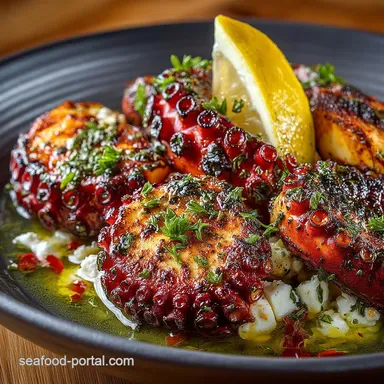
Tender Perfection Easy Greek Grilled Octopus with Lemon Olive Oil and Oregano

- Bypassing the Chewiness: Unlocking True Mediterranean Octopus Texture
- Why This Method Guarantees Perfect Easy Greek Grilled Octopus
- Essential Components for an Aegean Marinade
- Phase One: Achieving Tender Perfection Through Gentle Simmering
- Phase Two: Marinating and Charring Your Easy Greek Grilled Octopus
- Serving Suggestions That Echo a Seaside Taverna
- Recipe FAQs
- 📝 Recipe Card
Bypassing the Chewiness: Unlocking True Mediterranean Octopus Texture
The mystique surrounding octopus often keeps home cooks away from the grill. We’ve all encountered that rubbery, tooth-challenging specimen masquerading as a delicacy. But let me assure you, mastering the Easy Greek Grilled Octopus is far simpler than its reputation suggests.
The key isn't brute force or fancy equipment; it’s patience and understanding the two essential phases: tenderizing and searing. When done right, octopus tentacles transform into something silken, almost creamy on the inside, contrasted beautifully by a smoky, crisp exterior.
This approach cuts through complexity to deliver authentic, tender results every single time, establishing this as a cornerstone of your Greek Seafood Recipes repertoire.
Why This Method Guarantees Perfect Easy Greek Grilled Octopus
This streamlined recipe for Grilled Octopus focuses on maximizing tenderness before any high heat is introduced. We treat the initial cooking stage as a gentle infusion bath, setting the stage for the final, flavour-packed char.
This method ensures that even if you are attempting this for the first time, you will achieve the sought-after texture that defines excellent Greek Style Grilled Octopus .
The Secret to Silky Smooth Tentacles: Pre-Cooking Prep
The critical first step involves slow simmering. We are not trying to boil the life out of the octopus; rather, we are coaxing the collagen in the connective tissue to break down slowly.
By using a combination of red wine vinegar, which subtly aids in tenderizing the protein structure, and aromatics, we prepare the Octopus Tentacles Recipe meat to accept the intense heat of the grill without seizing up. This pre-cook is non-negotiable for achieving tender perfection.
From Sea to Sizzle: Setting the Stage for Authentic Flavor
Once tender, the octopus is not merely slapped onto the grate. It must be thoroughly dried and gently coated in a bright, zesty marinade. This marinade, featuring high-quality olive oil, pungent fresh garlic, and, most importantly, robust dried Greek oregano, acts as a flavour conduit.
When it hits the hot grill, the olive oil protects the surface from drying out while the herbs slightly caramelize, creating a complex outer crust that tastes exactly like a seaside taverna.
Why Fear of Grilling Octopus Ends Here
Many Easy Octopus Recipes fail because they try to cook the octopus and tenderize it simultaneously on the grill. This inevitably leads to scorching on the outside before the inside softens.
Our two-stage approach isolates these processes: Stage One handles the texture, and Stage Two handles the magnificent smoky char. This separation of concerns makes this Simple Greek Grilled Octopus Recipe foolproof.
Essential Components for an Aegean Marinade

The hallmark of any great Greek dish is its reliance on superlative, simple ingredients that speak for themselves. For this marinade, we focus on synergy rather than overwhelming the natural flavour of the seafood.
The Holy Trinity: Olive Oil, Lemon, and Dried Oregano
You need a substantial amount of good, fruity Extra Virgin Olive Oil, not just for moisture during grilling, but for the final, liberal dressing. The lemon juice must be fresh; bottled juice lacks the necessary aromatic brightness needed to cut through the richness of the oil and the smokiness of the grill.
Finally, dried Greek oregano is paramount. Its intensity and slightly woody notes are far superior to its fresh counterpart for this specific application, providing that unmistakable Aegean scent.
Tools of the Trade: Necessary Equipment for Tenderizing
For the initial tenderizing simmer, you must use a large stockpot with a lid that fits snugly. The goal is to maintain a very low, controlled heat, barely a ripple on the surface. Boiling the liquid vigorously will shock the proteins and make the octopus tough, even after hours of cooking.
Selecting the Best Octopus for Grilling Success
For this Grilled Octopus Recipe , aim for a smaller, whole octopus, ideally around 1.5 to 2 pounds (about 1 kg). Smaller octopuses tend to have thinner tentacles, which cook more evenly during the simmer.
Always ask your fishmonger to clean it for you, removing the beak and ink sac, which saves considerable time and mess.
Beyond the Basics: Optional Flavor Boosters
While we are aiming for simplicity, a few additions during the simmer elevate the base flavour profile. Whole black peppercorns add a mild background spice, and a few bay leaves impart a subtle herbal layer that marries beautifully with the oregano used later.
Related Recipes Worth Trying
- The Best Homemade Peach Cobbler Recipe Easy Buttery Topping — Forget soggy bottoms Learn how to make the best Peach Cobbler with a crisp flaky biscuit topping and a jammy spiced filling Perfect summer dessert idea
- The Ultimate Dublin Coddle Easy Irish Sausage Stew Recipe — Craving hearty Irish comfort food This authentic Dublin Coddle recipe simmers sausages bacon and potatoes into a silky flavourful broth So simple yet...
- The Foolproof Flip Juicy Grilled Chicken Breast Every Time — Stop cooking dry chicken This herbkissed Grilled Chicken Breast Recipe uses a twostage grill method for a truly moist chicken marinade result
Phase One: Achieving Tender Perfection Through Gentle Simmering
This phase is where the magic happens, the slow transformation from resilient muscle to succulent bite.
Place your cleaned whole octopus into the large stockpot. Add the bay leaves and whole black peppercorns. Crucially, pour in about 1/4 cup of red wine vinegar. Now, add enough cold water to cover the octopus completely.
Turn the heat to medium-low and slowly bring the liquid up to a point where it is just barely simmering, think small, infrequent bubbles breaking the surface. Cover the pot.
The Crucial Low-and-Slow Initial Cook Time
Maintain this gentle simmer for anywhere between 1 hour 30 minutes and 2 hours. The duration depends entirely on the size and age of the octopus. The universal test for doneness is resistance: use a sharp paring knife or skewer and pierce the thickest part of a tentacle.
If it slides in with barely any pressure, it is done. If you feel significant resistance, continue simmering until it yields easily.
Aromatics Infusion: Building Depth During the Simmer
Resist the urge to add salt during this process. Salt draws moisture out, leading to a dry, firm texture. The vinegar and aromatics are working to relax the fibres internally. Once the octopus is perfectly tender, turn off the heat completely. Allow the octopus to cool down fully within its cooking liquid.
This gradual cooling traps moisture inside the flesh, further enhancing tenderness.
Phase Two: Marinating and Charring Your Easy Greek Grilled Octopus
After cooling, drain the octopus and pat every surface completely dry with paper towels. Residual moisture will prevent that crucial charring effect we seek in Greek Octopus Recipes .
The Ideal Marinade Soak Duration
In a bowl, whisk together 1/4 cup of your finest olive oil, the fresh lemon juice, minced garlic cloves, and half of your dried oregano. Gently toss the dried, cooled octopus in this mixture, ensuring every piece is coated.
Allow this to rest at room temperature for about 30 minutes while you prepare your grill. This short soak allows the citrus and garlic oils to lightly penetrate the surface.
Grill Heat Management for the Perfect Sear
Preheat your grill to a high temperature, around 450° F ( 230° C). Oil the grates well to prevent sticking. Place the marinated tentacles directly over the heat.
Because the octopus is already cooked, you are only looking for surface caramelization and smoke infusion.
Grill for approximately 3 to 5 minutes per side. You are looking for deep grill marks and a slightly crispy exterior. Watch carefully; the sugars in the lemon juice and oil can cause flare-ups or burning quickly.
This fast sear is what elevates this to a true Easy Greek Grilled Octopus .
Serving Suggestions That Echo a Seaside Taverna
Once beautifully charred, transfer the grilled pieces to a clean cutting board. Slice the tentacles diagonally into manageable, attractive sections if desired. Now, and only now, is the time to season generously with flaky sea salt and freshly cracked black pepper.
Finish by drizzling liberally with the remaining fresh, high-quality olive oil and sprinkling with the remaining dried oregano.
Pairing Recommendations: Wines and Sides
To complement the robust, smoky, and bright profile, pair this dish with a crisp, high-acidity white wine like Assyrtiko or Sauvignon Blanc to balance the richness of the oil. For sides, keep it traditional: a simple Greek salad (Horiatiki) keeps the flavours clean, or serve it atop creamy, warm fava puree, which soaks up the delicious pan drippings beautifully.
Troubleshooting and Keeping Your Octopus Fresh
Common Pitfalls and How to Avoid Them
The primary mistake is overcrowding the grill. Give each tentacle ample space on the hottest part of the grate to ensure you achieve a true sear rather than a steamy, rubbery mess. If the initial simmer feels too long, check it early; if it’s tender, stop cooking immediately.
Overcooking in either phase guarantees chewiness.
Storage Protocols for Leftover Tentacles
If you are fortunate enough to have leftovers, store cooled, cooked octopus tightly sealed in the refrigerator for up to three days. Reheat gently; the best method is a quick 30-second blast under a broiler or in a dry, hot skillet, rather than a microwave, to preserve any remaining texture.
Flavor Variations: Exploring Regional Greek Touches
To explore regional twists on your Easy Octopus Recipes , consider adding a touch of smoked paprika to the marinade for a deeper colour and smokiness, or swap the oregano for fresh mint, a common pairing in some Cycladic preparations.
Whichever way you choose, the foundation of tenderness set by the slow simmer remains the key to success.
Recipe FAQs
How do I stop my octopus from turning rubbery when making this Easy Greek Grilled Octopus?
The secret to tenderness lies entirely in the initial, slow simmer! You must bring the liquid to a very gentle simmer, barely bubbling, and maintain that heat for 1.5 to 2 hours. Boiling it aggressively will instantly turn it tough, making it chewy, which is just not cricket for a proper Greek dish.
Can I cook the octopus ahead of time, and how should I store leftovers?
Absolutely, you can cook the initial tenderizing simmer a day ahead; in fact, resting it overnight in its cooking liquid often improves the texture even more. Store the cooked, unmarinated octopus in an airtight container in the fridge for up to three days.
When ready to serve, pat dry, marinate briefly, and then grill as directed.
What is the purpose of adding red wine vinegar to the simmering water?
That splash of red wine vinegar is a cracking traditional trick that helps the proteins in the octopus firm up correctly during the slow cooking process. It subtly tenderizes the flesh without affecting the final flavour profile too much, ensuring you get that lovely, yielding texture we are aiming for.
My grill is smoking terribly when I add the marinated octopus, what am I doing wrong?
That’s likely the olive oil and lemon juice in the marinade caramelising too quickly on very high heat. Make sure your grill grates are wiped clean before you place the octopus down, and try oiling the grates themselves rather than soaking the octopus. Keep a close eye on it, as the marinade burns fast!
Do I really need to use an expensive, whole octopus, or can I use frozen tentacles?
For the very best flavour and texture, a whole, fresh (or high-quality frozen and thawed) octopus is best as it cooks more evenly during the long simmer. If you are short on time, you can use pre-cooked frozen tentacles, but you should skip the 2-hour simmer entirely and just grill them for 2-3 minutes per side to heat through and char.
Tender Perfection Easy Greek Grilled Octopus Recipe