Mini Clam Cake That is Crispy Golden Addictive: Pan Fried Perfection
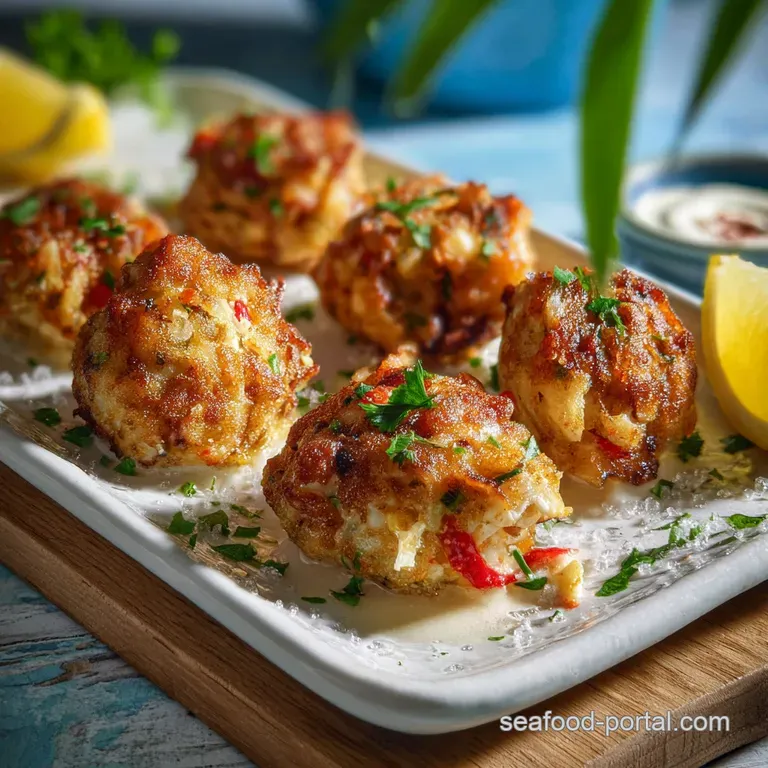
- Time: Active 10 minutes, Passive 0 mins, Total 25 minutes
- Flavor/Texture Hook: Shatter crisp exterior with a tender, briny center
- Perfect for: Summer appetizers, coastal themed parties, or a quick seafood fix
- Physics of the Shatter Crisp Crust
- Essential Statistics and Serving Sizes
- Component Analysis for Sea Salty Bites
- Essential Pantry Items and Clever Swaps
- Necessary Tools for Frying Success
- Folding and Frying for Peak Crunch
- Avoiding Heavy or Greasy Clam Bites
- Smart Scaling for Large Groups
- Debunking Searing and Soaking Theories
- Creative Ways to Vary Flavor
- Saving Leftovers and Reducing Waste
- The Best Sauces and Pairing Ideas
- Recipe FAQs
- 📝 Recipe Card
Physics of the Shatter Crisp Crust
The real magic behind this recipe lies in the thermal shock and aeration. By using ice cold club soda, we are introducing millions of tiny CO2 bubbles into a cold batter. When that cold batter hits the 365°F oil, those bubbles expand rapidly, creating a porous, honeycomb like structure inside the crust that prevents it from becoming a dense, leaden brick.
The Steam Barrier: Ice cold liquid slows gluten development, while the rapid evaporation of club soda creates a protective steam wall that keeps oil from soaking into the center. This ensures the cake stays airy rather than greasy.
| Thickness | Internal Temp | Rest Time | Visual Cue |
|---|---|---|---|
| 1.5 inch (mini) | 190°F | 2 minutes | Deep mahogany gold, firm to touch |
| 2 inch (standard) | 190°F | 3 minutes | Bubbling slows significantly |
| 0.5 inch (flat) | 185°F | 1 minute | Edges turn dark brown quickly |
The choice between using fresh clams or the canned variety often comes down to where you live and how much time you have. While fresh quahogs are the gold standard for many, high-quality canned clams offer a consistent salt level and tender texture that works brilliantly in a fried batter.
| Feature | Fresh Chopped Clams | Canned Chopped Clams | Outcome Difference |
|---|---|---|---|
| Texture | Chewy, firm bite | Tender, consistent | Fresh has more "snap" |
| Juice | Salty, ocean heavy | Milder, stable brine | Canned is easier to measure |
| Prep Time | 20 minutes (shucking) | 1 minute (opening) | Canned saves significant time |
Essential Statistics and Serving Sizes
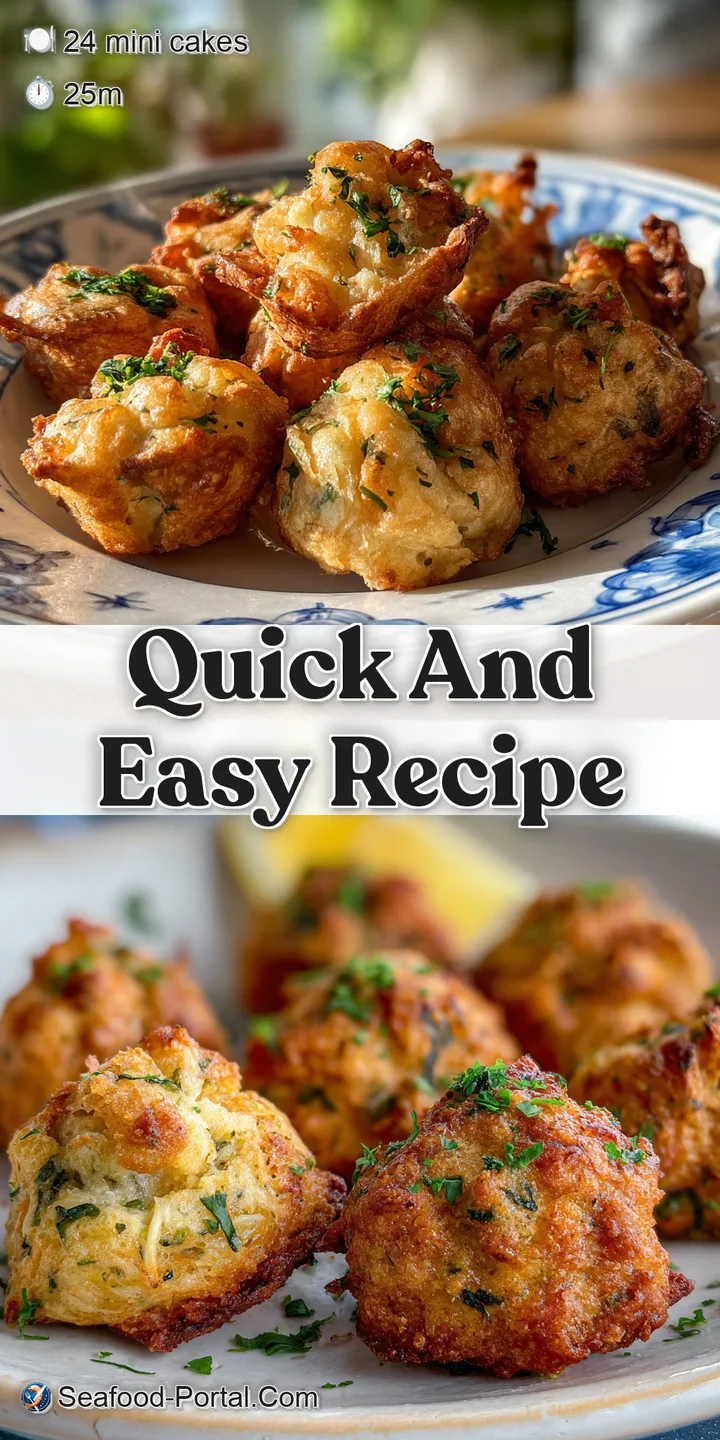
When you are planning a get together, knowing exactly how many of these little golden bites to produce is the difference between a successful party and a hungry crowd. This recipe is designed specifically for "mini" versions, which are roughly the size of a large walnut or a small golf ball.
Standard Party Batch
- Servings: 24 mini cakes
- Total Flour: 2 cups all purpose
- Clam Weight: 8 oz chopped
- Cook Time: 15 minutes total
For the Dry Mix
Sifting your flour and cornstarch together is non negotiable here. It aerates the base before the liquid even touches it, ensuring you don't have to over mix the batter later. Over mixing is the enemy of the crunch; it builds gluten, and gluten makes things bread like instead of cracker like.
For the Wet Bind
The beaten egg acts as the structural glue, while the clam liquor provides the "soul" of the flavor. Without that 1/4 cup of reserved liquor, the cakes taste like plain fried dough. We want the essence of the sea in every single bite.
Component Analysis for Sea Salty Bites
Understanding why we use specific ingredients helps you adjust on the fly. For instance, if you're out of club soda, knowing that we need "bubbles and cold" allows you to reach for a cold seltzer or even a light lager.
| Ingredient | Science Role | Pro Secret |
|---|---|---|
| Cornstarch | Lowers protein content | Prevents the crust from getting tough |
| Baking Powder | Chemical leavening | Creates micro pockets for extra lift |
| Club Soda | Mechanical aeration | Keep it unopened until the very last second |
| Old Bay | Flavor profile | Whisk it into the flour for even distribution |
Chef Tip: Freeze your 1/4 cup of clam liquor for 10 minutes before adding it to the mix. The colder the liquids are when they hit the flour, the crispier your result will be.
Essential Pantry Items and Clever Swaps
You likely have most of these items in your cupboard already. The goal is a light, seasoned batter that doesn't overshadow the clams. If you find yourself missing an item, don't panic there are ways to keep that addictive texture without a trip to the store.
- 8 oz chopped clams: Canned or fresh. Why this? Provides the essential briny protein base.
- 1 cup ice cold club soda: Must be carbonated. Why this? The CO2 creates the airy, light structure.
- 2 cups all purpose flour: Sifted. Why this? Provides the main bulk and structure.
- 2 tbsp cornstarch: Why this? Inhibits gluten for a "shatter" crunch.
- 1.5 tsp Old Bay Seasoning: Why this? The classic coastal celery salt and pepper kick.
| Original Ingredient | Substitute | Why It Works |
|---|---|---|
| Club Soda (1 cup) | Light Lager (1 cup) | Provides carbonation and a nutty yeast depth. |
| All Purpose Flour | Pastry Flour | Lower protein means a more tender, flaky crumb. |
| Old Bay | Cajun Seasoning | Similar salt/heat profile but adds more smoke. |
If you are looking for a more substantial meal, these cakes are essentially the coastal cousin to a well made Crab Cake Remoulade recipe, sharing that same love for high-quality seafood and a perfect golden crust.
Necessary Tools for Frying Success
You don't need a commercial deep fryer to get professional results. A heavy bottomed vessel is your best friend here because it holds heat better. When you drop cold batter into oil, the temperature naturally dips; a heavy pot like a Dutch oven or a cast iron skillet helps minimize that drop.
- Cast Iron Skillet or Dutch Oven: For stable heat retention.
- Small Cookie Scoop: For perfectly uniform 1 tablespoon sized cakes.
- Wire Cooling Rack: Essential for letting air circulate so the bottoms don't get soggy.
- Spider Strainer: To safely scoop the cakes out of the hot oil.
Folding and Frying for Peak Crunch
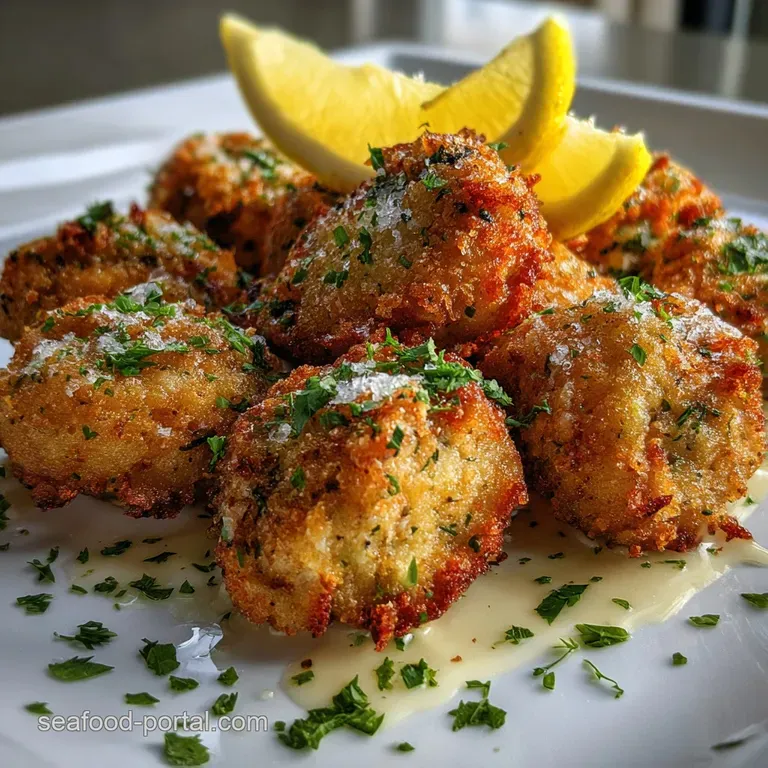
- Sift 2 cups all purpose flour, 2 tbsp cornstarch, 1 tbsp baking powder, 1.5 tsp Old Bay, and 0.5 tsp salt into a large bowl. Note: Sifting removes lumps and ensures the leavening is perfectly distributed.
- Whisk 1 large egg in a separate small bowl until completely liquid.
- Combine the 8 oz chopped clams and 1/4 cup reserved liquor in a measuring cup.
- Heat 2 cups neutral oil in your heavy pot until it reaches 365°F and shimmers.
- Pour 1 cup ice cold club soda, the beaten egg, and the clam mixture into the dry ingredients.
- Fold the mixture together gently using a spatula until just combined and still slightly lumpy. Note: Do not over mix; stop as soon as the dry flour streaks disappear.
- Scoop 1 tablespoon portions of batter into the hot oil, working in batches of 6.
- Fry for 3 minutes per side until deep golden brown and sounding hollow when tapped.
- Transfer the cakes to a wire rack immediately. Note: Using paper towels can trap steam and make the bottoms soft.
- Rest for 2 minutes until the exterior sets into a hard, crispy shell.
Avoiding Heavy or Greasy Clam Bites
The most common heartbreak with clam cakes is the "grease sponge" effect. This happens almost exclusively because of temperature. If your oil is too cold, the batter sits in it and soaks up fat like a wick. If it's too hot, the outside burns while the inside stays raw and doughy.
Why Your Clam Cakes Are Doughy
If the center feels like unbaked bread, your heat was likely too high. The outside browned before the baking powder could react and the flour could set. Lower the heat by 10 degrees and try again.
| Problem | Root Cause | Solution |
|---|---|---|
| Heavy/Leaden Texture | Over mixing the batter | Fold gently; leave lumps in the batter. |
| Oily/Soggy Exterior | Oil temperature too low | Wait for oil to return to 365°F between batches. |
| Rubbery Clams | Clams were cooked too long | Chop clams smaller so they heat through instantly. |
Common Mistakes Checklist
- ✓ Never skip the cornstarch; it is the secret to that "shatter" effect.
- ✓ Always use a thermometer to check oil; "medium high" is too vague for frying.
- ✓ Don't overcrowd the pot; too many cakes at once will crash the oil temperature.
- ✓ Keep your club soda in the fridge until the very moment you pour it.
- ✓ Use a wire rack for cooling, never a flat plate, to allow steam to escape.
Smart Scaling for Large Groups
When doubling this recipe for a party, you can't just double everything and call it a day. Large batches of batter sit longer, and the club soda will lose its "fizz" before you reach the end of the bowl.
- Scaling Up (2x): Double the flour and clams, but keep the club soda in two separate cans. Only mix half the batter at a time so the second half stays bubbly and fresh.
- Scaling Down (1/2): Use 1 cup flour and 4 oz clams. For the egg, beat one whole egg and use exactly 2 tablespoons of it to maintain the correct fat to protein ratio.
| Batch Size | Clam Amount | Oil Needed | Total Time |
|---|---|---|---|
| 12 Cakes | 4 oz | 1.5 cups | 15 minutes |
| 24 Cakes | 8 oz | 2.0 cups | 25 minutes |
| 48 Cakes | 16 oz | 3.5 cups | 45 minutes |
Chef Tip: If you're doing a massive batch, keep the finished cakes in a 200°F oven on a wire rack. They will stay crispy for up to 30 minutes without losing their structure.
Debunking Searing and Soaking Theories
There's a common myth that you should soak clams in milk before adding them to batter to "tenderize" them. In reality, the high acid or calcium in milk doesn't do much for a clam's muscular structure in the short time it takes to prep. The brine (liquor) is where the flavor lives don't wash it away.
Another misconception is that the batter needs to "rest" like pancake batter. While resting helps pancakes, it kills clam cakes. The longer this batter sits, the more the CO2 from the club soda escapes and the more the flour hydrates, leading to a heavy, bready texture instead of a light, crispy one.
Creative Ways to Vary Flavor
While the old-fashioned way is hard to beat, sometimes you want to lean into different regional profiles. The base batter is neutral enough to handle quite a bit of experimentation.
1. The Spicy Coastal Kick
Fold in 1 tablespoon of finely minced pickled jalapeños and a pinch of cayenne. The acidity of the vinegar in the pickles cuts through the richness of the fried batter perfectly.
2. The Smokey Shoreline
Add 1/2 teaspoon of smoked paprika and replace the sea salt with smoked flaky salt. This gives the cakes a "charcoal grilled" essence that pairs beautifully with a cold beer.
3. gluten-free Seafoam
Swap the all purpose flour for a high-quality 1 to-1 gluten-free blend (ensure it contains xanthan gum). Increase the cornstarch by 1 tablespoon. gluten-free flours actually fry up incredibly crisp because they don't develop the toughness that wheat does.
Saving Leftovers and Reducing Waste
Leftover clam cakes are a rare sight in my house, but they do happen. The fridge is fine for a day or two, but the freezer is your friend if you want to keep that "just fried" vibe for a later date.
- Storage: Keep in an airtight container in the fridge for up to 2 days. For longer storage, flash freeze them on a tray for 1 hour, then move to a freezer bag for up to 2 months.
- Zero Waste: Don't toss the leftover flour mix if you didn't use it all. It can be kept in a jar for your next seafood fry. If you have leftover clam liquor, freeze it in an ice cube tray to add to future chowders or pasta sauces.
- Reheating: Never use the microwave it creates a rubbery, sad mess. Use an air fryer at 375°F for 4 minutes or a toaster oven for 6 minutes until they sizzle again.
The Best Sauces and Pairing Ideas
A clam cake is only as good as its dipping partner. While many purists demand nothing but a squeeze of fresh lemon, I think a creamy element provides a necessary contrast to the crunch.
You could go with a traditional tartar sauce, but I highly recommend trying a Zesty LemonDill Crab recipe style aioli. The dill and lemon zest brighten up the heavy fried notes and make the whole dish feel much lighter.
For a fun "Clam Slider" style, serve these on toasted mini brioche buns with a smear of spicy mayo and a single pickle chip. It turns a simple appetizer into a substantial snack that looks impressive on a platter. Whatever you do, serve them hot.
The window for peak "shatter crisp" is about 10 minutes after they leave the oil, so have your guests ready and waiting!
Recipe FAQs
What is another name for clam cakes?
Clam fritters. While sometimes used interchangeably, clam cakes often imply a slightly denser, doughier structure, whereas fritters can sometimes be looser or include more vegetables.
Are clam cakes the same as clam fritters?
No, they are very similar but not identical. Clam fritters generally have a looser batter and may contain more chopped vegetables, while these "mini cakes" rely heavily on carbonation for a very light, brittle shell.
What cake is similar to angel food cake?
Angel food cake is similar in its emphasis on aeration. The goal in both recipes is to trap gas (air or CO2) to prevent a dense structure, leading to a light interior crumb.
What is the best oil to fry clam cakes in?
A neutral oil with a high smoke point like peanut or canola. You must maintain a temperature of 365°F to achieve the necessary thermal shock for a shatteringly crisp exterior quickly.
Should I soak the clams in milk before battering them?
No, this is a common misconception. Soaking in milk washes away flavor; always use the reserved clam liquor in your batter for that essential salty, briny depth.
How to ensure the cakes stay crispy and not greasy after frying?
Fry them in batches while maintaining oil temperature above 360°F. If the oil temperature drops, the batter soaks up the fat rather than cooking instantly. If you mastered the thermal shock technique here, you will enjoy applying the same principles to our Perfect Crispy Pan Seared Grouper with Lemon Butter Sauce.
Can I use canned clams instead of fresh ones?
Yes, canned clams are an excellent substitute. They are already tender and offer consistent salinity, saving prep time while delivering great flavor.
Crispy Mini Clam Cakes Recipe
Ingredients:
Instructions:
Nutrition Facts:
| Calories | 329 kcal |
|---|---|
| Protein | 10.1 g |
| Fat | 15.6 g |
| Carbs | 35.4 g |
| Fiber | 1.2 g |
| Sugar | 0.4 g |
| Sodium | 488 mg |
