Classic Peruvian Ceviche with Tigers Milk
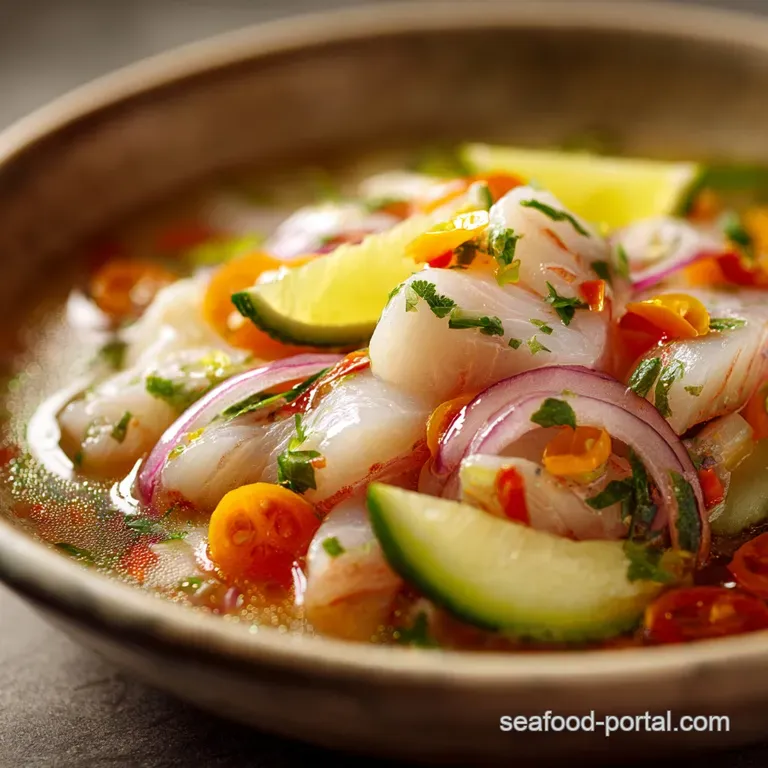
- Classic Peruvian Ceviche: The Ultimate Tiger's Milk Refresher
- The Art of Ceviche: A Culinary Introduction to Peru’s National Dish
- Unlocking Flavor: The Science Behind Perfect Ceviche Marinade
- Essential Components for Authentic Peruvian Ceviche
- The Swift Process: Step-by-Step Ceviche Preparation
- Achieving Excellence: Expert Tips and Common Ceviche Errors
- Traditional Garnishes and Pairing Your Ceviche
- Recipe FAQs
- 📝 Recipe Card
Classic Peruvian Ceviche: The Ultimate Tiger's Milk Refresher
If there’s one dish that screams pure, exhilarating freshness, it’s Peruvian Ceviche . That first bite icy cold, bright lime, and a shock of chili heat is transformative.
It's truly electric, and the complex flavors are miles ahead of any simple, marinated raw fish you've had before.
Forget turning on the stove; this dish is a weeknight miracle if you can grab high-quality fish. It’s light, protein packed, and takes less time to prepare than ordering takeout, making it a surprisingly fast option for an elegant meal. Once you master the technique, you'll wonder why you waited so long.
We aren’t just cutting fish and pouring juice, though. We’re delving into the magic of Leche de Tigre and precision timing, which are non-negotiable for authenticity.
Let’s learn how to make an authentic Peruvian Ceviche that tastes exactly like a high end restaurant dish.
The Art of Ceviche: A Culinary Introduction to Peru’s National Dish
This isn't just another fish salad; it's a foundational lesson in precision and balance. Making great Peruvian Ceviche relies on understanding how the acid interacts with the protein, a process known as denaturation.
We aren’t "cooking" the fish in the traditional sense, but we are firming up the exterior until it reaches a perfect texture contrast: firm on the outside, tender and translucent within. That tight window is everything.
Unlocking Flavor: The Science Behind Perfect Ceviche Marinade
The secret to why restaurant Peruvian Ceviche tastes so much better than the home attempts usually boils down to the marinade base itself. Most folks just pour bottled lime juice over the fish and call it a day, but that’s missing the entire aromatic foundation that defines this dish.
We have to treat the lime juice as an ingredient to be flavored, not just a curing agent.
What is Leche de Tigre (Tiger's Milk) and Why is it Key?
Leche de Tigre , or Tiger’s Milk, is the vibrant, opaque, potent elixir left after the fish has cured. But the real secret is making it before the cure, starting with aromatics.
It’s a complex, spiced liquid base of lime, salt, chili, and crucial elements like ginger and garlic, which are often overlooked in lesser recipes. This potent mix is what gives authentic Peruvian Ceviche its bracing intensity and depth.
Choosing the Right White Fish for Optimal Texture
Texture is non-negotiable here. You need a firm, lean, white fish something sturdy enough to hold its shape against the acid. Snapper, Halibut, or Corvina (if you can find it) are the gold standards for traditional Peruvian Ceviche .
I made the mistake once of using flounder total mush within five minutes. Always prioritize quality and firmness ; if you wouldn't eat it raw, don't cure it.
A Brief History of Cebiche's Evolution
While raw fish cured in citrus has roots all over the Pacific, the specific preparation of Peruvian Ceviche evolved through colonial influences and the availability of key ingredients like Limes and Aji chilies.
The speed of the cure is relatively modern; historically, the fish would cure for hours in seco (bitter orange). Today, we move fast to keep the fish silken, celebrating its incredible freshness.
The Role of Acid: Denaturing the Protein vs. "Cooking."
The lime juice contains citric acid, which breaks down the fish protein structure, turning it opaque, much like heat does. This is denaturing. Crucially, in traditional Peruvian Ceviche , we only want a surface cure, not a full breakdown.
Over marinating leads to chewy, chalky fish; the goal is barely cured, bright, and glistening.
Balancing Heat and Acidity: Using Aji Limo or Rocoto
These Peruvian chilies are mandatory for authentic flavour, offering a fruity heat distinct from Mexican varieties. If Aji Limo is unavailable, use Habanero, but use it sparingly! The oils in the chili rapidly infuse the Leche de Tigre , lending a sharp, immediate warmth that balances the acidity of the classic Peruvian Ceviche incredibly well.
Maximizing Depth with Ginger and Cilantro Stems
Don't discard the fibrous parts of the cilantro or the ginger; they are essential for the aromatic foundation of the Leche de Tigre. Blending a small piece of ginger root into the lime juice base adds a clean, warm background note that makes this style of ceviche stand apart.
It's these subtle background flavors that elevate the quality of the final Peruvian Ceviche .
Essential Components for Authentic Peruvian Ceviche
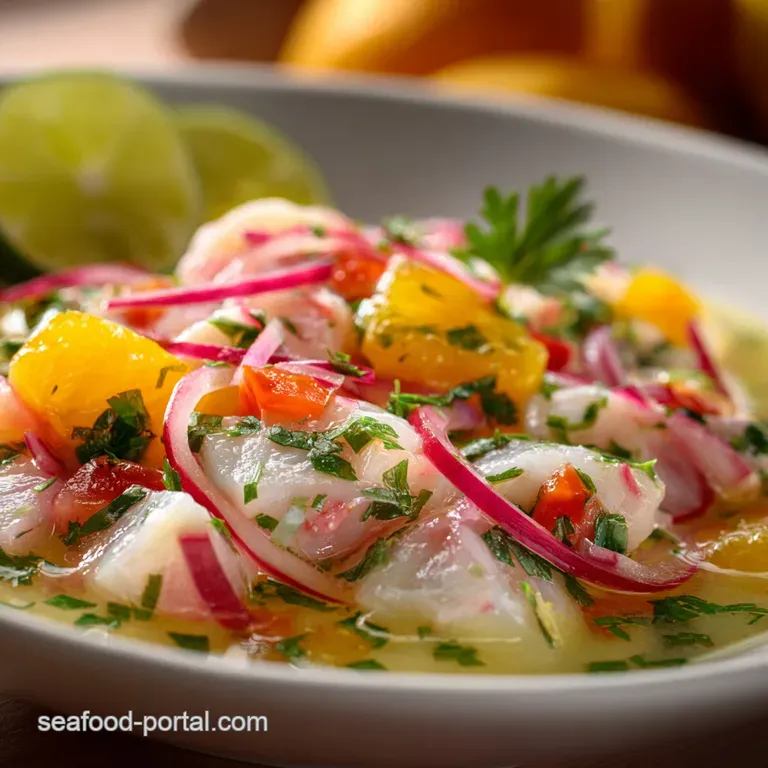
Primary Ingredients and Required Tools Checklist
The quality of your ingredients dictates the quality of your dish. If you're going to splurge on one thing this week, make it the fish for your Peruvian Ceviche .
You also need non-reactive bowls that means glass, ceramic, or stainless steel to prevent the intense lime acid from reacting with your container, which can give the fish a metallic taste.
Selecting and Preparing the Fresh Catch
As mentioned, Snapper or Halibut are perfect choices. When cutting the fish, aim for uniform, 3/4 inch cubes. Uniformity ensures an even cure across every single piece. Use your sharpest knife and keep the fish on ice while you work.
Speed and cold are your best friends when preparing Peruvian Ceviche .
Essential Substitutions for Peruvian Ingredients
I know finding Aji Limo or authentic Choclo can be a pain depending on where you live. Don't sweat it, just adapt. We can still achieve incredible flavor in your homemade Peruvian Ceviche .
| Peruvian Ingredient | Acceptable Substitute | Notes |
|---|---|---|
| Aji Limo/Rocoto Chili | Habanero or Scotch Bonnet (use 1/2!) | Provides similar fruity heat. |
| Corvina/Snapper | Mahi Mahi or sashimi grade Tilapia | Firm, lean white fish. (P.S. If you are experimenting, try my guide on Tilapia Ceviche Quick Easy LimeCured Mexican Classic ) |
| Choclo (Giant Corn) | Canned Hominy or large sweetcorn kernels | Needed for the textural burst. |
The Perfect Red Onion Slice: Achieving Maximum Crispness
Red onion is mandatory for color, crunch, and sharp flavor, but it can be overwhelmingly pungent. After slicing it razor thin (julienned), put it immediately into a bowl of ice water for 5- 10 minutes.
This draws out the harsh sulfur compounds, leaving you with a crisp, mild onion that is perfect for garnishing Peruvian Ceviche .
The Swift Process: step-by-step Ceviche Preparation
The beauty of this dish is its speed. Once everything is chopped and chilled, the actual "cooking" time for classic Peruvian Ceviche is under 15 minutes.
- Prep and Chill Everything: Ensure the fish is cubed and the onions are soaking. Have your sweet potato and corn cooked and cooled. Everything must be cold, cold, cold.
- Muddle the Aromatics: In a blender or mortar and pestle, combine the chili, garlic, ginger, salt, and the small pieces of fish trim. Pulse quickly with a small splash of lime juice. This step is non-negotiable for superior Peruvian Ceviche flavor.
- Build the Leche de Tigre : Add the remaining lime juice and the ice cubes. Blend for just a few seconds until smooth, then strain immediately through a fine mesh sieve. Discard the solids. The ice keeps the marinade shock cold.
- Salt the Fish First: Add your cubed fish to a chilled bowl. Sprinkle generously with salt and white pepper and toss gently for 30 seconds.
- The Cure: Pour the chilled Leche de Tigre over the fish. Add most of the drained red onion slices. Toss once or twice to ensure everything is coated.
- Wait (Barely): Let it sit for 10- 12 minutes. That’s it! The moment you see the edges of the fish turn opaque and firm up, it’s ready. This short cure makes for the best Peruvian Ceviche .
Chef's Note: If you want to experiment with different seafood textures, try a mixed seafood version. We have a great recipe for Easy Shrimp Ceviche Zesty Fresh Fiesta Ready in Under an Hour — just remember shrimp needs to be fully cooked first, unlike the fish here.
Achieving Excellence: Expert Tips and Common Ceviche Errors
We’ve all been there tasting a ceviche that’s either too sour, too chewy, or too mild. The margin for error is small, but the fixes are simple if you know the tricks.
Method 1: Crafting the Intense Leche de Tigre Base
The ginger and fish trim in the marinade base provide the umami backbone. Many Americanized versions skip this, and the resulting Peruvian Ceviche tastes flat, only sour and salty.
Using a small piece of the same fish in the blender extracts subtle flavors that re-incorporate into the marinade, guaranteeing maximum depth for your Peruvian Ceviche .
Method 2: Timing the Marinade (The "Curing" Window)
This is where people fail most often. They treat it like a traditional marinade, letting it sit for an hour. Don't! If you let your Peruvian Ceviche marinate for too long, the texture degrades rapidly. Set a timer for 12 minutes. Seriously.
A quick cure is the defining feature of modern, high-quality Peruvian Ceviche .
Plating the Dish: Arrangement and Presentation
Always use a slotted spoon to lift the fish out of the liquid. The purpose is to serve the cured fish with a drizzle of the now-flavored Leche de Tigre , not floating in it like soup.
Arrange the fish elegantly alongside the colorful sides the orange sweet potato and the white or yellow corn kernels for a visually stunning Peruvian Ceviche presentation.
The Danger of Over Marinating ("Mushing" the Fish)
I once left a bowl of Halibut ceviche in the fridge for 45 minutes because I got distracted by a phone call. When I came back, it was white, rubbery, and chalky. That was an expensive mistake.
Over marinating completely destroys the delicate texture we seek in Peruvian Ceviche .
Troubleshooting Flavour Imbalance (Too sour? Too spicy?)
If you find your Leche de Tigre base tastes too sour, a tiny pinch of sugar can help cut the lime's harshness without making it sweet. If it’s too spicy, dilute the liquid with a tablespoon of water or a few extra ice cubes.
If it's lacking zest, add a few stems of cilantro for a final aromatic pop. This Peruvian Ceviche requires balance.
Hygiene First: Keeping Ingredients Below 40°F
Since we are dealing with raw fish, temperature control is non-negotiable for food safety. The fish must be cold, the bowls must be cold, and the Leche de Tigre must be shock cold (thanks, ice cubes!). Never let the fish sit at room temperature for more than a few minutes before adding the acid.
A safe Peruvian Ceviche is a cold Peruvian Ceviche .
Traditional Garnishes and Pairing Your Ceviche
The accompaniments are not optional; they complete the culinary experience of Peruvian Ceviche . The sharp acidity of the fish is meant to be contrasted by starch and earthiness.
Serving with Cancha (Toasted Corn) and Choclo (Giant Corn)
Cancha, or toasted corn kernels, provides a crunchy, savory texture similar to popcorn, offering a salty counterpoint to the bright lime. Choclo (the giant white corn kernels) is boiled and tender, giving a soft, earthy chew.
You need both to fully appreciate the complex textures of traditional Peruvian Ceviche .
The Importance of Glazed Sweet Potato (Camote)
The inclusion of sweet potato (Camote) is what makes this preparation uniquely Peruvian. The natural sweetness and soft, yielding texture offer essential relief from the intense acidity of the lime cure. Make sure the sweet potato is boiled until tender but still holds its shape.
It’s an absolute necessity for authentic Peruvian Ceviche flavors.
Suggested Beverages: Beer, Pisco Sour, and Non-Alcoholic Pairings
A high acid, highly flavored dish like this demands a beverage that can cut through the richness and spice. A crisp, cold lager or a bright, herbaceous Sauvignon Blanc works wonderfully.
But if you really want the authentic experience, nothing beats the pairing of a classic, frothy Pisco Sour alongside your amazing Peruvian Ceviche creation.
Can I Prepare Leche de Tigre Ahead of Time?
Yes, absolutely! You can prepare the strained Leche de Tigre base (the lime, chili, ginger mix) up to 4 hours in advance and keep it tightly sealed in the refrigerator.
Just remember to use ice cubes when you make it, and keep it separate from the fish until you are ready to serve the Peruvian Ceviche .
Why Ceviche Must Be Consumed Immediately
Once the fish hits the acid, the clock starts ticking. The quality of the Peruvian Ceviche peaks within the first 15 minutes of the cure. After 30 minutes, you start losing that beautiful tender crisp texture.
This is a dish designed to be assembled à la minute (at the minute) and served immediately. Do not attempt to save leftovers.
Repurposing Leftover Tiger’s Milk
Don't throw away that brilliant, fish infused Leche de Tigre ! It’s highly prized in Peru and often served in small shot glasses as a digestive or hangover cure (hence the "Tiger's Milk" name). It’s also fantastic drizzled over plain rice or used as a potent marinade starter for an alternative seafood dish, perhaps a different fish species like my favorite Ahi Tuna Ceviche: Easy, Zesty Recipe with Mango Avocado . Enjoy making this truly spectacular Peruvian Ceviche !
Recipe FAQs
How long should I marinate the fish in the Leche de Tigre?
The optimal marinating time (the "cooking" time) is remarkably short, usually between 5 to 10 minutes, until the fish turns opaque only on the edges. Over marinating will cause the fish proteins to completely seize, resulting in a tough, dry, and chalky texture.
Quick preparation is the secret to maintaining the desired delicate texture and freshness.
Why did my ceviche turn out tough or rubbery, rather than tender?
Toughness is almost always a result of over marination, where the citric acid has been allowed too long to fully denature the fish proteins. Ensure you are using impeccably fresh fish and watch the clock closely once the lime juice is added.
Additionally, ensure the lime juice is freshly squeezed, as bottled juice can sometimes yield inconsistent results.
What is the best type of fish to use for classic Peruvian Ceviche?
Always use high-quality, lean, white ocean fish, ideally sushi or sashimi grade, such as corvina (sea bass), snapper, or halibut. The fish must be extremely fresh and have a low-fat content to absorb the acid correctly and achieve the perfect texture. Avoid oily fish like salmon or freshwater fish.
What exactly is Leche de Tigre, and can I prepare it ahead of time?
Leche de Tigre (Tiger's Milk) is the potent, flavourful marinade liquid, consisting of fresh lime juice, chili, red onion, cilantro, and often a small amount of fish trim or pureed onion. While you can prep the aromatics, the liquid should be assembled and mixed with the fish immediately before serving.
The flavor profile of the Leche de Tigre degrades rapidly, so it should not be made more than an hour in advance.
Can I store leftover ceviche, or is it unsafe to eat later?
Ceviche should always be consumed immediately, preferably within 30 minutes of the lime juice being added. Storing leftovers, even in the refrigerator, allows the acidification process to continue, quickly ruining the intended delicate texture.
For both quality and safety, it is best to prepare only what you plan to eat in one sitting.
I don't eat fish. Can I make a vegan version of this recipe?
Yes, the Leche de Tigre base is excellent with firm, non-animal proteins or vegetables. Try substituting the fish with diced hearts of palm, blanched cauliflower florets, or thickly sliced king oyster mushrooms.
These ingredients will absorb the potent, bright flavour of the marinade beautifully, creating a delicious plant based alternative.
What are the traditional Peruvian accompaniments for ceviche?
Classic Peruvian ceviche is typically served with starchy elements to contrast the sharp acidity and heat. Essential traditional sides include thin slices of boiled sweet potato (camote), large kernels of boiled corn (choclo), and crispy toasted corn kernels (cancha serrana).
Classic Peruvian Ceviche Refresher
Ingredients:
Instructions:
Nutrition Facts:
| Calories | 176 kcal |
|---|---|
| Protein | 21.4 g |
| Fat | 3.2 g |
| Carbs | 14.6 g |
