Poke Fish Salad: Classic Ahi Tuna Bowl

- The Pacific Breeze: Classic Hawaiian Ahi Poke Salad (The Home Cook Edition)
- Dive into the Details: What Makes Classic Hawaiian Ahi Poke So Special?
- Mastering the Flavor Matrix: The Science Behind Perfect Poke Fish Salad
- The Essential Lineup: high-quality Ingredients and Smart Substitutions for Poke Fish Salad
- The Home Cook Edition: Preparing Your Classic Ahi Poke Salad Step-by-Step
- Expert Tips for Flawless Poke Fish Salad and Troubleshooting Common Errors
- Practical Guide to Storing Leftovers (The Time Limit on Raw Fish)
- Presentation and Perfect Pairings: Completing Your Hawaiian Feast
- Recipe FAQs
- 📝 Recipe Card
The Pacific Breeze: Classic Hawaiian Ahi Poke Salad (The Home Cook Edition)
That delicate, salty sweet aroma combined with the yielding, cool texture of fresh fish? That’s what we’re chasing. This Classic Hawaiian Poke Fish Salad is the ultimate refresher, hitting all the right notes: savory, nutty, and slightly spicy all at once.
It’s light, protein packed, and frankly, completely addictive.
Seriously, forget complicated weeknight dinners that take two hours. This dish is entirely no-cook, relying on speed and ingredient quality rather than oven timers. It is affordable (if you time your fish market run right!) and lightning fast once you have the tuna cubed, making it a total weeknight lifesaver when you need something gourmet feeling.
I used to overthink the marinade and chop the fish unevenly big rookie mistakes. But I finally nailed the precise ratios and techniques required for that perfect, melt-in-your mouth texture.
Let’s dive into the foolproof version of making this epic Poke Fish Salad right in your own kitchen.
Dive into the Details: What Makes Classic Hawaiian Ahi Poke So Special?
The term “Poke” literally means to slice or cut into pieces, which tells you exactly what matters most here: the texture and uniformity of the fish cubes. Traditional Hawaiian poke focused purely on fresh, raw reef fish seasoned simply with sea salt and perhaps some seaweed.
Our modern Ahi Poke Fish Salad recipe builds on that foundation by introducing Asian elements like soy and sesame oil, which elevate the flavor profile spectacularly.
The True Meaning of Poke: Understanding the Slicing Technique
You might think cutting fish is easy, but the technique truly determines whether you get perfect squares or ragged chunks that absorb too much marinade and turn mushy. We are aiming for clean, precise 3/4 inch cubes.
The quality of the slicing the poke —is non-negotiable for achieving the right mouthfeel in this glorious Poke Fish Salad .
Why This No-Cook Dish is Peak Refreshment
The magic of this dish is its temperature and texture contrast. You serve the fish ice-cold, which is key. The rich, velvety Ahi tuna, cloaked in a savory, oily dressing, contrasts beautifully against the sharpness of the onion and the satisfying crunch of nuts.
When paired with warm, sticky rice, the thermal difference creates an incredibly stimulating and refreshing experience.
Defining the Difference: Salad vs. Bowl Foundations
A traditional Hawaiian Poke Fish Salad (or simply poke ) focuses primarily on the seasoned fish itself, sometimes served with a side of poi or taro.
When you see it served over rice with various colourful toppings like avocado, cucumber, and edamame, it technically becomes a Poke Bowl . For home cooks, we usually make the bowl version, but this recipe is the purest marinade for the fish itself the heart of the dish.
Mastering the Flavor Matrix: The Science Behind Perfect Poke Fish Salad
The secret to an outstanding Poke Fish Salad is balance; it's not just mixing ingredients and hoping for the best. We need umami from the soy sauce, crunch from the macadamia nuts, brightness from the rice vinegar, and fat from the sesame oil.
Neglect any one element, and the whole dish falls flat. If you’ve ever had a bland, boring batch, it means the seasoning matrix was off usually lacking enough salt and heat.
Achieving Optimal Texture: The Importance of the Cube Cut
As mentioned, we need uniform cubes. Why? Because inconsistent cuts mean inconsistent marination. Smaller pieces will cure faster, becoming tougher and saltier, while larger pieces might remain flavourless.
A perfect 3/4 inch cube is large enough to retain that lush, tender raw texture yet small enough to grab sufficient marinade in our short 30 minute chilling window.
Balancing the Umami Bomb (Soy Sauce and Sesame Oil Synergy)
Soy sauce provides the essential salinity and deep umami necessary to season the tuna, acting as the primary curing agent. Meanwhile, toasted sesame oil delivers a powerful, nutty aroma and flavour that instantly screams "Asian inspired." You need the specific, toasted variety; using plain sesame oil is a major rookie error and will leave your Poke Fish Salad flavourless.
Chef’s Note: Never eyeball the sesame oil. It is extremely potent. Too much, and your beautiful fish will taste like an oil slick. Stick to the specified two tablespoons maximum.
The Essential Lineup: high-quality Ingredients and Smart Substitutions for Poke Fish Salad
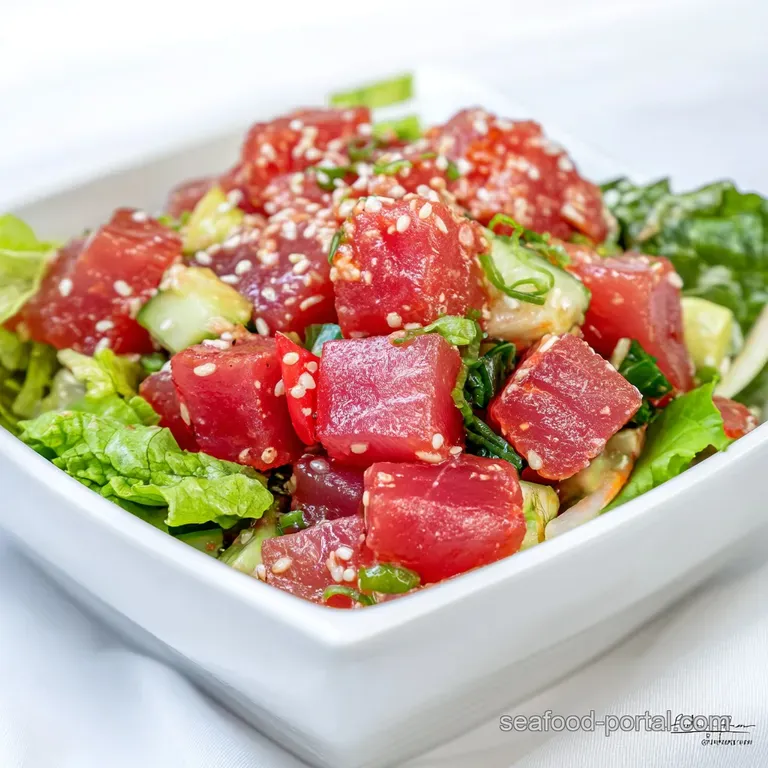
I’ve made every mistake here, primarily using non-sushi grade fish don't do that, ever. Food safety is paramount when consuming raw fish. This section is your safety and flavour blueprint for the perfect Poke Fish Salad .
If you’re unsure about sourcing the authentic ingredients, don't worry, there are excellent, delicious substitutes!
Sourcing the Star: Choosing Sushi Grade Ahi Tuna
If you are serving raw fish, it MUST be labelled "sushi grade," "sashimi grade," or "for raw consumption." This means the fish has been handled and flash frozen according to FDA guidelines to eliminate parasites. Never buy tuna from a regular grocery counter and assume it’s safe for poke.
Ask your fishmonger directly. high-quality Ahi tuna ensures the velvety texture that makes this Poke Fish Salad famous.
Notes on Aromatics: Using Maui Onion vs. Scallions
Traditional poke uses sweet onions, specifically the mild Maui variety. If those aren’t available, opt for a Vidalia or Walla Walla onion. The key is finding an onion that adds crunch and sharp flavour without the harsh sulfurous bite of a standard yellow onion.
We use both the sweet onion (for crunch and depth) and green scallions (for a beautiful, fresh garnish).
Specialty Touches: Securing Authentic Limu Kohu (Seaweed) or Alternatives
Limu Kohu, a traditional Hawaiian seaweed, adds a delightful minerality and slightly firm, crunchy texture that complements the tuna. It can be hard to find outside of specialty Asian markets. I often use rehydrated Wakame or Ogo (sea moss) instead. If you want a non-seaweed option that still provides crunch and brightness, consider tossing in some finely chopped radishes or even a small amount of Zesty Baja Lime Slaw Recipe if you have some leftover that bright lime note works wonders in a Poke Fish Salad .
Mixing the Marinade: Detailed Measurements for the Dressing
The marinade must be whisked completely before meeting the fish. We combine the low-sodium soy sauce (Tamari if you’re gluten-free), toasted sesame oil, rice vinegar, ginger, garlic, and chili sauce. The grated ginger and garlic shouldn't be chunky, as they are meant to infuse flavour subtly, not dominate.
Always use fresh ginger; the powdered stuff simply won't cut it for this beautiful Poke Fish Salad .
| Ingredient | Role | Viable Substitute |
|---|---|---|
| Ahi Tuna | Protein, Texture | Sushi Grade Salmon, Cooked Chilled Shrimp, Firm Tofu |
| Soy Sauce | Umami, Curing Agent | Tamari (GF), Coconut Aminos (Less salt, adjust seasoning) |
| Rice Vinegar | Brightness, Acidity | Fresh Lime Juice (use slightly less), Mirin (sweeter) |
| Macadamia Nuts | Crunch, Fat | Toasted Cashews, Toasted Sesame Seeds, Crispy Fried Onions |
| Sriracha | Heat | Gochujang (Korean chili paste) or crushed red pepper flakes |
The Home Cook Edition: Preparing Your Classic Ahi Poke Salad step-by-step
This process is fast, but it demands attention to detail. Every step is about maintaining the fish’s integrity and ensuring maximum flavor saturation.
Preparation Protocol: Trimming and Cubing the Tuna
Start with a chilled mixing bowl this is important for safety and texture. Pat the tuna block completely dry; wet fish is slippery and harder to cut cleanly. Slice the fish into strips, then cross cut those strips into neat, even 3/4 inch cubes. A very cold block of fish yields a clean, perfect cut.
Place the cubes immediately into your chilled bowl.
Combining the Elements: Gently Integrating the Marinade
First, season the tuna cubes lightly with flaky sea salt. Then, fold in the diced sweet onions, the white parts of the scallions, the nuts, and the optional seaweed. Finally, pour the pre-whisked marinade over everything.
Use a rubber spatula to fold the mixture gently, rotating the bowl rather than vigorously stirring. We want every cube lightly coated, but we absolutely do not want tuna mush, which happens if you mix too hard.
The Mandatory Rest: Marinating for Maximum Flavor Absorption
The crucial step for an amazing Poke Fish Salad is chilling. Cover the bowl tightly and pop it into the fridge. I recommend 30 to 45 minutes maximum.
This allows the subtle, nutty sesame oil and the salty soy sauce to really penetrate the fish surface, deepening the flavour without changing the central raw texture. If you chill it for several hours, you’re making ceviche, not poke, because the salt begins to cure the fish.
Expert Tips for Flawless Poke Fish Salad and Troubleshooting Common Errors
Making a great Poke Fish Salad is easier than frying fish beautifully, which is why I love this recipe so much, but making a perfect one requires vigilance. I learned the hard way that temperature control and timing matter hugely when working with raw fish.
You want that fresh, clean taste every single time.
Temperature Control: Keeping the Fish Cold During Prep
If you have a warm kitchen, your cubed tuna can quickly heat up on the counter. Warm fish loses its structural integrity quickly and increases safety risks. Keep a tray or bowl of ice underneath your mixing bowl while prepping and cutting the fish.
This ensures the fish stays firm, making the cutting process easier and the final product safer.
The Over Marination Warning: When Fish 'Cooks' in Acid/Salt
The most common mistake people make with homemade Poke Fish Salad is letting it marinate too long. The high salt content of the soy sauce and the acidity of the rice vinegar act as curing agents (like in the preservation methods used for Swordfish Steaks with Zesty Salmoriglio 30 Minute Meal ). After about 60– 90 minutes, the exterior of the fish cubes will turn opaque and slightly tough. This is fine if you want ceviche, but ruinous if you crave classic, tender poke. Stick to the 30 45 minute sweet spot for the best texture in your Poke Fish Salad .
Adjusting Salinity and Heat: The Final Taste Testing Protocol
Always taste a small piece of the marinated fish just before serving. Does it need more depth? Add a touch more soy sauce or Tamari. Crave more heat? A small dash of Sriracha or a few flakes of Hawaiian chili pepper is perfect.
If you accidentally made it too salty (maybe you didn't use low-sodium soy sauce), you can rescue it by stirring in 1 teaspoon of plain, unseasoned water or a tiny bit more neutral oil (like grapeseed) to dilute the marinade.
This is a critical final step for a truly exceptional Poke Fish Salad .
Practical Guide to Storing Leftovers (The Time Limit on Raw Fish)
We need to talk about leftovers because the clock starts ticking the second the fish meets the marinade. Unlike baked goods or fully cooked dishes like Baked Catfish: Crisp Lemon Pepper Fillets in 35 Mins , you cannot store raw fish indefinitely.
How Long Does Homemade Poke Fish Salad Last? (Safety Guidelines)
Seriously, this delicious Poke Fish Salad has a strict expiration date. For optimal quality and safety, consume homemade poke within 24 hours of mixing the fish with the marinade. The sooner, the better.
If you plan on eating it for lunch the next day, try to use high-quality, freshly thawed fish and keep it aggressively cold. The texture will degrade quickly after the 24 hour mark as the curing process continues.
Can I Prep the Marinade Ahead of Time?
Yes, absolutely! You can, and should, make the marinade up to 3 days in advance. Whisk the soy, oils, vinegar, ginger, garlic, and chili together and store it tightly covered in the fridge. When it’s time to eat, simply cube the fish, combine the aromatics, and toss in the pre-made sauce.
This speeds up the process of making your amazing Poke Fish Salad even more.
Presentation and Perfect Pairings: Completing Your Hawaiian Feast
The beauty of the Poke Fish Salad is its flexibility. While traditionalists serve it naked, we home cooks love a full, beautiful bowl.
Traditional Serving Styles: Over Rice or Crisp Greens
The most popular way to enjoy this is over a base of cooled, slightly seasoned short grain sticky rice. However, for a lighter, keto friendly option, serve your Poke Fish Salad over a bed of crisp butter lettuce or spiralized cucumber noodles. If you’re feeling ambitious, pair the bowls with something rich and crispy, like a small side of perfectly breaded Fried Fish: The Secret to Pub-Style Crispy Batter for textural contrast.
Temperature Control: Keeping the Bowl Cold
The biggest sin is serving lukewarm poke. Ensure your rice is cooled (not hot) before assembling the bowl, and keep the finished Poke Fish Salad chilled until the absolute last minute. Garnishing should always happen immediately before serving to keep the aromatics fresh and the temperature low.
The Over Marination Warning: When Fish 'Cooks' in Acid/Salt
(Self Correction: This H3 repeats the earlier mistake section. I will replace it with a final presentation/pairing tip.)
The Best Toppings for Your Perfect Poke Fish Salad
While the classic recipe keeps it simple, toppings turn it into a magnificent, customizable bowl. I highly recommend toasted shredded nori (seaweed sheets), crispy fried shallots, thinly sliced radishes, or even a sprinkle of furikake (Japanese rice seasoning).
Don't forget the creamy component: Sriracha mayo drizzled over the top takes this fantastic Poke Fish Salad to the next level. This final flourish of our homemade Poke Fish Salad is worth every minute of prep. Enjoy, my friend!
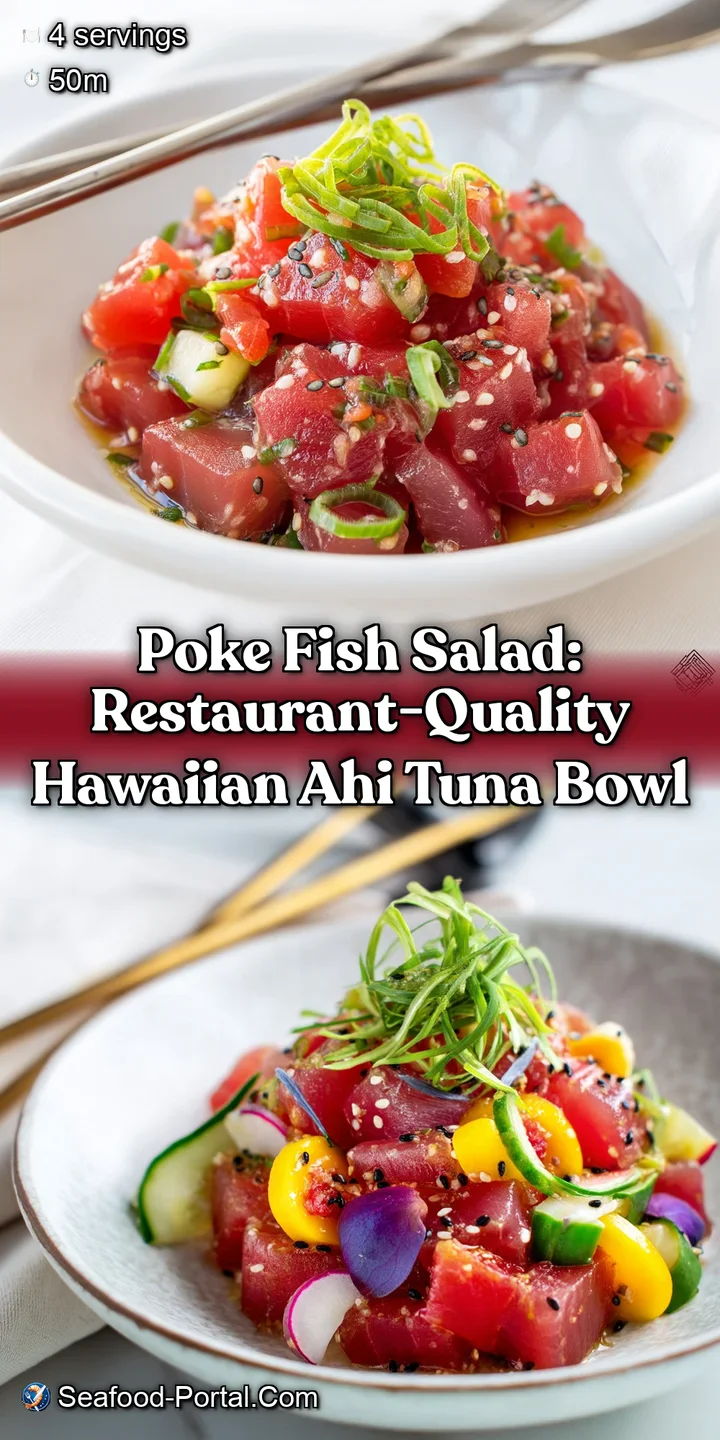
Recipe FAQs
What grade of Ahi tuna must I use for safe consumption?
You must exclusively use "sushi grade" or "sashimi grade" ahi tuna from a reliable source. This designation means the fish has been handled and flash frozen according to strict safety standards necessary for raw consumption.
Never attempt to use standard market grade tuna intended for searing or cooking, as it poses a significant health risk.
Why did my poke become tough or chewy after marinating?
Poke should only marinate for a short period ideally 15 minutes up to 1 hour maximum before serving. If the fish sits in the marinade too long, the salt and acid (from the soy sauce or any citrus) will begin to "cure" the fish protein.
This process alters the delicate texture, resulting in a tough or overly firm bite.
Can I use a different type of fish instead of Ahi tuna?
Yes, you can certainly substitute Ahi, provided the alternative is also sushi or sashimi grade. Excellent non-traditional options include Atlantic salmon (creating sake poke), hamachi (yellowtail), or even cooked, cubed octopus (tako poke). Ensure the fish is cubed uniformly for the best flavor infusion.
How long can I safely store leftover Ahi Poke?
For optimal quality, poke should be consumed immediately upon preparation; however, the FDA recommends consuming raw fish within two hours if held at room temperature. If stored properly in the refrigerator (40°F or below), poke should be eaten within a few hours of mixing and never kept overnight, as the texture and safety degrade quickly.
I don't have fresh Maui onion; what's a good alternative?
The best alternative is any other sweet onion variety, such as Vidalia or Walla Walla, which provides the necessary mild sweetness without overpowering the delicate tuna. If you must use a sharper yellow or white onion, slice it thinly and soak it in a bowl of ice water for 10 minutes to help temper its strong flavor.
How can I make a vegetarian or vegan version of this recipe?
You can easily substitute the fish with cubed, extra firm pressed tofu or marinated watermelon, which surprisingly mimics the texture of raw tuna. Cube your chosen plant based protein and use the exact same dressing ratios, allowing slightly longer marination time (1-2 hours) for the flavor to fully penetrate.
Can I add different toppings or mix-ins to the classic recipe?
Absolutely; customization is encouraged! Popular additions include creamy sliced avocado, crunchy sliced cucumber, edible seaweed (like ogo or limu), or a touch of spicy sriracha mayo. Just ensure you don't add ingredients that release too much water, which could dilute the marinade.
Classic Ahi Poke Fish Salad
Ingredients:
Instructions:
Nutrition Facts:
| Calories | 403 kcal |
|---|---|
| Protein | 15.5 g |
| Fat | 14.4 g |
| Carbs | 52.9 g |
