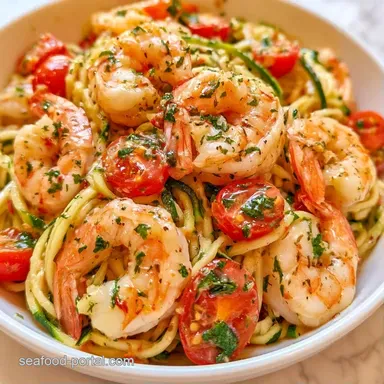
Low-Carb Tomato Shrimp Zucchini Noodles
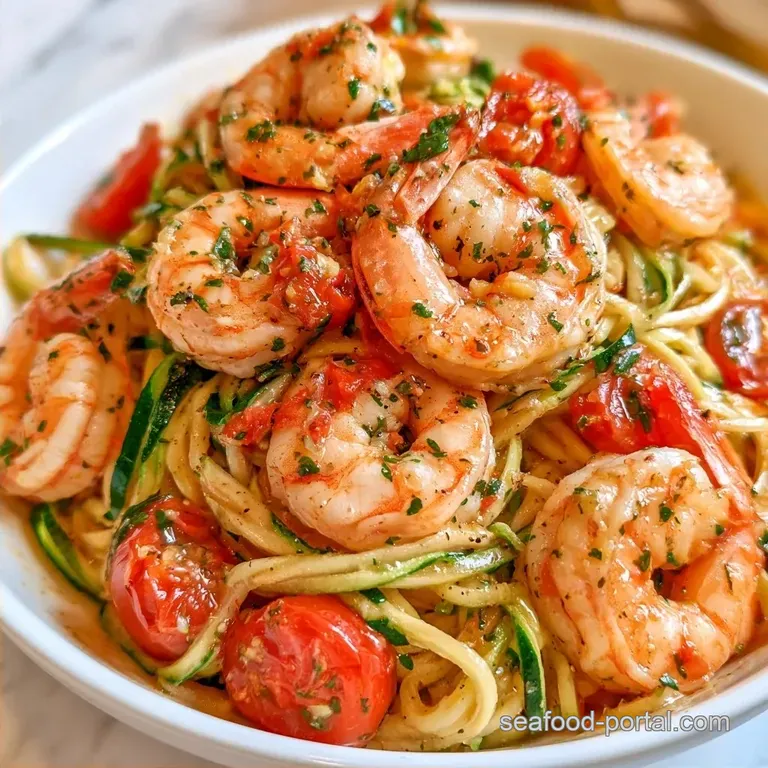
- Duration: 10 min active + 15 min cooking
- Key Texture: Blistered tomatoes and snap-tender noodles
- Great for: Quick weeknight meals, low-carb lifestyles, or new cooks
Tomato Shrimp Zucchini Noodles
Nothing beats the sound of cherry tomatoes popping in a hot skillet. That fragrance, the mix of sweet, acidic juices meeting hot oil, instantly brings summer to mind. However, zucchini noodles often get a bad rap for turning into a watery, colorless mess the moment they hit the heat.
I've experienced that frustration firsthand, looking at a plate of shrimp floating in a lake of squash water.
Solving this doesn't require expensive gadgets or complex methods. Instead, it's a simple matter of using salt and a little patience. By removing the excess moisture from the zucchini before cooking, the entire texture changes.
You'll end up with a meal that feels fresh and light but tastes deeply satisfying, with shrimp that remain juicy rather than becoming rubbery.
This recipe for Tomato Shrimp Zucchini Noodles balances bold elements. The spice of red pepper flakes complements the sweetness of blistered tomatoes, while the crispness of the zucchini offsets the tenderness of the shrimp.
In just 25 minutes, you have a dinner that defies the "diet food" stereotype thanks to its vibrant, intense flavors.
Why Most Recipes Fail
Most people just toss their "zoodles" into the pan and hope for the best. Zucchini is mostly water, so it leaks the moment it heats up. Salting them first pulls that moisture out, so the noodles stay firm and the sauce actually sticks to them.
What actually happens here:
- The Salt Draw: Salt pulls water from the zucchini cells, preventing "zoodle soup" in your pan.
- High Heat Sear: Searing shrimp quickly at a high temp prevents them from overcooking and becoming chewy.
If you love this light approach, you might also like my shrimp tomato sauce for when you want something a bit more traditional.
| Method | Time | Texture | Best For |
|---|---|---|---|
| Quick Sear | 25 min | Snap tender | Weeknights |
| Slow Simmer | 45 min | Soft/Melty | Comfort Meals |
Everything You'll Need
The foundation of this dish is a blend of fresh seafood and garden vegetables. I choose cherry tomatoes over large sliced varieties because their higher sugar content allows them to blister more quickly.
- 450g large shrimp, peeled and deveined Why this? Larger shrimp maintain their structure better during searing
- 30ml extra virgin olive oil Why this? It has a smoke point ideal for searing shrimp
- 3g sea salt (divided) Why this? Necessary for pulling excess moisture from the zucchini
- 1g cracked black pepper Why this? Contributes a mild, woody warmth
- 300g cherry tomatoes, halved Why this? They break down into a rustic, natural sauce
- 20g garlic, thinly sliced Why this? Slices caramelize more uniformly than minced garlic
- 2g crushed red pepper flakes Why this? Adds a soft heat to the back of the palate
- 15ml fresh lemon juice Why this? Lifts the intensity of the olive oil
- 8g fresh Italian parsley, chopped Why this? Provides a fresh, herbal finish
- 600g zucchini, spiralized Why this? Acts as the low-carb bulk of the meal
If you prefer a variation, scallops can replace the shrimp, though they will need to sear slightly longer to develop a deep brown crust.
The Recipe Specs
Here is a quick look at the schedule. Since this comes together quickly, make sure all your ingredients are chopped and ready before you start the heat.
- Preparation: 10 minutes
- Cooking: 15 minutes
- Total: 25 minutes
- Yield: 4 servings
- Calories: 221 kcal per serving
Gear For This Meal
Basic kitchen gear is all that's required here.
- 12 inch skillet: A wide pan is essential. Without enough space, the shrimp will steam rather than brown, and the zucchini will release excess water into the sauce.
- Spiralizer: You can use a vegetable peeler as an alternative to make thick ribbons.
- Colander: Necessary for the salting and rinsing step.
- Paper towels: Use these to pat the zucchini completely dry.
Step-by-step Cooking Guide
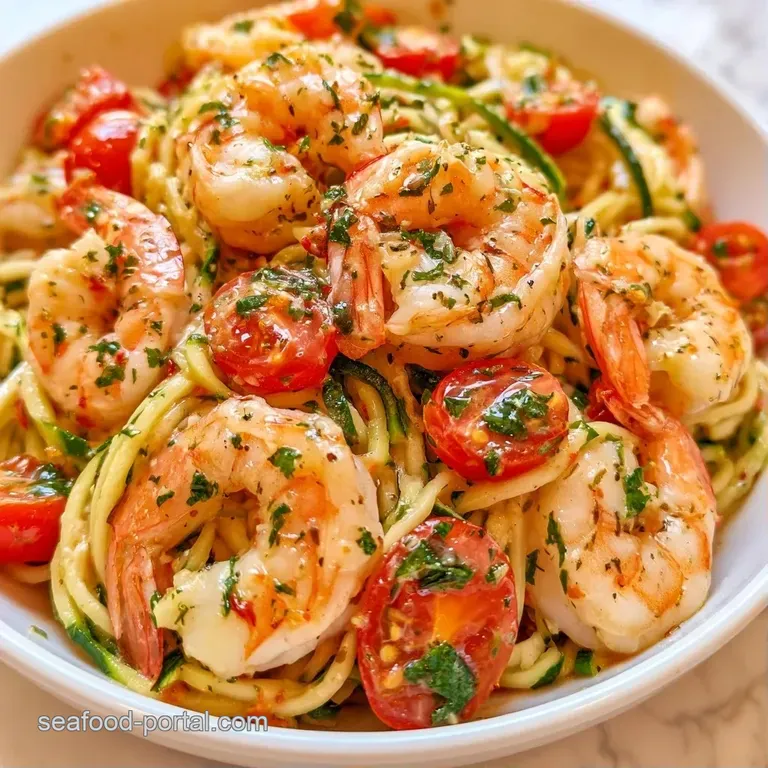
Let's crack on. Pay close attention to the visual cues, they matter more than the timer here.
Phase 1: Prepping the Zoodles
Place the spiralized zucchini in a colander and sprinkle with 1.5g of salt. Let them sit for 10 minutes. Pat them thoroughly dry with paper towels. If they stay damp, your Tomato Shrimp Zucchini Noodles will end up watery.
Phase 2: Searing the Shrimp
Heat 15ml of olive oil in your 12 inch skillet over medium high heat. Add the shrimp in a single layer. Sear for 1-2 minutes per side until they turn opaque and coral pink. Immediately remove them from the pan and set them on a plate.
Phase 3: Blistering the Tomatoes
Add the remaining 15ml of oil to the same pan. Toss in the halved cherry tomatoes. Cook them undisturbed for 2-3 minutes until the skins blister and collapse.
Phase 4: The Final Integration
Stir in the sliced garlic and red pepper flakes. Sauté for 60 seconds until the garlic is fragrant and translucent. Return the shrimp to the pan. Pour in the lemon juice and add the parsley and zucchini noodles.
Toss everything for 2-3 minutes until the noodles are just tender.
Chef's Note: Don't overcook the zucchini. You want them to have a slight "bite" to them. If you cook them too long, they lose their structure and become mushy.
Fixing Common Issues
Even with the salting trick, things can happen. Most issues with Shrimp with Zucchini Noodles come down to heat management or moisture.
Too Much Liquid in the Pan
If you see a pool of water forming at the bottom, your zucchini wasn't dry enough. Don't panic. Crank the heat to high for 60 seconds to evaporate the excess moisture, or just carefully spoon some of the liquid out before adding your shrimp back in.
Shrimp are Tough or Chewy
This happens when shrimp are overcooked. They go from tender to rubbery in about 30 seconds. Pull them off the heat the moment they turn pink. They will continue to cook slightly from carryover heat while resting on the plate.
Zucchini is Mushy
Overcooking the noodles is a common slip. Only toss them in at the very end. They only need 2-3 minutes of heat to be done.
| Problem | Fix |
|---|---|
| Watery sauce | Increase heat to high for 1 min |
| Rubbery shrimp | Reduce sear time by 30 seconds |
| Mushy noodles | Add zucchini in the last 2 minutes |
Storage and Waste Tips
Tomato Shrimp Zucchini Noodles are best eaten fresh, but you can save them. Store them in a glass container in the cooler for up to 2 days.
When reheating, don't use a microwave if you can help it. Put them back in a skillet over medium heat for 3-4 minutes. This helps evaporate any water the zucchini released while sitting.
For zero waste, don't toss your zucchini ends or the shrimp shells. If you have shells, simmer them with a bit of water and onion to make a quick seafood stock. You can use that stock for a sautéed shrimp and mussels dish later in the week.
Great Sides and Drinks
Because this dish is so light, you can pair it with something a bit heartier or keep it fresh.
- For a complete feast: Serve this with a side of charred asparagus or a simple arugula salad with a lemon vinaigrette.
- For a crusty touch: A piece of toasted sourdough rubbed with a raw garlic clove is the best way to soak up the leftover tomato juices.
- Wine pairing: A crisp Sauvignon Blanc or a chilled Pinot Grigio cuts through the olive oil and complements the lemon juice.
Swaps and New Twists
You can easily tweak this recipe to fit your mood or what's in the fridge.
- For a creamy Tuscan twist: Stir in 30g of goat cheese or a splash of heavy cream during the final integration phase. It makes the sauce rich and glossy.
- For bold, spicy heat: Double the red pepper flakes and add a pinch of smoked paprika to the shrimp before searing.
- For a plant based swap: Replace the shrimp with chickpeas or thick slices of king oyster mushrooms. Sauté them until browned before adding the tomatoes.
- For more depth: Add a teaspoon of capers or sliced Kalamata olives along with the garlic for a salty, briny kick.
Decision Shortcut:
- For a firmer noodle: Salt for 15 minutes instead of 10.
- For a richer sauce: Use salted butter instead of the second tablespoon of oil.
- For more zing: Add lemon zest as well as the juice.
A Quick Word on Myths
You might hear that searing shrimp "seals in the juices." This isn't actually true. Searing creates flavor through browning, but moisture loss happens regardless of the temperature. The goal of the sear is the taste and the color, not a moisture seal.
Another myth is that you have to boil zucchini noodles to "cook" them. Trust me, don't do that. Boiling them practically guarantees you'll end up with zucchini mush. Stick to the quick sauté.
High in Sodium
956 mg 956 mg of sodium per serving (42% 42% of daily value)
The American Heart Association recommends a daily limit of no more than 2,300 mg of sodium to help manage blood pressure and reduce the risk of heart disease.
Tips to Reduce Sodium
-
Eliminate Sea Salt-30%
Remove the 1/2 tsp of sea salt entirely. This is the largest source of sodium in the recipe.
-
Skip Additional Salt-25%
Omit the final 1/4 tsp of salt added at the end. The shrimp and tomatoes provide enough natural flavor.
-
Amplify Citrus-10%
Increase the fresh lemon juice or add lemon zest to provide a bright acidity that mimics the taste of salt.
-
Boost Aromatics-5%
Double the amount of sliced garlic or red pepper flakes to create a bolder flavor profile without adding sodium.
-
Use Fresh Herbs
Add more fresh Italian parsley or a sprinkle of fresh basil to add depth and freshness to the dish.
Recipe FAQs
How do I stop zucchini noodles from getting watery?
Salt the spiralized zucchini in a colander for 10 minutes and pat them thoroughly dry.
Tip: use thick paper towels to press out as much moisture as possible.
How can I make the tomato sauce base?
Cook halved cherry tomatoes undisturbed for 2-3 minutes until the skins blister and collapse.
Tip: keep the heat medium-high to get a good sear on the tomatoes.
Is it true shrimp need to simmer in the sauce to be cooked through?
Actually, no. Sear them separately for 1-2 minutes per side until opaque, then remove them from the pan.
Tip: add them back only at the very end to avoid a rubbery texture.
What can I use if I want a traditional pasta instead of zucchini?
Substitute the zucchini with linguine or spaghetti for a classic feel.
Tip: if you enjoy this flavor profile, you might like the buttery notes in a seafood medley.
Why remove shrimp before adding the garlic?
This prevents the shrimp from overcooking while the aromatics sauté.
Tip: set the shrimp on a plate to keep them warm while you blister the tomatoes.
When should I add the garlic to prevent burning?
Stir in the garlic and red pepper flakes only after the tomatoes have collapsed.
Tip: sauté for exactly 60 seconds until fragrant but not brown.
Does the zucchini need to be peeled before spiralizing?
False. The skin provides structure and nutrients that keep the noodles from turning to mush.
Tip: use a sharp spiralizer to ensure clean cuts through the skin.
Tomato Shrimp Zucchini Noodles for 4