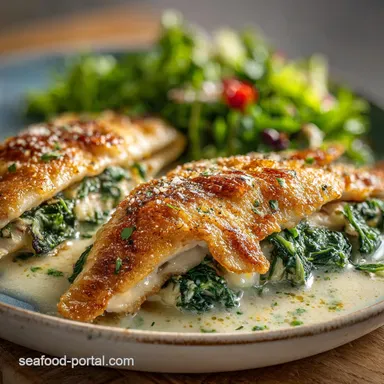
Baked Flounder Florentine with Spinach

- Total35 Mins
- Protein40.8 g
- Calories339 kcal
- Time: 15 min active + 20 min baking
- Flavor & Texture: Rich, buttery white fish with a zesty, salty spinach center and a rich brown crunch on top
- Perfect for: An effortless weeknight dinner that delivers a fancy bistro experience without the stress
Flounder Florentine
If you've ever tried stuffing fish, you know the horror of the "watery mess." You pull the rolls out of the oven only to find a pool of green liquid in the pan and fillets that have turned into mush. It's frustrating and ruins the whole vibe of the meal.
The trick is all in the moisture control. By aggressively squeezing the spinach before it ever touches the fish, you create a concentrated, savory filling that stays put. This flounder Florentine recipe turns a delicate fillet into a sturdy, flavorful roll.
Expect a dish that hits every note. You get the brightness of lemon, the saltiness of feta, and a golden Panko crust that provides a necessary crunch. It's a Quick flounder Florentine that tastes like you spent hours on it.
Ingredient Deep Dive
- 4 flounder fillets (6 oz / 170g each)
- 1/2 tsp (3g) salt
- 1/4 tsp (1g) black pepper
- 10 oz (280g) fresh baby spinach
- 1 tbsp (15ml) olive oil
- 2 cloves (6g) garlic, minced
- 2 oz (56g) crumbled feta cheese
- 2 tbsp (30g) ricotta cheese
- 1 tbsp (15ml) lemon juice
- 1/4 cup (60ml) vegetable broth
- 1 pinch (0.5g) nutmeg
- 1/4 cup (30g) Panko breadcrumbs
- 2 tbsp (28g) melted unsalted butter
- 2 tbsp (8g) grated Parmesan cheese
Understanding the role of each ingredient helps the process. Flounder acts as a mild, flaky foundation, while the butter and cheeses serve as carriers for the overall flavor.
| Component | Purpose | Substitute Notes |
|---|---|---|
| Fresh Spinach | Offers an earthy foundation | Thawed frozen spinach is acceptable if squeezed very dry |
| Feta Cheese | Supplies a salty tang | Goat cheese is a good alternative for a softer texture |
| Panko Breadcrumbs | Ensures a crunchy top | Standard breadcrumbs are less airy and more dense |
| Ricotta Cheese | Acts as a binder | Cream cheese provides more richness but is heavier |
Opt for the highest quality fillets available. Ensure they are patted dry; excess moisture interferes with the seasoning's adhesion and hinders the fish from searing correctly in the oven.
Gear for This Recipe
You only need a few basic tools to get the job done.
Grab a medium skillet for the spinach and a colander to drain the liquid. A 9x13 inch baking dish is the perfect size to keep the rolls snug without overcrowding them. Have some toothpicks ready to keep the fish from unraveling. To ensure the fillets aren't overcooked, an instant-read thermometer is essential.
Step-by-step Instructions
Phase 1: Prepare the Savory Filling
Sauté the olive oil and minced garlic in a pan over medium heat until fragrant. Stir in the baby spinach and cook until it wilts. Note: Garlic browns quickly, so keep it moving.
Move the spinach to a colander and press it with a spoon or squeeze it with paper towels to remove any excess water. This is the most important step to avoid a soggy dish.
Return the drained spinach to a bowl and stir in the ricotta, feta, lemon juice, and nutmeg. The ricotta should be silky and hold the feta crumbles together.

Phase 2: Assemble and Roll
Ensure the flounder fillets are completely dried. Season both sides with salt and pepper.
Place a generous scoop of the spinach filling along the wider end of each fillet. Roll the fish tightly around the stuffing. Place the rolls seam-side down in the 9x13 inch baking dish, securing each with a toothpick.

Phase 3: Bake to Perfection
Set your oven to 400°F (200°C).
Carefully pour the vegetable broth into the bottom of the baking dish. Pour it around the fish instead of over the top to avoid washing away the seasoning.
In a small bowl, combine the melted butter and Parmesan, then mix in the Panko breadcrumbs. Sprinkle the topping evenly over each roll.
Bake for 15 to 20 minutes until the topping is dark golden and the fish is cooked to 145°F (63°C) internally. For more guidelines at USDA.gov, always trust a thermometer over the timer.

The Trick Behind the Texture
Getting the texture right comes down to how you handle the water and the heat.
Moisture Removal: Squeezing the spinach stops it from releasing water during baking, which prevents the fish from poaching in a puddle. Seam-Down Placement: Placing the rolls with the opening facing the pan uses gravity to keep the filling inside while the proteins set.
| Method | Prep Time | Texture | Best For |
|---|---|---|---|
| Oven Baked | 15 min | Flaky & Crunchy | Easy cleanup and consistent heat |
| Stovetop Sear | 10 min | Crispy Skin | Faster cooking but harder to keep rolls closed |
Avoiding Kitchen Disasters
Filling is Too Wet
If you see liquid leaking from the rolls, the spinach wasn't squeezed enough. Next time, use a clean kitchen towel to wring out the spinach until no more drops fall. If it's already in the oven, you can carefully spoon out excess liquid halfway through.
Rolls Unraveling
This happens when the fish is rolled too loosely or the toothpicks aren't centered. Make sure the roll is tight, like a cigar, and that the toothpick pierces through the center of the filling into the fish.
Fish Overcooking
Flounder is thin and can go from tender to rubbery in two minutes. Start checking the temperature at the 15-minute mark. If the breadcrumbs are brown but the fish isn't at 145°F, give it another 2 to 3 minutes.
Storing Leftovers
Store leftover rolls in a sealed container in the fridge for up to 3 days.
To keep the topping from getting soft, avoid the microwave. I prefer using an air fryer at 350°F (175°C) for 3-5 minutes. A toaster oven also works to bring back that dark golden crunch. This dish does not freeze well, as the spinach filling becomes grainy and the fish loses its structure.
Easy Swaps and Add-Ins
You can easily tweak this to change the flavor profile. For a more Mediterranean feel, add a teaspoon of dried oregano to the spinach. If you want something zesty, add a bit of lemon zest to the Panko topping.
If you're in the mood for something smokier, try to grill flounder instead of baking it, though you'll need to skip the breadcrumbs for that method.
| Original Ingredient | Substitute | Why It Works |
|---|---|---|
| Feta Cheese | Goat Cheese | Similar tang. Note: Slightly creamier, less salty |
| Panko | Almond Flour | Low carb option. Note: Browns faster than Panko |
For a Baked flounder Florentine with a twist, try swapping the ricotta for a small amount of cream cheese for a denser, richer filling.
Serving Suggestions

This dish is light, so it pairs well with something hearty. I like serving it over a bed of wild rice or with a side of roasted asparagus. A simple squeeze of fresh lemon over the top right before eating cuts through the richness of the feta and butter.
If you want a full meal, a crisp arugula salad with a balsamic glaze balances the salty notes of the filling.
Recipe FAQs
What defines a Florentine-style dish?
The use of spinach. Traditionally, dishes labeled "Florentine" feature spinach as a primary accompaniment or filling.
How to prevent the spinach filling from getting watery?
Press the wilted spinach firmly in a colander. Use a spoon or paper towels to squeeze out all excess moisture before stirring in the cheeses.
Can I make the filling creamier?
Yes, increase the ricotta. Adding a bit more of this soft cheese will create a richer, smoother texture inside the roll.
Do these thin fillets overcook easily?
Yes, they cook quickly. Bake for 15 to 20 minutes and pull them from the oven once they reach 145°F (63°C).
Where should I store and how do I reheat leftovers?
Keep them in a sealed container and refrigerate for up to 3 days. Reheat in an air fryer at 350°F (175°C) for 3-5 minutes or use a toaster oven to maintain the dark golden crunch.
Flounder Florentine with Spinach