Sheet Pan Garlic Lemon Butter Salmon
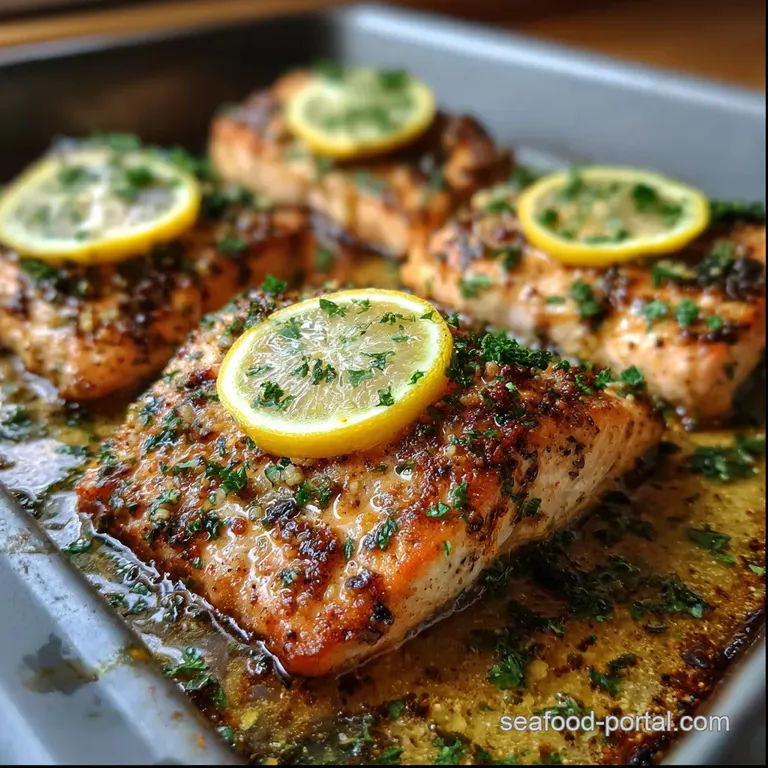
- Time: Active 10 minutes, Passive 12 minutes, Total 22 minutes
- Flavor/Texture Hook: Velvety salmon with snappy, charred asparagus
- Perfect for: Busy weeknights or impressive low carb dinner dates
- Making My Sheet Pan Garlic Lemon Butter Salmon
- Why This Easy One Pan Meal Works
- Key Components for Maximum Flavor Impact
- Essential Tools for a Simple Dinner
- The Alchemy of the Ingredients
- Mastering the over High heat Roasting Process
- Solving Common Salmon Cooking Issues
- Delicious Variations for Different Tastes
- Scaling the Recipe for Any Crowd
- Storing and Reheating Your Leftovers
- Perfect Side Dish Pairings
- Recipe FAQs
- 📝 Recipe Card
Making My Sheet Pan Garlic Lemon Butter Salmon
The sharp, punchy aroma of fresh garlic hitting a warm tray always takes me back to my first tiny apartment. I remember the first time I attempted a fancy fish dinner; I had four different pans going, the smoke alarm was screaming, and the salmon ended up as dry as a desert.
It was a chaotic mess that left me dreading seafood for months until I discovered the beauty of the sheet pan.
This sheet pan garlic lemon butter salmon is the recipe that changed everything for me. It’s the ultimate "I’m too tired to cook" solution that still tastes like a million bucks.
We’re talking about salmon fillets that stay incredibly flaky and moist, tucked next to asparagus spears that soak up all that golden, garlicky butter. There is something deeply satisfying about watching the butter bubble and brown around the edges of the lemon slices.
You can expect a meal that feels bright and fresh but carries a comforting richness from the compound butter. The smoked paprika adds just a whisper of earthiness that cuts through the citrus, making every bite feel balanced. It is simple, it is fast, and most importantly, it only requires one tray to clean.
Let's get into how we make this work every single time without the stress.
Why This Easy One Pan Meal Works
- Lipid Laced Moisture Barrier: The unsalted butter creates a hydrophobic layer over the salmon protein, significantly slowing down the evaporation of internal juices during the 200°C roast.
- Maillard Reaction Synergy: The small amount of natural sugars in the lemon juice and asparagus reacts with the heat, creating those crispy, savory brown bits that provide a "sizzle" factor.
- Convection Heat Distribution: Using a flat sheet pan allows hot air to circulate rapidly around the fillets, ensuring the skin crisps up while the center remains tender.
- Oxidation Control: Zesting the lemon fresh onto the butter ensures the volatile oils stay intact, providing a much deeper citrus perfume than bottled juice ever could.
| Salmon Thickness | Internal Temp | Rest Time | Visual Cue |
|---|---|---|---|
| 1.5 cm | 52°C | 2 minutes | Opaque edges, translucent center |
| 2.5 cm | 54°C | 3 minutes | Flakes easily with a fork |
| 4 cm | 57°C | 5 minutes | Firm to touch, pale pink center |
Choosing the right thickness for your fillets is the biggest hurdle. If you have very thin tail pieces, they will cook much faster than a thick center cut loin. Try to find fillets that are relatively uniform so the asparagus doesn't turn to mush while the fish finishes. If you ever find yourself craving a different texture, you might also enjoy the technique used in this Pan Seared Salmon recipe which focuses more on that ultra crispy skin.
Key Components for Maximum Flavor Impact
| Ingredient | Science Role | Pro Secret |
|---|---|---|
| Salmon Fillets | High fat protein base | Keep skin on to act as a heat shield during roasting. |
| Unsalted Butter | Emulsification vehicle | Use softened, not melted, butter to create a thick "paste" that stays on the fish. |
| Fresh Garlic | Aromatic sulfur compounds | Grate the garlic into the butter for a more intense, uniform flavor. |
| Lemons | Acidic structural breakdown | Place slices under the fish to steam it slightly from the bottom. |
The Buffer of Citrus Rounds
Placing your salmon directly on top of lemon slices isn't just for aesthetics. These yellow "rafts" create a physical barrier between the hot metal and the delicate fish skin. This prevents the salmon from sticking and infuses the bottom of the fillet with concentrated citrus steam.
It’s a trick I learned after losing far too many crispy skins to the bottom of a baking tray.
Emulsified Garlic Butter Infusion
By mashing the garlic and herbs into softened butter rather than just pouring oil over the top, you create a slow release flavor system. As the tray heats up, the butter melts gradually, basting the fish in a continuous stream of fat.
This prevents the garlic from burning too quickly, which is a common disaster in over high heat roasting.
Essential Tools for a Simple Dinner
To get that perfect result, you really need a heavy duty rimmed baking sheet. Those thin, flimsy trays tend to warp in a hot oven, which can cause the butter to pool in one corner, leaving half your asparagus dry and the other half swimming in grease. A sturdy aluminum pan provides the most even heat distribution.
You’ll also want a sharp zester or a Microplane. The goal is to get just the yellow part of the lemon skin the pith is bitter and will ruin the delicate balance of the butter. I also swear by a flexible fish spatula.
It’s thin enough to slide under the fillets without breaking them apart, which is vital when you’re transferring them from the tray to the plate.
- 1 Large rimmed baking sheet (standard half sheet size)
- Small mixing bowl for the compound butter
- Microplane or fine zester
- Parchment paper or silicone mat (optional, but makes cleanup easier)
- Digital meat thermometer
The Alchemy of the Ingredients
Here is exactly what you’ll need to pull this together. I always suggest using the freshest asparagus you can find; look for stalks that are firm and have tight, closed tips.
- 4 (170g) Salmon fillets: Look for bright flesh and skin that looks silver and tight. Why this? Provides the essential omega-3 fats and heartiness for a main meal.
- 450g Asparagus: Trim those woody ends off! Why this? A fast cooking green that pairs perfectly with lemon and garlic.
- 2 large Lemons: One for slicing, one for the zest and juice. Why this? The acid cuts through the richness of the salmon and butter.
- 3 tbsp Unsalted butter: Make sure it is softened to room temperature. Why this? The primary fat source that carries all the aromatics.
- 4 cloves Garlic: Freshly minced is non negotiable here. Why this? Adds a savory depth that balances the bright citrus.
- 1 tbsp Extra virgin olive oil: Just enough to coat the vegetables.
- 1 tbsp Fresh parsley: Finely chopped for a burst of color.
- 0.5 tsp Smoked paprika: Adds a subtle wood fired flavor.
- 0.5 tsp Sea salt & 0.25 tsp Cracked black pepper: To season everything perfectly.
| Original Ingredient | Substitute | Why It Works |
|---|---|---|
| Unsalted Butter | Ghee | Higher smoke point and nutty flavor. Note: Best for those sensitive to lactose. |
| Asparagus | Broccolini | Similar cook time and high surface area for charring. |
| Smoked Paprika | Chipotle Powder | Adds a smoky element but with a significant spicy kick. |
If you are looking for more inspiration for fast seafood nights, check out these other Fish Recipes that use similar bright, acidic flavor profiles to make dinner exciting without the fuss.
Mastering the over High heat Roasting Process
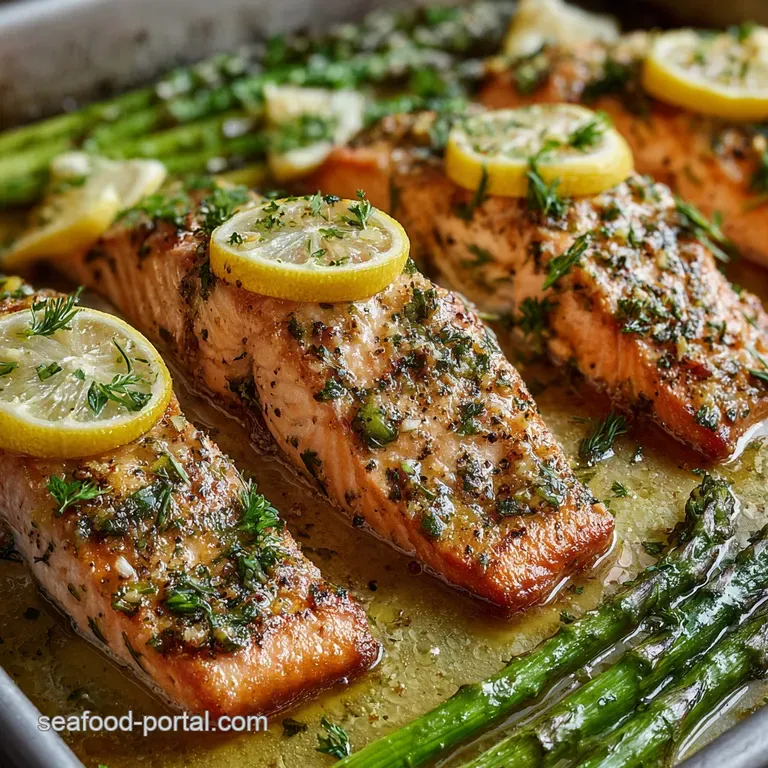
1. Thermal Prepping & Tray Layout
Preheat your oven to 200°C. Line your sheet pan with parchment paper if you want an easy cleanup. Place your 450g of trimmed asparagus on one side of the tray and drizzle with 1 tbsp olive oil, a pinch of salt, and pepper. Toss them directly on the tray until they are glistening.
Note: Keep the asparagus in a single layer so they roast rather than steam.
2. The Citrus Foundation
Slice one of your lemons into thin rounds. Arrange these rounds in four clusters on the empty side of the tray. Place one 170g salmon fillet on top of each cluster. This keeps the fish elevated and prevents the skin from getting soggy in the vegetable juices.
3. Creating the Butter Armor
In a small bowl, combine the 3 tbsp softened butter, 4 minced garlic cloves, the zest and juice of the remaining lemon, 1 tbsp chopped parsley, 0.5 tsp smoked paprika, and the remaining salt and pepper. Use a fork to mash it into a smooth paste. Note: If the butter is too cold, it won't spread evenly.
4. Applying the Flavor
Spoon the garlic butter mixture over the top of each salmon fillet. Use the back of the spoon to spread it into a thick, even layer. If you have a little left over, feel free to dot a few small pieces over the asparagus.
Aroma Checkpoint: You should smell the raw, pungent garlic and the bright, floral scent of the lemon zest immediately.
5. The Roasting Phase
Slide the tray into the center of the oven. Bake for 10 to 12 minutes. Note: The exact time depends on the thickness of your fillets. At the 8 minute mark, you’ll start to hear a wonderful sizzle as the butter hits the hot metal.
6. The Finishing Broil
If you like a little extra color, turn the broiler on for the last 1 to 2 minutes of cooking. Watch it like a hawk! You want the garlic to turn golden brown and the asparagus tips to get slightly charred.
Aroma Checkpoint: The kitchen should now smell like nutty, browned butter and toasted garlic.
7. The Rest Period
Remove the tray from the oven. Let the salmon rest for 3 minutes right on the tray. Note: This allows the juices to redistribute so they don't run out the moment you cut into the fish.
8. Final Flourish
Squeeze any remaining lemon juice over the whole tray and sprinkle with a little extra fresh parsley. The heat from the tray will release the final perfume of the herbs. Aroma Checkpoint: The final scent is a clean, herbaceous finish that balances the heavy butter.
Solving Common Salmon Cooking Issues
Why Your Salmon Is Dry
The most common culprit is simply leaving it in the oven too long. Salmon continues to cook for a few minutes after you take it out (carryover cooking). If you wait until it looks completely dry in the center to pull it out, it's already overdone.
Use a thermometer to hit 52-54°C for the best texture.
Preventing the "White Stuff" (Albumin)
That white gunk that sometimes seeps out of salmon is called albumin. It’s a perfectly safe protein, but it happens when the muscle fibers contract too quickly and squeeze it to the surface.
To minimize this, don't cook the fish straight from the fridge; let it sit at room temperature for 15 minutes first.
| Problem | Root Cause | Solution |
|---|---|---|
| Rubbery Asparagus | Overcrowding the tray | Space the spears out so air can circulate. |
| Burned Garlic | Garlic minced too fine | Use a rougher chop or mix it deeper into the butter. |
| Soggy Salmon Skin | Too much liquid on tray | Pat the fish completely dry with paper towels before seasoning. |
Common Mistakes Checklist
- ✓ Always pat the salmon skin dry with a paper towel (moisture is the enemy of crispiness).
- ✓ Don't skip the lemon zest; the juice provides acid, but the zest provides the aroma.
- ✓ Ensure the oven is fully preheated before the tray goes in.
- ✓ Avoid using "light" butter or margarine; they have too much water and won't emulsify.
- ✓ Trim at least 2cm off the bottom of the asparagus to remove the woody, stringy parts.
Delicious Variations for Different Tastes
Chef's Tip: If you want to take this to the next level, freeze your butter for 10 minutes before grating it into the bowl. This creates tiny "cold pockets" that melt at different rates, creating a more textured sauce.
If you’re feeling adventurous, there are so many ways to pivot this recipe. For a Mediterranean Twist, swap the smoked paprika for dried oregano and add some halved cherry tomatoes and Kalamata olives to the tray.
The tomatoes will burst and create a beautiful light sauce that mingles with the garlic butter.
For those who like a Spicy Citrus Kick, add a teaspoon of red chili flakes to the butter mixture. You can also swap the lemon for lime and the parsley for cilantro to give it a more zesty, tropical vibe. If you’re looking for something even more decadent, you might want to try a Salmon with Herb recipe that features a richer cream sauce base.
- If you want it crunchier: Sprinkle 2 tbsp of Panko breadcrumbs over the butter layer before baking.
- If you want it heartier: Add par boiled baby potatoes to the tray with the asparagus.
- If you want it keto: Double the butter and skip any honey or sugar based seasonings.
Scaling the Recipe for Any Crowd
When you're cooking for one or two, this recipe is a dream. You can simply halve everything and use a smaller quarter sheet pan. The cook time remains largely the same, though you should check the fish at the 8 minute mark since a smaller tray might heat up slightly faster.
Scaling up for a crowd requires a bit more strategy. Don't try to cram 8 fillets onto one tray. The moisture released by the fish and vegetables will steam everything, and you'll lose that roasted texture.
Use two separate trays and rotate them halfway through the cooking time (top rack to bottom rack) to ensure even browning. For the spices, only increase them by 1.5x even if you're doubling the fish; spices can become overwhelming in large quantities.
Storing and Reheating Your Leftovers
Leftover salmon is surprisingly versatile, though it's never quite as flaky as it is fresh out of the oven. You can store it in an airtight container in the fridge for up to 3 days.
I don't recommend freezing cooked salmon as the texture becomes quite mushy upon thawing, but you can freeze the raw fillets in the garlic butter marinade for up to 2 months.
To reheat, avoid the microwave! It will turn the fish into rubber. Instead, place the salmon and asparagus back on a sheet pan, cover loosely with foil, and heat in a 150°C oven for about 8 to 10 minutes. This gently warms the fat without overcooking the protein.
Zero Waste Tip: Don't throw away those squeezed lemon halves! Toss them into a jar of white vinegar to make a natural, citrus scented kitchen cleaner, or put them down the garbage disposal to freshen it up. You can also chop up the leftover salmon and mix it into a cold pasta salad the next day.
Perfect Side Dish Pairings
While this is technically a full meal on its own, I love serving it over a bed of fluffy quinoa or jasmine rice to soak up all that extra garlic butter. A side of crusty sourdough bread is also a fantastic idea for mopping up the tray juices honestly, that golden liquid is the best part of the whole dish.
If you want to keep it light, a simple arugula salad with a balsamic glaze provides a nice peppery contrast to the rich salmon. The goal is to keep the sides simple so the lemon and garlic remain the stars of the show. Trust me, once you see how easy this is, it will become your new Tuesday night tradition.
It's fast, it's elegant, and it's practically foolproof. Right then, let's get that oven preheated!
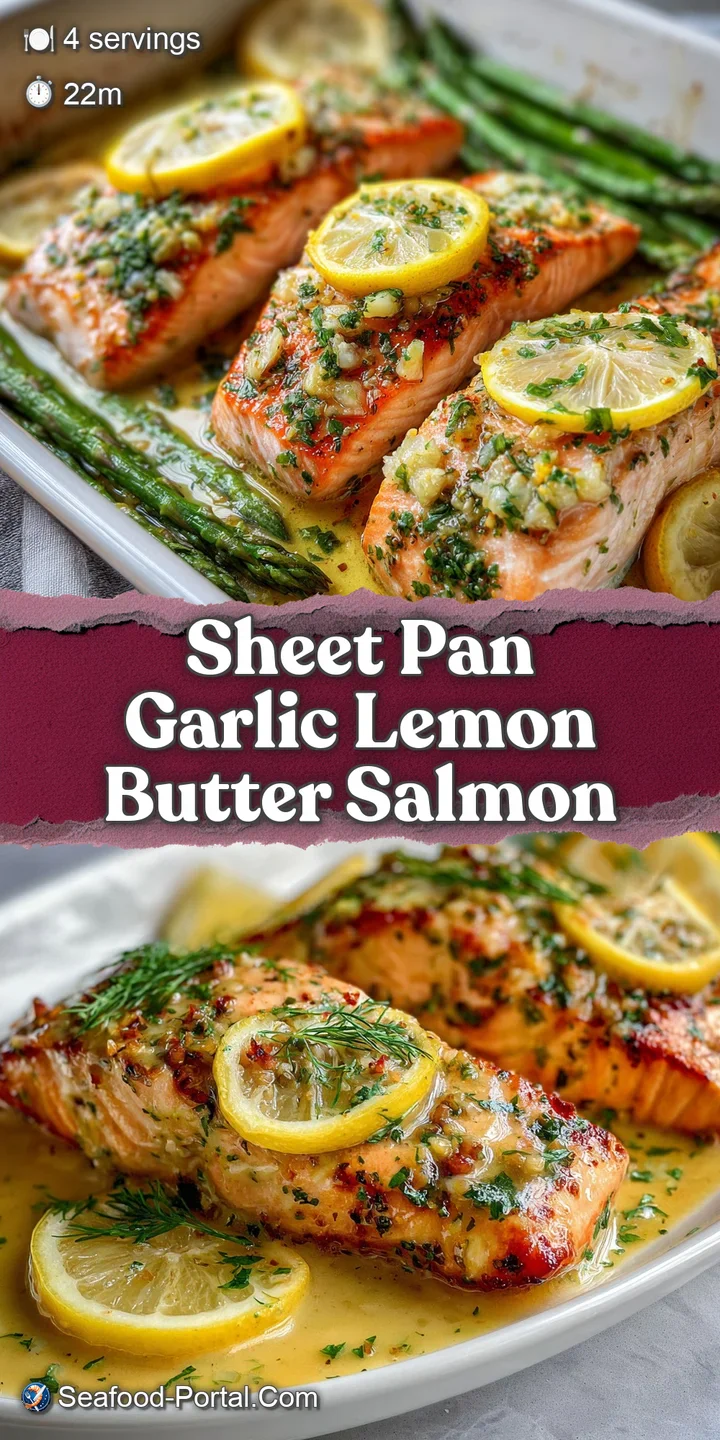
Recipe FAQs
What temperature should I preheat my oven to for this recipe?
Preheat the oven to 200°C (400°F). This high heat is crucial for achieving those desirable charred edges on the asparagus quickly while keeping the salmon moist.
How long do I bake the salmon at 200°C?
Bake for 10 to 12 minutes total. The exact time depends heavily on the thickness of your fillet; always check the internal temperature to ensure it reaches 54°C before removing it from the heat.
How do I prevent the garlic from burning before the salmon is cooked?
Mix the minced garlic into softened butter, not oil, and spread it thickly. The fat acts as a barrier, ensuring the garlic flavors infuse the fish slowly rather than scorching instantly on the hot tray.
Is it true I must use parchment paper on the sheet pan?
No, parchment paper is optional but highly recommended. Placing the fish directly on the metal can cause sticking; using paper or a silicone mat simplifies cleanup and helps steam the bottom of the fillets slightly.
What is the key to getting a non-soggy texture on the asparagus?
Toss the asparagus with just enough oil to coat, and place them in a single layer. Overcrowding the pan causes the vegetables to steam in their own moisture, leading to a limp texture instead of a roasted snap.
Can I use frozen salmon fillets instead of fresh for this sheet pan method?
Yes, but you must thaw them first and pat them completely dry. For best results relating to temperature precision, follow the steps in our Frozen Salmon Savior recipe to ensure an even cook.
What is the best way to incorporate a spicy kick into this recipe?
Add one teaspoon of red chili flakes directly into the softened garlic butter mixture. This integrates the heat evenly across the fillet surface, complementing the lemon beautifully, similar to how heat is balanced in the Blackened Salmon with recipe technique.
Sheet Pan Salmon With Lemon
Ingredients:
Instructions:
Nutrition Facts:
| Calories | 492 kcal |
|---|---|
| Protein | 37.4 g |
| Fat | 34.8 g |
| Carbs | 6.9 g |
| Fiber | 2.6 g |
| Sugar | 1.4 g |
| Sodium | 322 mg |
