Thanksgiving Seafood Recipes: Ultimate Holiday Menu
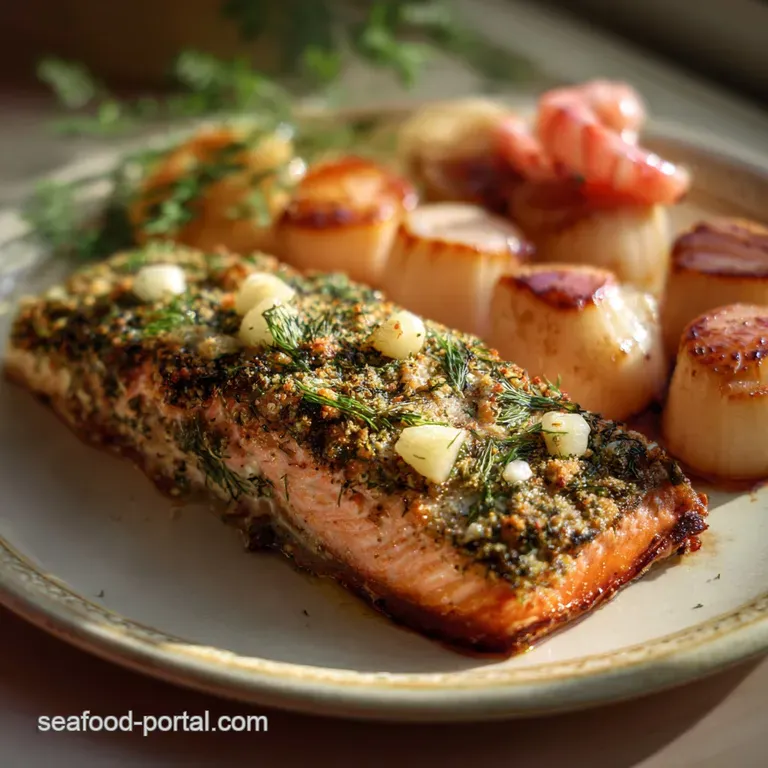
- Effort/Time: Moderate / 45 minutes
- Flavor Hook: Briny sweetness meets citrus-brightened umami.
- Perfect for: Pescatarian-friendly hosting and luxury holiday gatherings.
- Achieving Textural Mastery in Thanksgiving Seafood Recipes
- Precision Thermal and Yield Metrics for Your Menu
- The Alchemy of Umami: Selecting Your Elements
- Essential Technical Tools for Holiday Seafood
- Precision Timing and Thermal Control Protocol
- Troubleshooting Thermal Failures
- Variations and Substitutions for Every Table
- ⚗️ The Scaling Lab: The Physics of Quantity
- Debunking Seafood Myths
- Preservation and Zero Waste Philosophy
- Festive Presentation and Flavor Pairing
- Recipe FAQs
- 📝 Recipe Card
There is nothing more gut-wrenching than watching $90 worth of prime seafood turn into a rubbery, dry disaster because the oven temp was off by ten degrees. I’ve lived that nightmare specifically, a Thanksgiving five years ago where I served salmon so overcooked it had the texture of a wool sweater and scallops that looked more like boiled erasers than restaurant quality delicacies.
The financial sting was bad, but the look of polite disappointment on my family’s faces was worse.
I spent the next three years obsessed with the thermodynamics of fish. I ruined dozens of fillets and sets of scallops, testing everything from cold pan starts to over the-top brining techniques. I realized I was overcomplicating the seasoning while ignoring the physics of moisture loss.
You don't need a culinary degree to master Thanksgiving Seafood Recipes; you just need to understand how to manage protein denaturation and surface moisture. Mastering these Thanksgiving Seafood Recipes starts with preparation.
The secret to this specific dish isn't a "magic" spice blend. It’s the strategic use of Dijon mustard as a moisture barrier and the relentless pursuit of a bone dry surface on your scallops before they ever touch the Lodge Cast Iron Skillet.
When you hit that perfect sear, the "shattering" crunch of the panko crust against the "velvety" interior of the salmon creates a sensory experience that no turkey could ever replicate. Let's crack on with the science of superior Thanksgiving Seafood Recipes.
Achieving Textural Mastery in Thanksgiving Seafood Recipes
Understanding the "why" behind your technique prevents common holiday kitchen catastrophes. These Thanksgiving Seafood Recipes rely on specific scientific triggers to ensure the fish remains succulent while the exterior achieves a deep mahogany crust.
- Protein Coagulation Control: By using a center cut side of salmon, we minimize the surface area-to-volume ratio, slowing down the rate at which internal proteins tighten and squeeze out moisture.
- The Albumin Barrier: Applying Dijon mustard acts as a sacrificial layer that denatures slightly under heat, preventing the unsightly white albumin (the protein that leaks out of salmon) from surfacing and ruining the aesthetic.
- Starch Gelatinization: The panko breadcrumbs absorb the essential oils from the fresh parsley and thyme, creating a localized steam environment that keeps the top of the fish hydrated while the dry heat of the oven toasts the exterior.
- Osmotic Pressure Management: Using Diamond Crystal Kosher Salt 15 minutes before cooking draws out surface moisture which, when wiped away, allows for a more efficient Maillard reaction on the scallops.
- Capillary Action in Scallops: Dry-packed scallops are essential because they haven't been treated with sodium tripolyphosphate, which forces the muscle to hold excess water that would otherwise "weep" into the pan and steam the meat. These principles are central to great Thanksgiving Seafood Recipes.
Precision Thermal and Yield Metrics for Your Menu
Success in Thanksgiving Seafood Recipes requires strict adherence to timing and temperature. Unlike a turkey that can sit for an hour, seafood has a narrow window of perfection. Even slight deviations can ruin what should be one of the best Thanksgiving Seafood Recipes you ever serve.
- Prep Time: 20 minutes
- Cook Time: 25 minutes
- Total Time: 45 minutes
- Yield: 6 servings
- Salmon Internal Temp: Pull at 125°F (52°C) for medium rare/medium.
- Scallop Internal Temp: Pull at 115°F (46°C) for a translucent, buttery center.
The Alchemy of Umami: Selecting Your Elements
The quality of your Thanksgiving Seafood Recipes depends entirely on the integrity of your haul. Use these specific quantities and pay attention to the scientific "why" behind each choice.
- 1.36 kg (3 lbs) Center cut Side of Salmon, skin-on: Why this? Thicker cut ensures even heat distribution and prevents the tail end from drying out.
- 15 g (1 tbsp) Diamond Crystal Kosher Salt: Why this? Lower density than table salt allows for more even coverage without over salting.
- 60 g (1/2 cup) Panko breadcrumbs: Why this? Large surface area creates a superior shattering texture compared to fine crumbs.
- 30 g (1/4 cup) Fresh parsley, finely minced
- 15 g (1 tbsp) Fresh thyme, minced
- 2 cloves Garlic, grated: Why this? Grating breaks more cell walls, releasing more allicin for intense flavor.
- 30 ml (2 tbsp) Grey Poupon Dijon mustard: Why this? Acts as a biological "glue" and acidity balancer for the fatty fish.
- 900 g (2 lbs) Jumbo Sea Scallops (dry-packed): Why this? Prevents chemical leaching and ensures a crusty sear rather than a steam.
- 60 g (4 tbsp) Unsalted butter
- 30 ml (2 tbsp) Grapeseed oil: Why this? High smoke point (420°F) allows for searing without the oil breaking down.
- 1 Lemon, juiced and zested
- 5 g (1 tsp) Smoked paprika
- 50 g (1/3 cup) Pomegranate arils
- 1 handful Microgreens or fresh dill
Ingredient Chemistry Breakdown
| Ingredient | Chemical/Physical Role (Science) | The Pro Secret (Why This Matters) |
|---|---|---|
| Salmon Skin | Thermal insulator and moisture trap | Keeping the skin on prevents the bottom of the fish from over coagulating against the pan. |
| Dijon Mustard | Emulsification and Acidification | The vinegar in the mustard breaks down tough connective tissue on the surface. |
| Grapeseed Oil | High Smoke Point Lubrication | Allows for a 400°F pan surface, essential for the Maillard reaction without acrid smoke. |
| Lemon Zest | Essential Oil Volatilization | Heat releases zest oils that cut through the heavy fats of the butter and salmon. |
Essential Technical Tools for Holiday Seafood
You cannot wing it with Thanksgiving Seafood Recipes. These tools ensure the thermodynamics work in your favor. Successful execution of these Thanksgiving Seafood Recipes hinges on having the right gear.
- Lodge Cast Iron Skillet (12 inch): Essential for scallops to provide high thermal mass; it won't drop in temperature when the cold protein hits the surface.
- Thermapen One Digital Thermometer: Non-negotiable. Seafood moves from raw to ruined in 90 seconds.
- Half Sheet Pan with Wire Rack: Elevating the salmon allows hot air to circulate under the skin, preventing "soggy bottom" syndrome.
- Microplane Grater: For the garlic and lemon zest to ensure microscopic distribution.
- Fish Spatula: Its thin, flexible metal is designed to slide under delicate fillets without tearing the flesh.
Precision Timing and Thermal Control Protocol
Follow these steps with surgical focus. The goal is to sync the salmon and scallops so they arrive at the table while the carryover cooking is still active. This is the hallmark of great Thanksgiving Seafood Recipes.
- Preheat the oven to 400°F (200°C) and place a wire rack inside a baking sheet.
- Pat dry the 1.36 kg salmon with paper towels until the surface is matte; moisture is the enemy of a crisp crust.
- Season the salmon with 10 g of the Kosher salt, letting it sit for 10 minutes until tiny beads of moisture appear on the surface.
- Combine the 60 g panko, parsley, thyme, grated garlic, and smoked paprika in a bowl, stirring until the breadcrumbs are uniform in color.
- Spread the 30 ml Dijon mustard over the top of the salmon until the pink flesh is completely obscured by a thin, yellow layer.
- Press the herb panko mixture firmly into the mustard until a thick, insulating crust is formed.
- Roast the salmon for 18–22 minutes until the thickest part reaches 125°F and the panko is golden brown.
- Pat dry the 900 g scallops while the salmon roasts until they feel tacky to the touch.
- Heat 30 ml oil in the Lodge skillet over high heat until the first wisps of white smoke appear.
- Sear scallops for 2 minutes per side until a deep mahogany crust forms and they no longer stick to the pan.
- Baste the scallops with the 60 g butter and lemon juice in the final 30 seconds until the butter foams and smells nutty.
- Rest the seafood for 5 minutes until juices redistribute within the muscle fibers.
- Garnish with pomegranate arils and microgreens for a festive visual contrast.
Troubleshooting Thermal Failures
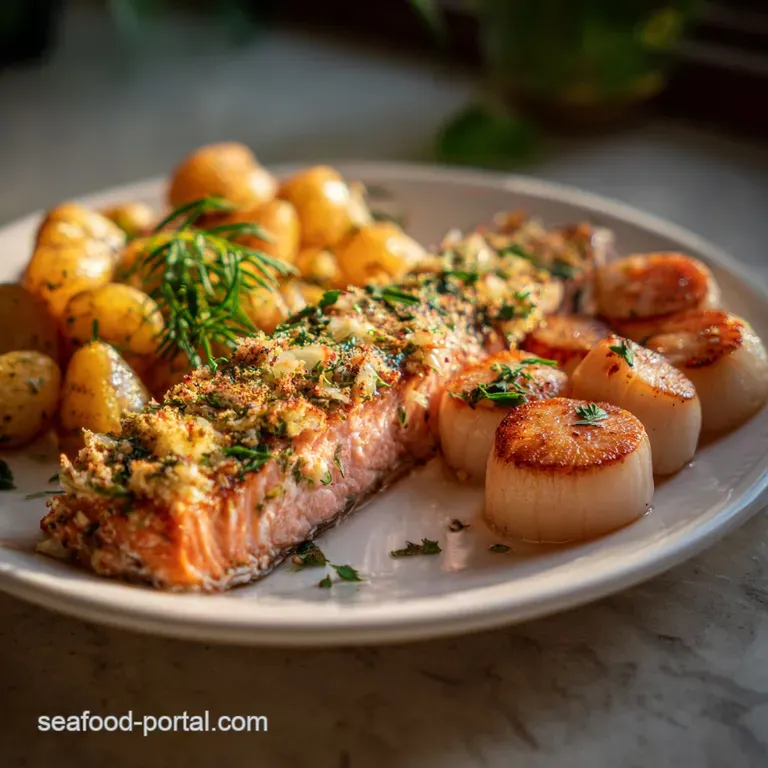
Why Your Salmon is Leaking White Liquid
When salmon is heated too rapidly or for too long, the internal muscle fibers contract violently, squeezing out a protein called albumin. This is the primary sign of overcooking in Thanksgiving Seafood Recipes.
| Problem | Root Cause | The Fix | Pro Protocol |
|---|---|---|---|
| White Albumin Leak | Internal temp exceeded 140°F | Pull fish at 125°F; use carryover cooking. | Tent with foil to slow heat loss during the rest. |
| Soggy Salmon Crust | Steam trapped under panko | Do not tent with foil during the bake; use a wire rack. | Grate cold butter into the panko for extra crisp. |
| Rubbery Scallops | Overcooking or wet-packed | Buy "dry-packed" only; sear for max 2 mins/side. | Use a heavy cast iron pan to ensure a fast sear. |
Variations and Substitutions for Every Table
If you need to pivot based on availability or diet, use these scientific swaps to keep your Thanksgiving Seafood Recipes on track. Pairing these with a Rich Buttery Seafood recipe can also offer a different flavor profile for the scallops.
| Original Ingredient | Substitute | Why It Works |
|---|---|---|
| Salmon Side | Arctic Char | Similar fat profile but slightly milder flavor; cooks 10% faster. |
| Panko Breadcrumbs | Crushed Pork Rinds | Provides the same "shatter" texture without the gluten/carbs. |
| Sea Scallops | Colossal Shrimp | Similar protein density; peel and devein but leave tails on for presentation. |
| Dijon Mustard | Whole Grain Mustard | Adds more textural "pop" but has less surface coverage. |
For those looking for more streamlined options, my Fish Recipes often utilize similar searing techniques but with leaner white fish. These simpler approaches are still fantastic Thanksgiving Seafood Recipes.
⚗️ The Scaling Lab: The Physics of Quantity
When doubling these Thanksgiving Seafood Recipes for a crowd of 12, standard math fails. You must account for thermal mass.
- The Evaporation Paradox: If you make a larger batch of the lemon butter sauce in the same small saucepan, the liquid won't reduce fast enough. Increase your pan surface area or reduce the added lemon juice by 15% to avoid a watery finish.
- Pan Crowding (Maillard Killer): Putting 1.8 kg of scallops in one pan will drop the surface temperature of the cast iron instantly to below 212°F. Instead of searing, the scallops will boil in their own juices. Mandatory instruction: Sear in three batches, allowing the pan to reheat for 60 seconds between each.
- Carry Over Cooking: A 2.7 kg (6 lb) piece of salmon has significantly more thermal mass than the 1.36 kg piece. It will continue to cook for 10 minutes after leaving the oven. Pull the large fish at 120°F to avoid a dry center.
- Spice Saturation: Scale spices (salt, paprika) by 1.5x only when doubling the recipe. The surface area of the fish does not double at the same rate as the weight (the Square Cube Law).
Debunking Seafood Myths
- Myth: You must flip scallops multiple times for an even cook. Truth: Flipping more than once prevents the Maillard reaction from building a thick, flavorful crust. Leave them alone for the full 2 minutes.
- Myth: "Fresh" fish is always better than frozen. Truth: Most "fresh" seafood at the counter was previously frozen and thawed. "Flash frozen at sea" (FAS) fish often has superior cellular integrity because it was processed within hours of the catch.
Preservation and Zero Waste Philosophy
Storage and Reheating: Seafood is best within 24 hours. Store in an airtight glass container in the fridge for up to 2 days. To reheat, avoid the microwave it turns protein into rubber.
Instead, place the salmon in a 275°F oven with a splash of water and cover tightly with foil until just warm.
- Salmon Skin
- Transform: Peel it off and pan-fry until it becomes a "cracker." Science: The high fat content and collagen make for a nutrient dense, salty snack.
- Herb Stems
- Transform: Toss them into a freezer bag for future stock. Science: Stems contain more volatile aromatic compounds than the leaves, which survive long simmering better.
- Lemon Rinds
- Transform: Simmer with the butter for the scallops. Science: The pith contains pectin, which can help slightly thicken the butter sauce.
Festive Presentation and Flavor Pairing
These Thanksgiving Seafood Recipes demand sides that offer high acidity or starch to balance the fatty salmon. I recommend serving this alongside a vibrant citrus salad or a The Seafood Boil recipe style garlic butter dip for the table. It's important to choose sides that complement your main Thanksgiving Seafood Recipes.
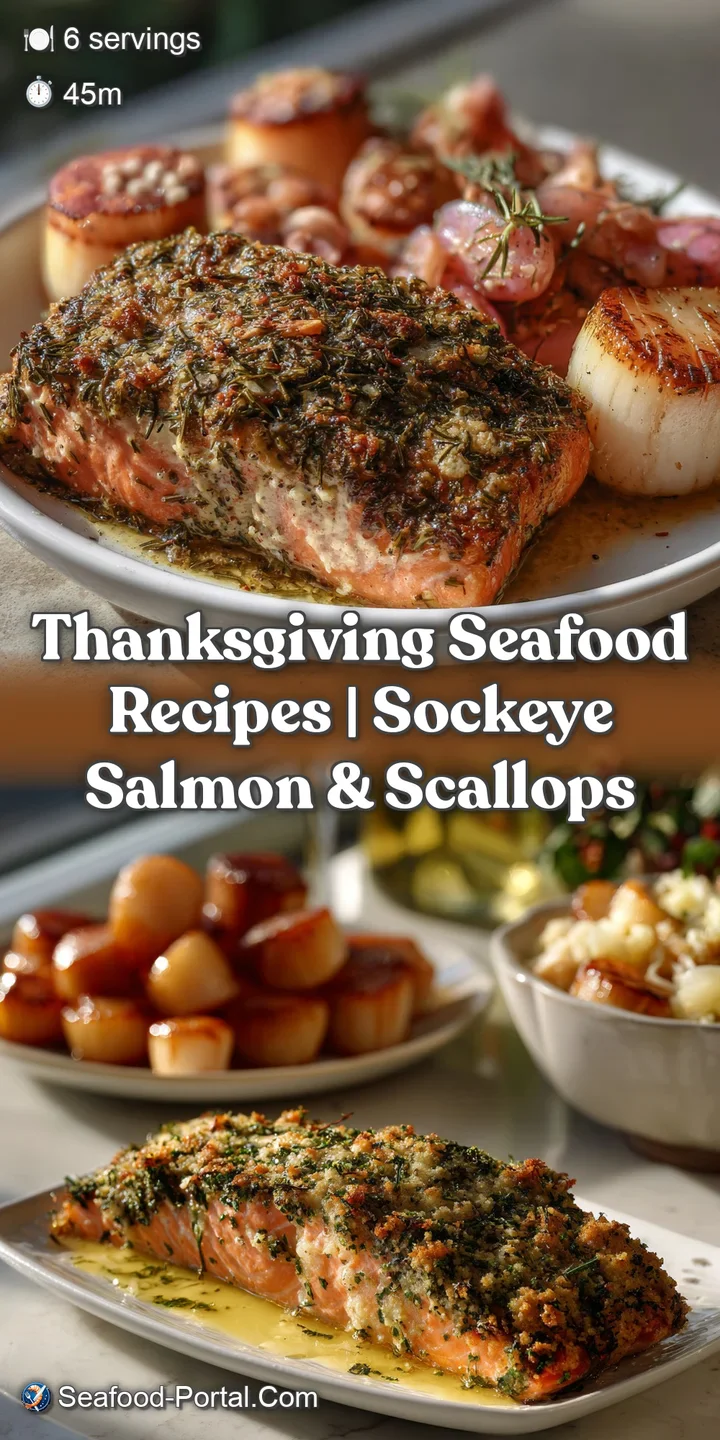
The visual contrast of the deep green herbs, the golden panko, and the ruby red pomegranate arils creates a centerpiece that feels like a celebration. The pomegranate isn't just for show; the burst of tart juice provides the necessary phosphoric acid to cut through the richness of the 43 g of fat per serving.
This balance of textures shattering, velvety, and popping is what makes these Thanksgiving Seafood Recipes the highlight of the holiday.
Recipe FAQs
What internal temperature should I pull the salmon at for Thanksgiving seafood dishes?
Pull at 125°F (52°C) for medium rare/medium. Seafood temperature control is critical because the protein structure tightens rapidly, squeezing out moisture above 140°F. This low pull temperature ensures succulence while carryover cooking finishes the job perfectly.
What is the best oil to use when searing scallops for a deep crust?
Grapeseed oil provides the ideal high smoke point (420°F). Using an oil that breaks down releases bitter compounds, halting the Maillard reaction needed for a deep crust. If you enjoyed mastering the high heat sear here, apply the same temperature logic to achieving the crust on the fillet in our Seafood Medley in TomatoButter Sauce Better Than Restaurant.
Myth: Rinsing frozen seafood before cooking removes ice crystals.
Myth: Rinsing frozen seafood removes ice crystals. Reality: Rinsing adds surface moisture, which immediately turns to steam when it hits a hot pan, preventing the necessary Maillard reaction crust.
Should I use salted or unsalted butter for basting the scallops?
Unsalted butter for precision control. Salted brands vary widely in sodium content, making it impossible to accurately season the final dish when relying on external seasoning. Unsalted butter provides a neutral fat medium for the lemon and garlic infusions.
Why is my salmon leaking unsightly white albumin protein?
Rapid heating causes protein coagulation and expulsion. When the muscle fibers tighten too quickly above 140°F, they force the suspended protein, albumin, to surface as a white, opaque substance.
- Pull fish early at 125°F
- Use Dijon mustard as a surface barrier
- Ensure even thickness across the fillet
Can I substitute Arctic Char for the main salmon fillet?
Yes, Arctic Char is an excellent, milder substitute. Char shares a similar fat-to-protein ratio with salmon, meaning it can be cooked using the same time and temperature metrics. If you enjoyed controlling the fat balance in this recipe, see how that same skill applies when balancing dairy in our Seafood Symphony Mixed seafood in a creamy Garlic Wine Sauce.
Myth: Adding thick herbs directly to the pan prevents burning.
Myth: Thick herbs prevent oil/butter from burning. Truth: Herbs like parsley and thyme burn faster than oil due to their low moisture content and high surface area. They should be mixed into a protective panko crust.
Seafood Thanksgiving Centerpiece
Ingredients:
Instructions:
Nutrition Facts:
| Calories | 742 kcal |
|---|---|
| Protein | 64 g |
| Fat | 43 g |
| Carbs | 14 g |
| Fiber | 2 g |
| Sugar | 3 g |
| Sodium | 1180 mg |
