Japanese Shrimp Curry: 30-Minute Umami Bomb
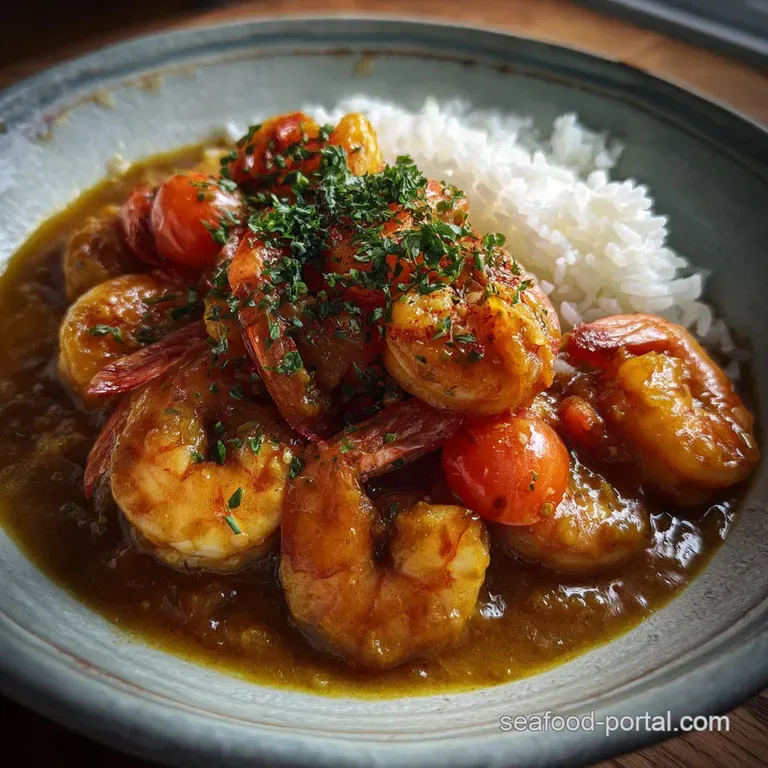
- Effort/Time: Minimal prep with a high-speed 30 minute execution for this Japanese Shrimp Curry.
- Flavor Hook: A savory-sweet-spicy balance fueled by synergistic glutamates and honey specific to this dish.
- Perfect for: Busy weeknight-dinners or high-protein meal-prep utilizing Japanese Shrimp Curry.
- Master the Ultimate Japanese Shrimp Curry
- The 30 Minute Assembly Protocol and Emulsion Stability
- The Alchemy of Umami: Selecting Your Elements
- Precision Thermal Tools for Optimal Heat Distribution
- The Sequence of Flavor Extraction and Texture Control
- Correcting Structural Failures and Texture Imbalances
- ⚗️ The Scaling Lab: The Physics of Quantity
- Creative Adaptation and Flavor Profile Modifications
- Common Myths
- Preservation Physics and Thermal Reconstitution
- Enhancing the Sensory Experience of Japanese Prawn Curry
- Recipe FAQs
- 📝 Recipe Card
Master the Ultimate Japanese Shrimp Curry
There is nothing more frustrating than investing $20 in high-quality seafood only to end up with rubbery, "bouncy" protein swimming in a thin, watery broth. When the sauce lacks body and the aromatics taste raw rather than caramelized, the entire meal feels like a wasted effort.
This specific technical failure usually stems from a misunderstanding of how heat affects delicate crustacean fibers versus how it transforms vegetable starches when making Japanese Shrimp Curry.
I remember my first attempt at this dish; I threw everything into the pot at once, thinking a longer simmer would "deepen" the flavor. Instead, I destroyed the texture of the shrimp and ended up with a gray, unappealing sludge. It was a humbling lesson in the physics of carryover cooking.
I realized that the secret wasn't more time, but rather the strategic sequencing of ingredients based on their specific thermal requirements for excellent Japanese Shrimp Curry.
The breakthrough came when I applied the principle of protein denaturation to the seafood. By searing the shrimp separately and introducing them only at the final stage of starch gelatinization, I achieved a velvety sauce and succulent prawns, creating a truly superior Japanese Shrimp Curry.
This recipe relies on the Maillard reaction to build an aromatic foundation and uses the pre-measured thickeners in the roux to create a glossy, mahogany colored glaze that clings to every grain of rice.
The 30 Minute Assembly Protocol and Emulsion Stability
- Protein Denaturation Control: Cooking seafood at a lower, controlled temperature prevents the tightening of muscle fibers that leads to a "rubbery" texture in any seafood dish, including this one.
- Starch Gelatinization: The wheat flour and fats in the roux blocks hydrate at approximately 175°F (80°C), creating a stable, thickened lattice for the sauce.
- Synergistic Umami: Combining seafood dashi (inosinates) with soy sauce and onions (glutamates) creates a flavor profile significantly more intense than either alone in your final product.
- Osmotic Pressure Balance: Seasoning the shrimp 15 minutes prior to cooking allows the salt to penetrate the protein, improving moisture retention during the sear for your Japanese Shrimp Curry.
The Alchemy of Umami: Selecting Your Elements
Selecting the right components for your Japanese Shrimp Curry is a lesson in chemical balance. You aren't just looking for "fresh" ingredients; you're looking for specific molecular contributions that define this specific meal.
Ingredient Chemistry Breakdown
| Ingredient | Chemical/Physical Role (Science) | The Pro Secret (Why This Matters) |
|---|---|---|
| Yukon Gold Potato | High amylopectin content for structural integrity | Stays intact during simmering while releasing enough starch to thicken the periphery. |
| Seafood Dashi | Source of inosinate driven umami | Amplifies the "shrimpiness" of the dish through glutamate synergy. |
| Japanese Curry Roux | Complex lipid starch emulsion | Pre-cooked flour prevents a "raw grain" taste and ensures instant thickening. |
| Honey | Hygroscopic sweetener | Balances the capsaicin heat while adding a glossy sheen to the final sauce. |
Essential Ingredients:
- 1 lb Large Shrimp (Peeled and Deveined): Look for 21/25 count for the best surface-to-volume ratio. Why this? Larger prawns resist overcooking better than smaller varieties when making Japanese Shrimp Curry.
- 3.2 oz S&B Golden Curry Roux Cubes: The industry standard for consistent spice ratios. Why this? Contains specific oil-to-flour ratios for perfect emulsion stability.
- 1 Medium Yukon Gold Potato: Cut into 0.5 inch cubes. Why this? Lower starch than Russets prevents the curry from becoming "grainy."
- 2.5 cups Seafood Dashi or Chicken Stock: Use Hondashi granules for an authentic profile.
- 1 tbsp Lee Kum Kee Soy Sauce: Adds fermented depth and essential sodium.
- 2 cloves Garlic (Minced): Provides the sulfurous backbone for the aromatics.
- 1 tbsp Honey: Acts as a pH balancer against the acidic ketchup.
- 2 tbsp Unsalted Butter: Use Kerrygold for a higher milk solid content.
Substitutions Table
| Original Ingredient | Substitute | Why It Works |
|---|---|---|
| Seafood Dashi | Chicken Stock | Provides a neutral savory base; less "oceanic" but highly palatable. |
| Yukon Gold Potato | Red Bliss Potato | Similar waxy texture that prevents disintegration during the simmer. |
| Honey | Mirin (1.5 tbsp) | Adds sweetness and a distinct Japanese luster to the sauce. |
| Neutral Oil | Ghee | Higher smoke point than butter with a deep, nutty aroma profile. |
Precision Thermal Tools for Optimal Heat Distribution
To execute a Japanese Shrimp Curry with professional results, you need tools that manage thermal mass effectively.
- Lodge 12 inch Cast Iron Skillet or Dutch Oven: Necessary for maintaining a consistent temperature when adding cold vegetables. Stainless steel often loses too much heat, leading to steaming rather than searing.
- Global G-2 8 inch Chef's Knife: Essential for the "brunoise" or fine mince of the onions, which ensures they melt into the sauce rather than leaving chunks.
- Microplane Zester: Used for the fresh ginger to maximize surface area, releasing the gingerol compounds instantly into the hot butter.
- Instant Read Thermometer: Used to ensure the internal temp of the shrimp hits exactly 120°F (49°C) for peak succulence in your curry.
The Sequence of Flavor Extraction and Texture Control
H3: Phase 1: Searing the Prawns
- Pat 1 lb shrimp dry with paper towels. Note: Surface moisture prevents the Maillard reaction by keeping temp at 212°F.
- Season with 0.5 tsp salt and 0.5 tsp black pepper.
- Heat 1 tbsp neutral oil in your Lodge Dutch Oven over medium high heat.
- Sear shrimp for 1 minute per side until edges turn opaque pink and a light golden crust forms. Remove and set aside; they will be undercooked.
H3: Phase 2: Developing the Mirepoix
- Melt 2 tbsp unsalted butter into the remaining oil.
- Sauté minced yellow onion for 5 minutes until translucent and the sharp sulfurous smell turns sweet.
- Stir in minced garlic and 1 tsp grated ginger for 30 seconds until highly aromatic and pale gold.
- Add 0.5 inch cubes of carrot and Yukon Gold potato, tossing for 2 minutes until the potato edges look slightly softened.
H3: Phase 3: Simmering and Thickening
- Pour in 2.5 cups seafood dashi and bring to a boil.
- Reduce heat to low and simmer for 10 minutes until potatoes are fork tender but not falling apart.
- Whisk in 3.2 oz curry roux cubes, 1 tbsp soy sauce, 1 tbsp honey, and 1 tsp ketchup.
- Stir constantly for 3 minutes until the sauce thickens and the surface takes on a glossy, velvety sheen.
H3: Phase 4: The Finishing Touch
- Return the seared shrimp to the pot.
- Fold gently for 1 minute until shrimp are fully opaque and the internal temp reaches 120°F.
- Remove from heat immediately until the bubbling subsides to prevent carryover overcooking of your final Japanese Shrimp Curry.
Correcting Structural Failures and Texture Imbalances
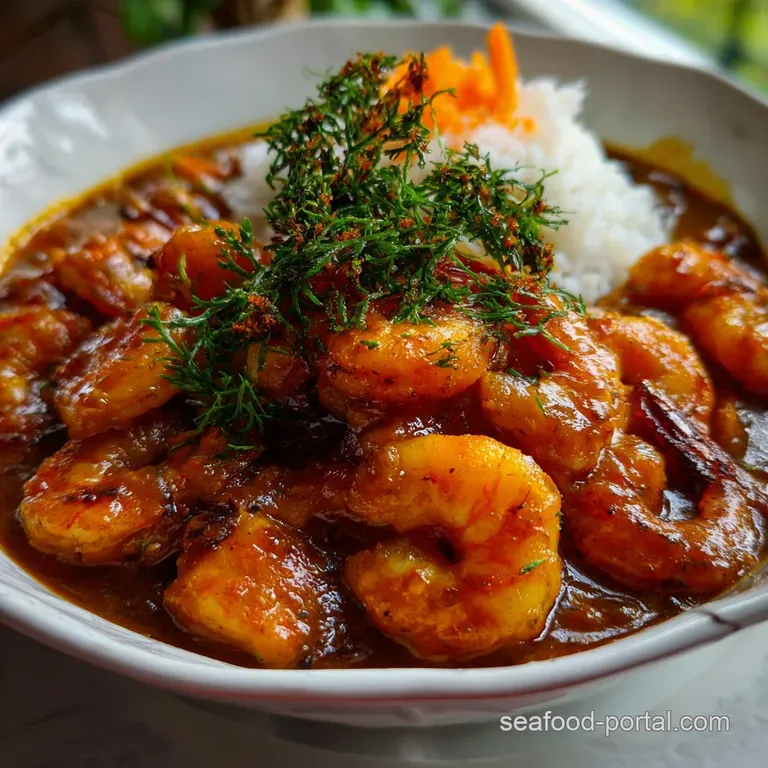
Why Your Shrimp Curry is Watery
When your Japanese Shrimp Curry fails to thicken, it’s usually due to incomplete starch gelatinization. Starch molecules must be heated to a specific threshold to "unravel" and trap liquid.
If you add the roux to a lukewarm liquid, the emulsion will never form, leaving you with a greasy, separated mess.
| Problem | Root Cause | The Fix | Pro Protocol |
|---|---|---|---|
| Thin Sauce | Insufficient heat or too much dashi | Simmer for 3 extra minutes | Add an extra half cube of roux for immediate body. |
| Rubbery Shrimp | Over denaturation of protein | Reduce final simmer time | Pull shrimp at 115°F; carryover heat hits 120°F. |
| Bitter Aftertaste | Burnt garlic or spices | Add 1 tsp extra honey | Never sauté garlic longer than 45 seconds. |
Why Your Potatoes Are Mushy
If the potatoes disintegrate, you’ve likely used a starchy Russet instead of a waxy Yukon Gold. High starch potatoes have cells that separate easily when heated. For a texture similar to the Shrimp with Garlic Sauce recipe, you want the vegetables to hold their shape against the thick sauce of the Japanese Shrimp Curry.
⚗️ The Scaling Lab: The Physics of Quantity
When you decide to double this Japanese Shrimp Curry for a dinner party, the thermodynamics change drastically.
- The Evaporation Paradox: If you use the same size pot for a double batch, the liquid volume increases but the surface area stays the same. Reduce the dashi by 10% to avoid a diluted sauce, or prepare for a longer reduction time.
- Pan Crowding (Maillard Killer): Doubling the 1 lb of shrimp in one skillet will drop the pan temperature instantly, causing the prawns to boil in their own juices rather than sear. Mandatory instruction: Sear the shrimp in two separate batches to maintain a temperature above 300°F.
- Thermal Mass Recovery: A larger volume of cold vegetables will take significantly longer to reach a simmer. Do not start your timer until the liquid has returned to a full boil, or the potatoes will be undercooked in the center.
- Flavor Saturation: Spices like the ones in Japanese Shrimp Curry scale non-linearly. When doubling, start with 1.5x the honey and soy sauce, then adjust. You can't un-salt a pot.
Creative Adaptation and Flavor Profile Modifications
While the classic Japanese Shrimp Curry is a staple, the architecture of the sauce allows for significant experimentation.
- Japanese Curry Udon: Thin the final sauce with an extra 0.5 cups of dashi and serve over thick, chewy udon noodles. The extra liquid helps the noodles absorb the spices without becoming a dry clump.
- The "Sokuseki" Umami Boost: If the sauce feels one-dimensional, grate half an apple into the simmering aromatics. The malic acid and natural sugars mimic the "Vermont style" curry popularized in Japan.
- Seafood Variation: For a more robust "Japanese Prawn Curry," keep the heads on during the initial sear. The fat in the heads contains concentrated flavor that infuses the butter. This technique is similar to building the base for our Fresh Ginger Sauce recipe.
Variation Comparison Table
| Variation | Key Change | Outcome |
|---|---|---|
| Instant Pot | 4 mins High Pressure | Softest vegetables; less liquid evaporation (use 2 cups dashi). |
| Coconut Twist | Replace 0.5 cup dashi with Coconut Milk | Thai fusion profile; adds a velvety, tropical fat mouthfeel. |
| Spicy Kick | Add 1 tsp Shichimi Togarashi | Increases capsaicin levels and adds citrusy notes. |
Common Myths
Myth: You must cook the shrimp in the sauce for a long time to "infuse" the flavor.Truth: This is a recipe for rubber. Shrimp take less than 3 minutes to cook.
The "infusion" happens during the final 60 seconds of folding and through the sauce clinging to the surface, making the final moments crucial for this dish.
Myth: Japanese curry roux is just "curry powder."Truth: Curry roux blocks are a complex emulsion of flour, fats, and concentrated spices. Using powder alone will result in a thin, gritty broth without the signature velvety texture expected from a true Japanese Shrimp Curry.
Preservation Physics and Thermal Reconstitution
Storage: Store leftovers in an airtight glass container (plastic will stain) for up to 3 days. The flavor of Curry Shrimp actually improves overnight as the aromatics continue to meld.
However, the shrimp will continue to toughen slightly each time they are reheated, so consume your Japanese Shrimp Curry fresh if possible.
Freezing: You can freeze the curry base (vegetables and sauce) for up to 2 months. Do not freeze the shrimp inside the sauce; they will become mealy upon thawing. Freeze the sauce separately and add fresh seared shrimp when reheating.
Reheating: Avoid the microwave if possible. Reheat on the stovetop over low heat, adding 2 tbsp of water or dashi to loosen the starch network.
💡 ZERO WASTE PHILOSOPHY: Don't discard the shrimp shells if you bought them whole. Transform: Simmer the shells in water for 20 minutes to create a quick shrimp stock.
Science: The shells contain chitin and residual protein that release deep oceanic flavors, providing a much richer base than plain water for your Japanese Shrimp Curry Rice.
Enhancing the Sensory Experience of Japanese Prawn Curry
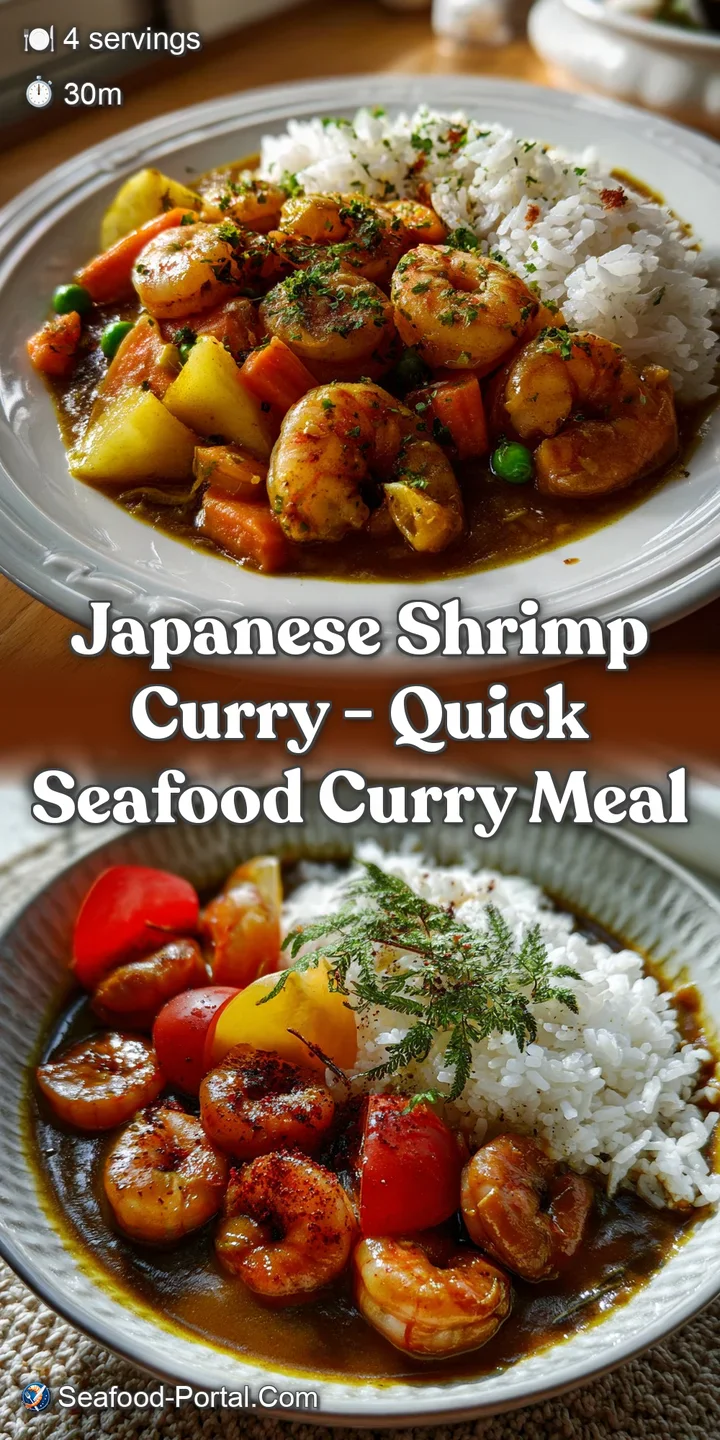
Presentation is key for a dish that can otherwise look like a monolithic brown sauce. Serve the Japanese Shrimp Curry in a shallow bowl, placing the rice on one half and the curry on the other. This prevents the rice from becoming "soupy" immediately.
- Traditional Garnish: Fukujinzuke (red pickled vegetables) provides a necessary acidic crunch to cut through the heavy fats of the roux.
- Textural Contrast: A sprinkle of toasted sesame seeds or sliced scallions adds a fresh "pop" against the velvety sauce.
- The Classic Pairing: A cold glass of Mugicha (roasted barley tea) or a crisp Japanese lager balances the warm spices and cleanses the palate between bites.
Whether you're making this as a Quick Seafood Curry Recipe or a weekend project, remember that the secret lies in the 30 minute execution. By respecting the science of the roux and the delicacy of the shrimp, you'll produce a bowl that rivals any Tokyo curry house. Let's crack on!
Recipe FAQs
How to make Japanese shrimp curry?
Sear shrimp separately, then simmer base for 10 minutes until potatoes soften. Add roux cubes, honey, and soy sauce last, stirring until the sauce thickens. Reintroduce the pre-seared shrimp for only 60 seconds to finish cooking without toughening the protein.
Can you put shrimp in Japanese curry?
Yes, shrimp is a popular protein substitution. Crucially, shrimp must be added only in the final minute of cooking; high heat over denatures the proteins, causing them to seize and become rubbery, unlike slow cooked meats.
Why is my shrimp curry sauce thin and watery?
Incomplete starch gelatinization prevents proper sauce thickening. The roux requires a consistent simmer temperature (around 175°F) to fully hydrate its flour and fat structure, which is essential for creating a stable emulsion that suspends liquid.
- Ensure liquid is simmering before adding roux
- Whisk roux cubes in one at a time
- Avoid over thinning with excess dashi
Should I use frozen or fresh shrimp for Japanese curry?
Fresh, raw, peeled shrimp are superior for searing texture. Frozen shrimp often retain excess moisture, which steams the surface instead of allowing the Maillard reaction to occur, resulting in poor surface flavor development.
What is the main flavor difference between Japanese and Indian shrimp curry?
Japanese curry relies on a roux based, savory sweet profile, contrasting with Indian curries’ complex spice layering. The Japanese version uses fermented ingredients like soy sauce and pre-made blocks for predictable umami, while Indian variants utilize fresh toasted spice powders for depth.
Myth: You must cook the shrimp in the sauce for a long time to "infuse" the flavor.
Myth: This is a recipe for rubber. Truth: Shrimp take less than 3 minutes to cook. The "infusion" happens during the final 60 seconds of folding and through the sauce clinging to the surface, making the final moments crucial for this dish.
Can I substitute chicken stock for seafood dashi?
Chicken stock works as a neutral substitute base. While it lacks the specific inosinate compounds found in seafood, it provides the necessary savory foundation for the roux blocks to build upon effectively.
Quick Japanese Shrimp Curry 2
Ingredients:
Instructions:
Nutrition Facts:
| Calories | 403 kcal |
|---|---|
| Protein | 26.9 g |
| Fat | 19.6 g |
| Carbs | 30.5 g |
| Fiber | 2.4 g |
| Sugar | 8.8 g |
| Sodium | 1624 mg |
